Within days after the recent news of Kjaerbye temporarily stepping down from competitive CSGO due to health problems, another saddening news haunts the scene. This time, it’s Danish pro Lukas “gla1ve” Rossander who has taken a step back from Astralis due to his recent health issues. However, unlike Kjaerbye, gla1ve seems to be struggling with mental stress and pressure rather than physical problems.
Through a Tweet, gla1ve has called the decision to temporarily step down from his team as the “toughest decision” of his life.
In his detailed statement, he mentioned that he had been experiencing symptoms of “stress and burnout” for a long period of time. After consulting with his doctor, the 24-year-old has decided to not accompany Astralis on their journey for the next few months.
Gla1ve wrote, “The next 3 months I will be using my time to fully rest and then come back to the Astralis team.”
He wrapped up his thoughts by thanking his teammates and Astralis for “for being so understanding and helpful throughout a situation like this.” He also stated that it was hard for him to put health first, but the decision was “necessary”.
Through a follow-up tweet, he thanked his fans for being understanding and supporting him during these troubling times.
I hope for your understanding and support in this difficult time for me ❤️
In their official blog post, Astralis elaborated on this situation of the temporary leave of gla1ve. The organization has decided to replace gla1ve with Jakob “JUGi” Hansen, who has recently joined Astralis.
Kasper Hvidt – Director of Sports in Astralis Group – seems to have wholeheartedly supported gla1ve’s decision. He said in the blog, “I know that there are many players out there in situations similar to Lukas’ and though you might say we should have taken this step a long time ago, it is my hope that we can avoid a similar situation in the future. I am obviously looking forward to having Lukas back 100%, but right now he needs to rest. We will support him in any and all ways possible.”
JUGi is all set to make his debut on Astralis in the DreamHack Masters Spring 2020, which is scheduled to begin today on May 19th with Astralis taking on Heroic in a BO3 series.
The former Virtus Pro duo Filip ‘NEO’ Kubski and Wiktor ‘TaZ’ Wojtas are back together in a new Polish team called Honoris. We saw this duo winning some of the biggest tournaments in the history of counter-strike, including the EMS One Katowice Major, in 2014. However, they split up in February 2018, when ‘TaZ’ was benched by his team Virtus.pro.
In February, it was confirmed that ‘TaZ’ and ‘NEO’ had worked through their differences and were looking to form their new team and were looking for talented and promising polish players. They finally found two such players Kamil “reiko” Cegiełko and Wojciech “Prism” Zięba who formerly played for Codewise Unicorns and Pompa Black.
We also have common sports ambitions so that we want to continue playing, but also to share our experience with younger gamers, which is one of the most important goals of HONORIS
NEO
The final player of the squad was filled by Daniel ‘STOMP’ Plominski who was back in the scene after being on Team Iluminar’s bench. He did have a good run with the team as they won Games Clash Master 2019 and the ESL Polish Championship Autumn Finals with a 1.09 rating during his seven-month tenure with the team.
Honoris now have a complete polish lineup with one of the most experienced yet young players in their team and have even got a partnership deal with Red Bull and currently look to focus on just men’s Counter Strike team in the starting but the organization’s plans go far beyond this squad.
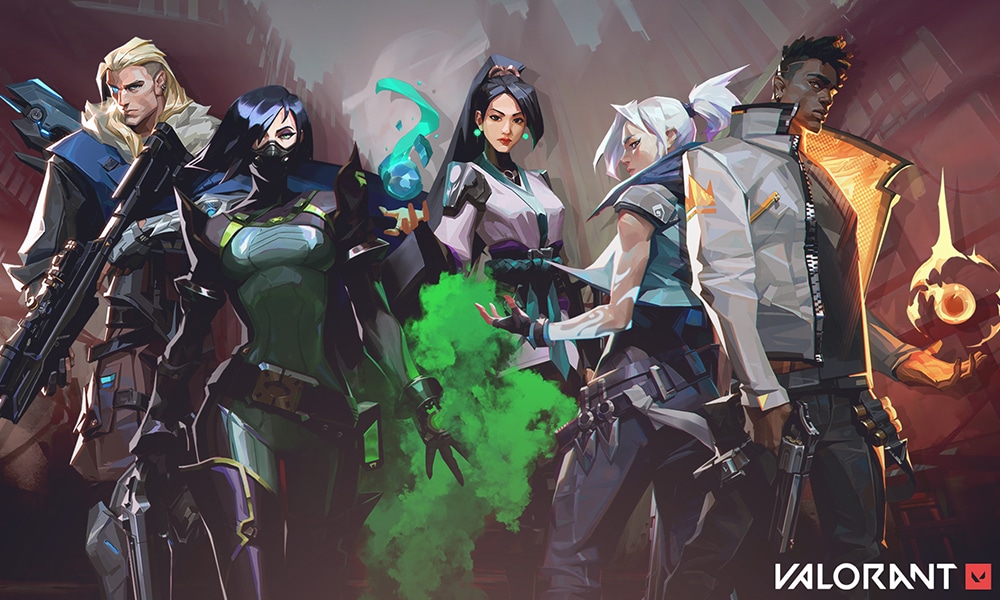
The closed beta for Valorant began on April 07 in North-America, Europe, Russia and Turkey. Servers for Latin America, Brazil and South Korea went live a fortnight ago. Riot Games’s foray into the first-person shooter domain has wreaked havoc in the PC gaming scene.
The game has received heavy engagement and applause from several enthusiasts. Being in a beta phase, Valorant is receiving frequent updates mending bugs, balancing agent abilities and map fixes.
In the initial days after going live into the beta phase, the game shattered records on Twitch. Valorant peaked at 1.72M concurrent viewers breaking Fortnite’s record 1.68M peak. The ranked competitive mode is already live despite the game being in the beta phase.
Photo: Valorant
The definite release date isn’t revealed, however, Valorant is expected to go live in the summer later this year. Riot Games is anticipated to add numerous other regions including Japan, South East Asia, Middle East and Oceania in the near future prior to the official release.
The COVID-19 pandemic is having a severe impact on the global rollout of Valorant. Hence the inclusion of other regions might take longer than expected. “None of these are excuses. They are amazing challenges for us to overcome as we bring Valorant to you. And we are so, so excited to be on this journey with all of you,” said Anna Donlon, Executive Producer for Valorant.
Not to worry, here’s a way to sneakily gain access even if your country hasn’t officially received servers or it isn’t listed under the regions eligible to gain beta access:
Determine the closest region with access to Valorant beta that would provide you with minimum ping.
Now, sit back and watch your favourite streamer streaming Valorant for at least a couple of hours.
Cross your fingers and hope for the best!
The Valorant beta drops are randomised and it’s all about luck. It is likely that you might receive a mail from Riot Games or a notification on Twitch even when you are not watching any stream. It may take hours or a week at worst for you to receive the beta access.
Anything above 2 hours is pretty good for being eligible for the drop. It makes no sense to run live streams in the background while sleeping or running streams on multiple tabs.
There are several shady third party websites that are selling Valorant beta accounts. Mind you, it makes no sense to pay for a game that is free to play. And, Riot Games is taking stern actions against the websites as well as the buyers. Plenty of accounts that were sold earlier, got banned due to breaking user agreement.
After the success of last year’s SEA Games, this year Razer has come up with “first of its kind” online tournament, The Razer Southeast SEA Invitational 2020. The tournament will feature esports athletes throughout the South-East Asian region and will be played out in an online-only format from next month, June 22nd with the Grand Finals set for July 3-5.
According to Razer, the SEA Invitational aims to prepare athletes and federations for the inclusion of esports in the 31st SEA Games in Vietnam set for 2021.
The tournament will feature three of the most popular games throughout the SEA region, including two mobile titles PlayerUnknown’s Battlegrounds Mobile and Mobile Legends: Bang Bang (MLBB) and only one pc title- Dota 2.
As for participation, only athletes that are officially confirmed by their country’s respective esports federation will be allowed to participate. Later athletes will be shortlisted for the main event on June 22nd through various qualifiers from May to June.
The matches will be live-streamed only on Razer’s social media channels on YouTube, Twitch, and Facebook.
For the tournament, Razer has collaborated with Filipino gaming agency Tier One Entertainment, who will be in charge of talent, promotions, and overall broadcasting of the tournament. Speaking with the press, Tier One Entertainment’s CEO Tryke Gutierrez said:
“We are excited to partner with a company such as Razer to create a platform for talents to shine. As a premier talent agency in Southeast Asia, we want to lead initiatives like the SEA Invitational to help develop talents to become Truly Top Tier.”
I’m not sure how well this opinion will go among the CSGO fanbase worldwide, but that’s what I’d still stand behind. CS:GO, world’s most popular and successful FPS game owned by Valve Corp. is pushing updates lately. Therefore, 128 Tick Match Making in CSGO could officially be well on the cards. Thus, I’d take you through what I think in this and why this might not be good enough for the game’s popularity.
CSGO player base has the toughest loyal fans of all time. Counter Strike prequel fanbase amounts to most of the current CSGO players. The segregation of the player-base amounts for equal community casual & competitive numbers. And the number of people enjoying the Valve match making and ranked among Silvers and Gold Novas are 67%. Imagine for a game whose more than 2/3rd users are in the casual ranks, how will they cope up with pros storming into Valve match making?
Casual Experience
Imagine when the 128 tick servers come in, don’t you think premium users at third party match making like FACEIT, ESEA or SoStronk will return to CSGO? Which will create a ripple effect, and suddenly you’ll have people shooting your heads in all games because of the indifferent skill set.
Firstly, CSGO match making by Valve is much of a casual games where newbies can play and learn the game. It’s not intense, it doesn’t have to be. It just offers an overview of how professional esports scene works to the new players. So the intention is never to host CSGO events on those servers. In case Valve does listens to the community and ports all the existing servers to 128 tickrate, the casual players will no longer be able to enjoy the game as much. Instead, pros will start barging into the servers and make it highly competitive for the causal community who’re there to just have fun.
Third Party Ecosystem
Valve’s CSGO match making was never intended to create a pro scene, it was always a pro-casual balanced mode. Or why do you think it still doesn’t have a map veto or knifes for the sides? That’s because Valve intends to show the way and support the ecosystem which lets third-party-software and service providers take the responsibilities of it.
In fact, Valve’s official CSGO Major events are also played on third-party vendor servers, that tells you a lot about Valve’s intention. Despite being ridiculed every now and then on Reddit and other discussion forums, Valve doesn’t pay much of a heed towards porting the existing servers to 128 tick. Tournament organizers like BLAST Pro, ESL, DreamHack, FACEIT & PGL have their dedicated teams for production, observers and shout-casters, thus, Valve doesn’t intend to get into that scene. Instead, Valve wants them to explore more competitively.
Data Science & Analysis
Who would’ve thought CSGO will have grown this much? And equally HLTV.org? For those who’re new here, HLTV.org earlier used to be a service provider for spectating and recording demos in Counter Strike 1.6. It is nostalgic to even think about it. The way HLTV has developed its systems to record, gather and analyze data is commendable. You can do so much with those data, you could predict outcome of the games, you could play well with the odds, everything because HLTV has dedicated team of developers.
And that’s also possible because third-party-event organizers allow accessibility of that data to HLTV. Valve themselves are so impressed with HLTV that they’ve officially incorporated HLTV’s database in their game. That’s too big, but it has only been possible because Valve pushed it. They themselves can feature all those data, I think, in much better manner considering they themselves own it and could customize it well.
But as I discussed earlier, it’s not in their priority, they want their focus to be limited to the game. Hence, if semi-pros or even people start competing in Valve match making instead of FACEIT or ESEA, it’ll have an abstract affect on these service providers.
Resources
Valve has thousands of servers up and running to let people experience the match-making, casual matches, deathmatch, wing-mans and etc., why would they want to add another cost? When pro’s don’t complain, when the semi-pros have already given up hopes and are enjoying their time on other services, is it essential to put up a cost? I don’t think so their finances would see sense in this. Not just Valve though, even gamers, a game played on 64 tick consumes considerably less data than it does on 128 tick servers.
I am not saying everyone in the world has a metered-connection, but obviously the data does make something at some point.
I do agree though, that the experience of the current players at Valve match making will definitely improve, but that won’t stop pros from invading their semi-pro and amateurish ecosystem. Valve also seems to be considering adding 128-tick servers, but we’re not sure of how true it is, considering Source 2 was also on on the cards, except they did this.
Counter-Strike: Global Offensive is a game by Valve that has been out for almost 8 years. Throughout the years, the competitive scene of this game has been refined and the ranking system has been perfected so that only the best players in the game can make it to the top of the spectrum.
The rank distribution in CSGO is spread across 18 ranks in total ranging from Silver 1 to Global Elite. Today, we take an in-depth look at each of the ranks in the spectrum and assess the characteristics of each of the ranks. If you’re hard stuck at any point, we’ll also provide tips to get you through it.
Find out where you lie in the array of ranks as we’ll take a look at the percentages that each of the ranks contain.
Silvers – 33%
Silver is the beginning of the rank spectrum. Numerically, this range has the most ranks included in it. Beginners are generally most likely to be placed in it and once gotten into, it may take a while to get out of. According to CSGO-STATS, about 33% of the players are found in silver, which is considerable but it also contains 6 out of the 18 ranks in the game – about 33% of the spectrum.
Source: CSGO-STATS.com
Now let’s take a look at the numbers acting behind each rank.
Silver 1 – Consisting 4.51% of the players, the Silver 1 is the lowest rank in CSGO, and will continue to do so unless Valve decides to incorporate a bronze rank reserved for players who refuse to drop guns to their teammates even with 16000$ in pocket. Quite surprisingly however, it has more players in it than silver 2.
Silver 2 – Coming after Silver 1, this rank accounts for 4.33% of the player count. The graph sees an upward turn from this rank towards the rest of the ranks.
Silver 3 – Accounts for 4.39% of the players, slightly more dense than Silver 2.
Silver 4 – Silver 4 holds about 5.37% of the player count. While Silver 4 still can’t be considered to be particularly good at the game, from this point onwards you might not be able to survive a 30-bullet spray by the enemy while standing AFK.
Silver Elite – Takes up 6.70% of the players.
SilverElite Master – Not only the highest rank among the silvers, Silver Elite Master is also the most dense rank in Silver and one of the most dense ranks overall with 7.70% of the players lying in it.
Tips to get out of Silver: Focus on getting the basics right. You don’t need to be an aim god to be able to reach the next stage. Just learn the maps, practice your aiming, stop rushing B every round, play around your team and keep getting trades, you’ll be out of this trench in no time.
Gold Novas – 34.23%
If you’re one of the four gold Nova ranks, chances are you already have the basics right but still struggling to rank up. No, it’s not your team’s fault that you’re stuck in this trench. Gold Novas aren’t particularly known for having brilliant aim, and the knowledge of maps although present, are severely lacking when it comes to the minute details. The Gold Nova ranks hold 34.23% of the players scattered across only four ranks.
Gold Nova 1 – The first rank of the Gold Nova series. This rank has 8.52% of players in it. If not careful, it’s easy to find yourself falling back into SEM from this rank.
Gold Nova 2 – Gold Nova 2 holds the highest percentage of players in CSGO. Approximately 8.8 1% of players are found in Gold Nova 2.
Gold Nova 3 – The graph slowly sees a steady downward curve from here. GN3 accounts for 8.73% of the players in the competitive spectrum.
Gold Nova Master – The peak rank of the Gold Novas, it can be quite hard to get out of here. You have to perform consistently to be able to get to the next step.
Tips to get out of Gold Nova – You’re just about an average CSGO player if you’re in Gold Nova. It holds the maximum player count among all the ranks in the spectrum. Focus on improving your knowledge of the competitive maps. Know common grenade lineups and stay aware of one-way smokes, they’re quite common in these ranks. Practice recoil control but know when to spray and when to tap or burst. Stop raging on your teammates, play your own game and you’ll soon find yourself climbing up the ranks.
Master Guardians – 23.01%
Just like the Novas, Master Guardian also possesses four ranks under it. There’s no room for denying that Master Guardians are skilled. But there’s a lot of room for improvement. These ranks hold 23.01% of the player base despite having the same number of ranks as the Gold Novas included in it.
Master Guardian 1 – The first step to the Master Guardians, MG1 has about 7.39% of the players in it.
Master Guardian 2 – Holds 6.30% players in it.
Master Guardian Elite – The third rank of the Master Guardian series. The competition gets serious starting from these ranks. Takes up 5.25% of the total players.
Distinguished Master Guardian – Although the rank icon is dissimilar to the other Master Guardians, this rank can be placed in it. Hold 4.07% of the players.
Tips to get out of Master Guardian – Know meeting points of the competitive maps. Study the maps minutely, you need to know the precise times it takes to move between the points across the maps. Learn every single smoke lineups and learn pop-flashes. Expand your map pool to include more maps as you keep learning. Improve movement – long jumping, bunny hopping and air strafing aren’t optional to learn anymore since they can save you from tense situations.
Legendary Eagles – 6.35%
Only consisting of two ranks, this part is where even experienced players of the game can find hurdling. These two ranks contain about 6.35% of the player base.
Legendary Eagle – Coming to this stage means you’re good at the game. There are only small areas of improvement from here. It takes up 3.16% of the players.
Legendary Eagle Master – Just 2 ranks from the peak, LEM consists of 3.19% of the players, which is surprisingly about 0.03% more than LE.
Tips to get out of LE – Not much is left for you to learn. All you have to do now is to refine and sharpen the skills you already have. Develop a practice routine before hopping on to a competitive game. Dedicate 30 mins to an hour of time practicing a combination of aim, spray, movement and smokes.
Supreme Master First Class – 2.61%
Supreme Master First Class or SMFC for short, is one of the most respected ranks in the game. Accounting for only 2.61% of the players, it’s not uncommon to find even professionals in this tank.
Tips to get out of SMFC – Grind, grind, and grind. No one can help you now but yourself. Grind till you make it.
The Global Elite – 0.78%
The most prestigious title in competitive CSGO, Global Elite lies at the apex of the ranks in CSGO. As expected, this ranks holds the least number of players in the game, accounting for a mere 0.78% of players across the said.
So, which part of the spectrum are you in? Regardless of where you stand, there’s always places for improvement. Read our tips, and get started on your way to your dream rank.
Daniel “Dafran” Francesca is an ex-Overwatch pro and is also a streamer and content creator. The 26-year-old isn’t a stranger to controversies, in the past he has received multiple bans from Overwatch, Twitch and Blizzard Games themselves. Recently, Dafran was seen regularly playing VALORANT and looking to go pro with his team Prodigy by competing in tournaments. But things didn’t exactly go as planned when it came to the Solary cup for VALORANT.
In the semi-finals of the tournament, there occurred some misunderstandings between the organizers and team Prodigy regarding the event timings. According to Dafran, his team was clueless about the change in schedule which was reportedly shifted through an announcement in discord which was made days prior to the actual schedule.
The misunderstanding caused team Prodigy to not be ready for the tournament in time. While his opponents, team HypHypHyp were on-line and waiting for them. The tournament organizers soon announced that a game point would automatically be given to team HypHypHyp, and Dafran wasn’t a fan of the decision.
He sparked an outrage against Solary and their rivals team HypHypHyp, showering them with a flurry of insults and profanities. Consequently, Solary was swift to call their decision. They imposed a permanent ban on Dafran across all their tournaments but allowed team Prodigy to advance further without him.
Needless to say, Dafran didn’t remain quiet after his lifetime ban was handed. He resorted to Twitter to speak up against Solary and their tournament, and wasn’t particularly polite in wording his thoughts.
Suck my ball sack. Joke of a tournament and organization. Hyp and his team of washed up OW players too scared to play. Bunch of bitches. Hf with ur dog shit https://t.co/eph44t3YcI
Team Prodigy currently consists of star CSGO player Adil ‘ScreaM’ Benrlitom accompanied by Oscar ‘mixwell’ Cañellas, Jacob ‘Pyth’ Mourujärvi, and Bayram ‘bramz’ Ben Redjeb. The team will now have to find a fifth player in order to continue their run at the Solary cup.
The ESL One Road to Rio came to its final stage where the current #1 team in the world Astralis faced G2 in a best of 5 series where Astralis already had a map advantage due to them coming from the upper bracket. We had seen Astralis performing brilliantly in the recent games and had lost just a single map out of 11 maps they placed recently. G2 also played quite well and made their way to the finals by defeating Faze 2-1 in their last game. We saw Astralis defeating G2 3-0 and securing a spot for themselves in the ESL Rio major.
The map veto started with Astralis removing mirage and G2 banning Overpass, then we saw Astralis picking up Nuke as the first map of the game and G2 picking up Vertigo. Astralis then picked up Inferno as the 4th map pick and G2 chose to play Dust2 as the final map of the game.
The first map of the final was Nuke and it started with Lukas ‘gla1ve’ Rossander picking up three top notch pistol kills from his glock and starting the game at a good note for his team. The next few rounds saw Astralis just going berserk on their map pick and started to lead the map 7-0. Later on G2 did pull off some good rounds with the heroics of ‘JaCkz’ and ending the first half 9-6 in the favor of Astralis.
The second half started with ‘Magisk’ picking up 3 kills from his USP in the eco round which was actually surprising as he had just 2 kills in the whole first half. The buy round was the same story as well as Astralis were on a different level and led the map 14-6. Astralis then easily closed out the first map of the game 16-6 and we saw Nicolai ‘device’ Reedtz just going crazy with his AWP throughout the map and had a 24K-13D in the map.
The second map of the game was Vertigo which was G2’s map pick and it began with Astralis yet again winning an eco round with a CT side retake and securing the first round of the map. The following rounds were just a disaster for G2 as Astralis were on another level today as they were not giving them even a single chance to get back in the game and led the map 11-1. This map was just a walk in the park for Astralis as they just went insane on this map and we saw the first half ending 13-2 in favor of Astralis.
The second half was the same story all over again as Peter ‘dupreeh’ Rasmussen got three amazing kills from his glock and there was nothing else left in the match and Astralis ended the map and the game with winning 16-2 on vertigo and winning the series 3-0.
TIGER, a Chinese organization with a full Mongolian roster that recently defeated TyLoo and won ESL One: Road to Rio (Asia) grabbing 1600 RMR points besides $4,000 is inching for a roster move. According to a report by DBLTAP, TIGER is in talks with Marco “Snappi” Pfeiffer and Owen “smooya” Butterfield.
Photo: DreamHack
Marco “Snappi” Pfeiffer was benched by Heroic in April 2020 earlier this year. However, the 29-year-old in-game-leader is still under contract with the Danish organization. His arrival at TIGER will bring much needed experience into the lineup.
Owen “smooya” Butterfield is, at present, a free agent after his departure from Chaos Esports Club. He had to leave the roster in the middle of Flashpoint 1 due to visa problems amid the coronavirus pandemic. The 20-year-old British sniper will surely wreak havoc in Asia.
If the alleged roster move comes to fruition, TIGER will lose 40% (640) of the 1600 RMR points due to the changes in the active lineup. Yesuntumur “nin9” Gantulga and Bold “ncl” Batsuh are likely to make way for the incoming players. The revamped roster of TIGER will be:
Hit registry is one of the most important aspects for a competitive shooter like VALORANT. Proper hit registry can be the difference between fairly winning a skirmish and losing one even after being the better marksman. Recently, the VALORANT subreddit was overwhelmed by posts claiming that the hit registry of the game was having major problems.
VALORANT’s patch 0.50 addressed a lot of underlying problems in Riot’s shooter. From economy changes, map changes, bug fixes to Sage nerfs and agent balances overall, Riot has focused on providing balance to the game and making it more enjoyable for the players. However, one change in the patch notes stood out more than the rest.
Patch 0.50 also delivered some key changes in weapon accuracies while moving or coming to a stop. While the change was theoretically good, it may have brought doom upon the hit registry in VALORANT, according to Riot dev ‘Riot_Sobey’.
After several individual posts complaining about the hit registry issues surfaced on Reddit, another post compiling some of the posts with concrete proofs accompanied by videos showcasing the bad hit registry was made by a Reddit user. Luckily, ‘Riot Sobey’ – a member of VALORANT’s hit registry team – came across the post and replied to it.
He came up with a theory which they can’t confirm if it’s “100% correct yet.” According to Sobey, this hit reg problem might just be because of the changes in movement accuracies in the last patch. He mentioned that the tracers fired from guns while moving aren’t properly synced to the server and are client-sided instead, which implies that even if the bullet tracer is hitting the enemy’s head on your screen, they might be way far off in practice.
In his second point, he claims that the spark hit impacts might be causing trouble for the players who are used to blood hit impacts due to them not differentiating clearly on a headshot and a body-shot.
However, soon after, another Reddit user came up with a video which rendered Sobey’s first point moot. The video showed that even while standing still, the bullets seem to completely miss their mark, which clearly showed the actual hit reg problem in the game.
Sobey acknowledged the fact and had also mentioned that the team is actively working on the issue. Players can certainly hope to see a patch being rolled out soon which will address the hit reg issues.