

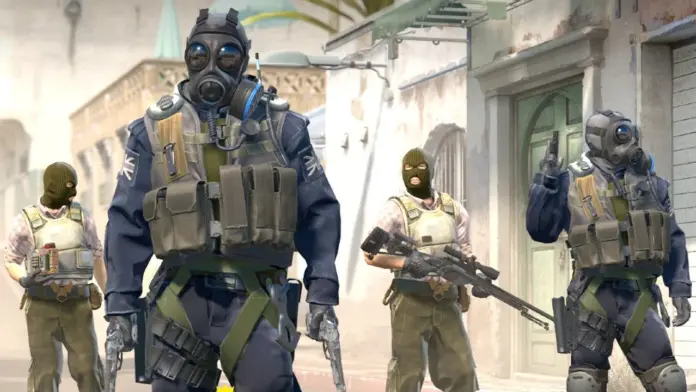


Counter-Strike has spent more than two decades teaching players to listen for one particular sound before making an aggressive move: the enemy reloading. Valve has now changed that equation.
A major Counter-Strike 2 update released on September 22 introduces silent reloads, allowing players to sacrifice reload speed in exchange for concealing one of the game’s most recognisable audio cues. The change arrives as part of Valve’s new “Rush Hour” update, which also introduces a 3v3 Rush mode, completely reworks Premier map selection, makes unscoping silent and brings back Clan Tags.
Unlike many of CS2’s recent updates, these are not simply bug fixes or cosmetic additions. Several of the changes directly alter decisions players make during rounds, particularly when information is being gathered through sound.
CS2 players can now reload silently
The biggest gameplay change is deceptively simple. Instead of tapping the reload key normally, players can now press and hold it to perform a silent reload. There is an important trade-off, silent reloads take considerably longer than conventional reloads. Players therefore have to choose between restoring ammunition quickly while potentially revealing what they are doing or accepting a slower reload to deny the opponent that audio information.
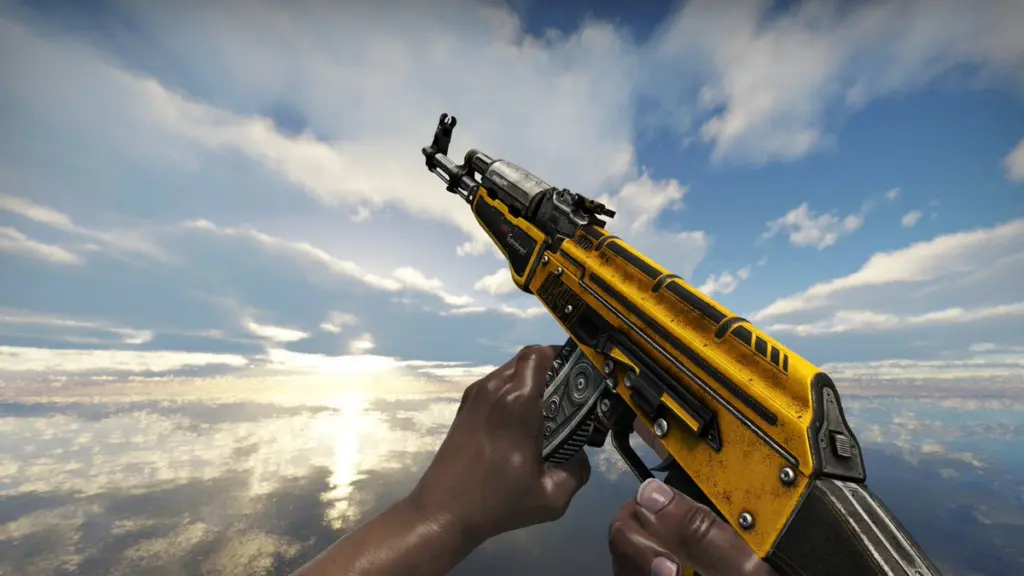
That distinction could become particularly important in clutch situations. Reload sounds have traditionally given opponents valuable information about when a player may be vulnerable, sometimes creating the brief window needed to swing an angle or close distance. A player can now deliberately remove that cue if there is enough time to accept the slower animation.
Valve described the mechanic in the official Rush Hour announcement as another way of adding stealth to players’ in-game decisions, with the additional reload time acting as the cost for staying quiet.
Whether silent reloading develops into a meaningful part of the competitive meta will depend on how players use that trade-off in actual matches, but it immediately introduces another layer of decision-making to situations where sound can be as valuable as vision.
AWP players can now unscope without making a sound
Valve has made another significant audio change for scoped weapons. Unscoping a sniper rifle no longer produces a sound that nearby opponents can hear.
That means an AWPer can disengage from an angle without giving away the same audible information as before. In situations where opponents are attempting to determine whether a sniper is still holding an angle, the absence of that sound could make the player’s next movement more difficult to read.
Together with silent reloading, the change makes audio information slightly less absolute than it previously was. Players still have to manage movement, weapons and positioning carefully, but two familiar sounds can now be deliberately removed from the information available to an opponent.
Premier’s map veto has been completely reworked
The other major competitive change affects CS2 Premier before a round has even begun.
Premier teams will no longer repeatedly ban maps until only one remains. Valve has replaced that system with a selection process in which both teams identify maps they want to play before the game randomly chooses one of the resulting four.
Under the new system, Team 1 picks one map, Team 2 selects two maps and Team 1 then chooses one final map. CS2 randomly selects the match map from those four choices.
Valve says the goal is to give players more opportunities to actually play maps they have spent time learning. Under the previous veto structure, less popular maps could repeatedly disappear during the banning process even when individual players had specifically practised them.
The introduction of randomness represents a substantial philosophical change to Premier matchmaking. Players still influence the pool through their selections, but neither team can guarantee the final map simply by manipulating a conventional veto down to one remaining option.
Premier remains one of Valve’s central competitive systems in CS2. TalkEsport has been following its evolution throughout 2026, including Valve’s seasonal Premier structure and map-pool changes that have continued to reshape the matchmaking environment.
Valve introduces Rush, a new 3v3 CS2 mode
The update takes its name from Rush, a completely new queued 3v3 mode built around a series of smaller battle arenas.
Teams progress through randomly selected arenas with the objective of eventually reaching the opposing team’s castle. Winning an arena requires controlling its tower after eliminating the opposing team or surviving until time expires.
The arenas are randomly selected for each match, meaning the sequence can change between games. Valve has also introduced a Rush friends leaderboard that tracks wins, adding a competitive element to a mode designed to move considerably faster than a conventional Counter-Strike match.
Rush also operates with limited budgets and shorter engagements, creating a format distinct from both traditional 5v5 Counter-Strike and Wingman. Rather than fighting repeated rounds across one full-sized bomb-defusal map, players effectively work their way through a changing gauntlet of compact combat spaces.
Clan Tags are finally back in Counter-Strike 2
The Rush Hour update also restores a feature that longtime Counter-Strike players have been requesting since CS2 replaced CS:GO: Clan Tags.
Players who belong to Steam Community Groups can once again select a Clan Tag from their player profile, with the tag appearing alongside their name in-game.
Crosshairs have received a substantial overhaul as well. Valve has made them resolution independent, introduced a dedicated Crosshair/Scopes settings tab, added new crosshair styles and replaced the default design with a “Dynamic Quad” crosshair intended to provide a clearer representation of weapon accuracy.
Blood and bullet impact decals have also been adjusted for greater visual clarity, while Valve has added the ability to apply stickers to the C4.
CS2 Rush Hour update: Other important changes
Beyond the headline additions, the September 22 patch contains a sizeable collection of smaller gameplay and technical changes. The total-grenade setting now also limits how many grenades a player can purchase during a round, halftime scoreboard statistics have been corrected to fully reflect the previous round, and players can adjust music volume separately for different game modes.
Valve has also added several new Workshop and scripting tools for map creators, including support for location-specific minimaps and skyboxes, constrained death cameras and camera-shake volumes.
A new Starjunk 95 music kit titled Industrial Sunset Memories has joined the store in standard and StatTrak versions.
The update arrives during a period in which Valve has also been making changes behind the scenes to CS2’s competitive infrastructure. TalkEsport recently covered the introduction of the VACNet Labeling Portal, an invite-only system being used to help train CS2’s anti-cheat models.
Silent reloads could be the change players feel most
Rush may be the feature Valve named the update after, and the Premier overhaul will affect anyone regularly grinding CS Rating, but silent reloading is arguably the most fundamental change introduced on September 22.
Counter-Strike has always been a game in which sound functions as information. Footsteps, grenades, scopes, weapon fire and reloads allow experienced players to construct a picture of what an opponent is doing without actually seeing them.
Valve has not removed that principle. Instead, it has given players a new way to manipulate it. A normal reload remains faster and audible; a silent reload conceals the information but leaves the player vulnerable for longer.
That creates exactly the kind of decision Counter-Strike tends to build its deepest mechanics around: speed, information and risk. After more than two decades of players instinctively reacting to the sound of an opponent reloading, they can no longer be certain that silence means the magazine is full.
