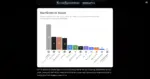
Valve has released its October 2026 Regional Standings for Counter-Strike 2, providing the clearest official picture yet of the race for PGL Major Singapore with less than a month remaining before all 32 invitations are determined. The race for the final Counter-Strike Major of 2026 has entered its most consequential month.
Valve has published the October Valve Regional Standings (VRS), updating the global and regional rankings that increasingly determine access to Counter-Strike’s biggest tournaments. This particular update carries considerably more weight than an ordinary monthly ranking. The next major VRS snapshot, scheduled for November 2, will determine the 32 teams invited to compete at PGL Major Singapore 2026. That leaves teams with only the remaining October tournament calendar to improve their position before Valve effectively closes the door on the Major qualification race.
October VRS puts the Singapore Major race into focus
The Valve Regional Standings have become one of the most important pieces of infrastructure in professional Counter-Strike. Rather than relying on conventional open and closed Major qualifiers, Valve uses its ranking system to determine invitations based on teams’ competitive results, opposition strength, prize money and other factors incorporated into the VRS model. For PGL Major Singapore, that system will decide the entire 32-team field.
The Major begins on November 24 and runs through December 13, marking the first Counter-Strike Major held in Southeast Asia. PGL has confirmed that invitations will use the VRS published on November 2. The October update therefore serves as the penultimate official monthly checkpoint before those invitations are decided.
The regional rankings matter more than ever
Understanding the Major race requires looking beyond the global leaderboard. Valve’s ranking system also divides teams geographically, creating regional standings that influence how Major places are distributed and which teams occupy the relevant invitation positions.
That has made a team’s regional classification increasingly valuable, and, during the final weeks before Singapore, increasingly controversial. Several organizations have made roster moves that can affect where their teams sit within the regional VRS structure, creating unusual incentives as the Major cutoff approaches. The most recent example is Sashi, whose addition of Australian players Tynan “TjP” Purtell and Jordan “Hatz” Bajic has opened a potential route into the Asian standings. The organization has also said Anton “Anlelele” Huynh holds Vietnamese citizenship, giving the lineup three players eligible for an Asian regional core.
That situation deserves its own explanation because it demonstrates how roster construction, regional identity and VRS points can intersect during the Major race.
The Asian standings have become particularly important as organizations search for every possible route towards Singapore. TYLOO currently lead the Asian VRS picture, with The MongolZ immediately behind them. BC.Game have also surged into the upper reaches of the region following significant roster changes. The proximity of several teams means comparatively small movements in VRS points can become enormously important when the final invitation threshold is applied.
It also explains why roster moves that alter a team’s regional eligibility have attracted so much attention.
The remaining weeks now create an unusual competitive environment. For teams comfortably inside Major qualification positions, the objective is largely defensive: maintain enough ranking strength to avoid being displaced before November 2. For organizations sitting near the invitation boundary, every eligible tournament becomes an opportunity to gain the points needed to cross the line.
And for teams further outside the projected field, October represents the final realistic opportunity to produce the kind of results capable of dramatically changing their position. The incentives extend beyond simply winning tournaments. The quality of opposition, placement, prize money and the wider VRS environment can all influence how valuable a result ultimately becomes.
The November 2 ranking is the one that matters
The October standings should therefore be viewed as a snapshot rather than the final Singapore Major field. Teams still have several weeks to compete, gain or lose ranking value and potentially change their regional position before Valve publishes the decisive standings.
On November 2, however, the calculations stop being theoretical. PGL has confirmed that all 32 invitations to the Singapore Major will be determined using that VRS update. Teams will then have until November 6 to complete registration requirements ahead of the event.
The Major itself begins November 24 before concluding at the Singapore Indoor Stadium on December 13. The VRS era has changed the final weeks before a Major. That has created new strategic considerations for organizations. Maintaining a three-player core can preserve ranking value, while roster construction can affect regional classification. Tournament selection itself can become part of a team’s qualification strategy. Valve’s latest standings tell us where everybody starts the final month. What happens between now and November 2 will determine who actually gets on the plane to Singapore.