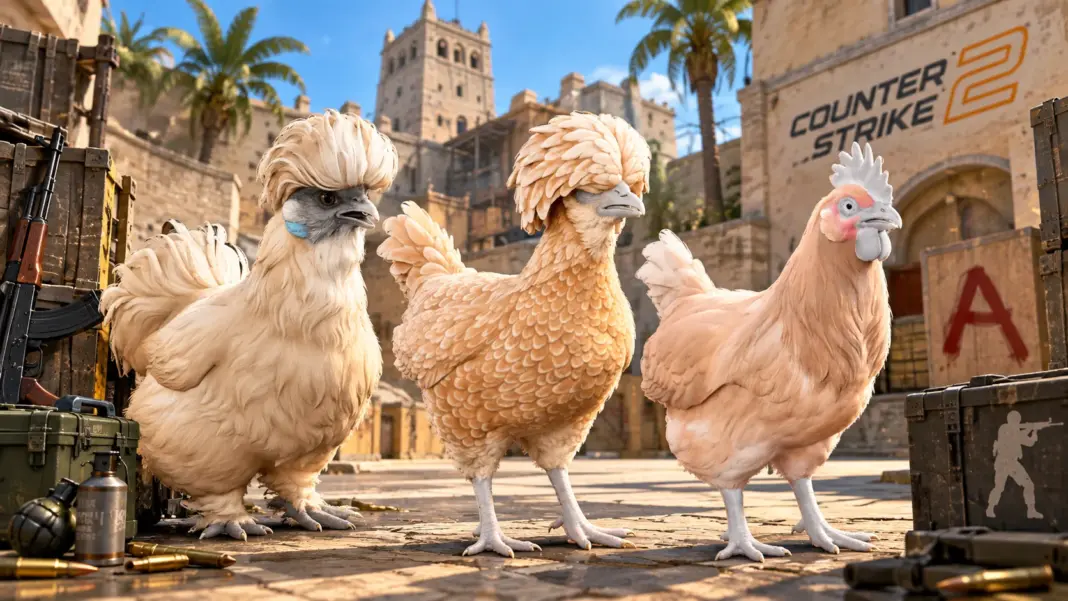
Counter-Strike 2 is one of the most-played games on the planet, and one of the easiest to hear about without ever understanding. It is free. It is Valve’s tactical shooter, and under one name or another it has anchored competitive PC gaming for over two decades.
Maybe you have watched a clip, or seen a friend chase a knife worth more than their monitor, or you just want to know what the fuss is about. Either way, here is the lay of the land, from the esports down to the cosmetics.
CS2 is a five-versus-five tactical shooter, released in 2023 as the successor to the long-running CS:GO. One team tries to plant a bomb. The other defends the two bombsites and races to defuse it. Win enough rounds and you take the match, and the teams swap attack and defence at the halfway mark.
There is no respawning inside a round, so a single mistake can end it for you. Money matters too. Before each round you buy guns and armour with cash earned from the last one, so a losing streak starves you of firepower. Skill is earned through aim and positioning, never unlocked with playtime. That is the whole appeal: free to load up, brutally hard to master.
The esports are a genuine spectacle
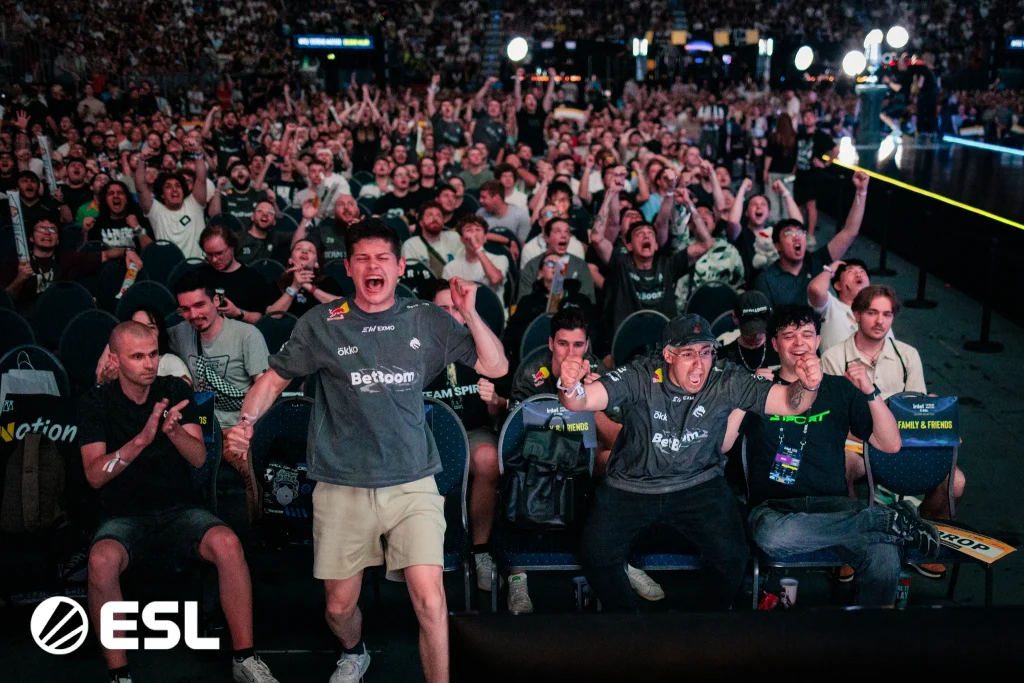
This is where plenty of newcomers arrive first. CS2 has one of the largest esports scenes in the world. Valve runs the showpiece Majors, third parties fill the rest of the calendar, and the prize money is real: the best players have banked more than two million dollars in career winnings.
Teams like Vitality and Spirit sell out arenas, and names like ZywOo, s1mple and the teenage phenomenon donk carry the sort of following footballers do. Best of all, you can watch nearly all of it free, on Twitch and YouTube, in dozens of languages, most weekends of the year. You do not need to play a single round to enjoy it. The tension of a one-versus-one with the bomb ticking needs no translation. The biggest finals pull in millions of concurrent viewers online.
The game is played on a small pool of maps, and each one is a board you learn rather than a level you clear. Names like Mirage, Inferno and Nuke come up again and again, because the competitive pool is kept deliberately small. Valve rotates it over time, retiring old maps and polishing new ones. For a newcomer the lesson is simple. Learn one or two maps well before you touch the rest, because knowing every angle on a single map beats a vague sense of seven.
Callouts: the language players speak
Turn on the comms during a match and you will hear a vocabulary that sounds like code. “Long A”, “Catwalk”, “Connector”, “Mid”, “B site”. These are CS2 callouts. They are the agreed names for every position on a map, and they let five players share what they see in the half-second they have to say it. Every map has its own set, learned by pure repetition. A single call like “two Long, one Mid” can reorganise a whole team in a second. You do not need them to have fun. But the moment they click, the game stops looking like chaos and starts looking like chess.
Skins and cosmetics: the other economy
This is the part that leaks into the wider culture. CS2 weapons can wear cosmetic finishes called skins. They change nothing about how a gun shoots. A skin is pure decoration. Yet the market around it is enormous, and rare knives and gloves trade for the price of a used car. Most of them arrive from cases, the loot boxes you open with a purchased key, though plenty change hands on the open market too. There is a system underneath it. Skins come in rarity tiers from common to covert, they carry a “wear” value that runs from Factory New to Battle-Scarred, and some count your kills as StatTrak weapons. One thing matters most for a newcomer: none of it is pay-to-win. You never need to spend a cent to compete, which is a big part of why the scene stays fair. Because real money changes hands, though, treat any spending the way you would any other hobby, and never more than that. If you want to see what your friends are actually collecting, a database of CS2 Skins is the fastest way to grasp the range, the rarities and what drives the prices.
CS2 is a free download on Steam. It drops you into casual modes, a ranked Premier ladder that scores you a number, and community servers to warm up on. Two settings are worth changing early. Set your mouse sensitivity low enough to aim with your arm, not your wrist. Keep your crosshair small and static, the way most players do. After that, warm up in Deathmatch or on an aim map before you queue, and accept that the only real path forward is repetition. There is no single rank you must reach, and the game is more fun when you measure today against yesterday. The curve is steep, but it is honest. Nobody buys their way to a better shot.
Why it is worth knowing
CS2 sits at an unusual crossroads. It is a serious esport, a hangout for friends, and a trading economy all at once. That mix is why it keeps pulling in people who arrived for one of the three and stayed for the others. Treat it as a game to play, a sport to follow, or a rabbit hole of cosmetics to browse. None of those is the wrong door. Whichever one you walk through, you will understand a corner of gaming culture that plenty of people talk about and far fewer ever bother to explain.