



The fallout from PUBG Asia Stars 2026 is escalating in Vietnam, where prominent content creators, professional organisations and fans are now publicly challenging KRAFTON’s handling of the tournament controversy even after the publisher accepted responsibility for its operational failures.
Vietnamese creators including DjChip, Độ Mixi, PewPew and RAMBO have spoken publicly about the dispute, with some removing PUBG from planned content or calling for KRAFTON to provide clearer answers. Anyone’s Legend and GAM The Expendables, meanwhile, have issued statements supporting players Himass and TanVuu while asking that disciplinary decisions be based on verified evidence.
The backlash represents a new phase in a controversy that has already resulted in two Vietnamese participants being removed, all eight Korean participants boycotting Day 2, the cancellation of the final day and PUBG Asia Stars ending without official standings. TalkEsport previously covered the full PUBG Asia Stars controversy and KRAFTON’s subsequent apology after the publisher acknowledged that its handling of the incident had helped escalate the crisis.
Vietnamese PUBG creators push back against KRAFTON
The dispute is no longer confined to the participants involved in PUBG Asia Stars. Several influential figures within Vietnam’s PUBG community have publicly expressed dissatisfaction with how KRAFTON handled the incident and communicated its findings. According to reporting from Press The Game on the reaction inside Vietnam, DjChip — a prominent PUBG creator who has also coached Vietnam at multiple PUBG Nations Cups — announced during a livestream that he would remove PUBG from his stream in protest.
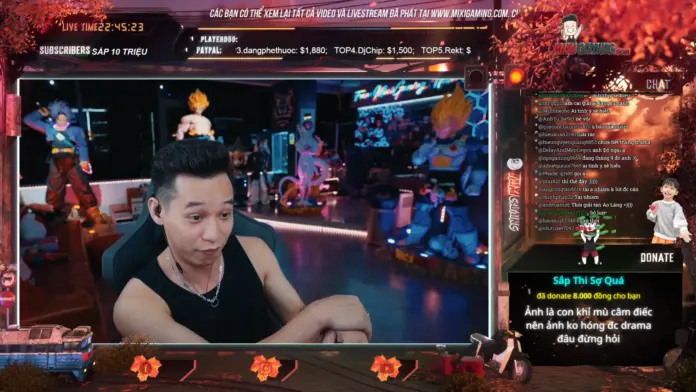
Độ Mixi, one of Vietnam’s biggest gaming personalities, subsequently said during a September 21 livestream that PUBG would be removed from an upcoming personal showmatch. He also discussed unresolved issues surrounding the dispute, although he indicated that there were matters he could not yet disclose publicly.
PewPew, another major Vietnamese creator with longstanding ties to the PUBG community, called on viewers to petition KRAFTON to publish the final results of its investigation as soon as possible. He also expressed disappointment with the developer over the way the situation has developed.
RAMBO, who participated as part of the Vietnamese squad at PUBG Asia Stars, has been more directly critical. He disputed the treatment of Himass and TanVuu and criticised Korean streamer Soopi over the subsequent escalation between sections of the Korean and Vietnamese online communities.
Those statements reflect the increasingly hostile atmosphere surrounding the event, but allegations concerning the actions or motivations of individual creators should be distinguished from KRAFTON’s confirmed findings. The publisher has acknowledged failures in its own handling of the tournament and confirmed violations involving Himass and TanVuu, while disciplinary proceedings remain ongoing.
What KRAFTON has actually confirmed about Himass and TanVuu
The underlying dispute began during Day 1 of PUBG Asia Stars on September 17, when concerns emerged that Vietnamese participants Himass and TanVuu had received information from outside the game while competing.
Both players had their personal livestream chats visible on secondary monitors. Information concerning opponents could consequently reach them through viewers even without the players directly opening another competitor’s livestream.
KRAFTON’s position has become more explicit as its investigation has progressed. In its latest apology, PUBG Publishing head Soojin Yoon said the company had confirmed the players’ acts of checking external game information, describing the conduct as stream viewing and stream sniping. Disciplinary procedures involving both players are now underway, with the results to be announced separately.
This is important because some of the continuing disagreement concerns how the incident was initially described. KRAFTON acknowledged that it failed to clearly establish preventative rules and sanction criteria before the tournament and later used terminology that did not adequately explain what had occurred.
KRAFTON says its own response made the crisis worse
KRAFTON has not limited its apology to the actions of the two Vietnamese players. The publisher has accepted responsibility for significant failures in the way PUBG Asia Stars was operated and in how the controversy was handled once it began.
In its September 21 statement, KRAFTON acknowledged that it had not established sufficiently clear preventative measures, standards for judging the use of external information or appropriate sanctions before the competition. It also admitted that its initial explanation of the incident was inadequate.
The company further acknowledged mishandling the Korean participants’ response, inconsistencies between notices distributed to different regions and a failure to protect participants as the dispute expanded into personal attacks.
Those admissions matter because PUBG Asia Stars was an official KRAFTON event rather than an independently operated third-party competition. The official tournament announcement described a three-day competition involving 48 professional players, PUBG Partners and streamers representing Korea, China, Japan, Thailand, Chinese Taipei and Vietnam.
The event featured nine different modes and a $70,000 team prize pool, with final standings originally intended to be determined by cumulative points across all three days.
Anyone’s Legend and GAM The Expendables defend their players
The organisations representing the two Vietnamese players have also entered the dispute publicly.
Anyone’s Legend, which represents Himass, published an open letter supporting its player and calling for the investigation to be completed before final conclusions are drawn. The organisation has maintained that it will continue supporting Himass while the disciplinary process unfolds.
GAM The Expendables issued a separate statement concerning TanVuu. The organisation called for decisions to be based on verified evidence, asked KRAFTON to explain the criteria behind its eventual ruling and argued that any punishment should be proportionate to the conduct established by the investigation.
It also urged members of the community to stop personal attacks and the spread of unverified information surrounding the players.
The distinction is important. KRAFTON has now confirmed that Himass and TanVuu accessed external information, but the disciplinary process itself has not concluded. The eventual sanctions therefore remain separate from the question of whether a violation occurred.
A tournament dispute has become a regional community crisis
What makes PUBG Asia Stars particularly damaging is how far the controversy has moved beyond the original competitive-integrity question.
All eight Korean participants boycotted Day 2 after objecting to KRAFTON’s handling of the incident. KRAFTON subsequently cancelled Day 3 and chose not to declare official final standings, while sections of the Korean and Vietnamese online communities became embroiled in increasingly hostile exchanges.
Sponsors also began distancing themselves from tournament-related activations as the controversy developed. By September 21, KRAFTON was no longer simply investigating the behaviour of two participants; it was publicly accepting responsibility for failing to prevent the dispute from developing into wider harm against players and teams.
The reaction now emerging from Vietnam demonstrates why that acknowledgement has not ended the story. The country’s PUBG community is substantial, and creators such as Độ Mixi, PewPew and DjChip have spent years building audiences around the game. Publicly distancing themselves from PUBG therefore carries significance beyond the result of a three-day exhibition tournament.
PUBG Asia Stars is over, but the investigation isn’t
The tournament itself will not resume. Day 3 was cancelled, no official champion will be declared and KRAFTON has said prize money will be distributed across the participating regions according to the same criteria.
The larger dispute, however, remains unresolved.
KRAFTON still has to complete the disciplinary proceedings involving Himass and TanVuu and publish the results. The publisher has also said that if participants pursue legal action, it will cooperate by providing relevant investigation materials and findings.
For KRAFTON, the challenge now extends beyond deciding what punishment should follow the confirmed use of external information. It must also address why an official regional event lacked sufficiently clear rules for precisely this scenario, why its communications differed between markets and how a competitive-integrity dispute was allowed to develop into a confrontation involving players, creators, sponsors and two major PUBG communities.
PUBG Asia Stars was conceived as a friendly regional competition bringing together prominent players and creators from six Asian markets. Less than a week after it began, the matches are over, there is no champion, disciplinary proceedings remain open and some of Vietnam’s most prominent gaming personalities are publicly questioning the publisher behind the event.
That makes KRAFTON’s final investigation report considerably more important than determining the outcome of a cancelled tournament. It will also be a test of whether the publisher can restore trust across communities that now disagree not only about what happened during PUBG Asia Stars, but about how KRAFTON handled what happened next.
