
New September sales data shows that 35% of Marvel’s Wolverine purchases were physical, rising to 51% across Europe and more than two-thirds in France, raising fresh questions about Sony’s plans to phase out PlayStation game discs in 2028.
Sony’s plans for a digital-only PlayStation future are facing an interesting test from one of its own biggest games. New September 2026 sales figures reveal that 35% of Marvel’s Wolverine purchases were physical copies, with boxed editions accounting for an even larger share across Europe. The figures arrive as Sony prepares to end production of physical PlayStation game discs in January 2028, a decision that has already generated considerable debate over consumer choice and game ownership.
According to data from Ampere Analysis published by The Game Business, physical editions represented 51% of Wolverine’s European sales. The regional differences were particularly striking: more than two-thirds of copies sold in France were physical, while approximately two-thirds of UK sales were digital.
The findings suggest that although digital distribution dominates much of the modern console market, the appetite for boxed releases remains substantial for certain games and audiences, particularly major single-player titles.
Marvel’s Wolverine sold surprisingly well on physical discs
Marvel’s Wolverine was among September’s major PlayStation releases, but its physical sales performance may prove almost as interesting as its position in the charts. Ampere Analysis found that 35% of the game’s sales came through boxed copies, a meaningful proportion for a console market increasingly dominated by digital storefronts and direct downloads.

Europe demonstrated an even stronger preference for the physical edition, with GSD data showing a 51% boxed share. That figure means physical copies slightly outsold digital purchases across the measured European market. France stood out in particular, with more than two-thirds of Wolverine purchases taking place through physical retail. The UK showed almost the opposite pattern, with roughly two-thirds of sales coming through digital distribution.
Those differences matter because they demonstrate that the transition towards digital gaming is not occurring at the same pace across every major PlayStation market. A distribution model that reflects purchasing behaviour in one country may not accurately represent the preferences of consumers elsewhere.
Physical PS5 game sales in September 2026
Wolverine was not the only major September release to record a meaningful share of physical purchases. Ampere’s figures show that several other games also retained substantial boxed sales, particularly across single-player action and role-playing genres.
| Game | Physical Sales Share | Market / Scope |
|---|---|---|
| Marvel’s Wolverine | 35% | Overall reported sales |
| Marvel’s Wolverine | 51% | Europe |
| Marvel’s Wolverine | More than 66% | France |
| Silent Hill: Townfall | More than 45% | Overall reported sales |
| The Blood of the Dawnwalker | 36% | PS5 |
| Onimusha: Way of the Sword | 30% | PS5 |
Source: Ampere Analysis and GSD figures reported by The Game Business, October 8, 2026. The figures reflect the reported sales populations and should not be interpreted as identical geographic or platform samples.
Silent Hill: Townfall recorded more than 45% of sales through physical editions, while The Blood of the Dawnwalker reached a 36% physical share on PS5. Capcom’s Onimusha: Way of the Sword recorded 30% of its PlayStation 5 sales in boxed form. The pattern is particularly interesting because these games do not all belong to the same franchise or publisher. Instead, the figures suggest that a meaningful audience continues to value physical ownership across several different types of premium console releases.
Sony plans to phase out PlayStation discs in January 2028
The figures arrive against the backdrop of Sony’s controversial decision to move away from manufacturing physical PlayStation game discs beginning in January 2028.
Digital distribution offers obvious advantages for publishers and platform holders, including lower physical distribution costs, greater control over storefront pricing and a direct commercial relationship with consumers.
For players, however, physical editions retain several characteristics that digital purchases cannot necessarily reproduce. Discs can generally be resold, traded, lent to other players or purchased through competing retailers, while digital PlayStation purchases are tied to the account and licensing conditions of Sony’s ecosystem. The issue is therefore not simply whether physical copies generate enough revenue to justify manufacturing costs. It also concerns the amount of purchasing flexibility consumers retain when a platform moves almost entirely towards digital distribution.
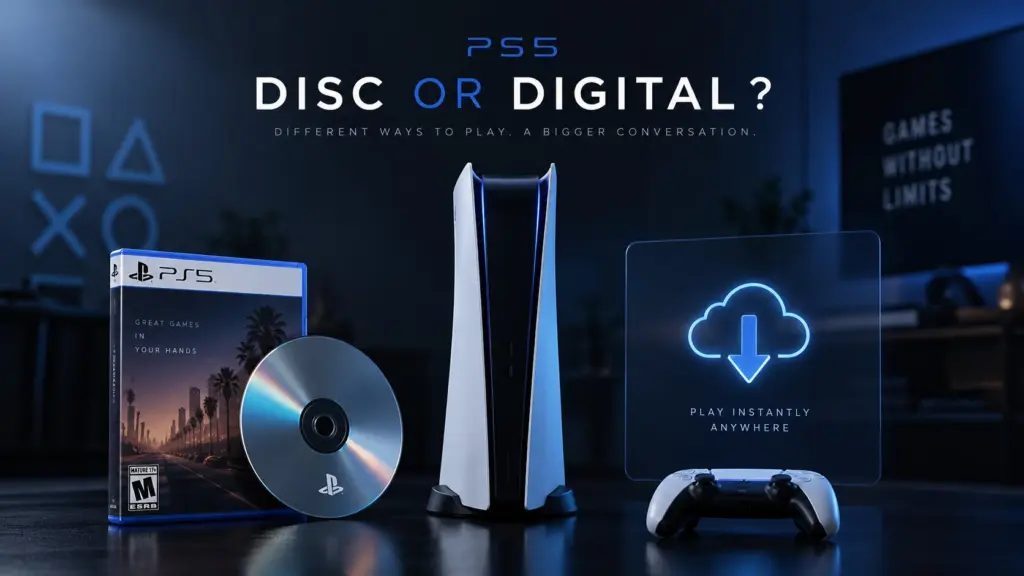
Former PlayStation executive Shawn Layden has also expressed reservations about the direction Sony is taking.
Speaking on The Expansion Pass podcast, Layden acknowledged the convenience of digital distribution but argued that players who continue purchasing physical games represent an especially committed segment of the PlayStation audience. He also raised questions surrounding the distinction between owning a game and obtaining access to it through a digital license, an issue that has become increasingly important as publishers move away from traditional physical distribution.
That concern is particularly relevant when considering the Wolverine figures. Even if physical buyers represent a minority across the overall market, they can still account for a substantial proportion of purchases for individual releases and in particular countries.
Physical games are still declining across the wider market
The September figures do not mean physical games are experiencing a broad recovery. The longer-term direction of the industry remains towards digital distribution, and physical software spending has fallen substantially from its historical peak.
Earlier US market data showed that physical game spending reached just $85 million in July 2026, its lowest monthly level in decades of industry tracking. In the United Kingdom, physical software spending also remains considerably below the levels recorded before digital distribution became the dominant purchasing method. Those figures help explain Sony’s commercial reasoning. Maintaining disc manufacturing, distribution, inventory and retail relationships becomes more difficult as the overall market contracts, even when particular blockbuster releases continue selling well in boxed form.
The more interesting question is whether a shrinking physical market is the same thing as a market that no longer deserves to exist. September’s figures suggest the answer may vary considerably depending on the game and country being examined.
PS5 hardware sales also surged in September
The physical software figures were accompanied by a stronger month for console hardware. According to NielsenIQ data reported by The Game Business, approximately 125,000 consoles were sold in the United Kingdom between August 23 and September 26, representing a 78% increase over the preceding monthly period and growth of nearly 10% compared with September 2025.
PlayStation 5 was the country’s best-selling console, with sales increasing 117% month-on-month and 24% year-on-year. Despite that recovery, PS5 hardware sales remained 26% lower across the year to date. Nintendo Switch 2 ranked second, recording a 70% monthly increase, while Xbox placed third with growth of 30% compared with August.
The stronger hardware performance coincided with a substantial release slate and growing anticipation surrounding major upcoming games, including Grand Theft Auto VI and Nintendo’s new Legend of Zelda release.
Are PlayStation players ready for an all-digital future?
The latest sales figures suggest there may not be one answer to that question. For many players, downloading a game directly to their console is already the default purchasing method. Digital stores offer convenience, immediate access and freedom from storing or changing discs, while subscriptions and online promotions have further accelerated the transition.
Yet the performance of Marvel’s Wolverine, Silent Hill: Townfall and other September releases indicates that physical copies continue to attract a substantial audience, particularly in markets such as France. The distinction becomes even more important for premium single-player games. Unlike continuously updated online titles, these releases can retain value as collectible products, making their boxed editions attractive to players who prefer tangible ownership or the ability to resell their purchases.
For Sony, the commercial advantages of digital distribution are clear, but September’s numbers suggest that removing physical editions altogether could affect consumers whose purchasing habits have not followed the industry’s digital transition at the same pace. Marvel’s Wolverine does not reverse the long-term decline of boxed games, nor does one successful month establish that Sony’s strategy is commercially mistaken. What it does demonstrate is that physical PlayStation games still command a meaningful share of sales when the right titles reach the market.
As Sony approaches its planned January 2028 transition, the question is no longer whether digital gaming represents the industry’s future. It is whether that future needs to arrive at the expense of a physical audience that, as September’s figures show, has not disappeared.