Tencent is still on the Pentagon’s list of Chinese military companies, and since June 30 the Tencent Pentagon blacklist has barred it from any contract with the US Department of Defense. On its own, the listing does nothing to BGMI, Valorant or any other Tencent-linked game in India. Washington’s restrictions govern what the US military buys and whom it signs contracts with. Tencent’s connection to Indian players runs through its investments, chiefly its stake in Krafton, the South Korean publisher behind Battlegrounds Mobile India (BGMI).
Tencent has been on the list for close to two years. It first appeared in a Federal Register notice published on January 7, 2025, and it stayed on the latest version of the list, which the Pentagon released in June this year. For India’s gaming industry, the open question is whether the US designation ever travels to New Delhi, or whether India decides to act against Tencent on its own.
What the Pentagon’s Tencent designation actually means
The list comes from Section 1260H of the National Defense Authorization Act (NDAA) for 2021. It requires the Pentagon to name Chinese companies it considers tied to the People’s Liberation Army (PLA) that operate in the US, and to revise the list at least once a year until 2030. The June 2026 notice runs to 188 entities and gives a one-line reason for Tencent: the department says it is indirectly affiliated with the PLA.
Getting to that version was messy. The Pentagon published an update in February 2026, withdrew it from the Federal Register without explanation, and put out a near-identical list in June. Tencent was on the final roster, alongside Alibaba, Baidu, BYD and CATL.
Until this year, a 1260H listing was mostly a reputational problem. That changed on June 30, 2026, when Section 805 of the 2024 NDAA took effect. The Pentagon can no longer sign, renew or extend contracts with listed companies or the businesses they control, and from June 30, 2027 the ban widens to any goods or services that contain something those companies made. A second rule that started the same day bars the Pentagon from hiring contractors whose lobbyists also work for listed firms. Bloomberg reported that Tencent lost four Washington lobbying firms in the weeks after the June update.
Markets took the original listing seriously. Reuters reported that Tencent’s Hong Kong shares fell 7.3% the day after the January 2025 designation, erasing about HK$275 billion in market value. Tencent called its inclusion “a mistake”, said it is neither a military company nor a supplier, and promised to work with the department to clear up the misunderstanding. Close to two years later, it is still listed. Alibaba, added this June, has gone to court to get off.
The listing is not a sanction. US companies can generally still do business with Tencent, and Riot Games, which Tencent has owned outright since 2015, still runs League of Legends and Valorant in America. What the Tencent Pentagon blacklist does is put the US government’s name to a security judgment about what is widely regarded as the world’s largest gaming company by revenue, and attach a growing set of procurement rules to it.
How Krafton found a workaround in India
India’s problem with Tencent predates Washington’s. In June 2020, after the deadly border clash in Galwan, the government blocked 59 Chinese apps, Tencent’s WeChat among them. On September 2 that year it blocked 118 more under Section 69A of the IT Act, including PUBG Mobile. The game had about 50 million monthly players in India at the time, more than any other mobile title in the country, and Tencent held its publishing rights here.
Krafton moved within a week. On September 8, 2020, its PUBG Corporation unit withdrew Tencent’s India licence and took over publishing itself. PUBG Mobile still went dark for Indian users on October 30, but the break with Tencent became the basis for its replacement. Krafton launched BGMI in 2021 as an India-only game that it published itself, and moved its servers to Microsoft Azure in India.
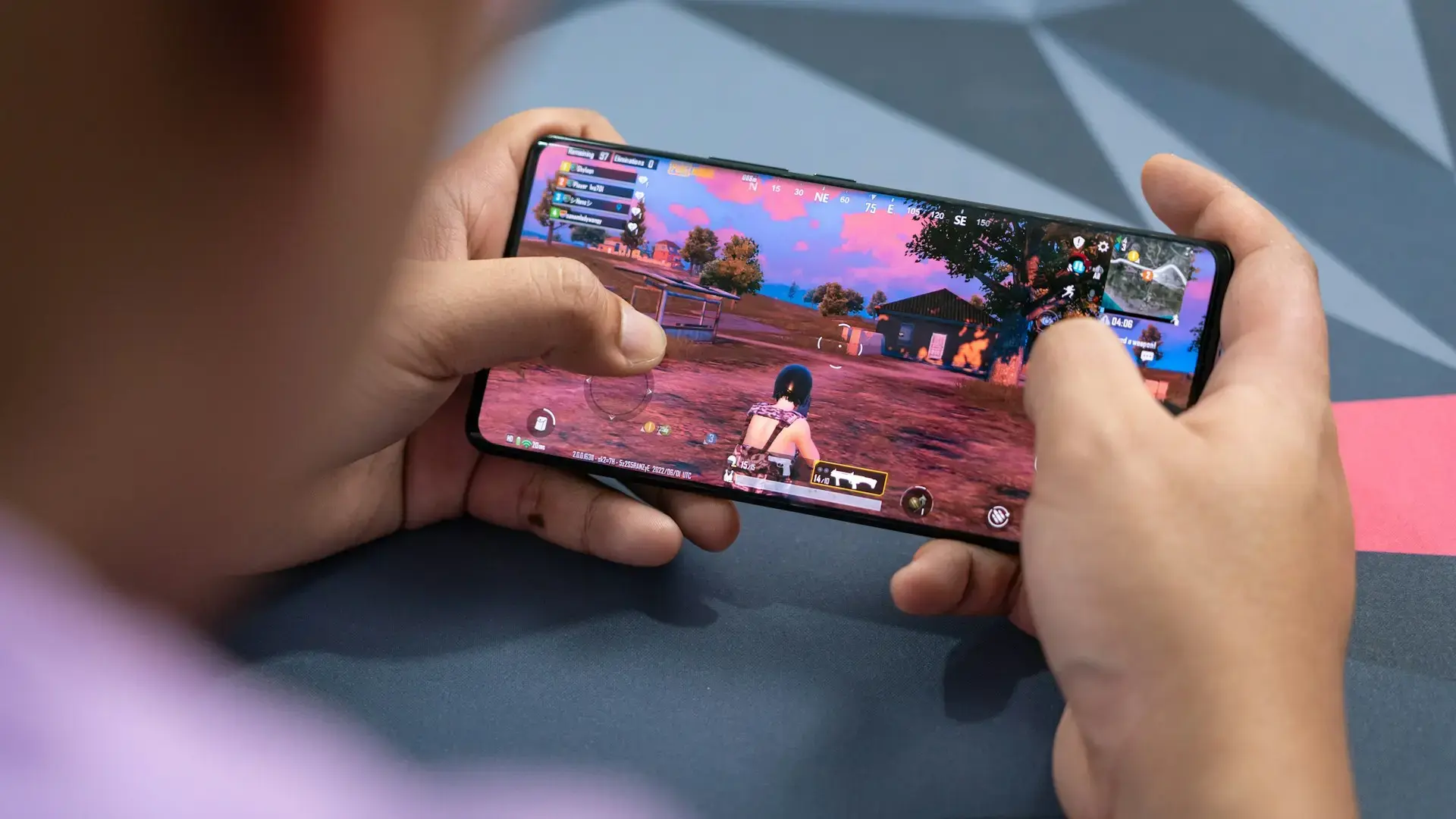
The workaround was tested in July 2022, when the government blocked BGMI as well, again under Section 69A. Krafton argued that its operations and data were independent of Chinese influence, and in May 2023 MeitY allowed the game back on a three-month trial. Rajeev Chandrasekhar, then Minister of State for IT, said the approval followed compliance on server location and data security. BGMI has stayed online since.
Krafton has built a large business on that arrangement. BGMI has passed 260 million downloads, and Krafton has put more than $250 million into India since 2021. In September, on the day chairman Chang Byung-gyu met Prime Minister Narendra Modi, the company pledged another $250 million for AI, robotics and deep tech. That comes on top of a $670 million India growth fund it set up with Naver and Mirae Asset in December 2025, and BGMI Lite is due before the end of this year.
Through all of this, Krafton cut Tencent out of every part of BGMI a regulator can inspect: the publishing licence, the servers and the handling of Indian user data. The one thing it left alone was the shareholding.
Tencent remains one of BGMI’s biggest beneficiaries
Through its Hong Kong vehicle, Image Frame Investment, Tencent owns roughly 13.9% of Krafton. That makes it the second-largest shareholder after Chang, and means close to a seventh of whatever value BGMI adds to Krafton belongs, on paper, to Tencent. The conditions New Delhi cited when it cleared BGMI in 2023 concerned servers and data security. Tencent’s stake was about 13.5% at the time and has barely moved since.
BGMI’s paying base is growing faster than PUBG Mobile’s. Krafton’s 2025 results show BGMI’s paying users up 27% on 2024, against 5% for PUBG Mobile, in a year when the company booked record revenue of ₩3.33 trillion (about $2.3 billion). Mobile, which covers both games, was its largest segment at ₩1.74 trillion. In the first quarter of 2026, the PUBG franchise, BGMI included, crossed ₩1 trillion in a single quarter for the first time.
Tencent’s tie to the PUBG name also goes beyond equity. It co-developed PUBG Mobile with Krafton and operates Game for Peace, the version sold in China. It earns from the franchise directly in China and through its Krafton shares everywhere else, India included. Every skin sold and every brand deal signed around BGMI here still adds to the earnings of a company whose second-largest owner sits on the Pentagon’s list.
Will the Tencent Pentagon blacklist reach India?
Not by itself. The 1260H list binds the US Department of Defense and the companies that sell to it. Indian regulators work under their own laws, chiefly Section 69A of the IT Act, and blocking orders under that section are kept confidential, which is why the 2022 BGMI block landed without public warning.
For now, New Delhi’s signals point the other way. Krafton announced its new $250 million commitment on the same day its chairman met the Prime Minister. Valorant, published by the wholly Tencent-owned Riot Games, runs in India without restriction, and BGMI Lite is on its way.
The risk has not gone away. India has moved against Tencent-linked products twice, with WeChat in 2020 and BGMI in 2022, and both orders arrived without advance notice. Teams, creators and tournament organisers who depend on BGMI have already lived through ten months of that uncertainty once.
The next date to watch is June 30, 2027, when the Pentagon’s ban extends to products and services that contain anything made by listed companies. That will matter to US defence suppliers using Tencent technology. For Indian players, BGMI’s standing rests on the server and data commitments Krafton made in 2023, and on the government continuing to accept them while Tencent stays on Washington’s list.