



There was a time when watching the LEC meant watching the LEC. You opened Riot’s broadcast, listened to Riot’s desk, followed Riot’s commentators and experienced European League of Legends largely through the product the league itself had assembled.
That relationship has changed. Increasingly, fans are not simply choosing which League of Legends match to watch. They are choosing who they want to watch it with.
For a significant part of the English-speaking audience, that person is Marc “Caedrel” Lamont. In France, Kamel “Kameto” Kebir and the community surrounding Karmine Corp represent another powerful example. Across languages and regions, personalities have become an increasingly important gateway into professional League of Legends.
Riot Games knows this. More significantly, it has actively encouraged it. Now the LEC Commissioner has acknowledged the uncomfortable consequence of that strategy: the league has developed a degree of dependence on the creators broadcasting it.
Riot knows the LEC depends on its creators
Speaking to Esports Insider following the 2026 season, LEC Commissioner Artem Bykov was unusually candid about the trade-off.
Co-streaming, he explained, has been a major bet for the LEC. Riot believes it has increased total viewership, but distributing a competition across 50 or 60 creator channels introduces risks that simply did not exist when the league controlled most of its audience through a handful of official broadcasts.
“There is a degree of dependence on the creators themselves.”
Artem Bykov, LEC Commissioner, speaking to Esports Insider
That sentence gets remarkably close to the central business question surrounding modern esports broadcasting. Co-streaming can make the LEC larger, more culturally relevant and accessible to audiences who might never voluntarily spend five hours watching a conventional studio broadcast. But it can also change who those viewers believe they are actually showing up for.
Caedrel is no longer just another way to watch League of Legends
The distinction matters. A successful co-streamer initially provides an alternative window into somebody else’s product. Eventually, if the personality becomes large enough, that relationship can reverse: the tournament becomes content for the creator’s community.
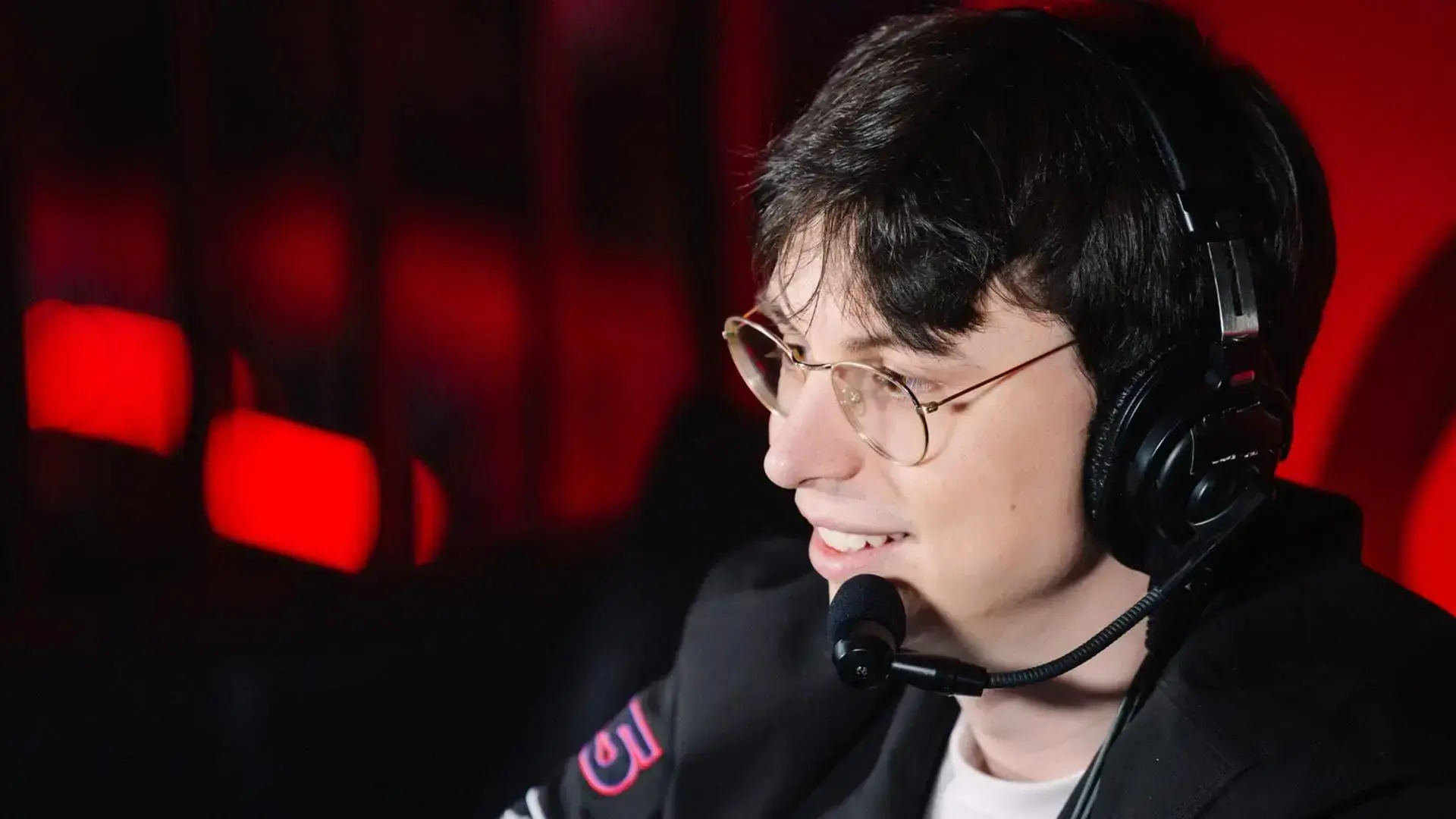
Caedrel is perhaps Europe’s clearest example of that transformation. He has gone from professional player and broadcast analyst to one of the most influential personalities surrounding competitive League of Legends. His audience follows his analysis, reactions and personality, but increasingly it also follows an ecosystem built around him.
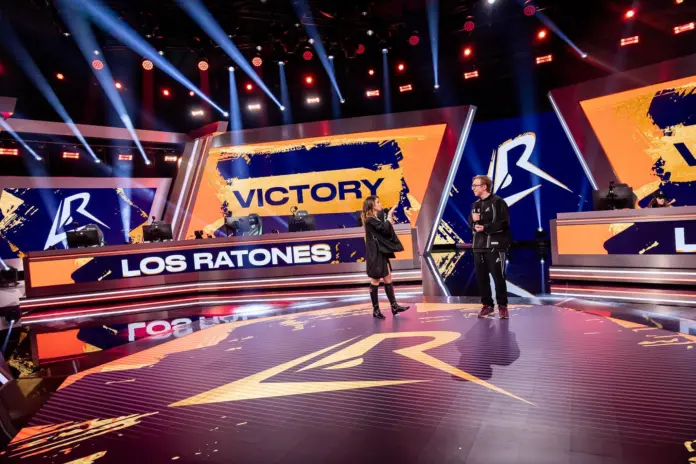
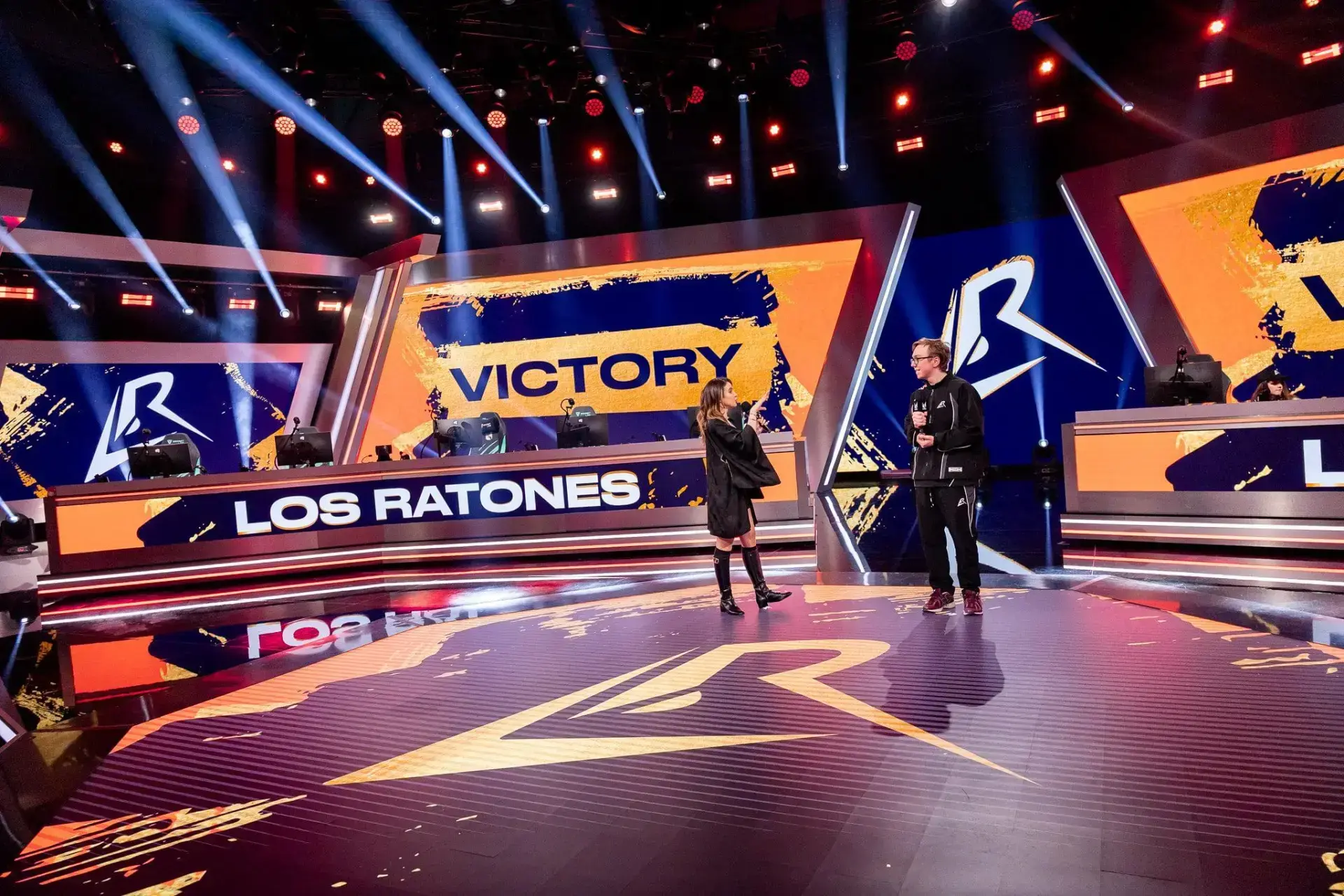
Los Ratones pushed that relationship into entirely new territory. Caedrel was no longer merely reacting to professional League of Legends; a team he created became part of the competitive product itself. That made LEC Versus a particularly revealing experiment, with Los Ratones entering Riot’s Tier 1 competition from Europe’s regional ecosystem while bringing an enormous existing audience with them.
The tournament ultimately peaked at 734,933 viewers and generated approximately 33.8 million hours watched, according to Esports Charts figures cited by Esports Insider. Those numbers make Riot’s decision to retire the format particularly interesting. As TalkEsport reported following Bykov’s confirmation, LEC Versus will not return in 2027, with Riot instead intending to give third-party tournament organisers room to explore competition between Europe’s Tier 1 and Tier 2 ecosystems.
Versus, in other words, was not simply an experiment nobody watched. It demonstrated that the boundary between Tier 1 competition, Tier 2 teams and creator communities could produce significant attention.
The disappearing viewer problem
This is where the conversation becomes more complicated than simply celebrating bigger numbers. If 100,000 people watch Caedrel cover an LEC match, those viewers are unquestionably consuming the LEC. Riot benefits from their attention, its teams gain exposure and sponsors are attached to a competition reaching an audience that might otherwise be smaller.
But what happens when Caedrel does not stream? A viewer whose primary relationship is with the LEC will probably find another LEC broadcast. A viewer whose primary relationship is with a creator may simply do something else.
The difference is enormous from a media-business perspective. One represents an audience the league owns. The other represents an audience the league can access. Those things can look almost identical on a peak-viewership chart, but they are not identical assets.
This isn’t Caedrel’s problem to solve
It would also be profoundly unfair to frame this as something Caedrel has done to the LEC. Creators are succeeding because they offer something audiences want. They can speak more freely, spend longer discussing individual moments, build recurring jokes and interact directly with viewers.
Most importantly, watching alongside a familiar personality can make a six-hour esports broadcast feel less like television and more like spending an evening with a community. Riot recognised that demand and deliberately expanded co-streaming rather than treating it as an unwanted competitor to its own broadcasts.
The strategy has since become part of the infrastructure surrounding League of Legends esports. Riot increasingly wants its competition to reach viewers through the communities and personalities they already follow, rather than insisting that every fan consume the same official presentation.
That makes the dependency Bykov acknowledged a consequence of Riot’s own successful distribution strategy, not evidence that creators have somehow taken something away from the league.
Kameto shows why the model is so powerful
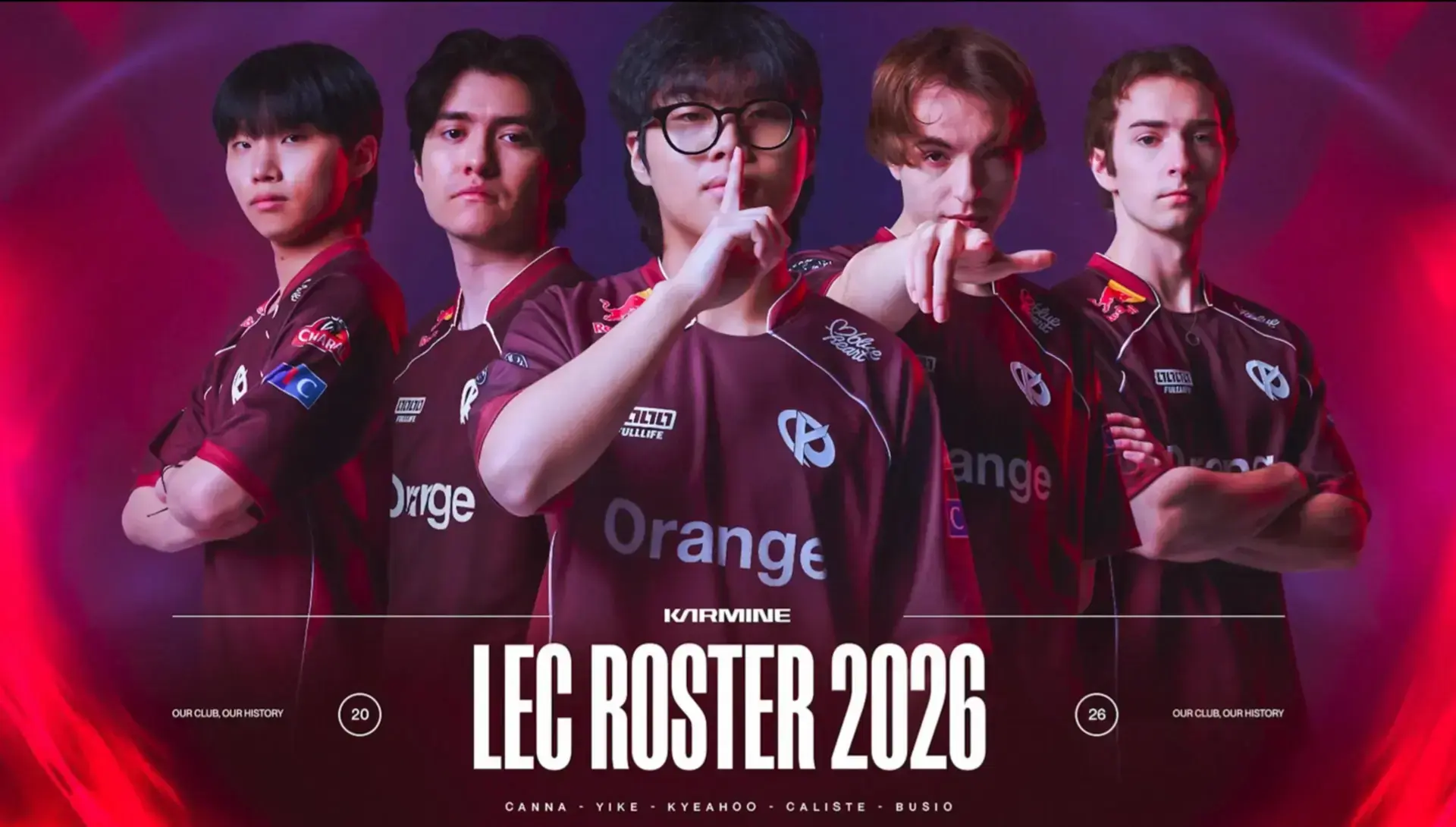
Caedrel is not the only reason this strategy is difficult to reverse. In France, Kameto and Karmine Corp demonstrate how a creator-led community can become intertwined with a professional esports organisation. Fans do not necessarily separate the team, its founder, the co-stream and the competition into different products. They experience them as parts of the same community.
For the LEC, that kind of loyalty is extraordinarily valuable. Karmine Corp can bring viewers, ticket buyers, social engagement and an atmosphere that a league cannot manufacture through advertising alone. It also illustrates the structural risk Bykov is talking about: the stronger the relationship between fan and creator becomes, the less control the league has over that relationship.
The official broadcast still matters
None of this means Riot should attempt to drag viewers away from creators and back onto one official channel. That would misunderstand why co-streaming became successful in the first place. The more important challenge is ensuring the LEC itself remains valuable regardless of who happens to be broadcasting it.
The official production still creates the underlying product. Riot operates the competition, employs observers and production crews, creates graphics, conducts interviews, builds stages and sends cameras into arenas. Co-streamers can reinterpret that product precisely because somebody has already spent considerable money producing it.
There is therefore a strange symbiosis at work. Creators need a compelling competition to react to, while the competition increasingly needs creators to maximise the number of people who care about it. Neither side replacing the other would necessarily improve the product.
The real danger of borrowed loyalty
The question for Riot is not whether Caedrel has become too big. Building personalities people genuinely want to spend hours watching is exactly what an entertainment ecosystem should want. The more important question is whether enough of that affection eventually transfers back to the competition.
If someone discovers the LEC through Caedrel and eventually becomes interested in Caps, G2, Karmine Corp or European League of Legends itself, co-streaming has expanded the league’s audience. The creator has functioned as an extraordinarily effective entry point into the product.
If that viewer watches only when Caedrel watches, follows only when his team participates and disappears whenever he does, the equation looks different. Riot has still gained valuable reach, but it has borrowed somebody else’s audience rather than created one of its own.
That distinction will become more important as esports matures. Traditional sports built competitions capable of surviving generations of commentators, players and broadcasters. Creator-led esports is moving in a different direction, putting increasingly powerful personalities between the competition and its audience.
That isn’t necessarily a mistake. It may simply be what internet-native sports look like.
Riot may be making the right bet, but it is still a bet
Bykov’s acknowledgement of creator dependence is therefore more important than it first appears. Riot understands the trade-off and, at least for now, believes the benefits outweigh the risks. Fans clearly want creator-led broadcasts, Riot can reach audiences across more languages and communities, and personalities can generate forms of engagement that a conventional esports desk simply cannot replicate.
The mistake would be assuming that every viewer reached through a creator automatically becomes an LEC viewer.
Caedrel has built something immensely valuable because people choose to watch Caedrel. Kameto has built something immensely valuable because his community chooses to follow Kameto and Karmine Corp. Riot gets to participate in those relationships whenever its competition becomes the subject of their attention.
For the moment, that arrangement is helping League of Legends esports reach people in ways its traditional broadcast cannot. But Bykov’s own words reveal that Riot understands the other side of the bargain. The LEC has gained powerful new distributors, storytellers and communities, while surrendering a small part of the direct relationship it once had with its viewers.
The future of the LEC may depend less on taking that relationship back than on making sure fans still care about the league when their favourite streamer finally turns off the camera.
