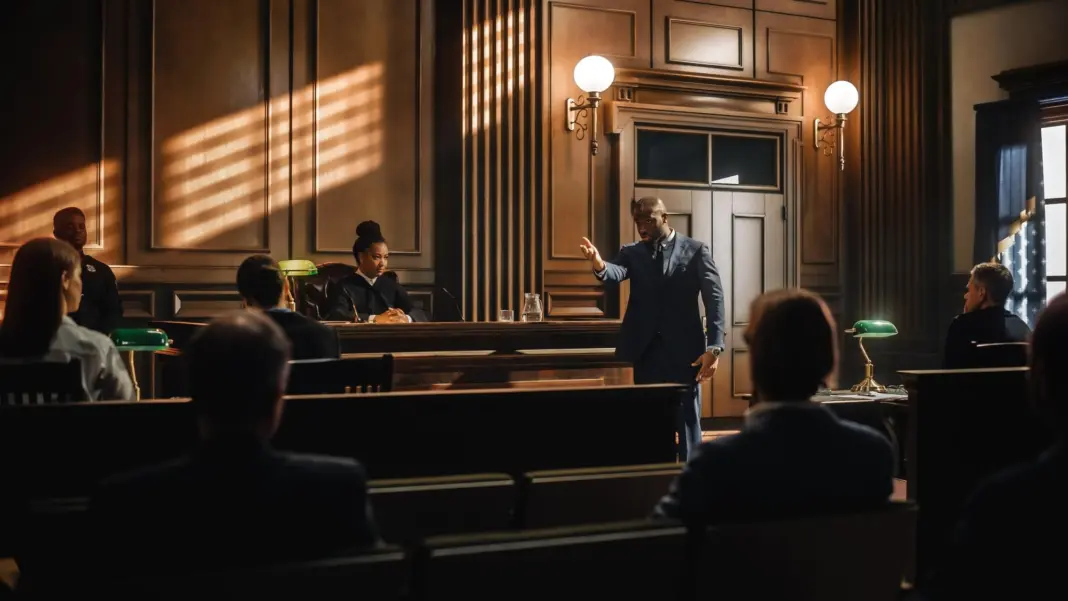
From Kaashvi vs 8Bit Thug and ESGF vs ESFI to fresh disputes involving team owners, contracted players and prominent esports personalities, India’s gaming industry is increasingly taking conflicts away from social media and into lawyers’ offices, police stations and courtrooms.
For much of Indian esports’ first decade, disputes tended to follow a familiar trajectory. A player left a team, an owner went live, screenshots appeared, creators picked sides, social media spent several days deciding who was right, and eventually the ecosystem moved on to its next controversy.
That model is beginning to break. Some of the biggest disagreements in Indian gaming are no longer ending with livestream explanations, deleted tweets or private settlements. Lawyers are being copied into emails. Police complaints are being filed. Anticipatory bail applications are reaching Sessions Courts. Questions surrounding the authority to represent India in esports have reached the Delhi High Court, while prominent personalities are publicly warning critics that they are prepared to litigate.
TalkEsport has also learned of multiple additional disputes developing behind the scenes involving major Indian esports organisations, team owners and contracted players, some of which could result in further legal proceedings if private efforts at resolution fail.
None of those cases should be treated as identical, and several remain allegations or potential disputes rather than adjudicated matters. Taken collectively, however, they reveal something important about where Indian esports finds itself in 2026: the industry has accumulated enough money, contractual value, institutional significance and reputational risk that its disputes increasingly have consequences too large to settle through social media alone. Indian esports is discovering the legal system.
Kaashvi vs 8Bit Thug changed the scale of an esports dispute
Perhaps the clearest example arrived in July, when gaming creator Kaashvi Hiranandani filed an FIR at Mumbai’s Santacruz Police Station naming Animesh “8Bit Thug” Agarwal amid allegations concerning financial transactions and brand deals from her association with 8Bit Creatives. Kaashvi alleged discrepancies between amounts brands paid for campaigns and figures disclosed to her, alongside other financial claims. Agarwal subsequently described the allegations as “false and misleading” and said he would allow the appropriate legal authorities to examine the matter rather than litigating it through public commentary.
TalkEsport reported the allegations and FIR in detail when the dispute entered the formal legal process, marking a significant departure from the social-media controversies that have historically characterised disagreements between prominent figures in Indian gaming.
What followed demonstrated the difference between an esports controversy and a legal proceeding. In September, a Sessions Court granted Agarwal anticipatory bail in connection with the FIR. The order required a ₹50,000 personal recognizance bond with sureties and imposed conditions relating to cooperation with the investigation, while the investigation itself remained active.
Our subsequent report on 8Bit Thug’s anticipatory bail also highlighted a distinction that becomes increasingly important as esports disputes enter the legal system: anticipatory bail is not an acquittal, just as the registration of an FIR does not establish guilt.
Those distinctions are routine in legal reporting but comparatively new territory for an esports audience accustomed to reaching conclusions through livestreams, screenshots and social-media statements. The dispute also concerns numbers that demonstrate how much Indian creator businesses have grown. According to FIR details previously reported by TalkEsport, Kaashvi’s allegations concern transactions running into crores of rupees across numerous transactions and invoices. Those figures remain part of allegations under investigation, but their scale alone illustrates why disputes inside modern gaming management cannot necessarily be resolved like disagreements from the industry’s early years.
ESGF vs ESFI asks an even bigger question, who actually governs Indian esports?
At another end of the industry, the dispute is not primarily about creator money, player transfers or social-media reputation. It concerns authority. The E Sports Games Federation has challenged the Esports Federation of India’s role surrounding the selection and representation of Indian esports athletes for the 2026 Asian Games, taking the dispute into the Delhi High Court.
The underlying question goes considerably beyond one tournament because recognition of esports as a sport does not automatically resolve every institutional question concerning which federation possesses the authority to administer national representation, how that authority should be exercised and what remedies exist when competing organisations disagree. The fact that such questions are now reaching legal proceedings is itself a milestone. Indian esports spent years debating whether competitive gaming deserved recognition alongside conventional sports; it is now confronting the considerably more complicated questions that arise after recognition, including governance, athlete selection, institutional authority and accountability.
Those are not uniquely esports problems. They are the same types of institutional disputes that established sports systems have spent decades taking before courts, tribunals and governing bodies. Esports has arrived there remarkably quickly.
Then came Sid vs LetsGrowEsports
The industry’s growing legal vocabulary has also entered its social-media disputes. S8UL manager Siddhant “Sid” Joshi recently publicly warned esports news account LetsGrowEsports that he was prepared to pursue legal action following an escalating dispute between the two sides. The disagreement moved from public posts into accusations concerning private communications and personal information, with both sides presenting sharply different accounts of what had occurred.
As TalkEsport reported, Sid said he was prepared to commit substantial personal resources towards pursuing the dispute legally, using unusually emphatic language to describe how seriously he was considering the prospect of litigation.
No publicly indexed lawsuit establishing that those proceedings have actually commenced had been identified at the time of that report, making this materially different from the Kaashvi FIR or proceedings already before a court.
But the language itself is significant. Five years ago, an esports personality unhappy with a community page might have demanded an apology, organized a livestream or fought the argument through quote tweets. In 2026, one of the industry’s most recognisable managers is openly talking about financing litigation. That represents a cultural change as much as a legal one.
Scout has also begun talking about legal recourse
Tanmay “Scout” Singh has similarly referred publicly to the possibility of taking legal action in response to disputes and statements surrounding him. At present, TalkEsport has not independently identified a corresponding public court filing that would justify describing Scout’s comments as an active lawsuit, meaning his remarks belong in the category of potential legal action rather than a filed case.
That distinction matters throughout this discussion. Indian esports currently contains several different forms of legal conflict that are frequently conflated online: actual court proceedings, police complaints and investigations, contractual disputes being handled through lawyers, and personalities publicly threatening or considering legal remedies.
They are not interchangeable, yet the fact that legal recourse has entered the vocabulary through which prominent esports personalities think about reputation, contractual disagreements and public accusations is revealing in itself.
TalkEsport is hearing of more disputes behind closed doors
The cases already in public view may represent only part of what is developing. TalkEsport has learned from sources familiar with separate disputes that owners associated with two major Indian esports organisations are considering legal recourse against one another.
Because proceedings have not been publicly filed and TalkEsport is continuing to corroborate the underlying dispute, we are not identifying the organisations or individuals involved at this stage. The significance lies in the nature of the disagreement. A legal conflict between owners of major organisations would represent a substantially different category from a creator dispute or social-media argument because esports organisations increasingly operate as formal businesses with investment, intellectual property, sponsorship obligations, player contracts and commercial relationships extending considerably beyond competitive results.
TalkEsport has separately learned of another situation in which an esports organisation is considering legal action involving players who allegedly exited while still bound by contractual obligations.
No finding has been made concerning whether those players breached enforceable contracts, and TalkEsport is withholding identifying details while verification continues. The underlying issue, however, is one the Indian ecosystem will increasingly have to confront as player salaries, transfers and contractual obligations become more valuable.
The handshake era of esports contracts is ending
Player movement in early Indian esports could be remarkably informal. Teams formed between friends, rosters changed overnight, tournament winnings sometimes substituted for salaries, and agreements could exist through conversations rather than detailed contracts negotiated with professional legal advice. That becomes considerably harder once organisations are investing substantial money into players.
A modern player agreement can govern salary, tournament obligations, streaming hours, image rights, sponsorship exclusivity, transfer restrictions, confidentiality, intellectual property, termination rights and the circumstances under which either party can leave.
When a player walks away from such an agreement, the question is no longer simply whether the organisation feels betrayed. It becomes a contractual question. Was the agreement enforceable? Did the organisation fulfil its own obligations? Was there a valid termination clause? Did the player provide the required notice? Was compensation owed? Were restrictive provisions reasonable? Did either party commit a prior breach? Those questions cannot be answered by follower counts, community polls or whichever party produces the most convincing livestream. They are precisely the type of questions that courts, lawyers and dispute-resolution mechanisms exist to determine.
Money has changed what is worth fighting over
There is a straightforward economic explanation for much of this transformation: Indian esports used to have relatively little to litigate over, and that is no longer true. Creators can generate substantial revenue through sponsorships. Organisations sign commercial partnerships with major consumer brands. Players receive salaries and prize money. Talent-management companies negotiate campaigns worth lakhs or crores of rupees. Tournament operators control valuable media and sponsorship inventory, while federation decisions can determine who represents India at major international competitions.
As the economic value of those relationships increases, so does the cost of a dispute. A disagreement over a relatively small tournament payment might once have been grudgingly written off, whereas a disagreement involving crores in alleged commercial transactions, a valuable player contract, national-team selection or damage to the reputation of a major organisation is considerably harder to resolve with a Discord call.
This is not necessarily evidence that Indian esports has become more hostile. It may simply mean that there is finally enough at stake for legal rights to matter.
Reputation has become an asset worth protecting
Money is only half the equation. Indian gaming personalities now command audiences comparable to mainstream entertainers, and esports organisations increasingly depend on reputational trust when negotiating sponsorships, recruiting players and attracting investment. A serious allegation published online can therefore have consequences extending well beyond hurt feelings.
It can affect brand negotiations, employment, commercial partnerships and an individual’s ability to operate professionally. That helps explain why defamation, privacy, confidentiality and reputational disputes are increasingly likely to move towards lawyers rather than remaining entirely within social media. At the same time, legal threats cannot become a mechanism for insulating powerful esports figures or organisations from legitimate journalism and criticism. Public figures and businesses retain legal remedies against unlawful statements, while journalists, creators and community accounts must remain able to report verifiable information, express protected opinions and scrutinise organisations without assuming that every threat of litigation establishes wrongdoing. The maturation of Indian esports therefore requires better legal literacy on both sides.
There is another reason the transition may ultimately be healthy. Indian esports has historically tried far too many cases on X, Instagram and YouTube. An accusation appears, screenshots follow and a livestream begins. Friends of both parties join the discussion, private messages are selectively published and thousands of viewers begin forming conclusions before the person being accused has even responded.
Within hours, a complicated commercial or personal dispute can be reduced to hashtags and fan camps. The legal system is slower and substantially less entertaining, but that is also the point. Courts require evidence, police investigations operate through procedures, contracts contain language that must be interpreted and both parties have an opportunity to be represented. Assertions can be tested rather than rewarded according to which side possesses the larger audience.
The legal process is imperfect, expensive and often painfully slow, but an industry cannot simultaneously demand to be treated as a serious professional sector while expecting its most consequential disputes to be adjudicated through livestreams.
Indian esports may now need specialist lawyers almost as much as coaches
The next phase of professionalisation may consequently happen outside the server. Major organisations already employ managers, analysts, coaches, content teams and commercial executives. Increasingly, they will also need lawyers who understand the peculiar overlap between sports law, employment and contract law, intellectual property, media, digital platforms and corporate governance.
Players need representation too. A young competitor receiving a first professional contract should understand what happens if he or she wants to leave six months later. A creator signing with a talent-management company should know exactly how brand revenue is disclosed and commissions are calculated. Organizations need agreements that protect legitimate investments without imposing provisions that would not survive legal scrutiny. Federations similarly need governance structures capable of answering questions about authority, selection and accountability before those questions require judicial intervention.
The industry has spent years professionalizing everything visible. Jerseys improved, tournament production became more sophisticated, prize pools grew, bootcamps developed and sponsorship decks became increasingly corporate. The paperwork now has to catch up.
The courts are becoming part of Indian esports’ infrastructure
There is an understandable temptation to look at the growing list of legal disputes and conclude that something has gone badly wrong inside Indian esports. The opposite interpretation may ultimately prove more accurate. A sector becomes legally complicated when it becomes economically and institutionally consequential.
Traditional sport has spent decades dealing with contract disputes, federation battles, disciplinary proceedings, image rights, sponsorship conflicts and disagreements between athletes and organisations. Entertainment industries routinely litigate over management agreements and commercial rights, while businesses turn to courts or arbitration when contractual relationships break down. Esports was never going to remain exempt once it reached comparable levels of professionalisation. The concerning part is therefore not that Indian esports personalities and organisations are beginning to use lawyers and courts. The greater concern would be entering that era without the contracts, governance, transparency and legal literacy necessary to handle disputes responsibly.
Kaashvi and 8Bit Thug’s dispute has already entered the formal criminal-justice process, where allegations are being investigated and legal protections are being determined through established procedures rather than social-media consensus. ESGF and ESFI are contesting questions surrounding esports governance through the courts. Sid has publicly discussed litigation against a media account, while Scout has spoken about potentially pursuing legal remedies of his own.
Beyond those public cases, TalkEsport is now tracking additional disputes involving major organisation owners and player contracts that could also result in legal proceedings if they cannot be resolved privately. Not every threatened lawsuit will ultimately be filed. Not every allegation will be proven. Not every contractual demand will be enforceable, and the party that approaches a court first does not automatically become the party that is legally correct.
That is precisely why courts, investigations and formal dispute-resolution mechanisms exist.
What appears to be changing is the industry’s understanding of when those mechanisms become necessary. As Indian esports accumulates larger businesses, more valuable contracts, increasingly influential personalities and institutions responsible for representing the country internationally, disagreements that once might have ended with a livestream can now carry consequences extending into careers, companies and substantial amounts of money.
Indian esports spent its formative years building teams, tournaments, audiences and businesses. Its next phase may be defined by something considerably less glamorous but equally important: learning how those businesses protect their rights, honour their obligations and resolve disputes when relationships break down. For an industry that has spent years asking to be taken seriously, the arrival of lawyers, contracts and courtrooms may be one of the clearest indications yet that it finally is.