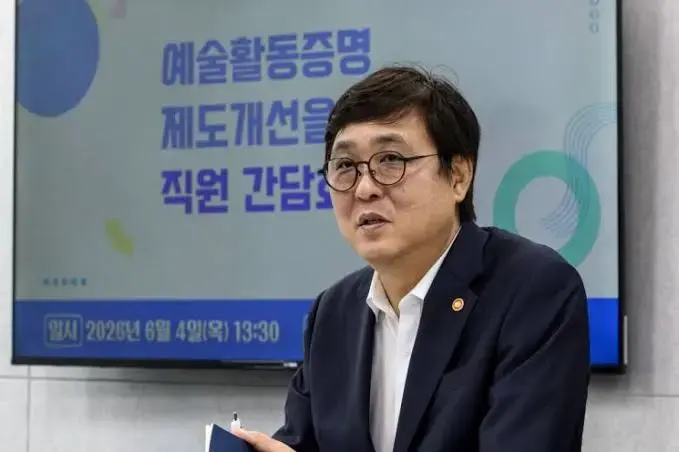
South Korea’s culture ministry plans to support major game development, independent studios and training for an industry adapting to AI. Culture, Sports and Tourism Minister Choi Hwi-young outlined those priorities during an October 23 parliamentary audit, acknowledging slowing growth and pressure from Chinese competitors.
According to Inven Global, he said support had been reflected in next year’s budget plans. The ministry’s published proposals show where that support would go. Its 2027 budget outline includes 43.9 billion won for game planning and production programmes covering Global Frontier projects, indie titles and other initiatives.
The proposal also places games within a wider content-industry funding programme, linking support for individual productions with the government’s broader cultural-sector ambitions.
Ministry proposes more funding for game development
The ministry’s 2027 budget document shows a 10.5 billion won increase for the game planning and production category. Its overall proposed content-sector budget is 1.7719 trillion won. The 43.9 billion won figure covers the specified production-support category, rather than the government’s entire gaming budget. It remains a proposed allocation, with individual awards and delivery requiring separate implementation.
At an October 20 advisory meeting, Choi gave further details of the intended support. Yonhap reported that the new Global Frontier production-support programme had been allocated 6 billion won in the proposal. Planned indie creation funding would increase from 9.3 billion won to 13.8 billion won. The ministry’s announcement of that meeting also identified young talent as a priority alongside flagship projects and independent games.
During the parliamentary audit, Choi also described preparations for training and practical experience as AI changes game production. That places workforce development alongside financial support for studios.
Esports is another area where Choi has identified a role for government. At the October 20 meeting, he advocated wider inclusion of Korean-developed games in domestic and international sports competitions. He discussed beginning with youth and national sports events and coordinating policy and funding with Korean Sport & Olympic Committee president Yoo Seung-min. No specific title was confirmed for inclusion through those remarks.
The ministry’s 2024–2028 game-industry promotion plan already includes esports development, specialist training and employment support. It also calls for a stronger console-game ecosystem, assistance for creative indie developers and export strategies tailored to major markets. These priorities show the range of work the ministry has set itself, spanning production, international distribution and careers. The new spending proposals would support parts of that existing agenda.
Ministry faces pressure to turn commitments into support
Committee chair Lee Jae-jung pressed the ministry to address smaller studios’ vulnerability, overseas movement of Korean game technology and intellectual property, and AI’s impact on workers. She also urged it to assess policy from players’ perspectives.
Several industry requests remain unresolved. At the October 20 meeting, Choi said game-production tax credits had not been included in the following year’s plans and required further public discussion. He also described continuing talks with the labour ministry over more flexible working arrangements. Those discussions underline that additional production funding does not settle the industry’s wider policy demands.
Choi committed to attending G-STAR after missing the previous edition because of parliamentary scheduling. For developers, the substantive measures remain the proposed production funding, talent programmes and esports initiatives. The documents and remarks set out the ministry’s intended direction; funding awards, competition selections and outstanding policy decisions still require follow-through.