
Britain wants under-16s to keep being matched with strangers in online games while switching off in-game chat with strangers. Ian Murray, the minister in charge of online safety, set out the plan to MPs on 2 November, and a gamers’ group has warned it could cut young players off from their communities.
Murray, whose formal title is Minister for Creative Industries, Media and Online Safety, was closing a Westminster Hall debate on a petition against the planned under-16 social media ban, which 217,682 people had signed. When he turned to games, he described “stranger communications” as “the biggest problem with Roblox” and said they would be tackled in a later set of rules on risky features.
“That will allow gamers to continue to have the functionality of stranger pairing, but without the ability to talk to strangers in a gaming context,” he told MPs. Matchmaking would survive but the conversation would not, because Murray says a lot of the harm happens when vulnerable children are taken from a game onto other platforms where grooming continues.
Gaming is the “plus” in Britain’s Australia-plus plan
The policy itself dates back to June, when Liz Kendall, then Science and Technology Secretary, told the Commons that social media companies would no longer be allowed to serve under-16s. She added that the government would also “ban communication with strangers, including in gaming, to stop paedophiles meeting and grooming children.”
For readers outside Britain, the template is Australia, whose under-16 social media ban took effect in December 2025 but left online games out. Murray calls the UK version “the Australia-plus model” for exactly that reason, since under-16s will lose livestreaming and stranger contact on gaming services, while 16 and 17-year-olds will have both switched off by default.
The government has yet to draw the finer lines, since neither its official fact sheet nor its July consultation response separates voice chat from text chat or defines a stranger. The fact sheet does say children can still keep in touch with friends and family they know. That makes the “voice chat ban” now doing the rounds on social media a loose label for a proposal aimed at strangers rather than voice alone.
Timing is also unsettled, because the first regulations, covering the social media ban itself, will be laid in December and take effect in late spring 2027, Murray said. They rely on powers in the Children’s Wellbeing and Schools Act 2026, while the rules on stranger chat will follow later and still have no date.
Gamer’s Voice says gaming is not social media
The loudest pushback so far has come from Gamer’s Voice, a not-for-profit consumer group that calls itself the UK chapter of the Stop Killing Games campaign. Its co-founder and spokesperson, Tom Shannon, put the case plainly on 3 November: “Gaming isn’t simply another form of social media.”
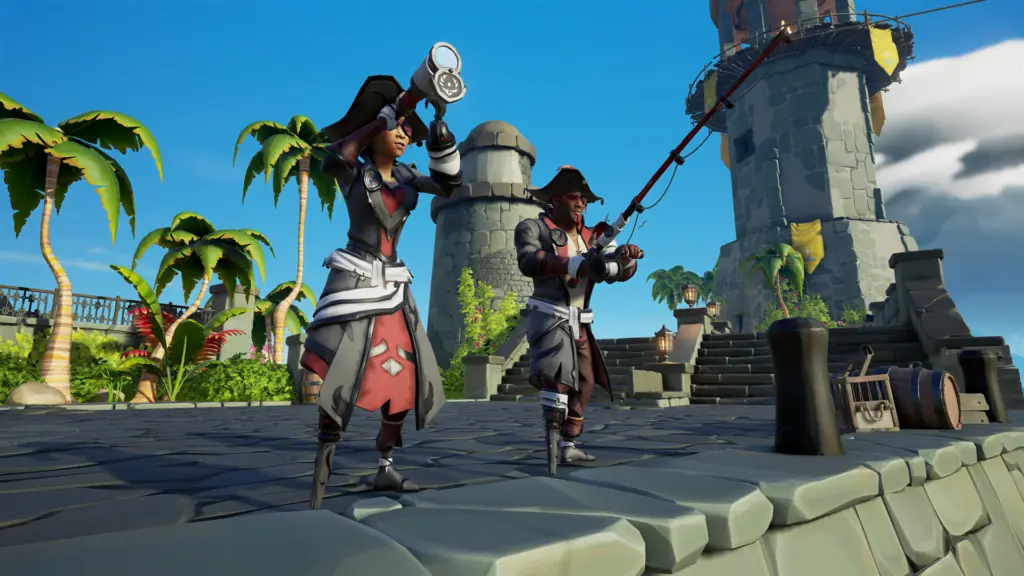
Talking is part of how many multiplayer games are played, the group argues, and in Sea of Thieves, from British studio Rare, players can hear crews they meet at sea by default. Shannon also warned about privacy, saying “British gamers should not have to surrender their personal information simply to participate in an ordinary social activity.”
The group also fears that older games no longer in development could not realistically be changed, leaving publishers to restrict them in Britain. Instead of blanket limits, it wants trusted community volunteers, better reporting tools and support for young people who face abuse, borrowing from the way sports clubs and youth groups are kept safe.
The group’s own post on X went further than the minister, claiming that all in-game chat would sit behind an ID gate, whereas Murray spoke only about talking to strangers. The government’s case rests on harm, and Murray told MPs he has spent a lot of time with grieving families since taking on the online safety brief.
He also cited the “Growing up in the online world” consultation, which drew more than 116,000 responses, with nine in 10 responding parents backing a ban. Ukie, the UK games industry trade body, told Esports News UK in June that it welcomed the recognition that games are distinct from social media and offered to be a technical partner to government.
Age checks are where the plan will be tested
None of this works unless platforms know who is under 16, and Murray said ministers are still weighing whether checks should happen at app store, device or platform level. Ofcom, the UK communications regulator, published a rapid assessment on 29 October naming four methods it considers capable of being highly effective at 16.
Those are photo ID matching, banking information, digital identity services and facial age estimation, although Ofcom noted there is less choice at 16 than at 18 and that photo ID is the likely backstop. Some platforms are already moving in this direction, with Roblox requiring a facial age check to use chat worldwide since January to keep under-16s away from adults.
Ofcom says it will consult on draft guidance for age checks at 16 once the regulations are laid, which Murray has promised will happen before Parliament breaks for Christmas.