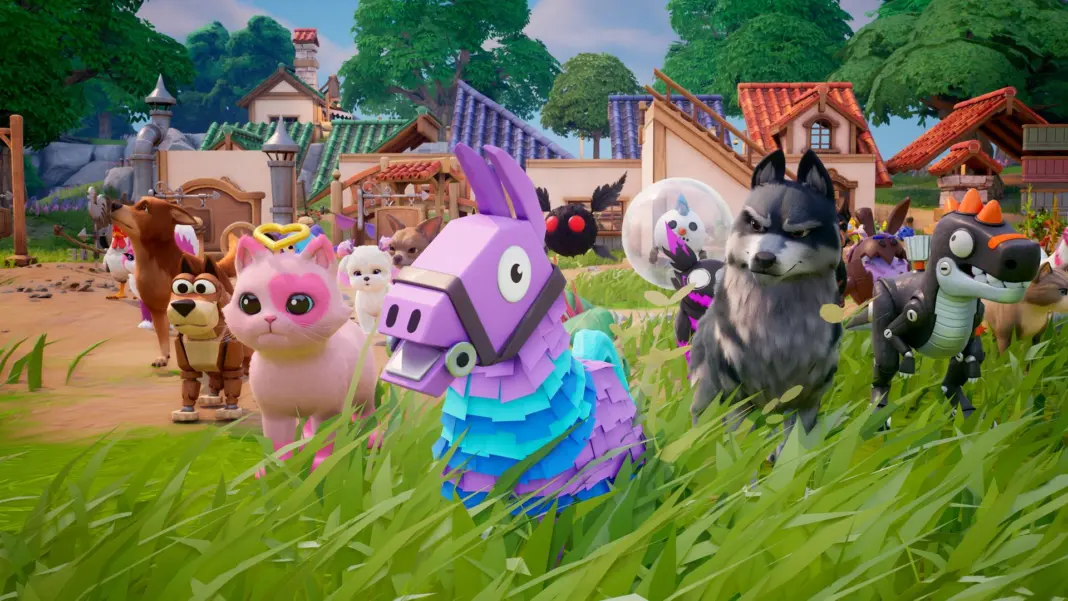
Epic Games is investigating a Fortnite bug that makes Sidekick NPCs invisible on creator-made islands, following reports on October 1. The problem concerns characters that developers can build activities around, including creature battles, farming games and companion adventures.
For an island that asks players to find, follow or fight a creature, losing sight of that character could disrupt the activity itself. The extent of that disruption remains unclear, but Epic has now acknowledged the visibility issue.
In an October 1 addition to its v42.30 known-issues thread, the company stated:
“We’re investigating an issue where NPC Sidekicks are invisible on developer-made islands.”Epic Games
What creators are reporting about invisible Sidekicks
Developer vageuly reported testing multiple islands on PC and Nintendo Switch 2, with Sidekick models failing to appear. According to the post, the devices associated with those characters remained visible, but the Sidekicks themselves did not.
Other contributors described additional symptoms. Giddybrom said the NPCs retained collision and despawn effects despite having almost no visibility or sound. VarunAiyar also reported that Sidekicks did not appear in UEFN live sessions, where creators test their projects. Epic staff member Flak responded to the thread and subsequently confirmed that the team was investigating. TalkEsport reviewed the public reports and Epic’s acknowledgement but has not independently reproduced the bug.
Those accounts suggest the problem warrants investigation beyond a single island. However, they do not establish that every map using Sidekicks, or every platform, experiences identical symptoms.
Why Sidekick NPCs matter to Fortnite’s creator games
Epic introduced scriptable Sidekick NPCs in June 2026, with publication of islands using the feature opening on July 23. Its announcement specifically encouraged monster battlers, creature-collection RPGs, farming games and adventures built around companions. The feature gives creators control over how those creatures behave, alongside their appearance and size. Epic’s Sidekick creation documentation explains how developers connect a character definition to an NPC Spawner and use Verse code to design custom behaviour.
That flexibility lets a familiar pet become an opponent, a quest companion or part of an island’s progression. If its model disappears, players could struggle to identify a target or understand what an interaction requires. Those are potential consequences of the reported symptoms, rather than confirmed outcomes across every affected game.
TalkEsport has previously covered the growth of Fortnite Creative and its creator payouts. Developers ask players to invest time in these experiences while relying on Epic’s underlying systems. A fault in a shared character feature can therefore become a problem for the game built around it.
Does this affect purchased Sidekicks?
Epic’s acknowledgement specifically identifies NPC Sidekicks on developer-made islands. It does not confirm deleted purchases, missing Locker items or a failure affecting all Sidekick cosmetics in Battle Royale.
Players may be more familiar with companions such as the Kitsune Sidekick covered in TalkEsport’s guide. These can accompany a player as cosmetics, whereas creators can give NPC Sidekicks a role within an island’s gameplay. There is some overlap: Epic’s Cosmetic Sync feature lets an NPC take the appearance of a player’s equipped Sidekick. However, a visibility problem involving an island’s NPC does not, by itself, demonstrate that the player has lost ownership of the corresponding cosmetic.
Has Epic announced a fix?
The latest October 1 notice reviewed by TalkEsport says the investigation is continuing. It does not provide a confirmed cause, a repair date or an official workaround. Creators documenting the issue can make their reports more useful by including an island code, the platform used and footage of the expected interaction. Distinguishing a missing model from a character that never spawned would also help clarify the symptoms.
For games built around feeding, collecting or battling creatures, those details matter. Restoring the characters’ visibility is essential to letting players understand the encounters and activities their creators designed.