
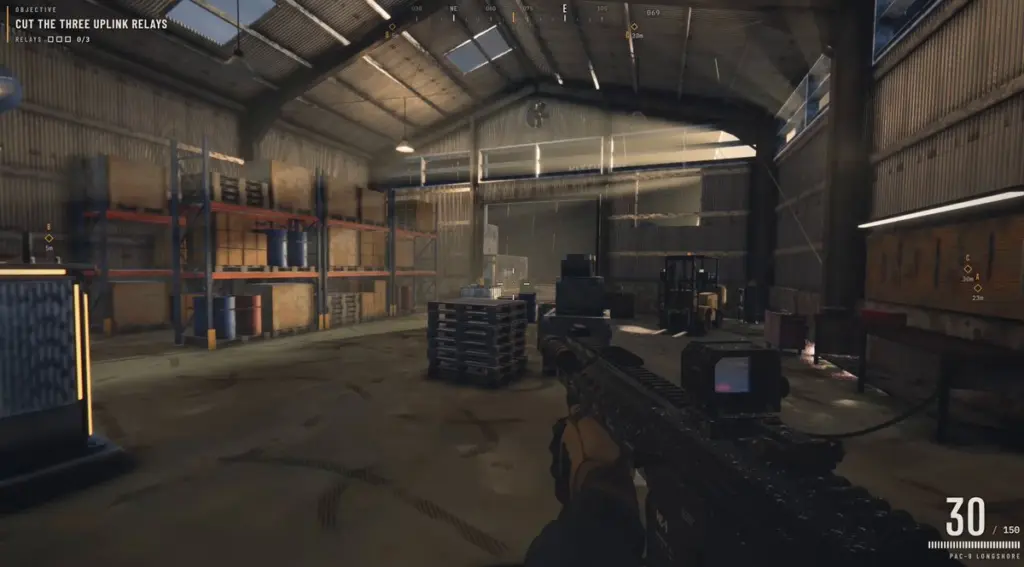
Within a day of its launch, Claude Fable 5.2 had turned X into a showroom for games that nobody coded by hand. Anthropic released the model at 18:58 UTC on 9 November, and its announcement post passed 12.6 million views by Tuesday. Users quickly began posting shooters, racing games, a boat ride through dreamlike worlds and a medieval MMO village, all built by the model. The most shared demo came from Felix Rieseberg, who works at Anthropic, and whose first-person shooter had close to a million views.
Rieseberg said he wanted to test the model “with one-shot prompts without human feedback”. According to his post, everything in the game, from the 3D models to the sounds and textures, was made from scratch over eight hours. He put the cost at about $550 at API prices, using around 2.7 million output tokens and 445 million input tokens, most of them cached. The game is playable in a browser, and footage from it shows an objective to cut three uplink relays inside a warehouse.
Fable 5.2 is the third model in Anthropic’s Fable line since June, and the company describes it as its most capable model for technical work. Its official page lists building “interactive 3D worlds” among its strengths, alongside coding, research and robotics. It also quotes a creative technologist at Unity, who says the model is “very strong on the harder game-dev tasks”. Anthropic cut the API price to $8 per million input tokens and $40 per million output tokens, down from $10 and $50 for Fable 5.1, and the benchmark scores on its page are the company’s own.
What people are building with Claude Fable 5.2
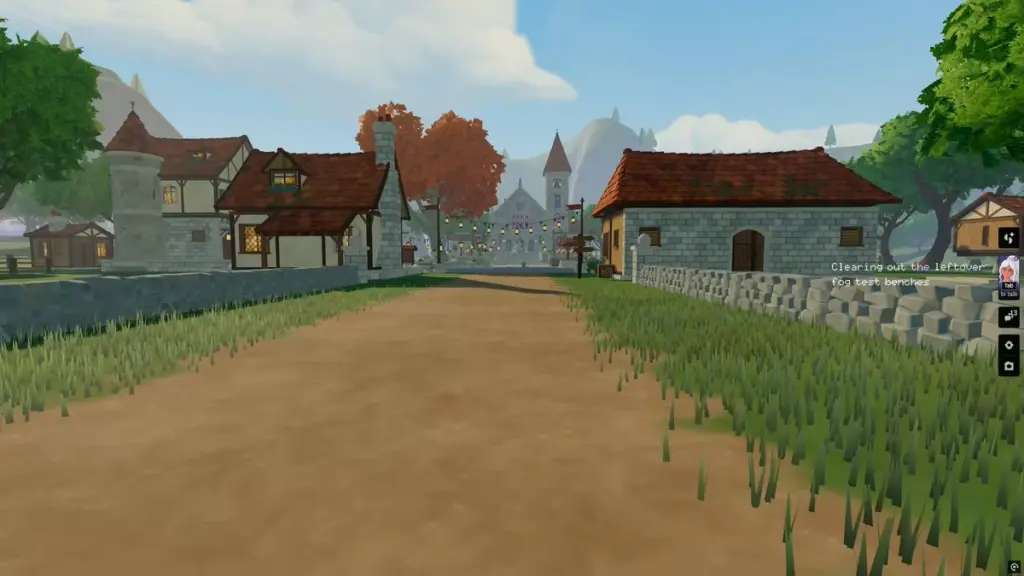
The demos cover most of the genres that fill a storefront. Creative coder Kevin Ngo posted a boat ride through eight dreamlike worlds, playable in the browser, which passed 320,000 views. Another user, Izkimar, said he built an entire MMO world in a single day, and that “every single asset you see was generated from code”. He argued that stylised art was a bigger test for the model than hyperrealism, and his footage shows a village of stone cottages, dirt paths and autumn trees.
The most ambitious claim came from the user ericmaskfr, who posted a Grand Theft Auto style city just over a week before GTA 6 launches. He said it took a single prompt, 2 hours and 14 minutes and a $200 subscription plan. His list of features includes a five-star wanted system, carjacking, a garage with paint jobs and neon underglow, nine districts and a day-to-night cycle. He also claimed that an indie studio would quote $90,000 and eight months for a similar prototype, a figure he did not source.
Not every early user was impressed by what the model produced. One user wrote that Fable 5.2 needed “much longer, highly specified prompts” than he expected, and called it “much higher friction to use” after a few hours of testing. Many of the most viral clips also came from people with early access, enthusiast accounts or companies that sell AI tools. None of the projects is a finished commercial game, and TalkEsport has not tested how they hold up beyond the footage shared on X.
Unreal Engine 5.9 shows studios are moving the same way
The bigger signal came from Epic Games, four hours before Fable 5.2 arrived. On 9 November, Epic released the Unreal Engine 5.9 MegaJam Preview, which it called “the first Unreal Engine release built primarily with agentic workflows”. According to Epic, a handful of people directed fleets of agents to port AI tools from its UE6 branch, and agents wrote the code for a new web platform. Engineers directed, reviewed and tested that work, and Epic admits it is “still cleaning up some of the agent-written code”.
The preview also hands those agents to developers. A new Unreal Assistant panel lets creators use Claude Code, Codex, Cursor or OpenCode inside the editor, connected to an expanded Unreal MCP. Epic says that toolset now covers rendering, profiling, debugging, gameplay testing, audio, UI and level creation, and can even install assets from its Fab store. The release arrives just before the Epic AI MegaJam, which runs from 12 to 15 November.
Publishers have been testing the same models for months. Krafton’s experiments with AI teammates in PUBG put Claude’s cost at $7.10 per match, and hobbyists have used Claude to bring old games back to life. The latest is the Cricket 07 port to Unreal Engine 5, which its developer described as a bare skeleton less than a week before its first playable build.
The limits: fun, licences, money and the people who make games
The price comparison is what makes these demos so striking. Felix Rieseberg’s shooter cost about $550 to generate, while Gears of War: E-Day reportedly cost more than $500 million to make. A vertical slice is not a finished game, though, and most of a studio’s budget goes on what comes after the first playable level. Content volume, balancing, testing, online infrastructure, platform certification and years of updates are where large teams spend their time and money.
Licensing is another problem, because many of the viral demos borrow from famous franchises. Clones of GTA and Gears of War make good clips, but publishers have already shown they will act, as Activision did when it shut down AI-built Call of Duty browser ports in October. Original ideas, characters and art direction still have to come from someone, and fun remains hard to judge from a 30-second video.
Developers are also deeply divided on the technology. In the GDC 2026 State of the Game Industry report, 52% of more than 2,300 professionals said generative AI was having a negative impact on games, up from 30% a year earlier. The same survey found that 36% were already using it at work, and that 28% had been laid off in the previous two years. Valve’s Steam disclosure form, updated in January, asks developers to declare AI content that “ships with your game, and is consumed by players”.
What has changed this week is the speed at which one person can test an idea. A playable prototype used to need a team, weeks of work and a budget, and it now takes a prompt, a few hours and a few hundred dollars. Whether that produces better games, or simply more of them, will depend on the developers who use it. The Epic AI MegaJam begins on 12 November, and entrants can use the agent tools in the Unreal Engine 5.9 Preview from the first day.