Monday, February 9, 2026
Home Blog Page 114

Why Spray Control in CS2 Feels Broken?

The transition from CS:GO to CS2 introduced a plethora of changes to the game, and while many argued that the game underwent significant visual changes, the new mechanics garnered mixed reactions from the community.

As in-game movement took a significant hit, the spray control was an absolute disaster for the first few days, as many were unable to apply the spray pattern that they had mastered for years. When we looked deeper, it wasn’t the spray pattern that changed significantly; however, the new subtick system was what caused most of the difference.

What is tickrate?

Tickrate in Counter Strike refers to the rate at which the game communicates to the server, or it is the frequency of the local game instance updating the data by the server hosting the match. In simple words, the higher the tick rate, the smoother the game will feel. It is generally measured in Hz, and CS:GO servers were broadly in 64 tick and 128 tick; however, fans expected the developers to implement the 64 tick system across all Valve servers but not only did they completely scrap the system, the new subtick system they introduced failed to replicate the smoothness of old 128 tick servers.

What is the subtick system?

The traditional tick system made sure that the game server was updated at a frequency of 64/128 with CS:GO, but the new subtick system took a different approach by assigning a timestamp to every action, which gets updated together in the server and as a result players notice improved hit registration, smoother movement, and a more responsive feel of the game or so it should have been.

While the new system was supposed to bring a massive difference in the smoothness of the server, it failed miserably, leading to pro players calling out the developers for releasing an undeveloped game. NAVI captain Aleski ‘Aleksib’ Virolainen openly pointed out how CS:GO felt way smoother compared to CS2. While everything felt way off, it was difficult to point out what exactly needed to be changed to fix it.

As time went by, the developers addressed each and every concern from professionals to casuals, and the game saw a significant improvement in almost all areas, but the difference in mechanics was readily apparent.

“Whenever I’m playing a matchmaking game on CS2 and I shoot the guy and I just go full spray mode, I feel like something is off, like my bullets are not connecting, or my pattern is just random… it doesn’t feel right.”

Robin ‘ropz‘ Kool

How does the new subtick system impact CS2 spray?

As every action gets mapped, down to the last bullet of each spray, this makes the server keep track without losing actions. Timestamps allow players to get accurate outcomes, and as a result, the sprays are less forgiving and not always accurate. The new system makes it more precise than ever, even if it doesn’t feel as smooth, leading many to believe that the mechanic is broken, but the reality is far from it.

It is broadly suggested that the new system will not make CS2 harder, but sharpshooters who are precise with their spray control and aim are likely to benefit a lot from this. It goes without saying that this approach is far from CS:GO, and it will be hard for some people to get over the muscle memory that has been trained for decades, but with time adapting to this game should not be difficult, given that the core fundamentals has been carried over from CS:GO.

It has been 2 years since the game was released, and while many have adapted to the new mechanics, there are still those who remain rebellious and are firm in their belief that the old 128 tick servers felt smoother. YouTube is flooded with comparison videos, and while it can be argued that the old game was smoother, the new one boasts better precision and accuracy, even though the feel-good factor is largely missing.

What do Professional Players feel?

  • “Whenever I’m playing … I go full spray mode, I feel like … my bullets are not connecting … it doesn’t feel right.” ropz
  • “When I spray with M4 or AK … it felt more accurate before … it feels like CS2 spray never ends up in the head.” m0NESY
  • “tapping and burst fire felt solid, but spraying needed improvement.” NAF, woxic & floppy (ESL / pro feedback)
  • “After playing … with 40–50 ping … the game felt incredibly inconsistent, from movement to spraying/hitting opponents.” Twistzz

Is the CS2 spray broken?

TLDR, no. The spray itself is not broken, but rather it’s a matter of how the player perceives it. On the face of it, the new subtick system not only impacts the spray, but it makes the overall game feel jittery to the point players end up checking their FPS every other round. While statistics would indicate that it has improved compared to CS2, players would choose to ignore that and trust the results of the eye test.

Almost all aspects of the game have been carried over from its predecessor, and as a result, the mechanics have also been retained. Players having a difficult time adapting should give it a little more time.

The developers have drastically improved every aspect of the game, which has led to CS2 spray feeling smoother with time.

From the players who criticised the game mechanics when the game was at a nascent stage, not only have they managed to get accustomed to it, but the likes of Ropz and Twistzzz are still considered in the list of the best riflers in the world.

The transition to the new game may have been tough, but hardly anyone can argue that their skill level has undergone a noticeable drop. With time and practice, players are finding the new subtick system easier to deal with, and some prefer having better hit accuracy over a slightly inaccurate but smooth-feeling game.

Verdict

The game did get its fair share of criticism during its early days, but developers have done their part to iron out all the kinks that came with earlier builds. The game feels much smoother compared to its earlier build, and while the game may not feel as good, it compensates for it by making its registry more accurate than ever.

How Valorant Challenged Counter-Strike’s Reign and Lived to Tell the Tale

Since the dawn of online multiplayer video games, Counter-Strike has remained one of the most, if not the most, formidable forces in the world of competitive gaming. Originally released in 2000 as a mod for Valve’s Half-Life, CS has become a global phenomenon over the years, and still holds its head up high as one of the most played games in the world.

To say that Counter-Strike helped birth modern esports wouldn’t be far off from the truth. This isn’t to take away from other titles like DOTA, StarCraft, or Unreal Tournament, which certainly played their part in the upliftment of esports, but it’s pretty safe to say that no other video game to this day has had as big an effect in bringing esports to the mainstream as CS.

For nearly two decades, CS held a near-monopoly over the competitive FPS throne, and while several titles challenged its dominance, none even came remotely close to dethroning it – that is, until 2020, when Riot Games, the name behind prominent esports title League of Legends, unveiled its own entry into the genre: Valorant.

The Game That Built a Genre

Counter-Strike 1.6

Back in the early days of gaming, video games weren’t seen as much more than a way to kill time. This mentality underwent a paradigm shift in the early 2000s, with titles like Halo, Call of Duty, and Warcraft III leading the charge in bringing multiplayer gaming to the mainstream.

Around that time, Counter-Strike 1.6 had already solidified its position as the face of competitive video gaming. The easy-to-learn, hard-to-master mechanics of the title made it an ideal choice for casual players and hardcore gamers alike. Almost every gaming café you walked into would have kids (and often adults) locked in endless gunfights between Ts and CTs on the virtual battlefields of Dust 2.

By the mid-2000s, the obsession surrounding CS 1.6 had reached a global scale. Thousands of community servers began to spring up, online forums dedicated to the game were being formed, and local tournaments were being set up at LAN cafés around the world.

Beyond its competitive appeal, Counter-Strike boasted a modding community that was second to none. Whether you were looking to unwind with Surf and Bhop maps after a long day at work, hang out with your friends playing minigames, or live out your post-apocalyptic dream (or nightmare) in Zombie Escape, the vast world of CS mods had something for every kind of gamer out there.

The Evolution of Counter-Strike

Counter-Strike Source

By the early 2010s, Counter-Strike’s popularity was reaching an all-time high, and Valve capitalized on the franchise’s growing momentum to launch Counter-Strike: Global Offensive in 2012.

Before that, Valve had experimented with a new CS version with the launch of Counter-Strike: Source in 2004. While CS:S was technically more advanced than its predecessor, the community still favored CS 1.6 due to a number of different reasons, ranging from “floaty,” less responsive movement to inconsistent hit registration and a lower skill ceiling.

While CS:GO was a giant leap forward for the Counter-Strike franchise in terms of visuals and accessibility, its launch was far from smooth. To an extent, CS:GO suffered from the same problems as CS:S at the time of its release. The gunplay felt clunky, movement was sluggish, hit registrations were inconsistent, and some weapons like the Tec-9 were wildly overpowered.

Fortunately, this time around, Valve was swift to address the community’s concerns. Less than a year after the initial launch of CS:GO, the devs shipped out the “Arms Deal” update, a game-changing patch that introduced weapon skins, opened the doors to the Steam Marketplace, and kickstarted a cosmetic economy that would redefine the entire genre.

From that point onward, CS:GO saw a meteoric rise in player count, fueled by hundreds of tournaments organized each year alongside Valve’s own Major events that pushed the game further into the global esports spotlight. The company then proceeded to put further resources into CS:GO to help boost its esports scene and continued to bring polish and new content to the game through a series of slow, yet consistent updates.

However, Valve’s tendency to move at its own pace gradually became a weakness, and Riot seized upon these gaps in communication, speed, and transparency to bring Valorant as an alternative to Counter-Strike.

Riot’s Strategic Entry: Capitalizing on Counter-Strike’s Shortcomings

Project A

In March 2020, Riot Games took the world of competitive gaming by storm with the official announcement of Valorant. Previously codenamed Project A, Valorant positioned itself as a direct competitor to CS:GO, not just in gameplay, but also in its aspirations to dominate the FPS scene.

Around that time, while CS:GO was still the undisputed king of the competitive shooter genre, it was suffering from a number of persistent issues. The lack of new content, Valve’s inconsistent update schedule, a stagnant meta, and widespread frustration with the effectiveness of VAC (Valve Anti-Cheat) had begun to wear down even its most loyal players, creating the perfect window for a serious challenger to emerge.

Riot Games capitalized on this opportunity to unveil Project A to the global audience, promising 128-tick servers, a functioning anti-cheat system, and a commitment to competitive integrity that immediately caught the attention of CS:GO players.

The movement and gunplay of Valorant were inspired by CS:GO. Mechanics like counter-strafing, recoil control, bunny hopping, and peeking techniques, all of which were originally popularized by Counter-Strike, found their way into Valorant as well. However, Riot aimed to make Valorant more accessible to a broader audience by introducing a number of key tweaks. 

While weapons still had defined recoil patterns, sprays were partially randomized, movement speed was reduced, counter-strafe timings were more forgiving, and while bunny hopping was easier to perform, it didn’t provide the player with an advantage whatsoever. As a result, Valorant had a much lower barrier to entry compared to CS:GO, making it an ideal choice for new players looking to get into the genre. At the same time, the introduction of Agent abilities ensured that the skill ceiling remained high enough to keep hardcore players engaged.

Valorant’s Marketing: Smart or Manipulative?

Valorant Twitch

When Valorant’s closed beta launched in April 2020, Riot executed one of the most calculated and effective marketing campaigns competitive gaming had ever seen. But it wasn’t without a manipulative edge, and seemed to be engineered to exploit curiosity and turn beta access into a psychological game of desperation.

For the uninitiated, the only way for gamers to gain access to the Valorant closed beta was through Twitch drops. But unlike most modern-day Twitch campaigns, where viewers receive rewards after watching for a set amount of time, Valorant’s drops were entirely random. This meant some viewers would find themselves spending dozens or even hundreds of hours watching Valorant streams without ever receiving a key.

The hype surrounding Valorant’s beta key drops eventually led to widespread exploitation of the system. Twitch streams began to be flooded with idle viewers, bots, and alt accounts, all farming for drops. Meanwhile, content creators started looping drop-enabled VODs 24/7 in attempts to rack up massive viewership numbers without actually being live. This continued to the point that Twitch itself had to step in and update its community guidelines to prevent exploits like these from taking place.

While this marketing approach was, without a doubt, controversial, it was also extremely effective. Viewership for Valorant skyrocketed overnight, and it almost cemented its position at the top of Twitch. The Twitch category for Valorant was regularly surpassing millions of concurrent viewers, and although not everyone was watching for gameplay, the desperation for farming beta keys ultimately aided in bringing Riot’s new tactical FPS into the mainstream spotlight before its actual launch.

Building a New Culture from Day One

Valorant Champions Tour

Fuelled by its incredibly successful marketing campaign, the launch of Valorant on June 4, 2020, was nothing short of explosive. Players from around the world started tuning into the title to check out what the hype was all about, and most welcomed the fresh change of pace compared to the more established titles in the genre.

Alongside making Valorant more accessible for players, it was also evident that Riot had placed strong emphasis on the game’s aesthetics. Its vibrant art style, colorful skins, lore, and world-building clearly stood out from Counter-Strike’s grounded, utilitarian design. This unique visual identity helped Valorant appeal to a younger and broader audience while also providing Riot with the creative freedom to introduce monetization in ways that felt on par with the game’s universe.

Riot Games also kickstarted Valorant’s esports scene with grassroots tournaments including the Ignition series and First Strike, with the inaugural season of the franchise-based Valorant Champions Tour (VCT) starting shortly afterward.

As a result, pro players from other shooters like CS:GO, Overwatch, and Apex Legends began migrating to Valorant in hopes of building a fresh competitive career. For many T2 and T3 pros, this was a rare chance to start from scratch on an esports-ready title that was backed by a developer with a proven track record.

Rival, Not a Replacement

When the dust settled and the initial hype had somewhat faded, Valorant established its position as a competent rival to Counter-Strike.

While some former CS:GO pros chose to switch for good, a good portion of the community just opted to play both games. Over time, the player base became increasingly regionally divided, with CS maintaining its dominance in Europe and South America, while Valorant surged in popularity across North America, South Korea, and parts of Southeast Asia.

The difference in audience between the two games also became increasingly apparent. While CS continued to attract more hardcore gamers due to its realistic gameplay elements and steep skill ceiling, Valorant appealed to a broader demographic with its stylized visuals, hero-based abilities, and beginner-friendliness.

Many believe that the addition of Valorant to the competitive landscape was a healthy change for the genre, as it finally pushed Valve to re-engage with the Counter-Strike community, accelerate updates, and eventually lay the groundwork for the release of Counter-Strike 2.

Why Valorant Succeeded Where Others Failed

Valorant Gameplay

So, what exactly made the difference? How did Valorant succeed in competing with CS, where several other seemingly “esports-ready” titles failed?

Instead of treating Valorant’s launch as just another game release, Riot Games treated it like a community event.

Rallying behind major content creator partnerships and a brilliantly executed marketing campaign, Valorant’s debut was undoubtedly one of the biggest multiplayer game launches in modern gaming history.

Additionally, the smart blend of familiar elements of CS with new and innovative Agent abilities became an instant hit among casual and hardcore gamers alike. Taking measures to address toxicity and creating a streamer-friendly environment further elevated Valorant’s popularity amidst Counter-Strike’s longstanding dominance in the genre.

Verdict

Valorant didn’t manage to “kill” Counter-Strike, far from it. What Valorant did instead was force evolution.

By capitalizing on Counter-Strike’s shortcomings and offering improvements upon a formula that was already working, Riot offered an alternative that appealed to gamers across different genres.

Counter-Strike, on the other hand, had to adapt to the circumstances. The launch of Valorant pushed Valve to address the community’s concerns regarding CS, introduce new content to a game that was growing stale, enhance its anti-cheat system, and ultimately release Counter-Strike 2.

Interestingly, despite the competition from Valorant, CS2 still stands tall as the most-played tactical shooter in the world, as per data from activeplayer.io.

At the end of the day, Valorant didn’t manage to dethrone Counter-Strike, but it did live to tell the tale. Over the past few years, it has cemented its place in the competitive FPS landscape, not as a clone, but as a rival that helped redefine the genre itself.

What Went Wrong for FaZe Clan in the Austin Major 2025?

Perceived as the most entertaining team in the history of Counter-Strike, FaZe Clan was far from the favorites coming into the Major. Their poor form could have been attributed to a plethora of reasons, which would do injustice to isolate one player as the Achilles’ heel.

FaZe Clan made it to every single Major finals of CS2 before losing to MongolZ in the Quarter Finals in the first Major of 2025. While they came extremely close to winning it on both occasions, the roster was not supposed to make it to the finals in the first place. However, things should have been different for the Austin Major, but that went south in the most dramatic way. To understand what went wrong, looking back at the events leading up to the Major is important.

FaZe Clan’s downfall

Cracks began to show right from the start of CS2, as their all-star approach, which had seen them win every prestigious CS title during the CS:GO era, could not keep up with the new rising stars of CS2. FaZe, being FaZe, shocked everyone and reached both Major finals when they were not supposed to. Far from being in-form, FaZe Clan’s team of misfits managed to put up a show on the stage of both Majors but failed to get past the final hurdles.

Aftermath of Shanghai Major

Following a heartbreaking defeat against Spirit in the Shanghai Major Final, Robin ‘ropz’ Kool disagreed on how the roster should move forward, leading to him jumping ships to a Vitality roster that was primed for an elite lurker like the Estonian. Ropz was arguably the most important player for FaZe, and his departure left the roster in complete disarray.

ropz was replaced as North America’s last hope in EliGE. While questions could be raised about whether he would be the best fit for the team tactically, he certainly has the resume to join a super team. karrigan is known to make bands of misfits work, and everyone hoped for ELiGE to solve the role-overlapping issues that surfaced between frozeN and ropz, but that is still up for debate.

s1mple replaces broky

broky came into FaZe long ago during NiKo’s reign as IGL. He survived the dicey time of the roster and rose to stardom as an AWPer as karrigan returned to steer the ship after parting ways. karrigan, with trusty Harvard ‘Rain’ Nygaard by his side, assembled the perfect superteam that went on to win everything.

While broky dropped highlights after highlights, CS2 took away his flair, making him a liability for FaZe. From missing easy shots to making poor decisions, broky found himself in the crosshairs of the community. While he got blamed for the poor performances of FaZe, the problems were far deeper.

With a tournament left for the Austin Major, FaZe benched broky, replacing him in a blockbuster move was s1mple. FaZe convinced the CS:GO GOAT to come out of retirement to save the roster, and in typical FaZe fashion, they managed to replace a superstar with arguably the biggest name in Counter-Strike.

Preparation for the Austin Major

s1mple’s debut for FaZe was in IEM Dallas, and while they did not manage to win the event, s1mple’s performance was convincing enough to show that the Austin Major is something they can start dreaming about.

Karrigan has a history of pulling off surprises at big events, and while fans could not dare to but s1mple’s addition made them start to believe that Austin Major can yield something surprising. However, Rain’s absence meant that the full roster had less time to practice than they would have liked.

After getting in whatever practice they could, FaZe walked into Austin as a dark horse.

FaZe Clan in the Austin Major were:

  • Finn “karrigan” Andersen – In-Game Leader (IGL)
  • Håvard “rain” Nygaard – Entry Fragger
  • David “frozen” Čerňanský – Rifler
  • Jonathan “EliGE” Jablonowski – Rifler
  • Oleksandr “s1mple” Kostyliev – AWPer (on loan from NAVI)

FaZe Clan’s results at the BLAST.tv Austin Major 2025

StageDateOpponentResultScore & Notes
2 – R1June 7HeroicWin13–3 on Dust2
2 – R2June 8TYLOOWin13–5 on Anubis
2 – R3June 9LegacyLoss0–2 best‑of‑3 upset
2 – R4June 103DMAX/MIBRAdvanced with 3–2 record in Stage 2 to reach Stage 3
3 – R?June 12–15LegacyWin13–8 on Anubis to secure playoff berth
PO QFJune 19–22The MongolZLossUpset 0–2 in quarterfinals

Austin Major Stage 2

The opening day of the Austin Major saw FaZe cruise past Heroic and TYLOO, beating both teams with a dominant scoreline. As soon as fans started to believe in the FaZe Clan Austin dream, to everyone’s surprise, FaZe lost back-to-back with a 0-2 against 3DMAX and Legacy, leading to them needing one more win before making it to the next stage of the Major, which they secured after smashing MIBR out of the tournament with a 2-0 scoreline.

Austin Major Final Stage

Starting the final stage with a loss to Aurora, fans wrote it off as fatigue-driven, as the team had to play a few extra matches before making it to this stage, thus giving them less time to prepare.

FaZe faced MOUZ in the second match in the Final Stage, and they were bound to head out, given MOUZ was one of the best teams in 2025, securing many trophies before the Major. In the most unexpected outcome, FaZe outclassed MOUZ, thus reigniting the fire inside and hinting at the s1mple gamble paying off.

Following the head-turning win against MOUZ, FaZe made quick work of Legacy, having lost to them earlier in the tournament. Waiting for them in the groups was the MongolZ. Despite having pundits suggesting they are the second favorites, their bold style of CS made sure MongolZ stood little chance, winning the final match of the groups 2-0 and booking their spot in the QF.

Revenge of the MongolZ

From their recent performances, it was quite evident that it would take the likes of Spirit or Vitality to stop FaZe from winning the Major, as the road to the finals kept looking easier and easier with every passing match.

As fate would have it, MongolZ became the team to make it to the playoffs, and FaZe was the one waiting for them. Previous results would suggest that FaZe had little to do to reach the semi-finals, but that is when disaster struck.

MongolZ returned the favor to FaZe, not only did they manage to win both maps, they made the highly experienced FaZe side look like novices with nerves. To cap off their loss, s1mple missing easy shots became the highlight that FaZe would head out with, having stood tall against everyone up until the quarter-finals.

FaZe Clan always had a distinctly different approach to building their teams, and more often than not, it did not produce results for a prolonged period. The FaZe era came to an end with CS:GO, pointing to a roster that needed to be done. Rumors floated that ropz suggested adding firepower to the team as well as to rope in a new AWPer, which the organisation did not agree with, leading to him parting ways.

Given their recent results, it would be hard to argue against ropz, FaZe had to go for a new AWPer and is likely to add more firepower during the player break before IEM Cologne kicks off.

If not anyone, the whole debacle could be attributed to poor planning and a lack of foresight. The downfall did not start with broky delivering poor performances, but failing to replace Twistzz, losing a crucial piece like ropz, and failing to get the roster going as a team.

Many would argue that the experience of the old guard is not helping the cause. Karrigan and Rain have been massive liabilities in terms of firepower, even though the latter has stepped up on multiple occasions, showing he is still capable of hanging with top aimers. However, consistently good beats occasionally great, which suggests the roster should stop looking towards their peaks rather focus on grinding out consistently great performances if they are to challenge the likes of Vitality and Spirit.

It has been a month, and FaZe has not announced any roster moves with IEM Cologne creeping in. While everyone expected them to bring in fresh faces, that has not happened yet, and unless it’s something they have planned for, IEM Cologne will once again find s1mple in FaZe colors but with enough practice for FaZe to be able to produce something that is more convincing than their showing in Austin.

It is hard to imagine what direction the roster would go and if all a roster change is in the cards for them, and anything less than a win at Cologne would once again get the community calling for heads. Only time can tell if FaZe pulls a rabbit out of the hat in IEM Cologne, as not only that will infuse faith back into the fans, but starting the second half of the season with a prestigious trophy would put them back on the map.

UAE Launches New Golden Visa for Esports Athletes

0

The United Arab Emirates has revolutionized its Golden Visa program, creating unprecedented opportunities for Indian professionals in emerging digital sectors. This groundbreaking expansion, launched in 2025, shifts from traditional investment-focused models to welcome skilled professionals from esports, content creation, and digital entertainment.

UAE’s New Golden Visa Now Include Indian Esports Pros, Creators, Etc.

The revamped Golden Visa program now includes ten distinct categories, with five newly added professional groups particularly benefiting India’s digital workforce. These additions encompass nurses, educators, digital content creators, esports professionals aged 25+, and luxury yacht owners.

For Indian nationals, this eliminates traditional barriers requiring substantial financial investments of AED 2 million (₹4.66 crore) in property or business ventures.

The UAE simultaneously launched a nomination-based Golden Visa program offering lifetime residency for AED 100,000 (₹23.3 lakh). This pilot initiative, initially available to Indian and Bangladeshi nationals, evaluates applicants based on professional contributions rather than financial investments.

The program targets sectors including culture, science, finance, startups, and professional services, expecting 5,000+ applications from Indians within three months.

Esports, Gaming, and Content Creation Recognition

Esports professionals now receive 10-year renewable residency without employer sponsorship. Eligible candidates include game developers, esports athletes with international competition experience, gaming content creators, company founders, and specialized animators.

Requirements include two years of professional gaming experience and comprehensive portfolios demonstrating industry contributions.

Through Creators HQ, digital content creators including YouTubers, podcasters, and influencers can secure residency by demonstrating proven track records, industry recognition, and potential contributions to UAE’s creative community.

Benefits of UAE’s New Golden Visa

The Golden Visa provides 10-year renewable residency with family sponsorship rights, tax-free income opportunities, complete work flexibility, and hassle-free travel privileges. Family members retain residency even after the primary holder’s death.

This initiative strengthens UAE-India bilateral relations, aligning with UAE’s Vision 2030 economic diversification goals. By attracting India’s digital talent, the UAE positions itself as a global innovation hub while offering Indian professionals unprecedented long-term career opportunities in one of the world’s most dynamic business environments.

Team Aryan x TMG Esports to Represent India at PMWC 2025… if no visa issues emerge

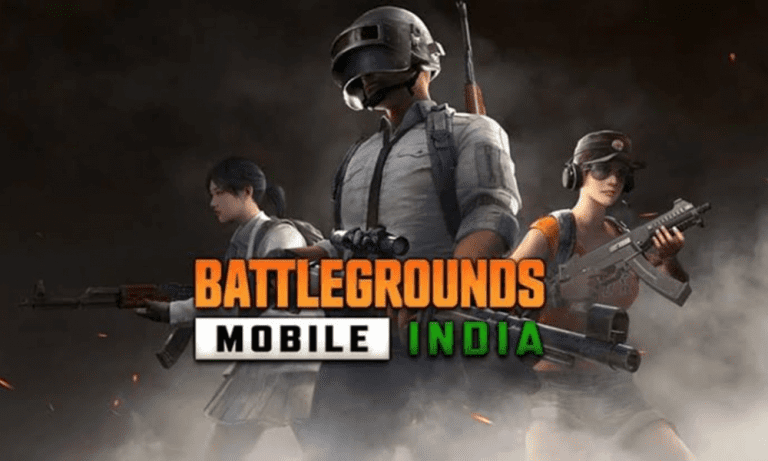
Team Aryan x TMG Esports has clinched the Battlegrounds Mobile India Pro Series 2025 (BMPS 2025) crown and secured India’s slot at the PUBG Mobile World Cup (PMWC) 2025 in Riyadh. Yet an age-old obstacle looms… visa delays. Indian esports talent routinely falters not on the virtual battlefield, but at diplomatic checkpoints.

Visa Issues in Indian Esports: A Pattern of Missed Opportunities

In 2019, three Indian PUBG Mobile teams, SOUL, TeamIND and Indian Tigers, earned slots to the global finals in Berlin, only to have their German visas rejected on grounds of “risk of overstay” and lack of a formal esports governing body. Forced to compete from New Delhi with crippling ping disadvantages, they watched opportunity slip away.

Similarly, Godlike Esports was slated for the COD Mobile Masters in São Paulo this April, but Brazilian visa delays dashed their hopes, as the team’s management revealed a 15-day embassy backlog that made timely travel impossible. Even organizations with government recognition, like Global Esports, have lobbied for “special athlete passports” after their Valorant roster’s South Korea and Brazil visa applications dragged on for months, imperiling participation in major international fixtures.

These incidents underscore systemic friction: visa protocols treat esports athletes as tourists or general workers, neglecting the unique nature of global competition. Furthermore, embassies demand bank statements, letters of invitation and proof of no intention to remain abroad. This documentation often arrives too late or is insufficient. Meanwhile, counterpart nations streamline accreditation for traditional sports stars, leaving Indian gamers scrambling.

Can Team Aryan x TMG Esports Represent India at PMWC 2025?

For Team Aryan x TMG, the script must differ. Organizers, publishers and the Ministry of Youth Affairs and Sports should collaborate on standardized “esports athlete” visa channels, complete with template forms, direct embassy liaisons and guaranteed fast-track processing. Without such measures, India’s PMWC representatives risk another déjà vu: a plane ticket in hand, but a visa stamp still pending at departure.

India’s esports ecosystem deserves global stages. Yet until visa processes adapt to its rise, our best players may remain grounded. Only by institutional recognition, proactive coordination and policy reform can Team Aryan x TMG truly carry India’s flag to Riyadh.

Stay tuned to the TalkEsport app for detailed gaming and esports coverage, latest news, and much more!

Team Aryan x TMG Gaming Crowned the Winners of BMPS 2025

Team Aryan x TMG Esports has emerged as the ultimate winners of Battlegrounds Mobile India Pro Series 2025 (BMPS 2025) championship. After three days of intense competition against India’s top 16 Battlegrounds Mobile India teams, Team Aryan emerged victorious. They have not only secured the championship title but also a coveted slot in the PUBG Mobile World Cup (PMWC) 2025 at the Esports World Cup in Riyadh.

BMPS 2025 Winners Team Aryan x TMG Esports to Represent India at PMWC 2025

The atmosphere at the Yashobhoomi Convention Centre was intense as Day 3 unfolded. The final day saw multiple teams still in contention for the championship. NoNx Esports entered Day 3 with a slim lead at 103 points, followed closely by 4Merical Esports at 99 points. On the third place, Team Aryan x TMG Esports at 87 points.

On the final day of the grand finals alone, Team Aryan x TMG Esports secured a whopping 45 points. This impressive step up propelled the team to the top of the points table. The entire team demonstrated exceptional consistency and unwavering teamwork throughout the tournament to claim the championship. Their victory earned them ₹1.25 crore, a the lion’s share of the ₹4 crore prize money.

NONx Esports and Los Hermanos Esports Secures Podium Finishes in BMPS 2025

The championship concluded with a thrilling finish that showcased the competitive depth of Indian BGMI esports. NONx Esports secured a well-deserved second place finish. This tournament witnessed their remarkable tournament journey that saw them stage one of the most impressive comebacks in BMPS history. After climbing from 10th place to 1st during Day 2, NONx maintained their championship form throughout the final day.

Los Hermanos Esports claimed the third place position on the podium. The team demonstrated consistency and skill throughout the tournament.

This victory holds particular significance as it grants Team Aryan x TMG Esports the honor of representing India at the PMWC 2025, which is part of the larger Esports World Cup 2025 in Riyadh, Saudi Arabia. The PMWC 2025 is scheduled to take place from 25th July to 3rd August, 2025. Notably, this tournament will feature a staggering $3 million prize pool. 

As the newly crowned champions prepare for their journey to the PMWC 2025, Team Aryan x TMG Esports carry with them the hopes and expectations of an entire nation.

Stay tuned to the TalkEsport app for detailed gaming and esports coverage, latest news, and much more!

Counter-Strike 2: Why Some Players Feel Right at Home, and Others Left Behind

0

Counter-Strike has long been one of the most popular first-person shooter games. Being in the esports scene for more than a decade, CS gradually became the first name among all the other FPS esports games. The transition from Counter-Strike: Global Offensive (CS:GO) to Counter-Strike 2 (CS2) was met with a blend of expectations and doubt from the Counter-Strike fans. Different players had different opinions when they first heard about Valve finally working on a new CS game based on the Source 2 engine. However, the new CS2 didn’t win everyone’s heart. Some players think it is a good move while others are not happy with it. There is always a battle between the lovers and the haters.

The Essence of Counter-Strike

Even though the developers changed the engine to Source 2, they didn’t change the fundamental mechanics in CS2 that define the Counter-Strike series. It definitely helps the CS:GO players to connect with the new game as fast as possible. Moreover, Valve also didn’t change the weapon loadouts.​ However, there are a few visual changes when it comes to the maps. But players can deal with the map changes as the fundamentals of the maps are also the same.

Undoubtedly, there are a lot of graphical changes in CS2. The developers improved textures, lighting, and particle effects, bringing a modern aesthetic to the classic maps, all thanks to the Source 2 engine. The dynamic smoke grenades, now interact with the environment and dissolve when players throw grenades into it or fire bullets through smoke. It is definitely a huge change to the meta of the game. The smoke physics overhaul in CS2 is arguably one of the biggest fundamental shifts in how utilities function in Counter-Strike.

However, there are some drawbacks. While CS:GO was compatible with even low-end computers, CS2 isn’t. You can blame the graphical changes for that. There are several reports that claim that CS2 is not as responsive as CS:GO with lower FPS. In an FPS game, every split-second reaction is crucial. A lot of players are feeling uncomfortable due to FPS getting lower in CS2.

CS2 also preserves the round-based economy system, where players earn money for kills, winning/losing rounds, and planting/defusing the bomb. The buy menu still functions the same way but has received a modern UI upgrade. Players must balance their spending between rifles, pistols, armor, and utility, and losing streaks still grants a progressive bonus. Eco rounds, force buys, and full-buy rounds still remain an integral part of competitive strategy.

Sub-Tick System: Good but Not the Best

CS2 introduces the new sub-tick system designed to boost server responsiveness. Well, it is not a 128-tick server which many players expected. The sub-tick system aims to address the limitations of traditional tick rates by ensuring that important actions such as shooting and movement are registered more precisely. In theory, this should lead to a more accurate and fair gameplay experience. However, there are always differences between theories and real-life experiences.

Despite its potential, the sub-tick system has faced criticism. Some players have reported inconsistencies in hit registration and movement, suggesting that the system may not be functioning as intended. Even though Valve advertised the sub-tick system as a high-tech mechanism, it failed to impress the players. Several players are also suggesting that the developers could just provide 128-tick servers instead of sub-tick.

Competitive Integrity: Criticism Is Not Leaving Behind

As an FPS game, Counter-Strike should always be careful about competitive integrity. CS2’s launch, however, has been spoiled by concerns over its readiness for tournaments. Professional players such as S1mple and several teams have voiced concerns regarding bugs, hitbox inconsistencies, and server performance. These issues have led numerous players to question the game’s competitive integrity.

Valve has responded to some of the concerns with a few patches and the others received only promises of future improvements. While some issues have been addressed, a huge number of players see CS2 as an unfinished product of Valve.

Other than that, a rise in cheating cases has been witnessed with the release of CS2. Cheats like aimbots, wallhacks, and ESP (Extra Sensory Perception) have become readily available, enabling players to get unfair benefits. Cheaters are nothing new in CS. In the past, there used to be thousands of cheaters in CS:GO and the problem was never addressed as Valve didn’t release anything substantial with their VAC. The same problem still exists in CS2. There are plenty of sites that freely advertise such cheats. Most importantly, Valve doesn’t seem to care about this problem.

Valve’s primary defense against cheating is the Valve Anti-Cheat (VAC) system, introduced in 2002 and continually updated to detect and ban players using unauthorized software. Despite its long-standing presence, the effectiveness of VAC has always been a topic of debate. Almost every player expresses frustration over VAC’s inefficiency, citing experiences where blatant cheaters remain unpunished.

Almost every online game has toxicity and harassment issues, and CS2 is no exception. Recent studies have shown that numerous players are exposed to racial slurs and abusive behavior in CS2. While Valve is struggling against cheaters with VAC, thinking of punishing toxic people is inconceivable.

Bugs and Optimization: The Critical Point

A significant number of players have reported experiencing performance-related issues in CS2, including stuttering, lag, and sudden drops in frames per second (FPS). Some players have also reported that the game freezes suddenly while playing. These problems persist even on high-end systems, suggesting underlying optimization challenges.

For instance, a user with high-end hardware specifications, such as an AMD Ryzen 5 5600X processor, AMD Radeon RX 6900 XT graphics card, 32GB RAM, and a 240Hz monitor, reported that despite achieving FPS ranging from 240 to 340, the game lacked smoothness during movement. It indicates that high FPS does not necessarily translate to smoother gameplay. Hence, there are several optimization issues within the game’s Source 2 engine.

Another common issue pertains to the game’s stability when using the Alt+Tab function to switch between apps. Players have reported that after using Alt+Tab multiple times, the game becomes unresponsive. The only solution to this is a system restart.

Some players have encountered audio issues, such as distorted sound, along with significant FPS drops. These audio glitches often occur during intense gameplay moments. Audio cues are a crucial component of any FPS game and such annoying glitches can hinder a player’s gameplay.

UI Changes: One of the Most Anticipated Upgrade

One of the most noticeable changes in CS2 is the transition from the circular, wheel-based buy menu of CS:GO to the grid-based interface. The old buy menu used a radial layout, requiring players to navigate through a circular interface to select weapons and utilities. The new grid-based buy menu provides a clearer, more organized layout where all available weapons are displayed simultaneously, reducing the time players spend searching for their desired weapons and utilities.

Map Redesigns: Mixed Feedback

Valve’s reworks of classic maps have been both admired and criticized. While updated visuals and minor layout tweaks, some players feel that certain changes alter the tactical flow of gameplay. For instance, adjustments to lighting and visibility have sparked debates among players as they make some corners of the maps not clearly visible.

However, some newer players have found the updated maps more approachable, but veteran players sometimes struggle with the redesigns.

Weapon Spray Patterns Remain Same

Unlike some other FPS games that feature randomized bullet spread, Counter-Strike has always relied on predictable recoil patterns. This means that every gun in the game has a fixed sequence of bullet dispersion when fired continuously. To counter this, skilled players must learn the “spray control” technique. Spray control is nothing but manually adjusting their mouse movements in the opposite direction of the recoil to keep shots on target.

One of the most important aspects of CS2 is that the weapon spray patterns remain unchanged from CS:GO. For veteran players, this continuity is a major relief, as learning spray patterns is one of the most essential skills in mastering Counter-Strike.

Verdict

Despite its rocky start, CS2 has the potential to become the most desired version of Counter-Strike. CS:GO itself was far from perfect at launch, many of the features that made it great today were only introduced years later after receiving community feedback. If CS2 follows a similar trajectory, there’s a strong possibility that in a few years, CS2 can be the perfect FPS title.

Therefore, Valve must take an active role in improving CS2. The developers have historically taken a hands-off approach when it comes to communicating with the players and community. But in an era where player engagement and transparency are more important than ever, that approach may no longer be viable. Open dialogue, faster bug fixes, and clearer explanations for changes could go a long way toward rebuilding trust and making CS2 feel more like the game its players want it to be.

For some, CS2 already feels like home. For others, it still doesn’t. The real question is whether, with time and refinement updates, it can truly become a game that unites both types of players. If it can, then CS2 won’t just be a worthy successor to CS:GO; it will be the next great chapter in Counter-Strike’s history.

BMPS 2025 Grand Finals Day 2 Recap

Battleground Mobile India (BMPS 2025) Grand Finals Day 2 delivered spectacular drama as the competitive landscape shifted dramatically at the Yashobhoomi Convention Centre in Delhi. With ₹4 crore and a coveted EWC slot still at stake, the second day witnessed stunning comebacks, strategic masterclasses, and a complete reshuffling of the leaderboard across six intense matches.

BMPS 2025 Grand Finals Day 2 Standings Summary

The day concluded with NoNX Esports staging one of the most remarkable comebacks in BMPS history, surging from 10th place to claim the overall lead with 103 points. 4Merical Esports, despite their dominant Day 1 performance, slipped to second place with 99 points but maintained their championship credentials. Aryan x TMG Gaming emerged as the day’s biggest success story, climbing to third place with 87 points and two crucial Chicken Dinners.

Match 7 – Erangel

The opening match of Day 2 belonged to Genesis Esports, who secured their first Chicken Dinner of the tournament on Erangel. This victory provided crucial momentum for the Shadow-led squad, helping them climb from their Day 1 struggles. The match showcased the unpredictable nature of the Grand Finals, with teams adapting their strategies for the second day.

Match 8 – Miramar

4Merical Esports demonstrated their championship pedigree by claiming another victory on Miramar, extending their tournament lead at that point. The team’s consistent performance across different maps highlighted their versatility and tactical depth, with BeardBaba continuing to deliver clutch performances.

Match 9 – Sanhok

Aryan x TMG Gaming announced their championship intentions with a dominant performance on Sanhok. This victory marked the beginning of their remarkable Day 2 surge, showcasing precision gameplay and strategic positioning that would define their tournament resurgence.

Match 10 – Sanhok

OnePlus K9 Esports, led by veteran Omega, finally found their rhythm with a crucial victory on Sanhok. This win propelled them from 13th place after Day 1 to 6th place overall, demonstrating the experience and skill that made them tournament favorites.

Match 11 – Miramar

NoNX Esports secured their first Chicken Dinner of the tournament on Miramar, beginning their incredible comeback story. This victory marked the start of their surge from 10th place, showcasing the depth of talent in the BMPS field and proving that no team could be counted out.

Match 12 – Erangel

The final match of Day 2 belonged to NoNX Esports, who secured their second consecutive Chicken Dinner to complete one of the most impressive single-day performances in BMPS history. With 67 eliminations across the day and two victories, they transformed from outsiders to tournament leaders.

With the leaderboard dramatically reshuffled, Day 3 promises to be the most competitive yet. NoNX Esports holds a narrow 4-point lead over 4Merical Esports, while Aryan x TMG Gaming lurks just 16 points behind the leaders. The tight standings ensure that multiple teams remain in championship contention.

Los Hermanos and Gods Omen, tied at 82 points each, demonstrated that their Day 1 performances weren’t flukes and remain dangerous opponents. Meanwhile, K9 Esports at 75 points and Team Eggy at 73 points have positioned themselves for potential championship runs with strong final-day performances.

The bottom half of the standings remains fluid, with teams like Genesis Esports and iQOO 8Bit still mathematically capable of dramatic climbs. Even 2OP Official, despite sitting at 29 points, managed their first Chicken Dinner and proved that surprises remain possible.

As the tournament enters its final day, the stage is set for an epic conclusion to India’s premier BGMI championship, with the PEWC slot and the lion’s share of the ₹4 crore prize pool still up for grabs.

Stay tuned to the TalkEsport app for detailed gaming and esports coverage, latest news, and much more!

The Problem With Esports Obsession: Not Every Game Needs a Pro Scene

Not every multiplayer video game has what it takes to be an esports title, and that’s a good thing.

With the constant rise in popularity of esports titles like Counter-Strike 2 and League of Legends over the past decade, many developers have felt compelled to design their games with competitive viability being the first thing in mind.

From indie devs to billion-dollar studios, the rush to create the ‘next big esport’ has become a recurring trend in gaming, and as history has shown time and again, it’s not always a healthy one.

Over the past few years, numerous ‘esports-ready’ games have surfaced that have struggled to gain traction in the competitive scene, despite the devs prioritizing esports from day one. Ubisoft’s XDefiant, the servers of which were shut down last month, is one prominent example of this.

Does this mean that the market for esports-focused titles has saturated, or is the real issue that modern esports titles have themselves degraded in quality?

This obsession with esports is often misguided. Not every game is meant to be competitive, and trying to force it can hurt more than help.

What Makes a Game Esports-Worthy & Why Most Don’t Qualify

To find out why many, if not most, esports titles are failing to make an impression on gamers, we first have to understand what actually makes a multiplayer video game a strong candidate for esports.

There are some obvious points like clear gameplay rules, deep game mechanics that are easy to get into but hard to master, and competitive balance, but there’s much more to it than just design fundamentals. A successful esports title needs to be spectator-friendly, able to foster a community and generate constant hype through its events.

Austin Major 2025
Austin Major 2025 (Image via: Blast)

Two of the biggest esports titles in the world, Counter-Strike and Rocket League, are good examples of games that check all these boxes. Their spectator-friendliness makes them enjoyable to watch even for non-gamers, and while they’re incredibly easy to pick up, their high-skill ceilings give players something to constantly strive toward.

Other titles, however, start chasing the esports status without even ensuring that they’re balanced, stable, and fully formed for casual players. This leads to an inevitable disconnect between what the developers envision and what the player base actually wants, ultimately resulting in the game’s failure.

When a game launches with esports-oriented features like a ranked mode and broadcast tools but lacks core gameplay polish or enjoyable mechanics, it struggles to retain even a basic player base, let alone foster an esports scene.

Instead of letting competitive ecosystems emerge naturally, these games try to manufacture hype, and when that hype fades, there’s nothing left to fall back on.

When Esports Hype Backfires

Recently, we’ve seen one too many instances of devs forcing esports support on games too early or unnecessarily, and the consequences have been rough.

Instead of launching Overwatch 2 with a PvE-focused game mode as originally promised, Blizzard chose to pour a massive amount of resources into the Overwatch League to try and help grow the game’s esports scene. However, the overall balance and content within the game itself continued to suffer, and the OWL was ultimately shut down in early 2024.

While the OWL was replaced by the Overwatch Champions Series (OWCS) shortly after, it failed to draw in nearly as many viewers as its predecessor. For instance, the Overwatch League hit a peak viewership of around 437K concurrent viewers in 2018, but the new OWCS tournaments can only draw around 150K max.

The release of Marvel Rivals in December 2024 only exacerbated the situation, drawing in a portion of the Overwatch 2 player count towards itself while also developing its own largely successful esports scene.

Another good example of this is Halo Infinite, which launched in November 2021 with a strong push toward reviving the Halo esports legacy. As a result, Microsoft and 343 Industries wasted no time in announcing the Halo Championship Series (HCS) and proceeded to secure partnerships with major organizations like Cloud9, FaZe Clan, and NAVI even before the game’s full release.

However, this esports-first rollout came at a cost. While the core gunplay and sandbox of the game were fairly decent, Halo Infinite launched with major issues in its ranked structure and matchmaking systems, not to mention the absence of campaign co-op and Forge at launch.

Ranked was riddled with bugs and inconsistencies, progression was confusing, the SBMM was widely criticized, and the experience was terrible for casual players.

Despite HCS receiving a strong start at first, including solid viewership for the Kickoff Major in Raleigh, it didn’t take long for the momentum to fade.

Games Can Thrive Without Esports

Not every multiplayer video game needs to have an esports scene to succeed. In fact, it’s not hard to come up with a list of long-standing titles that thrive to this day despite the absence of competitive play.

Minecraft is the first title that comes to mind. The 2009 video game by Mojang Studios is dominating the multiplayer video game scene to this day with its open-ended gameplay, creative freedom, endless customization options, and a constant flow of new updates from the devs.

Minecraft

Minecraft gives players the freedom to play the game however they want, at their own pace. The absence of a competitive mode hasn’t hurt the title at all; if anything, it has actually contributed to its growth.

Baldur’s Gate 3, a game designed primarily as a single-player or co-op experience, still consistently ranks towards the top of the Steam Charts, despite being released over two years ago.

So, how does a story-driven game maintain such strong momentum over the years?

Baldur’s Gate 3 provides replayability through the sheer amount of choices players can make across a playthrough, alongside its gameplay mechanics that let the player do whatever they want. While the overall plot of the game remains roughly the same, there are so many different ways for players to approach each scenario that every playthrough feels unique.

At the end of the day, video games need to be fun, and they can achieve that without constantly relying on competitive modes or striving to be the next big esport.

How Organic Esports Scenes Grow

Instead of spoon-feeding esports to players, more video games should focus on letting their competitive scenes grow naturally and organically from genuine player interest.

Dota 2 is, without a doubt, one of the best examples of an esports scene that has flourished organically from a passionate player base rather than being forced by the devs. Originally launched as a Warcraft III custom map, the MOBA has grown into one of the biggest esports in the world, consistently featuring record-breaking prize pools and a pro scene that continues to evolve every year.

During the early stages of its Warcraft III days, Dota wasn’t necessarily viewed as a hyper-competitive title, but just a fun, chaotic game to play with your friends. Its complex game mechanics and engaging gameplay loop resulted in the title drawing a competitive following, and over time, grassroots tournaments began to pop up across online forums and LAN cafes.

Dota 2

Once Valve stepped in, they doubled down on the game’s esports scene while retaining its core gameplay. Dota 2 was a significant improvement over its predecessor, both in terms of visuals and gameplay elements, offering a more polished experience on an accessible, stable platform without sacrificing any of the depth that made the original so beloved.

What started off as a casual way for friends to kill time at internet cafés eventually evolved into an esports juggernaut that’s now being played in front of millions, and a legitimate career path for countless aspiring pros.

Dota 2 is a testament to how multiplayer games can naturally grow into esports titles if the core gameplay is fun and gives players a reason to keep coming back. Organic growth not only leads to a larger overall player base but also fosters healthier ecosystems and more loyal communities.

Verdict

At this point, it’s pretty safe to say that esports obsession is doing more harm than good for the industry. Focusing on the competitive scenes of games from the get-go will never be able to compensate for bad game design or tedious gameplay loops.

The solution to this is simple: focus on fun, replayability, and polish first. The competitive layer of multiplayer games should only grow if there’s genuine demand from within the community. Forcing an esports scene, especially for games that aren’t built for it, can often backfire, and gamers are no strangers to how this approach can harm both the game and its player base.

Not every game needs to be played in front of thousands, balanced down to the frame or pushed into high-stakes competition as soon as it drops. Some games are much better served by embracing their identity as casual, community-driven experiences.

Esports is in no way a requirement for success, but rather a byproduct of a good game and a passionate community.

Marvel Rivals Season 3 Battle Pass: Skins, Release Date & Price

With Marvel Rivals Season 3 being just around the corner, NetEase has officially shed light on the new Battle Pass that the upcoming patch will bring to the game.

The Marvel Rivals Season 3 Battle Pass will feature 10 new sets of hero skins alongside a plethora of other cosmetics. As confirmed by the devs, the new hero costumes will be themed on the “cosmic power of the Phoenix Force” and the “mysterious Symbiotes.”

In this article, we’ll take a look at everything you need to know about the Marvel Rivals Season 3 Battle Pass, including its release date, skins, price, and more.

Marvel Rivals Season 3 Battle Pass Skins

Below, we have listed all the new hero costumes that the Marvel Rivals Season 3 Battle Pass will introduce to the hero shooter:

  • Jeff the Land Shark – Devouring Duo
  • Squirrel Girl – Symbiote Squirrel
  • Groot – Symbiote Flora
  • Rocket Raccoon – Symbiote Raccoon
  • Black Panther – Golden Panther
  • Adam Warlock – King in White
  • Wolverine – Weapon Phoenix
  • Namor – Phoenix King
  • Spider-Man – Black Suit
  • Emma Frost – Phoenix Diamond

Marvel Rivals Season 3 Battle Pass Release Date

The Marvel Rivals Season 3 Battle Pass is set to hit the live servers worldwide on July 11, 2025, at 2 am PT.

Marvel Rivals Season 3 Battle Pass Price

As with every other Marvel Rivals Battle Pass, the standard premium version of the Season 3 pass will be priced at 990 Lattice, which roughly translates to $10 USD.