Nvidia’s board is investigating chief executive Jensen Huang after he admitted to an extramarital affair, following reports that US intelligence linked him to a woman it believes was gathering information for China. The woman named in those reports, Alice Huang, was an executive at Megaspeed, a Singapore chip buyer that was spun out of a Chinese games and cloud company. Megaspeed has been on the radar of US lawmakers, Commerce Department investigators and Singapore’s police for more than a year. That paper trail, much of it public since October 2025, explains why a personal scandal has turned into a national security question for the world’s most valuable chipmaker.
Huang addressed the reports in a letter to Nvidia staff on Sunday, 8 November, writing that he owed his family and colleagues an apology. “I was unfaithful to my wife. My actions hurt her and our children,” he wrote, adding that there was “no excuse” for what he did. He did not name the person involved, and said he takes “full responsibility” while remaining committed to Nvidia.
The board said a committee of independent directors, working with outside counsel, will run the review. It said it has “no reason to believe” that national security or Nvidia’s secrets were compromised, and that Huang will keep leading the company while the investigation continues. Our first report on the board’s investigation covers Sunday’s announcement in detail.
What is confirmed in the Jensen Huang case, and what is only alleged
It is worth separating what Huang has admitted from what has only been reported. Huang has confirmed the affair, but not who it was with. The link to Alice Huang comes from The New York Times, which reported that he acknowledged to the board an intimate relationship with a business executive. According to the Times, US intelligence determined that this executive was gathering information for Beijing, and the two are not related.
The espionage claim itself rests on US intelligence assessments described to reporters, and the evidence has not been made public. According to the Times, a memo circulated to Trump administration officials earlier this year said China’s Ministry of State Security had recruited Alice Huang to gather information on Nvidia’s chief executive. The Financial Times reported that the same memo described a romantic relationship. No charges against her have been reported, and TalkEsport could not find any public statement from her or from Megaspeed.
Beijing has rejected the allegations outright as a smear campaign. Foreign ministry spokesperson Guo Jiakun said on Monday that “the so-called Chinese spy allegation is unsubstantiated”, calling it “nothing but smears against China”. Nvidia had previously described the pair’s interactions as “not unusual”, saying Huang meets thousands of customer executives every year and that the company does not share classified information with customers.
Megaspeed, the Chinese gaming offshoot Washington warned about for a year
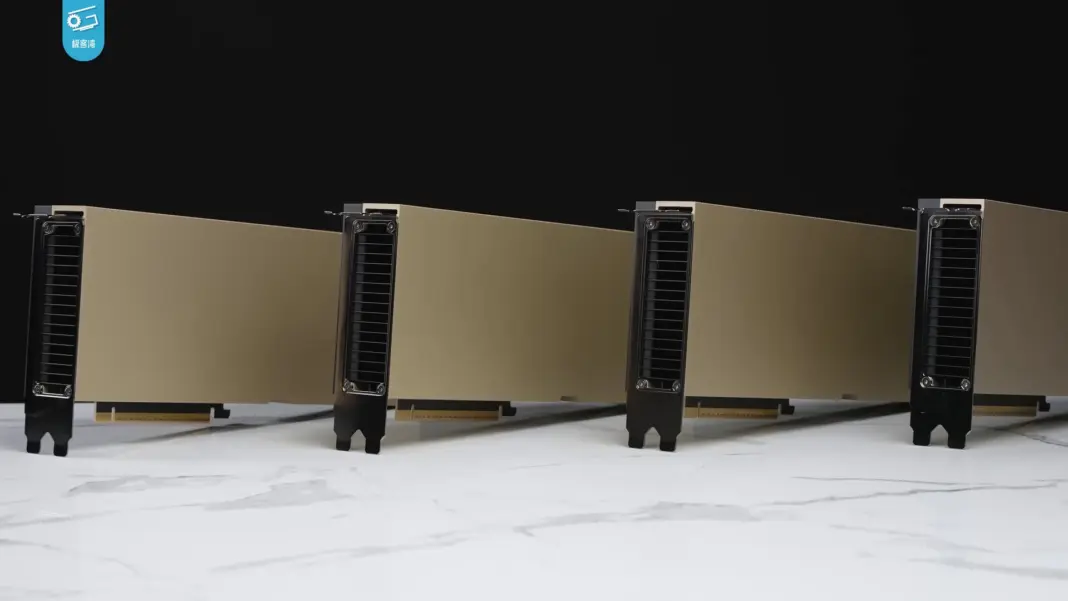
Megaspeed’s story begins, perhaps surprisingly, in the games industry. According to a New York Times investigation published in October 2025, the company emerged in 2023 when 7Road, a Chinese games and cloud computing firm backed by state investors, set up an offshore unit in Singapore. That parent company is best known to players for browser games such as DDTank and Wartune. Megaspeed then grew into one of Nvidia’s largest customers in the region, buying about $2 billion of AI processors by that first report’s estimate.
Those purchases reportedly went through Aivres Systems, a California-based arm of the Chinese server maker Inspur, whose parent is under US sanctions. US officials told the Times that hardware was then routed to data centres in Malaysia and Indonesia run by Megaspeed’s subsidiary, Speedmatrix. When US Bureau of Industry and Security officials inspected a Malaysian site in late 2024, they reportedly found Nvidia servers and GPUs still sealed in their crates.
Nvidia said at the time that its checks had found Megaspeed “legally qualified” with “no signs of diversion”, and that the company had no shareholders in China. Megaspeed reportedly stopped ordering Nvidia hardware in July 2025, as investigations widened, and Alice Huang was reported to have left around the same time. Later estimates of its total purchases were far higher, with US lawmakers putting Nvidia hardware imports at more than $4.6 billion.
Senator Tom Cotton raised the alarm publicly in an October 2025 letter to Commerce Secretary Howard Lutnick. “Megaspeed recently received billions of dollars of U.S. chips, potentially violating U.S. export laws,” he wrote. The letter said those sales followed meetings between a US chip company and a former Chinese state media reporter who held executive roles at Megaspeed. It added that the buyer accounted for nearly 2% of that company’s worldwide data centre sales the year before.
The concerns kept growing through the first half of 2026. In March, Cotton and Representative Bill Huizenga wrote to Lutnick again, saying Megaspeed had imported more than $4.6 billion in Nvidia hardware and was under investigation for possible export control violations. Their March letter pushed for the Chip Security Act, which would require location checks on export-controlled AI chips. They warned that “we catch significant smuggling and illicit exports, but we’re concerned it’s just the tip of the iceberg”.
The story then moved from export controls to espionage. On 29 October 2026, the Times reported that US intelligence believed Alice Huang had cultivated close ties with Jensen Huang to learn about Nvidia’s technology. It also reported that President Donald Trump had been briefed on the findings about a year earlier. Huang said in an interview the following day that his dealings with Megaspeed had been normal. The memo report followed on 6 November, and Huang’s admission came two days later.
Nvidia’s earnings, a congressional briefing and an APEC trip are next for Huang
The next ten days will be among the most closely watched of Huang’s career. Three House Republican committee chairs, Brian Mast, John Moolenaar and Rick Crawford, have asked him to give an in-person joint briefing on 18 November. “China’s access to that sensitive U.S. tech is core to the investigative work of our three committees this Congress,” they wrote. The briefing date falls one day after Nvidia is due to report its third-quarter results.
The pressure on Huang is now coming from both parties. Senator Elizabeth Warren said “NVIDIA’s Jensen Huang and NVIDIA’s board owe Congress answers,” and the House Select Committee on the CCP has made Chinese access to US chips a central part of its work. Trump has taken a softer line, calling Huang “an honourable guy” who had not done anything wrong. “He dealt with somebody, but so does everybody else,” the president said, adding that he would “certainly take him” to the APEC summit in China later this month.
The scandal also lands on a company already under pressure, after Nvidia lost $450 billion in market value in a single day last week during a wider AI chip sell-off. None of the allegations concern Nvidia’s gaming business, which includes GeForce graphics cards and features such as DLSS 4.5 Ray Reconstruction. It is not yet clear whether Huang will attend the 18 November briefing.