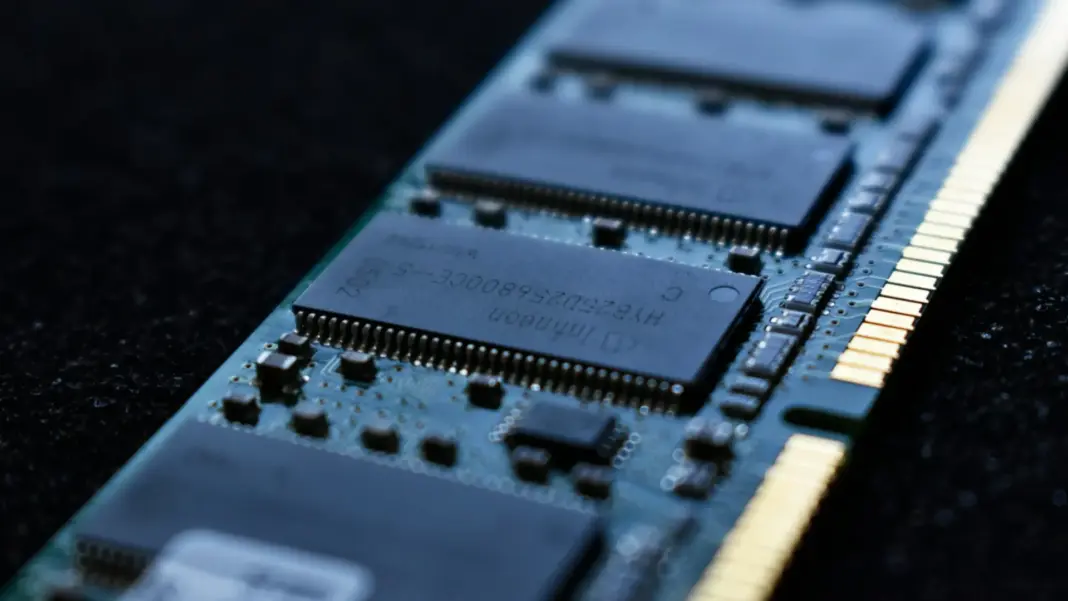
A federal judge in California has ruled that a lawsuit accusing Samsung, SK hynix and Micron of conspiring to starve the world of ordinary RAM can go ahead. On 14 November, US District Judge Noël Wise denied the three companies’ joint motion to dismiss Garciaguirre v. Samsung Electronics, a proposed class action filed in the Northern District of California in June.
The complaint claims the three, which together took more than 91% of global DRAM revenue, coordinated production cuts and then used the AI boom as cover to keep conventional memory scarce. None of it has been proven, and the companies say they acted independently.
The ruling matters well beyond one courtroom in San Jose. Memory is the common thread in almost every bad price story gamers have read this year, from the cancelled 24GB RTX 5080 to Radeon supply cuts in China and Valve’s $879 Steam Machine. According to the complaint, conventional DRAM contract prices rose 171.8% in the year to the third quarter of 2025, then climbed about 50% in the fourth quarter and 95% in the first quarter of 2026. If the plaintiffs are right, at least part of that increase was manufactured rather than inevitable.
The case was filed on 25 June by 17 plaintiffs, 14 individuals and three small PC businesses from five states, represented by the antitrust firm Bathaee Dunne. They sue as indirect purchasers, meaning people who bought products containing DRAM rather than the chips themselves, and SK hynix’s own US share prospectus describes the suit in exactly those terms. The claims rest on Section 1 of the Sherman Act and a range of state antitrust and consumer protection laws. The plaintiffs want an injunction, treble damages and a court order ending what they call an engineered shortage.
So how do you cut RAM supply without switching a single machine off?
Nobody in this case is accused of padlocking a factory. DRAM supply is set months in advance by wafer starts, the number of silicon wafers fed into a fab each month. Trimming them by a few per cent only shows up as fewer chips much later. Speed of migration is the second dial, because every move to a denser process packs more bits onto each wafer. Slow that migration or delay a new fab, and bit growth stalls without any announcement that sounds like a cut.
The third dial is the one at the heart of this case. Every DRAM wafer can become high-bandwidth memory (HBM) for AI accelerators, DDR5 for servers and PCs, LPDDR for phones, GDDR6 or GDDR7 for graphics cards and consoles, or older DDR4. HBM is far hungrier for wafers than any of the others. Micron said in its June 2024 earnings remarks that HBM3E consumes approximately three times the wafer supply of DDR5 for the same number of bits. It added that the HBM ramp “will constrain industry supply growth in non-HBM products”.
That is why a memory maker can run its fabs flat out and still ship far fewer gigabytes of the memory you actually buy. Micron told investors in September 2024 that its rising HBM mix “is reducing DRAM supply allocated to traditional products”. The fourth dial is allocation, deciding which customers get chips under long-term contracts and which are left to the spot market. According to the complaint, all three companies began vetting customers in January 2026, with one industry executive quoted as saying they “asked us about who we will supply to”.
Pricing works on two speeds, which is why allocation matters so much. Most DRAM is sold at quarterly contract prices negotiated with big buyers such as PC makers, phone brands and cloud companies, while a smaller spot market serves module makers and resellers. When supply tightens, spot prices react first and hardest, and they reach DIY builders through retail RAM kits within weeks. Contract prices follow as deals are renegotiated, which is how console makers and laptop brands feel it, and why almost nobody in this lawsuit bought a DRAM chip on its own.
Memory has always been cyclical, which is what makes the timeline so contested. Prices were falling hard in late 2022 after the pandemic buying spree, and the complaint alleges the three makers coordinated production cuts between 26 October 2022 and 7 April 2023. It then points to the shift towards HBM from March 2023, a joint wind-down of DDR4 and DDR3 in 2024 and 2025, and a refusal to expand conventional capacity even at record prices. Micron also announced on 3 December 2025 that it would leave the Crucial consumer business, saying it wanted to improve supply for “larger, strategic customers in faster-growing segments”.
For gamers, every one of those dials ends up in a price tag. Graphics cards ship with GDDR memory bought alongside the GPU, so Nvidia’s 3GB GDDR7 modules costing about three times the 2GB parts helped kill that 24GB card. Consoles depend on the same DRAM industry, and Microsoft pointed to memory costs when it raised Xbox prices in June. Those pressures also sit behind questions over whether RAM shortages could affect the PS6, and behind analysts’ doubts that even GTA 6 can lift console sales while hardware keeps getting dearer.
Is this a cartel, or just three giants reading the same market?
Under US antitrust law, competitors acting in parallel is not illegal on its own. In a market with only three serious players, each can watch the others and cut output without ever agreeing to anything, which lawyers call conscious parallelism. To get past a motion to dismiss, plaintiffs must point to extra “plus factors” that make an actual agreement plausible, and the judge has to assume their allegations are true. That is a low bar compared with what comes later, but it is the bar the last DRAM case failed to clear.
Judge Wise found that this complaint clears it, according to legal reporting on the order. She said Samsung’s lag of about four and a half months behind its rivals did not defeat the parallel conduct claim, and that the HBM pivot on its own might not be enough. The customer vetting allegations, however, strongly supported a plausible inference of an agreement, in her view, partly because they came after the HBM shift had already begun. Taken together, she said the conduct looked “more akin to hawks flying in formation” than rivals simply watching one another.
The ruling was not a clean sweep for the plaintiffs. The judge gave no weight to investors’ talk of “supply discipline”, even though Micron has used that exact language, telling investors it “will continue to exercise supply and capex discipline”. She also set aside meetings at trade conferences and treated the three-firm market structure as neutral. The companies argued in their joint motion that they independently reduced production amid falling prices and then followed AI demand, and Samsung has called the allegations unfounded.
The industry’s history cuts both ways for the three defendants. Between 2004 and 2006, the US Justice Department collected about $731 million in criminal fines over a real DRAM cartel that ran from April 2001 to June 2002, according to its own account. Samsung paid $300 million, Hynix $185 million, Infineon $160 million and Elpida $84 million, executives went to prison, and Micron avoided a fine by cooperating. Yet a 2018 class action alleging output cuts was dismissed, and in March 2022 the Ninth Circuit agreed it showed “nothing more than conscious parallelism”.
That earlier defeat is why Judge Wise’s line about the old case matters. The companies argued that this suit simply repeats the old one. She rejected that argument, writing that “The Court finds that it is not”. The honest reading is that this case is now plausible and dangerous for the companies, but nowhere near proven, and AI demand is a real explanation they will press hard in discovery. China’s market regulator also opened its own probe into the same three companies in 2018.
The next stage is where cases like this are usually won or lost. Discovery will give the plaintiffs access to internal production plans, emails and meeting notes, which is the kind of evidence a court needs to see an actual agreement rather than parallel moves. They will also have to win class certification, which means showing that buyers of very different products suffered a common overcharge. Even if they manage both, antitrust cases of this size usually take years, and many settle before they ever reach a jury.
Slowed iPhones and a 3.5GB graphics card: why buyers stopped taking hardware makers at their word
Many readers will connect this case with a different kind of limiting, where products are held back after you buy them. That is not what the DRAM suit alleges, since it is about supply and prices, not software. The two do share something important, however, which is a long record of buyers being told a performance or price problem was natural, and later learning otherwise.
The best-known example remains Apple’s iPhone battery throttling scandal. Apple used iOS updates to slow older iPhones with worn batteries, which it presented as power management, and in November 2020 it agreed to pay $113 million to 34 US states. It also settled a US class action for up to $500 million, and France fined it €25 million earlier that year for failing to tell users. Italy’s competition authority had already fined Apple €10 million and Samsung €5 million in 2018 over updates that slowed older phones.
Samsung faced a fresh row in 2022, when its Game Optimizing Service was found to throttle thousands of apps and games while leaving benchmark apps alone. Geekbench delisted four generations of Galaxy S phones, and Samsung apologised and shipped an update that let users switch the limiter off. In graphics, Nvidia settled a class action in 2016 over the GTX 970, sold as a 4GB card although its last 0.5GB ran on a much slower segment, paying owners $30 each.
Each of those cases ended with regulators or courts forcing companies to disclose what they had done or to pay buyers back. The DRAM suit is years away from that point, if it ever gets there. The three companies must file their answers by 7 December, and the first case management conference is set for 12 January 2027.