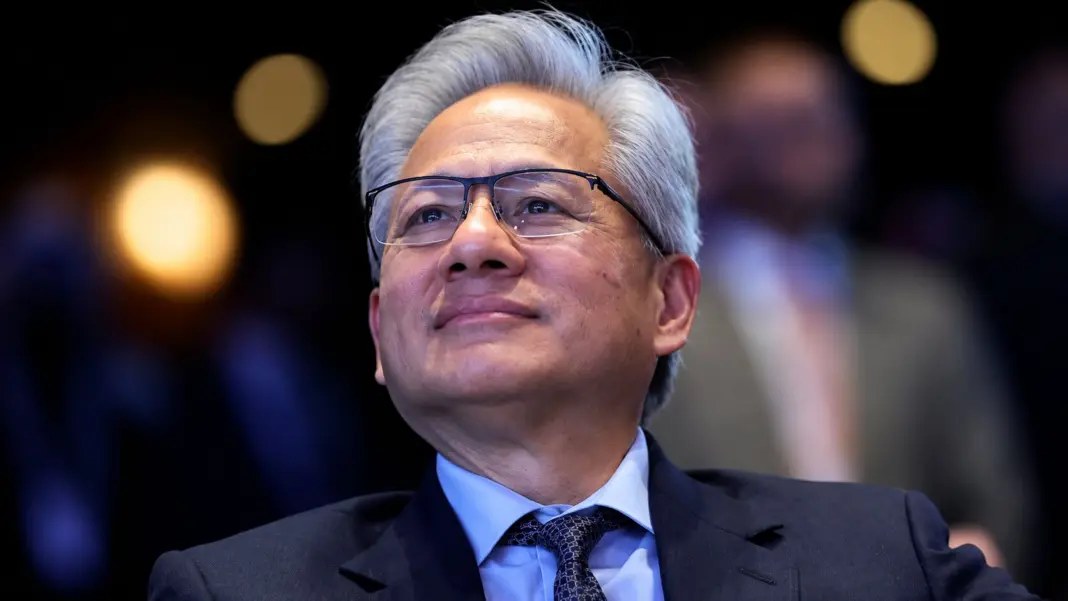
Jensen Huang offered to come back as Nvidia’s chief executive on 17 November, and the company’s board turned him down within hours. In a statement on X, the co-founder admitted “serious mistakes” in his personal life and said he would be “honored” to return if the board wanted him. That afternoon, on Nvidia’s third-quarter earnings call, board chair Harvey Jones said the board “unanimously accepted his resignation and does not intend to reinstate Jensen as CEO”, according to NPR.
The rejection landed on the same night Nvidia posted a record quarter. Revenue for the three months to 25 October reached $115.8 billion, up 103% from a year earlier, and the company forecast $130 billion for the current quarter. Nvidia shares closed 0.48% lower at $155.39 on Tuesday but rose nearly 5% in after-hours trading, according to The National.
What Jensen Huang said in his statement
Huang posted his statement at 9:48 pm Indian time on 17 November, which was Tuesday morning in the US. “I did not live up to the standards expected of everyone at NVIDIA, and I have made serious mistakes in my personal life,” he wrote. He added that he had “created problems for the Board” that he deeply regretted, and said he was committed to cooperating with the board’s independent investigation.
Most of the statement, however, was an offer. Huang said he had seen “an outpouring of calls” from employees, investors, business partners and customers asking him to return. If the board decided his return was in the best interest of shareholders, employees, the company and America, he wrote that he “would be honored to answer these calls and return as CEO”. By Wednesday morning in India, the post had passed 43 million views on X.
Those calls had been building all week, from inside and outside the company. A “Stand With Jensen” petition passed 175,000 signatures, and Altimeter Capital’s Brad Gerstner and Atreides Management’s Gavin Baker publicly asked the board to keep his possible return open. The Financial Times also reported that Huang was considering a comeback, with an ally reportedly assembling a “war room” of Silicon Valley executives to lobby the board.
How Nvidia’s board closed the door on Huang’s return
Washington, however, had been pulling the board the other way. Treasury Secretary Scott Bessent had said Nvidia needed “a dramatic shakeup” and should look outside the company for its next chief executive, as we reported when he demanded answers from the board within 10 days. On the call, Jones called the change “an unexpected transition”, but he gave Huang’s supporters no opening at all.
Jones also made clear that Colette Kress keeps the job for now. “We have every confidence in Colette’s leadership, integrity and ability to deliver as interim CEO,” he said, according to Yahoo Finance. He confirmed that the board has hired the executive search firm Heidrick & Struggles to find a permanent chief executive, but said Nvidia would not take questions about the nature of Huang’s resignation or the investigation.
Kress said Nvidia wants its next chief executive in place “as quickly as possible, but we won’t expedite the CEO before finding exactly the right person”, according to The National. The board had already set up a national security and export control committee earlier that day. Huang resigned on 12 November as president, chief executive and director, ending 33 years in charge of the company he co-founded.
The board may not be as settled as Jones suggested, however. Semafor reported late on Tuesday, US time, citing people familiar with the matter, that a minority of directors are still pushing for Huang’s return while others have begun narrowing the search for a successor. According to the report, Huang met several tech executives and discussed a comeback with at least one board member before the results and his statement were released. Neither Nvidia nor Huang’s representatives commented on the report, and TalkEsport has not independently confirmed it.
His legal and political problems are not over either. NPR reported that Huang will appear behind closed doors before House committees on 1 December, with general counsel Tim Teter following on 2 December. The board’s own investigation has no public end date.
The record quarter Huang left behind
The quarter itself ran entirely under Huang, and the results beat Wall Street’s forecasts comfortably. Revenue of $115.8 billion compared with an LSEG consensus of $109.15 billion, according to The National. Data Center revenue came in at $107.6 billion, up 110% from a year earlier, against expectations of $101.85 billion, while GAAP net income reached $65.3 billion.
Kress, who is also Nvidia’s chief financial officer, said in the release that “our momentum is real” and that Vera Rubin “is off to an explosive start”. Nvidia said its Vera Rubin NVL72 racks had shipped in the fastest product ramp in its history, with systems running at CoreWeave, Google Cloud, Microsoft Azure and Oracle Cloud Infrastructure. Non-GAAP earnings of $2.68 per share also beat the $2.47 that analysts expected, according to The National.
The outlook for the current quarter was stronger still. Nvidia guided for revenue of $130 billion, plus or minus 3%, in a fourth quarter that includes an extra week, compared with forecasts of $125.5 billion. It said it is not assuming any Data Center compute revenue from China, which has been at the centre of the export questions surrounding Megaspeed and Alice Huang.
Shareholders also have a large buyback behind them. The board approved a $150 billion increase to Nvidia’s share repurchase programme in September, and the company returned $28.1 billion to shareholders during the quarter, leaving about $227.3 billion still available. Gamers got a mention too, with the release listing DLSS 5 in NBA 2K27 and Hogwarts Legacy among the quarter’s highlights.
For the people who wanted Huang back, the numbers cut both ways. They show the company he built is still growing at a pace few others can match, and they show the board believes it can keep that going without him. The next quarterly dividend of $0.25 per share is due on 23 December, to shareholders on record on 2 December.