Megaspeed, the Singapore cloud company at the centre of the Nvidia espionage reports, has hired a US law firm to count its graphics processors and independently check whether it complied with US export controls. In an official statement dated 12 November on its website, chairman and chief executive Tan Yong Pong said the company had cooperated with inspections by the US Commerce Department’s Bureau of Industry and Security (BIS). He added that Megaspeed “stands ready to cooperate fully” with any other relevant US authority, and that it “welcomes appropriate government scrutiny”. It is the company’s first public statement since reports linked Nvidia chief executive Jensen Huang to Alice Huang, a former Megaspeed executive whom US intelligence reportedly suspects of gathering information for China.
The statement runs to four short paragraphs, signed by Tan as chairman and chief executive of Megaspeed International, and it leaves a great deal out. It does not mention Nvidia, Jensen Huang or Alice Huang, and it does not name the law firm, which it describes only as “a leading U.S. law firm”. It also gives no start date for the GPU census, and does not say whether the findings will be published. Nvidia’s board, meanwhile, has still not announced a decision on Huang, whom it is reportedly preparing to remove after a second affair report.
Megaspeed’s last statement threatened legal action, this one promises an audit
The tone is very different from Megaspeed’s previous public response. In December 2025, after a Bloomberg investigation into chip smuggling concerns, the company said it operated “fully within the bounds” of export control rules. It said inspections by BIS, Malaysia’s trade ministry and Nvidia itself had found no violations, and it did not rule out legal action against Bloomberg. The new statement repeats that Megaspeed cooperated with BIS inspections, but it makes no claim about what those inspections found.
BIS is the US agency that enforces export controls on advanced chips. Instead of repeating its earlier assurances, the company has handed an outside law firm the job of counting its GPUs and verifying its “export control compliance practices”. In export cases, the central question is usually where controlled chips ended up, and a full inventory is one way to answer it. US officials reportedly found Nvidia servers and GPUs still sealed in their crates when they inspected a Malaysian site linked to Megaspeed in late 2024. US lawmakers have since put the company’s Nvidia hardware imports at more than $4.6 billion.
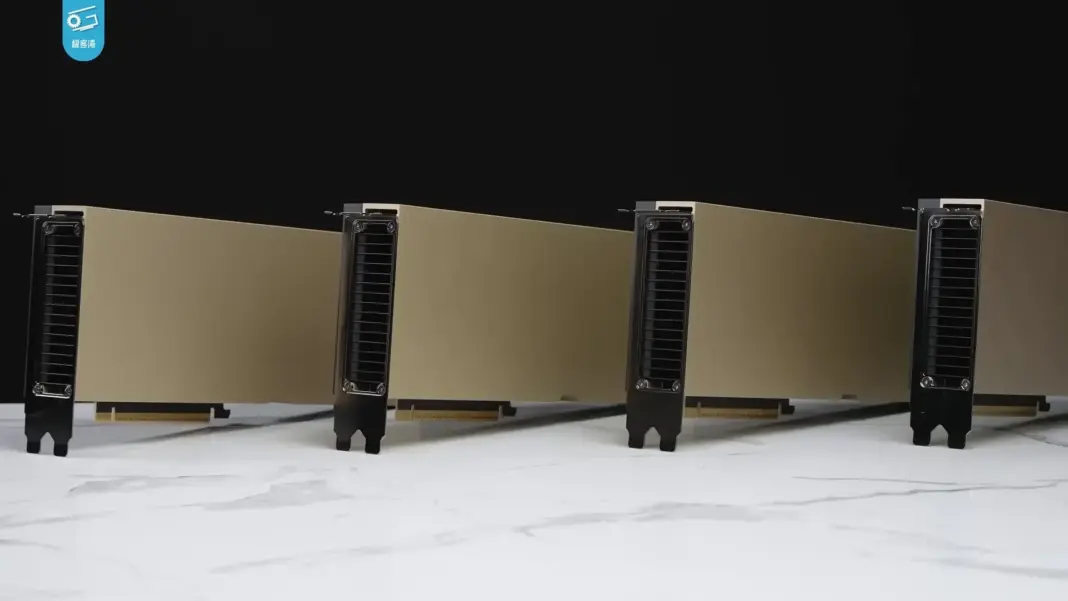
Megaspeed itself grew out of the games industry. According to a New York Times investigation from October 2025, it was set up in Singapore in 2023 as an offshore unit of 7Road, a Chinese games and cloud company. The parent is backed by state investors and is best known for browser games such as DDTank and Wartune. That background, along with its rapid rise as an Nvidia customer, explains why Megaspeed sits at the centre of the Huang scandal. Its website now presents it as a specialised GPU cloud provider, advertising Nvidia GB200 NVL72 and HGX H100 systems from offices in Singapore and Jakarta.
Alice Huang and Shanghai Century Litong are missing from the statement
US scrutiny of Megaspeed began more than a year before the Huang scandal. Senator Tom Cotton asked Commerce Secretary Howard Lutnick to investigate the company in an October 2025 letter, writing that it had received billions of dollars of US chips, “potentially violating U.S. export laws”. Megaspeed reportedly stopped ordering Nvidia hardware in July 2025, as investigations widened, and Alice Huang was reported to have left around the same time. Singapore police have said that their own inquiry concerns Megaspeed’s compliance with local law, not Alice Huang personally.
The scandal has also moved beyond Megaspeed in the past few days. This week, The Information reported that Alice Huang was linked to Shanghai Century Litong, a Chinese Nvidia cloud partner that it says helped move at least $7.5 billion of Nvidia chips into China since 2023. That report also described links between Century Litong, Megaspeed and a Malaysian subsidiary of Megaspeed. Reuters said it could not verify the report, and Megaspeed’s statement does not address it.
No charges have been reported against Alice Huang or any of the companies named in the reports. Beijing continues to reject the espionage claims as smears. Chinese foreign ministry spokeswoman Mao Ning said on Thursday that the US should stop making up “so-called spy stories” to justify technology restrictions, according to the German news agency DPA. Megaspeed’s statement does not address the intelligence reports, and TalkEsport has not found any public comment from Alice Huang.
Nvidia’s own checks on Megaspeed are now part of the question
The audit puts Nvidia’s earlier position under a fresh light. When the first reports about Megaspeed appeared in 2025, Nvidia said its checks had found the company “legally qualified”, with “no signs of diversion” of its chips. Nvidia’s independent directors have now hired former federal prosecutor Joon Kim and the law firm Wachtell Lipton to investigate Huang’s conduct, according to the board’s own statement. A census that found chips missing from Megaspeed’s declared data centres would contradict that 2025 assessment.
The pressure is also showing in Nvidia’s share price. The stock closed at $173.73 on Wednesday, then fell 7.25% to $161.13 in after-hours trading as reports spread that the board was preparing to remove Huang. Nvidia is due to report its third-quarter results on 17 November, and the board’s decision on Huang, along with any word on its own succession plans, could come before then. Megaspeed has not said when the law firm’s review will be finished, or whether its findings will be made public.