Jensen Huang, who co-founded Nvidia in 1993 and turned a graphics-card maker for PC gamers into the company at the centre of the AI boom, is no longer its chief executive. On Thursday, 12 November, Nvidia announced that Huang has resigned as president, CEO and a member of the board, effective immediately. Chief financial officer Colette Kress takes over as interim CEO while the board searches for a permanent successor.
The announcement ends a week in which the pressure on Huang kept building. It started with questions over his relationship with an executive whom US officials suspected of working for Chinese intelligence. Then came his own written admission to staff that he had been unfaithful to his wife, followed by fresh allegations about a second relationship, this time inside Nvidia. The board met on Wednesday night to decide his future, and the meeting ran into the evening. By Thursday morning in California, the most famous leather jacket in tech had left the building. Nvidia’s statement gives no reason for the departure, although the timing leaves little room for interpretation.
From Spy Allegations to an Affair Admission: How Nvidia’s Board Lost Faith in Huang
The unravelling began in late October, when The New York Times reported that Huang had a close relationship with Alice Huang (no relation), an executive at Singapore-based data-centre company Megaspeed. Megaspeed is an Nvidia customer, and it was already under investigation by US and Singaporean authorities over suspected chip-export violations. According to the Times, a US intelligence memo had alleged that she was working for China’s Ministry of State Security. Beijing has dismissed those claims as baseless, and Nvidia’s first response was that Huang’s interactions with her were “not unusual or unexpected” for a CEO who meets customers.
That line did not hold for long. On Sunday, 8 November, Huang wrote to employees admitting that he had been unfaithful to his wife of 40 years and apologising. The note named no one. On the same day, Nvidia’s board opened an independent investigation into whether he had been the target of a foreign intelligence effort. It also said it had no reason to believe national security or company secrets had been compromised. Two days later, the independent directors brought in former acting US Attorney Joon H. Kim and his firm to run the review. Then, on Wednesday, the Times reported a second affair, citing current and former employees, this time with a senior Nvidia executive who reports directly to Huang. Neither Nvidia nor Huang has confirmed that report. Within hours, The Wall Street Journal reported that the board was preparing to remove him.
Washington was also closing in. Three House Republican committee chairmen, John Moolenaar, Brian Mast and Rick Crawford, had asked Huang for a closed-door briefing on his ties to Alice Huang. They also warned that a subpoena could follow if he did not respond. Meanwhile, Senators Elizabeth Warren and Chris Coons asked the administration to preserve Nvidia’s China-related records. President Donald Trump stood by Huang throughout, calling him “an honorable guy” and saying he should stay on. In the end, however, the decision belonged to Nvidia’s board, and Huang had little power to resist it. He owns roughly 3.6% of the company, so unlike founders at Meta or SpaceX, he had no majority voting control to fall back on.
Colette Kress Takes Over Five Days Before Nvidia’s Earnings

Colette Kress has been Nvidia’s executive vice president and CFO since September 2013. Before that, she spent nearly 25 years in finance at Cisco, Microsoft and Texas Instruments. She keeps the CFO job alongside the top role. In Nvidia’s statement, she said she is committed to “building on the extraordinary foundation Jensen created over the last 33 years.” The board also named Harvey C. Jones, a former CEO and executive chairman of Synopsys, as the company’s first-ever chair. That is a telling change for a company that, until this week, had no board chair at all. According to Jones, the board has “full confidence in Colette and the leadership team” and expects operations, customer commitments and the product roadmap to carry on without interruption. The search for a permanent CEO will look at both internal and external candidates.
Kress will not get a quiet first week. Nvidia confirmed that it will still report third-quarter fiscal 2027 results on Tuesday, 17 November, with the earnings call at 2 p.m. Pacific time, as originally scheduled. The market has already passed its verdict on the past week. Nvidia shares were trading around $158 in early US trading on Thursday, down roughly 9% on the day and about a third below their October record. At that price, Nvidia’s market value is below $4 trillion, and the slide is starting to look like the record $465 billion DeepSeek rout of January 2025. Bernstein had already downgraded the stock and halved its price target to $200 before the announcement, while Oppenheimer pointed to the risk of a brain drain once Huang left. Nvidia’s own annual report had long listed its reliance on key executives as a business risk. This week, that risk stopped being theoretical.
The GeForce Founder Leaves PC Gaming Without Its Biggest Showman
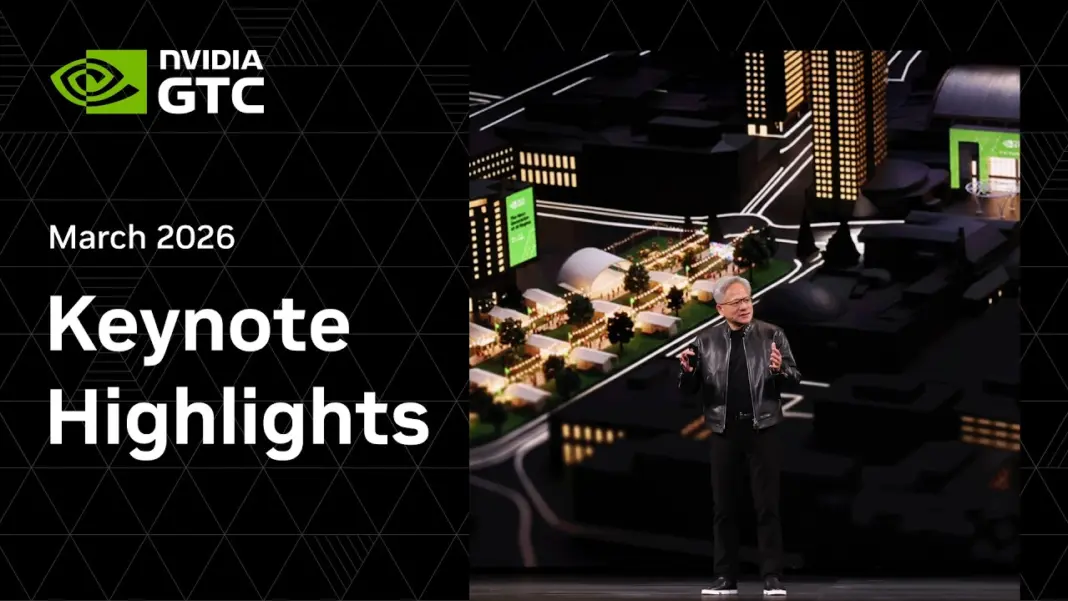
For gamers, Huang’s Nvidia was always GeForce before it was anything else. The company credits itself with inventing the GPU in 1999 with the GeForce 256. Under Huang, it went on to make real-time ray tracing and DLSS standard features of PC gaming. It also became a fixture of the competitive scene, from the tuning guides players use to squeeze more frames out of Counter-Strike 2 to team deals such as its partnership with Cloud9. Every big launch, including the RTX 5090, came with Huang on stage in his leather jacket, selling the hardware as much as the engineers built it. His GTC 2026 keynote in March was the latest example of that.
Nothing changes for an RTX owner overnight. The board says the product roadmap stays on track, and drivers, DLSS updates and the GeForce line do not depend on one person’s diary. However, the balance inside the company had shifted long before this week. AI data centres now bring in the overwhelming share of Nvidia’s revenue, and the new interim chief is a finance executive rather than a product evangelist. Whoever the board eventually picks will decide how much attention GeForce gets in a company that no longer needs gamers to pay its bills. On Tuesday, for the first time since Nvidia listed on the stock market in 1999, the company will report its results with someone other than Jensen Huang as chief executive.