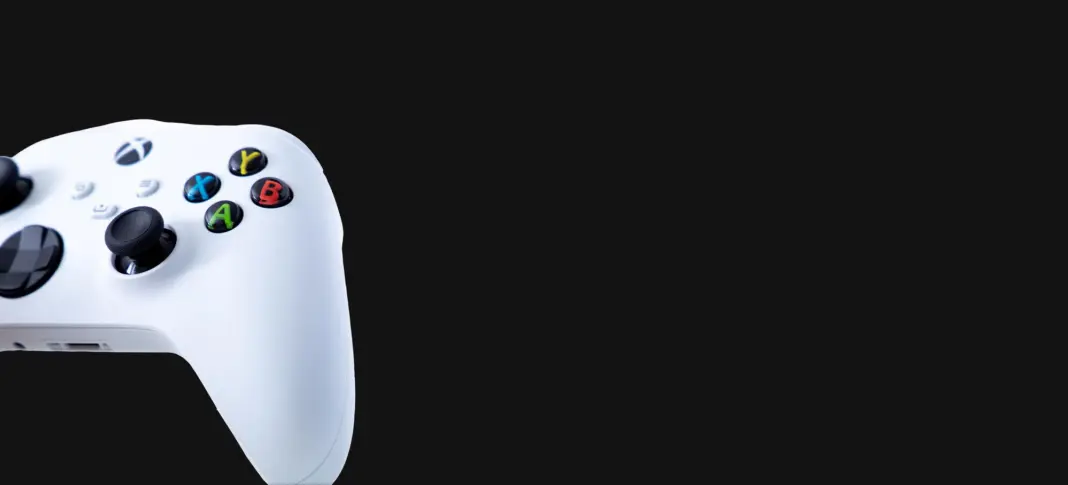
Microsoft’s unannounced Xbox cloud gaming controller received US regulatory approval on August 28, 2026, weeks before conflicting reports emerged about its cancellation. The filing offers new evidence of the project’s progress but does not establish whether the controller will reach consumers.
Microsoft’s mysterious Xbox cloud gaming controller had already cleared a significant US regulatory milestone weeks before reports emerged that the company had cancelled the device, according to Federal Communications Commission records examined by TalkEsport.
The records identify a Microsoft wireless input device under model number 2147 and FCC ID C3K2147, with an original equipment application dated August 28, 2026. The same model number appeared in photographs and documentation obtained from Brazil’s telecommunications regulator earlier this year, when a compact controller designed around cloud gaming first surfaced publicly.
The August filing introduces an important piece of evidence into the debate surrounding the controller’s future. While reports published in early October raised questions about whether Microsoft had abandoned the project, the FCC records establish that the company had completed a US regulatory authorisation process for the device shortly beforehand.
Regulatory approval does not guarantee commercial release, nor does it establish when Microsoft made any internal decision about the product. However, it provides a documented milestone that was absent from much of the recent discussion about the controller’s reported cancellation.
Microsoft’s Xbox controller model 2147 received FCC approval in August
The publicly available FCC equipment authorisation record for Microsoft model 2147 identifies the product as a wireless input device manufactured by Microsoft Corporation.
The application was submitted in late August, with the FCC record listing August 28, 2026, as the relevant application and grant date. The equipment identifier, C3K2147, combines Microsoft’s registered FCC grantee code with the product’s model number.
Supporting documentation includes wireless equipment testing, radio-frequency exposure assessments and attestation statements associated with the device’s wireless capabilities. The filing is significant because it independently establishes that Microsoft had advanced model 2147 through a formal US equipment authorisation process. Such approval is necessary for certain wireless products to be marketed in the United States, although companies can also obtain approval for devices that are subsequently delayed, redesigned or never commercially released.
The FCC record does not identify a retail name, price, launch date or confirmed availability for the controller.
The model number matches the Xbox cloud controller leaked in Brazil
The significance of model 2147 becomes clearer when compared with earlier regulatory reporting from Brazil. In May 2026, Brazilian technology publication Tecnoblog published images and information concerning a compact Microsoft gaming controller that had appeared through the country’s telecommunications regulator, Anatel.
The device was identified as model 2147 and appeared to be designed specifically around Xbox Cloud Gaming, with a smaller form factor than the conventional Xbox Wireless Controller and wireless connectivity intended to reduce the delay between player inputs and cloud-streamed games.
Windows Central’s May report on the Brazilian leak described the controller’s Wi-Fi 6 capabilities and noted that no corresponding FCC filing had been identified at the time.
The newly examined August records now fill that gap in the publicly documented regulatory history of the device. The matching model number provides a strong connection between the controller disclosed in Brazil and the equipment subsequently authorised in the United States, although the FCC listing itself uses the broader description of a wireless input device rather than explicitly marketing the product as an Xbox cloud controller.
Why Microsoft’s controller could connect directly to Wi-Fi
The controller’s most interesting reported feature is its approach to wireless connectivity. Conventional wireless controllers commonly communicate with a nearby console, PC, smartphone or television, which then handles the connection to the game or streaming service. A controller designed to connect directly to a home Wi-Fi network could potentially send player inputs towards a cloud gaming server without relying on the same Bluetooth connection to an intermediary device.
That architecture could reduce one source of input latency, although the actual improvement would depend on network conditions, server distance, software implementation and the overall streaming pipeline. Earlier reports identified Wi-Fi 6 and Bluetooth connectivity as part of model 2147’s capabilities. The FCC documentation confirms wireless equipment authorisation associated with the model, providing additional regulatory evidence of the device’s development.
Microsoft has not publicly announced final performance specifications or published comparative latency measurements for a commercial model 2147 controller.
Why were reports claiming the Xbox cloud controller was cancelled?
The controller returned to the headlines in early October following reporting by The New York Times suggesting that Microsoft had cancelled plans for an Xbox controller dedicated to cloud gaming. The reported cancellation attracted attention because Microsoft has spent years expanding Xbox Cloud Gaming across devices beyond traditional consoles, including televisions, smartphones, tablets and personal computers.
However, subsequent reporting introduced conflicting accounts of the project’s status. GameSpot reported that a Microsoft spokesperson denied the suggestion that the controller concept had been abandoned because of regulatory proceedings connected to the company’s acquisition of Activision Blizzard. That statement should not be interpreted as a comprehensive public confirmation that model 2147 will launch. It addresses the reported reason for a cancellation rather than providing a product announcement or release schedule.
The resulting picture remains unresolved: one report suggested cancellation, Microsoft’s response challenged a specific explanation for that decision, and separate sources disputed the cancellation rumours more broadly.
The August 28 filing adds a documented regulatory milestone to that conflicting reporting, but its significance requires careful interpretation. It establishes that Microsoft submitted model 2147 for US wireless equipment authorisation and that the device received the relevant regulatory grant.
It does not establish whether Microsoft had already made an internal decision to cancel the project, whether the controller remained in active development in October or whether the company intends to bring the device to market. Companies regularly complete regulatory certification for hardware before finalising commercial launch plans. Products can be delayed or cancelled after certification, while engineering prototypes and development programmes may continue through testing even when their eventual commercial status is uncertain.
Consequently, the FCC approval cannot be treated as proof that the cancellation reports were false. Equally, the existence of a cancellation report does not invalidate the documented progress made through the regulatory process. The two developments concern different questions: how far the hardware progressed through regulatory approval, and what Microsoft subsequently decided to do with it.
Xbox Cloud Gaming remains part of Microsoft’s hardware strategy
The controller’s development also reflects Microsoft’s broader interest in reducing the dependence of Xbox gaming on a dedicated console.
Xbox Cloud Gaming allows supported games to run on remote servers while video and audio are streamed to a player’s device. That approach makes the quality of the network connection and responsiveness of controller inputs particularly important to the experience.
A direct-to-Wi-Fi controller could address one part of that challenge by changing how inputs travel from the player’s hands towards the cloud gaming infrastructure. However, model 2147 should not automatically be confused with Microsoft’s wider next-generation controller plans. Reporting around the company’s hardware roadmap has described several controller concepts, and the existence of one certified model does not establish the specifications or status of other devices.
Microsoft has not publicly announced a commercial launch date, price or final product name for model 2147. The August FCC authorisation nevertheless provides an important addition to the controller’s documented history, connecting the compact device revealed through Brazilian regulatory records in May with a subsequent US equipment approval in August. That sequence establishes that the hardware progressed beyond the original Brazilian leak and into another major regulatory jurisdiction before cancellation reports appeared in October.
Whether the device was subsequently shelved, remains in development or will eventually appear as a commercial Xbox accessory is a separate question that the FCC filing cannot answer. The strongest evidence is not a launch announcement or a cancellation notice, and should be merely read as regulatory record showing that Microsoft’s cloud-focused controller project had reached a significant development milestone only weeks before its future became the subject of conflicting reports.