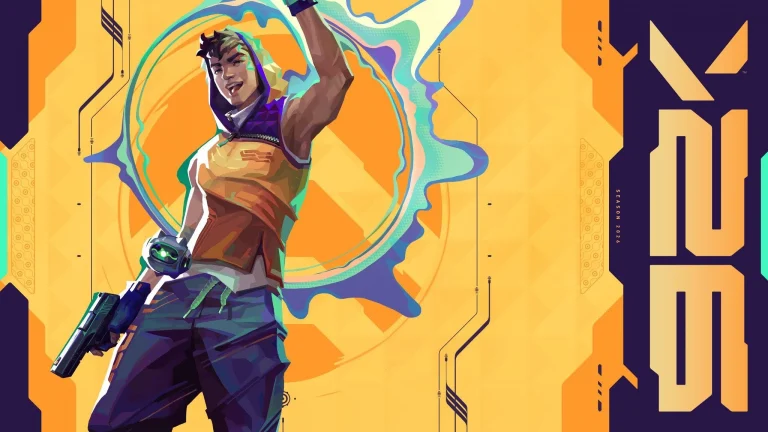
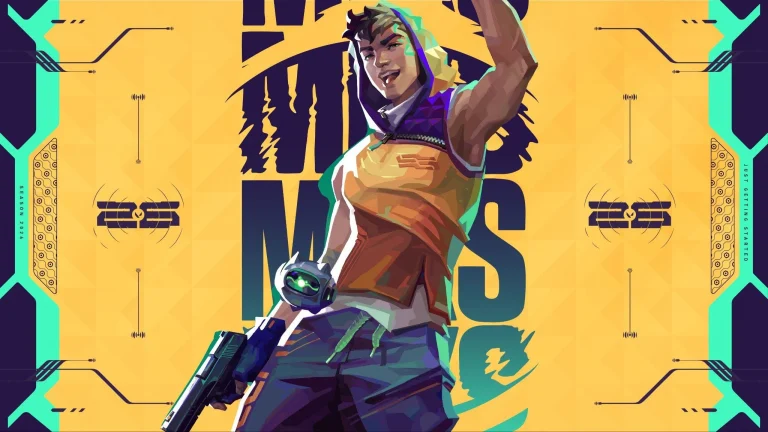
With only a few days remaining before the Valorant Season 2026 Act 2 update kicks off, Riot Games has officially shed light on the new Battle Pass that the upcoming patch will bring with it to the shooter.
Similar to the previous Battle Passes we’ve seen in the title, the Valorant Season 2026 Act 2 Battle Pass will feature a free track and a paid track. Players will have to spend 1,000 VP, which roughly equates to $10 USD, to unlock the paid track of the Battle Pass alongside a minor XP boost.
Without further ado, let’s take a look at everything you need to know about the Valorant Season 2026 Act 2 Battle Pass before it officially arrives.
Valorant Season 2026 Act 2 Battle Pass Release Date
The new Valorant Battle Pass will go live alongside the upcoming Season 2026 Act 2 Battle update on March 18, 2026. The exact release times may vary based on your game’s region.
Alongside kicking off the new Battle Pass, the Season 2026 Act 2 update will also introduce Miks to the competitive shooter, along with other additions such as the Knockout mode, the Blackthorn collection, and more.
Valorant Season 2026 Act 2 Battle Pass: Skins
Below, we’ve listed all the highlights of the Valorant Season 2026 Act 2 Battle Pass:
Riot Games has officially unveiled the new Valorant Agent Miks just ahead of the Masters Santiago 2026 Grand Final, giving fans the first look at the shooter’s Agent 30 just days before it hits the live servers.
Hailing from Croatia, Miks is set to be a Controller who is capable of disrupting his enemies with smokes, concussions, and slows. At the same time, he is also capable of supporting his team by granting heals and Combat Stims to both his allies and himself.
In this article, we’ll go through everything you need to know about Miks, the newest addition to the ever-expanding Valorant roster.
Valorant Miks Abilities Explained
Here’s a look at all the abilities of Miks in Valorant, as revealed by Riot earlier today:
Harmonize
EQUIP Harmonize. Target an ally and FIRE to activate a Combat Stim on yourself and the ally that refreshes with each kill. ALT-FIRE to grant Combat Stim to yourself.
M-pulse
EQUIP M-pulse. ALT-FIRE to toggle between Concuss and Healing outputs. FIRE to throw the device. Upon landing, M-pulse sends out sound waves, either Concussing or Healing players.
Waveform
EQUIP a Map Targeter. FIRE to set locations. ALT-FIRE to spawn Smokes at selected locations.*
Bassquake
EQUIP Bassquake. FIRE to build up and unleash Sonic Radiance forward, knocking back, Deafening, and Slowing players.
*On the console version of the game, the ALT-FIRE and FIRE functions are reversed
From the initial looks, Miks appears to be an extremely strong addition to the Controller role, offering both offensive and defensive potential. His powerful ultimate, which features a knockback, deafen, and slow, could be especially useful when trying to take control of a choke point or bombsite. Additionally, he is one of the only three Agents in Valorant capable of healing allies, alongside Sage and Skye.
It’d be interesting to see how teams integrate Miks into their lineups and whether he can carve out a place for himself in the evolving meta once he arrives in competitive play.
Valorant Miks Release Date
Miks will officially hit the live servers of Valorant on March 18, 2026, alongside the Season 2026 Act 2 update.
The upcoming patch will also mark the kickoff of a fresh map pool, a brand-new Battle Pass, the Knockout game mode, Blackthorn Collection, and more.
Krafton India has officially revealed the BGMI 4.3 update release date and time for players in India, giving fans clarity on when they can download the new version of the game. The BGMI new update will introduce several new features along with the Evolving Universe theme mode, which brings a futuristic environment and gameplay elements. Krafton also released the official 4.3 update podcast, where the developers shared details about upcoming features and events.
BGMI 4.3 Update Release Date and Time
The BGMI 4.3 update will be released on March 19, 2026. The rollout will begin for Android users at 6:30 AM IST, while iOS players will receive the update later on, around 9:30 AM IST. The official BGMI 4.3 Download APK will also be available from the official website at 12:30 PM IST.
Release Date: March 19, 2026
Google Play Store Rollout (Android)
30% Rollout – 06:30 AM IST 50% Rollout – 09:30 AM IST 100% Rollout – 11:30 AM IST
App Store Rollout (iOS)
100% Rollout – 11:30 AM IST
Official Website APK
Full Release – 12:30 PM IST
The BGMI 4.3 update will roll out in phases on March 19, 2026. On the Google Play Store, the update will start with a 30% rollout at 06:30 AM IST, followed by 50% rollout at 09:30 AM IST, and it will reach 100% rollout by 11:30 AM IST for all Android users. Meanwhile, iOS players on the App Store will receive the update with a full rollout at 11:30 AM IST. Players who prefer downloading the BGMI 4.3 update APK can get it from the official website at 12:30 PM IST on the same day.
Evolving Universe Theme: A new futuristic theme that updates the UI and adds high-tech elements to the lobby and spawn island.
Hot Drops & Health: There will now be four hot drop locations instead of two, and the battleground at Milta will offer unlimited health boosts
Dynamic Slide Rails: Players can use new slide rails to travel quickly across the map.
Energy Shield: A new defensive item that can protect you from grenades and enemy fire
Vehicle Boosts: Vehicles will now feature Nitrous Boosts for extra speed
Special Modes & Events
Squad Specializations: Players can choose specific roles like Healing, Vehicle Detection, Combat, or Recon. These skills can be upgraded from C-tier up to S-tier, which even allows for zone prediction.
Ancient Secret Returns: The fan-favorite Egypt-themed “Ancient Secret” mode is making a comeback.
Mini-Games: New challenges include a Para-shoot Challenge (using a slingshot for precision landing) and a Racing Challengs
Cricket League: A special event where you can predict match winners to earn rewards
Skins & Royal Pass
Supercars: New high-performance cars are arriving in the “Speed Drift” event
Royal Pass: The new Royal Pass is advertised as “full paisa vasool” (great value) and starts at 60 UC for new players.
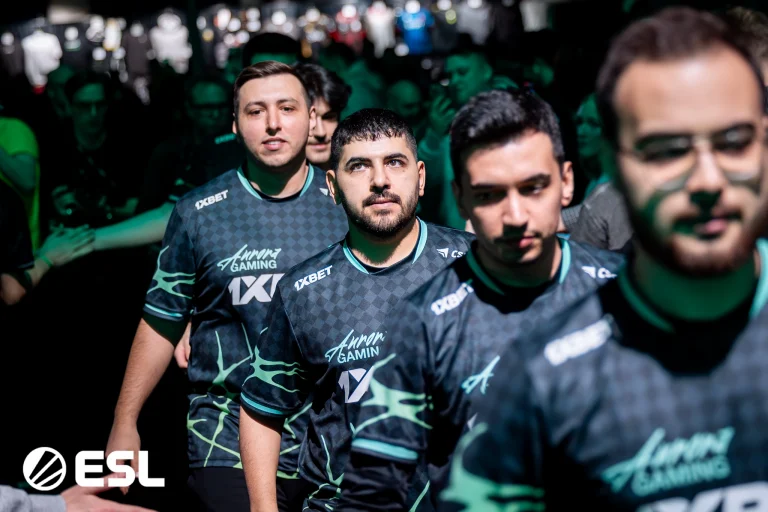
Aurora’s dream run continues as they reverse-sweep Astralis to book their place in the Grand Finals of ESL Pro League Season 23. Losing the first map only for the Turkish side to dominate in back-to-back maps resulted in them booking their first Grand Finals of the year, where they will face NAVI.
Solid start for Aurora on the defense put them in the lead before the Astralis offense took charge of the game. Gun rounds onwards saw Astralis dominating the Turkish side with little to no effort as the half closed with a narrow lead favouring the Danes. Aurora recovered from their 7-5 deficit and managed to race up to a lead before Astralis offense started garnering rounds. Aurora swooped into a lead with the start of the second half before Astralis started building a round. Aurora managed to hit map point first before Astralis won the final two rounds to edge out a close win to kick off the series.
Map 2: Dust2; Pick: Aurora; Winner: Aurora
Following a tough loss on Map 1, Aurora managed to race up to a 7-0 lead before Astralis could see their first round. Domination across the first half saw Astralis only get two rounds by the end of the first half. With little hope for a comeback, Aurora bulldozed the Danes on the CT side as they failed to win a single round, as Dust2 saw the Turkish side dominate and take us to the final map of the series. With the entire squad delivering, 17 kills from their stalwart rifler XANTARES proved instrumental in forcing a 3rd map.
Map 3: Inferno; Pick: Decider; Winner: Aurora
Astralis hit the board with a force buy conversion after Aurora won the pistol. The Aurora defense raced into a massive lead before Astralis salvaged the half with a 7-5 scoreline, 5 in a row for Astralis saw them head into the lead before Aurora got going with their defense. 6 in a row from the Turkish closed the map dominantly as Astralis saw its dream run come to an end.
Astralis taking down Spirit shocked the community, and despite a solid performance today, they failed to make it past Aurora. The signs of improvement are clear, and unless their form has been a fluke, Astralis will be a deadly team to face in the coming events.
NAVI has put a stop to the FUT Cinderella run after beating them with a 2-1 scoreline to reach the Grand Finals of the ESL Pro League Season 23. Dominant showing on the first and final map, with FUT showing signs of causing an upset in the second, summarized an exciting clash in the semi-finals, with the more seasoned side making it into the next stage.
Starting the map with a bang, NAVI mustered a 7-0 lead before FUT were given their first round. A dominant defence to kick off their opponents’ pick, NAVI read FUT like a book with an aggressive and proactive defence that would stop FUT from finding their footing in the first place. Losing just one more round before switching sides, NAVI had the map right under their belt with a 10-2 lead in the first half. Winning the pistol and converting the second round, NAVI hit the map point before slipping up to give FUT 3 rounds, but eventually closing the map dominantly with a 13-5 scoreline.
Map 2: Ancient; Pick: NAVI; Winner: FUT
Pistol win kicked off the offence for NAVI on their own map pick with FUT hitting the board with the first buy round. Round wins became a rare sight for FUT as they only managed 4 rounds on the defence, with NAVI walking away with 8, setting one foot in the Grand Finals. Winning the pistol round, FUT returned the favour to NAVI with a dominant offence of their own, which not only overcame the deficit but managed to outrun the team in reaching the finish line. Failing to defend against such a well-planned offence, FUT sent the map to a decider as they went away with a 13-11 scoreline. 18-year-old dem0n stood out with 21 kills to give his side a chance at the Grand Finals by taking us to the final map of the series.
Map 3: Dust2; Pick: Decider; Winner: NAVI
Winning the pistol FUT secured an early lead in the final map of the series before NAVI found their footing later in the half to level the scoreline before switching sides. As NAVI started from a levelled scoreline after recovering in the first half, the second showed a much more dominant display of Counter Strike despite losing out to the force buy for FUT. Hitting back in the following round with a force buy of their own, NAVI went on to remain flawless till the end of the series and eliminate FUT from EPL Season 23. 23 kills from iM showcased why he remains one of the most consistent riflers in tier 1 Counter-Strike.
FUT’s miracle run comes to an end gloriously as they fall out to NAVI, who has been one of the best sides in the tournament. Following their performances in the QFs, it is clear that they are not just an online team, but LAN requires experience, which, with time, the team will gather, and we shall see it in the coming days.
Despite being one of the biggest esports titles in the world, League of Legends still lacks a feature that’s already commonplace in nearly every major competitive team-based game out there: voice chat. However, Riot Games has confirmed that this might not be the case moving forward, as the MOBA may receive built-in team voice chat in the near future.
The official announcement from Riot comes less than a month after dataminers managed to dig up the PBE game files to uncover the existence of “voice comms abuse reporting” within the game files in February, suggesting that this highly anticipated feature might just be on the horizon.
At the time of writing, League of Legends does include a limited form of voice chat through its party voice feature, which allows players to communicate with others in the same party. At the same time, though, most premade parties tend to rely on third-party platforms like Discord for voice comms instead.
In Riot’s latest blog post on the topic, the company acknowledged the importance of voice chat in team-based games and reassured players that they’re working on bringing team-based voice comms to LoL.
“As a team-based game with the potential to be hyper-competitive, it’s something we have heard many of you have felt was missing from League,” the LoL devs said in a statement. “The text chat and ping system have served you all well for years (and will continue to for years to come), but we want to provide Team Voice for those of you who want to communicate seamlessly with your teammates.”
Riot further said that the devs didn’t focus on implementing voice chat earlier because it failed to meet their standards for “safety and reliability.” The company then claimed that its technology for identifying and dealing with bad actors has since improved, which has prompted the team to revisit the idea of adding voice chat to League of Legends.
Since many players have previously expressed concerns about potential toxicity following the implementation of voice chat in LoL, Riot is exploring ways to maintain its quality and safety. One option the company is considering is rolling the feature out one language or region at a time, ensuring it works well in each before expanding it further.
Lastly, the devs confirmed that LoL players will have to be in good standing in order to access Team Voice, preventing the more toxic players from accessing this feature in the first place.
The devs have yet to provide players with an exact release date for team voice chat in League of Legends.
Artificial intelligence is suddenly everywhere in gaming. Technology companies are pitching tools that promise to transform game development.
Publishers are experimenting with generative systems capable of producing dialogue, assets, and even interactive characters. Conferences such as the Game Developers Conference are increasingly filled with panels focused on AI-powered development pipelines and NPCs that can theoretically converse with players. To hear some companies describe it, the future of gaming may be shaped by generative AI systems capable of building worlds dynamically and responding to players in ways that were never explicitly scripted.
Yet the narrative that artificial intelligence is new to gaming is misleading. Games have relied on AI for decades.
Long before generative models entered the conversation, developers had already solved many of the fundamental gameplay challenges of artificial intelligence. Non-player characters, enemy bots, and environmental behaviors have always depended on carefully designed AI systems.
Open-world games such as Grand Theft Auto built entire cities powered by AI routines. Pedestrians follow schedules, vehicles respond to traffic patterns, and police units react dynamically to crimes committed by players. Competitive shooters like Counter-Strike introduced bots capable of navigating maps, planting bombs, defusing them, acting as hostages, coordinating with teammates, and reacting to player strategies and many more among other features.
These systems were not attempting to replicate human intelligence. Instead, they were carefully designed rule-based systems built to create believable and predictable behavior within the constraints of gameplay. Techniques such as pathfinding algorithms, finite state machines, and behavior trees allowed developers to simulate intelligence while maintaining the level of control required to balance a game.
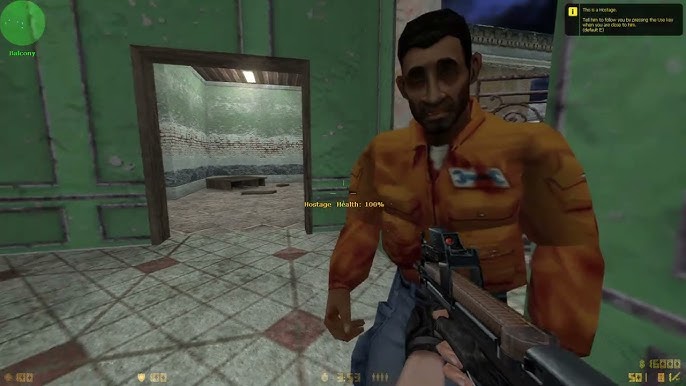
Hostage operation in Counter Strike’s legacy franchise Condition Zero (March 23, 2004)
Generative AI approaches the problem from a different direction.
Rather than following explicit rules written by designers, generative models produce responses based on patterns learned from large datasets. Dialogue can be generated dynamically. Images and animations can be created on demand. Characters could theoretically react to player input in ways that were never written by developers.
The promise sounds revolutionary. But in practice it introduces a new set of questions about control, consistency, and creative authorship in games.
Gaming Has Always Used Artificial Intelligence
Artificial intelligence in games has historically been less about intelligence and more about illusion. Developers design systems that behave intelligently within a limited context rather than attempting to simulate real cognition.
Classic FPS games relied on AI enemies capable of taking cover, flanking players, and coordinating attacks. Strategy games such as Civilization and StarCraft pushed these systems further, creating AI opponents capable of planning strategies and adapting to player actions.
Even competitive multiplayer games incorporated AI in the form of bots. Counter-Strike introduced bots to simulate players in offline matches, allowing newcomers to practice mechanics and learn maps. These bots could navigate environments, manage weapons, and react to combat situations using predefined decision systems.
The AI powering these systems was deterministic. Designers controlled exactly how characters behaved and how they responded to the player. This predictability was essential for gameplay balance. Generative AI changes that equation by introducing probabilistic systems into environments where predictability has traditionally been critical. That shift is at the heart of the industry’s current uncertainty.
Everyone Is Talking About AI in Gaming, But Does It Actually Improve Games?
The excitement surrounding generative AI did not appear in isolation. It arrived during a period when the economics of game development were already under pressure.
AAA game production has grown dramatically more expensive over the past decade. Modern blockbuster titles often require hundreds of developers and development cycles that stretch across five or more years. At the same time, the rise of live-service games has created an expectation that developers will continuously release new content, events, cosmetics, and story updates long after a game launches.
The unbelievable reimagination of GTA in Indian context. Must watch.
In this environment, generative AI offers something extremely attractive to publishers, and that is automation. AI-assisted tools can accelerate concept art generation, produce dialogue drafts during early development, assist with code writing, and automate parts of localization or testing workflows. Even if the final content still requires human oversight, the ability to generate early drafts quickly can significantly speed up production pipelines.
Industry surveys suggest that this is exactly where generative AI is currently being used. Many developers report experimenting with AI tools for brainstorming, coding assistance, or internal development tools rather than player-facing gameplay features.
The GDC 2026 SF Moment
The prominence of generative AI became especially visible at recent industry events.
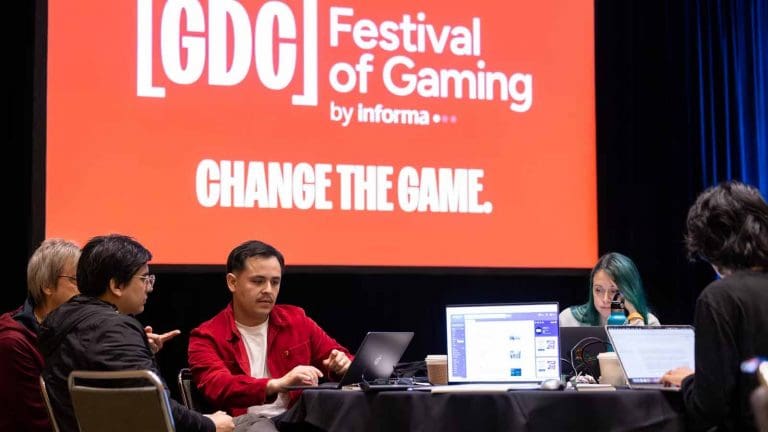
At the Game Developers Conference, generative AI tools were showcased across numerous panels and demonstrations. Technology companies presented systems capable of generating game environments, assisting with programming tasks, or producing dialogue for NPCs.
Yet the atmosphere surrounding these discussions has not been entirely enthusiastic.
Polygon journalist Giovanni Colantonio observed this contrast while covering the event, noting that generative AI had quickly become the dominant topic across conference discussions. At the same time, many developers expressed uncertainty about how these tools should actually be integrated into real game production. The enthusiasm surrounding AI demonstrations stood alongside a quieter skepticism among developers who are still trying to determine what role generative systems should play in their work.
The prototype demonstrated characters capable of responding to player input using AI-generated dialogue rather than scripted lines. The technology generated excitement but also raised questions about narrative control. Games often rely on carefully crafted dialogue to maintain tone, pacing, and story consistency. Allowing NPCs to generate responses dynamically introduces the risk that dialogue could contradict established lore or disrupt narrative structure.
NVIDIA has explored similar ideas with its ACE (Avatar Cloud Engine) technology. Demonstrations showed AI-powered NPCs capable of holding conversations with players in real time. These characters could theoretically respond to questions or adapt dialogue dynamically based on the context of the interaction.
Microsoft has also entered the conversation with experimental models such as Muse, designed to generate gameplay ideas or assist developers during the design process.
These projects illustrate the industry’s curiosity about generative AI. They also highlight how experimental the technology still is. Many demonstrations remain prototypes rather than features implemented in shipping games.
Steam’s AI Disclosure Rules
Valve’s Steam platform introduced another important development in the AI debate.
In 2024, Steam began requiring developers to disclose whether their games include content generated using artificial intelligence. The policy requires studios to explain how generative AI is used in the development process and to confirm that the content does not violate copyright or intellectual property rules. The rule reflects the growing complexity of AI’s role in creative industries. Generative models are trained on large datasets that may include copyrighted materials, raising legal questions about ownership and attribution.
By requiring developers to disclose AI usage, Steam effectively acknowledged that generative AI had already begun entering the game development pipeline.
When Gaming Community & Players Pushed Back
While technology companies and publishers have been eager to experiment with generative AI, player communities have often reacted more cautiously.
Several high-profile controversies illustrate how sensitive the topic has become.
Another controversy emerged around an experimental mobile release tied to the Angry Birds franchise. Players discovered that several images within the game appeared to have been generated using AI tools. The reaction from the community was overwhelmingly negative, with many players accusing the studio of cutting corners. The backlash was severe enough that the game was eventually removed from the Play Store.
Even studios with strong reputations have faced scrutiny. When comments from developers at Larian Studios suggested that generative AI might be useful for concept exploration, some fans immediately expressed concern that the technology could replace artists or writers in future projects. The studio later clarified its stance to reassure players that AI would not replace human creators.
These incidents reveal a broader tension within gaming communities. While players are often enthusiastic about new technology, many remain deeply protective of the craftsmanship behind game development.
Though The Question Still Remains
Artificial intelligence has always played a role in gaming.
What has changed is the scale of the conversation surrounding generative systems. Technology companies see enormous potential in tools that can accelerate development and expand content creation. Publishers see opportunities to reduce production costs and increase the speed of game development. Developers and players, meanwhile, remain uncertain about what this transformation might mean. Generative AI may eventually enable richer worlds, more dynamic characters, and interactive storytelling systems that were once impossible to build manually.
But it may also reveal something about the modern gaming industry itself.
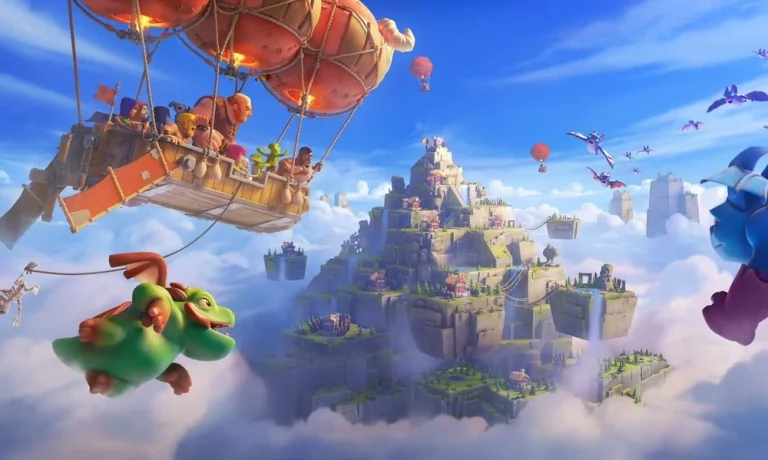
If you have been playing Clash of Clans for any length of time, you know that the Home Village is only half the battle. Clan Capital has become one of the most rewarding parts of the game, primarily because of those sweet, sweet Raid Medals.
In this Clan Capital, we are going to break down exactly how the math works behind the scenes, the secret to better matchmaking, and the attack strategies that will help you one-shot districts like a pro.
Understanding the Raid Weekend Basics
The Clan Capital is essentially a massive, shared base where your entire clan works together to build and defend. Every Friday, the “Raid Weekend” kicks off. During this time, every member gets five attacks (plus a bonus sixth attack if you manage to three-star a district) to hit enemy Clan Capitals.
The goal isn’t just to win; it is to be efficient. At the end of the weekend, the game rewards you with Raid Medals based on how well your clan performed on both offense and defense.
The Math Behind the Medals: Offense vs. Defense
Most players are confused about where their medals actually come from. It is not a random number. It is a calculation based on two specific metrics:
Defensive Raid Medals
Defense is often overlooked, but it can provide up to 350 medals every week. The game looks at all the enemy clans that attacked you. It takes the troop space used by the enemy clan that struggled the most to beat you and divides that number by 25. Essentially, the better your base defense is, the more troop space the enemy has to waste, and the higher your defensive medal count becomes.
Offensive Raid Medals
This is where the bulk of your rewards come from, with a maximum possible cap of 1,620 medals. The most important factor here is your average Capital Gold per hit. This is why one-shotting or two-shotting a district is so important. If you clear a base in two hits instead of three, your average gold per hit sky-rockets, and so does your medal count.
Why You Should Upgrade Fast
A common mistake clans make is trying to “max out” every defense before moving to the next Capital Hall. This is actually counter-productive for your Clan Capital guide to success.
Matchmaking in this mode is based solely on the total number of upgrades completed in your Capital, not your hall level or district strength. Because higher-level bases offer significantly more Capital Gold per hit, you actually want to get to the higher levels as fast as possible.
To manipulate matchmaking in your favor, you should prioritize:
Offensive Upgrades: Barracks, Army Camps, and Spells come first.
Cheap Upgrades: Knock out the tiny, inexpensive defensive upgrades to inflate your total upgrade count. This pushes you into matchmaking brackets with richer targets.
Best Attack Strategies for Every Level
Execution is key. If you want those high offensive medals, you need to be efficient. Here are the top strategies for each stage of the game:
Low Level (Capital Hall 1–6)
At these early levels, simplicity is your best friend. The most consistent strategy is a mix of Giants, Barbarians, and Battle Rams paired with a Heal Spell. Use the Battle Rams to open up deployment zones and the Barbarians to whittle down defenses while the Giants soak up the damage.
Mid Level (Capital Hall 6–8)
Once you hit the middle levels, you have two great options:
Mass Hog Riders: If you want something easy, just bring two Heal Spells and drop your Hogs near splash damage clusters.
Graveyard & Super Pekka: For a more advanced approach, use Graveyard spells to spawn skeletons and distract defenses while your Super Pekka punches through the high-HP core of the base. This is a reliable way to one-shot bases if executed correctly.
High Level (Capital Hall 9–10)
At the highest levels, the two titans of the meta are:
Super Miners: These are arguably the easiest troops to use. Simply freeze heavy-hitting defenses (like the Eagle Artillery or Inferno Towers) and spam your miners. Because they travel underground, they are especially effective on the Dragon Cliffs district.
Sparky: This is the most overpowered troop in the game. The secret to a Sparky attack is “trickling” in cheap troops like Barbarians and Battle Rams to tank for her. If you use heavy troops to tank, they will destroy the buildings before Sparky can get her massive shots off. Pair her with Haste and Graveyard spells to keep her moving and protected.
How to Spend Your Raid Medals
Finally, let’s talk about the shop. If you followed this Clan Capital guide, you’ll have enough Raid Medals to confuse you how to use them. You spent all weekend grinding for these medals. Don’t waste them on Wall Rings.
For 99% of players, the number one priority should be Ores. You should buy Starry, then Glowy, and finally Shiny ores every single week to boost your Hero Equipment.
If you are a player who is “rushing” your Town Hall, your priority might shift slightly toward Hero Potions. Buying three Hero Potions a week allows you to participate in Clan Wars at your full power level even if your individual hero levels are low.
Clan Capital is not only a side-quest. It is a vital engine for your Home Village progression. By understanding how the medals are calculated and focusing on offensive efficiency with the help of this Clan Capital guide, you can significantly speed up your path to maxing out your account.
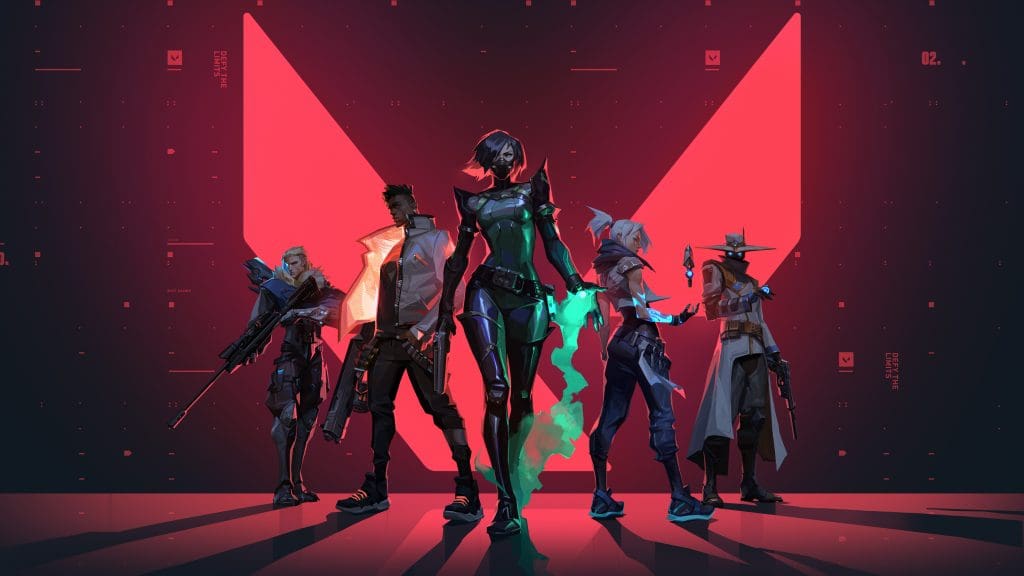
When Riot Games launched Valorant in 2020, it did something that many studios had attempted but few had managed to achieve. It entered a genre that had been dominated by Counter-Strike for more than two decades and immediately captured the attention of the global FPS community. Tactical shooters had always been notoriously difficult to disrupt because their appeal rests on a delicate balance of precision, discipline, and competitive clarity.
Counter-Strike had refined that formula over multiple generations. Riot approached it from a different angle and, for a time, the gamble paid off.
Valorant arrived with a clear understanding of how modern competitive games grow. The game was free to play, backed by Riot’s experience in running global esports, and launched at a moment when streaming platforms were becoming central to gaming culture. Within weeks of the closed beta, the game dominated Twitch viewership and drew in players from several established competitive scenes.
Professional players from Counter-Strike, Overwatch, and other FPS titles began exploring Riot’s new tactical shooter. Esports organizations moved quickly to establish rosters, and Riot’s promise of a structured international circuit created confidence in the long-term viability of the game. For a moment, the narrative across the industry was that Valorant might represent the next evolution of tactical shooters.
The Early Balance That Made Valorant Work
What made Valorant compelling during its early years was the way it combined familiar gunplay with a carefully controlled layer of abilities. Riot borrowed the skeletal structure of a traditional tactical shooter and added agents whose tools could shape the flow of a round without overwhelming it.
Abilities acted as instruments of information and control. Recon tools revealed enemy positions, smokes reshaped sightlines, and traps slowed aggressive pushes. These mechanics expanded the strategic possibilities of the genre while still allowing gunfights to remain the defining moment of most engagements.
Just as importantly, the early roster of agents was manageable. Players could quickly understand what each character contributed to a team composition. Matches remained readable for both participants and spectators, and the tactical rhythm of rounds still revolved around positioning, timing, and mechanical precision.
This balance helped Valorant attract players who were curious about ability-driven design but still appreciated the discipline of tactical shooters.
When Complexity Begins to Grow
Over the years, Riot has continued expanding Valorant’s agent roster, introducing characters with increasingly distinct mechanics and playstyles. Each addition has brought fresh strategic possibilities, but it has also added another layer to the game’s already complex ecosystem.
Today, rounds often involve multiple abilities interacting simultaneously. Recon tools expose positions, movement skills disrupt defensive setups, traps deny areas of the map, and ultimate abilities can reshape entire engagements. None of these mechanics are inherently problematic, yet the sheer number of systems that can influence a round has increased significantly compared with the game’s early days.
For veteran players who have followed the game since launch, adapting to these changes is part of the evolving competitive experience. For newer players, however, the learning curve can feel steeper than it once was. Understanding how to play around each agent’s abilities requires not only mechanical skill but also familiarity with an expanding library of interactions.
This gradual accumulation of mechanics has led some players to wonder whether the game’s design philosophy is shifting away from the simplicity that initially defined it.
A Different Design Philosophy From Counter-Strike
The contrast becomes clearer when Valorant is placed alongside Counter-Strike. Valve’s series has remained remarkably consistent in its approach to design. Maps evolve and graphics improve, but the core framework of the game changes very little. Players rely on a limited set of grenades, precise gunplay, and coordinated team movement to create advantages.
That minimalism has helped Counter-Strike maintain a strong competitive identity. Matches are easy to follow even for casual viewers, and the mechanics that determine victory remain transparent. Complexity arises from how players use the same tools rather than from introducing entirely new ones.
The result is a tactical shooter that occupies an unusual middle ground. It retains the emphasis on gunplay and map control that defines the genre while continuing to evolve through character design.
The Challenge of Sustaining Momentum
Despite ongoing debates about complexity, Valorant remains one of the most prominent titles in modern esports. Riot’s global league system has provided a structured competitive calendar, and international events consistently attract large audiences. The game has secured its place among the most influential FPS titles of the decade.
At the same time, the conversation around its design direction reflects a natural stage in the lifecycle of competitive games. Early growth is often driven by novelty and innovation. As a game matures, players begin paying closer attention to the systems that shape its long-term identity.
Valorant proved that the tactical shooter genre could evolve beyond its traditional boundaries. The challenge for Riot now is ensuring that the expansion of agents and abilities continues to enhance the game rather than obscure the qualities that made it compelling in the first place.
Finding that balance between innovation and clarity will likely determine how Valorant’s next chapter unfolds.
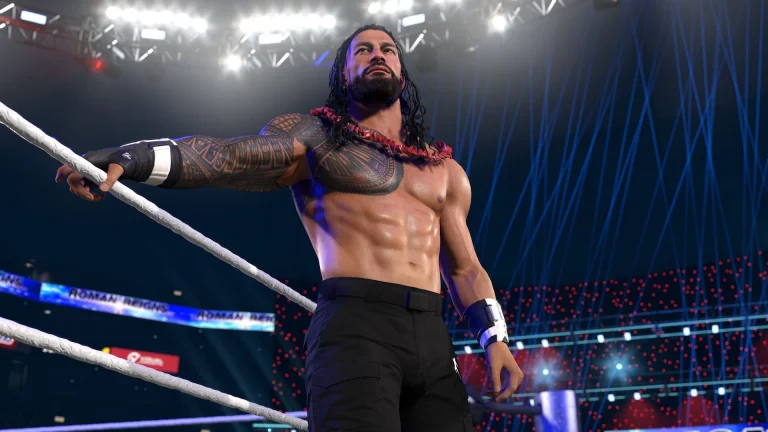
In WWE 2K26, there is a new level of complexity with backstage brawling. However, to return to the ring from the backstage area, a particular tweak must be made to the grapple mechanism. The following is a walkthrough on how to effectively bring your opponent back to the ring in a no-DQ match.
In WWE 2K26, the backstage area has been expanded to include new items such as vending machines and the exit. In previous versions of the game, an L1/LB button prompt is displayed near the exit. However, in WWE 2K26, the player must control the opponent to act.
How to Get Back to the Ring
Follow these controls to get back to the ring:
Grapple your opponent with Circle (PS) / B (Xbox), then press L1/LB to lock in a head hold.
Use the left stick to drag them toward the exit door by the vending machine.
When closed, a new L1/LB prompt appears. Press it to transition back to the arena seamlessly.
Master this, and you’ll avoid count-outs while setting up high-impact returns like a spear through the crowd.
Irish whip opponents into the walls to soften them up while saving your stamina. Practice in Exhibition mode to time the opponent’s grab perfectly, as a botched grab can cost valuable time.
Note: The same opponent grab rule applies when first leaving to go to the backstage area.
This feature improves WWE 2K26’s environment combat system by adding a touch of realism to the arcade gameplay. Try it out in a custom match to come back to the ring every time.