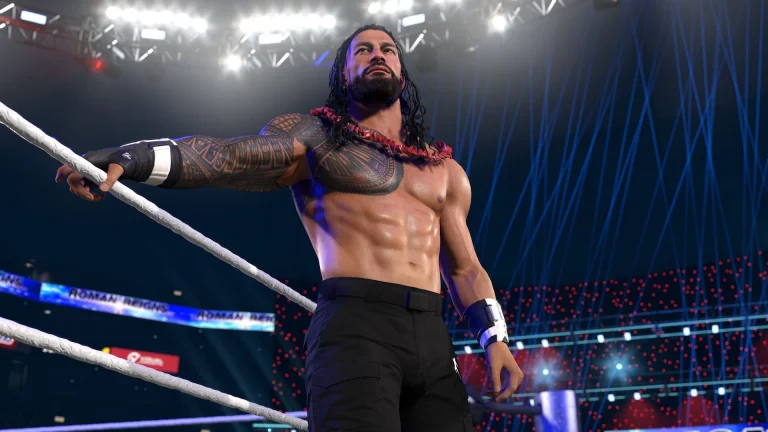
In WWE 2K26, there is a new level of complexity with backstage brawling. However, to return to the ring from the backstage area, a particular tweak must be made to the grapple mechanism. The following is a walkthrough on how to effectively bring your opponent back to the ring in a no-DQ match.
In WWE 2K26, the backstage area has been expanded to include new items such as vending machines and the exit. In previous versions of the game, an L1/LB button prompt is displayed near the exit. However, in WWE 2K26, the player must control the opponent to act.
How to Get Back to the Ring
Follow these controls to get back to the ring:
Grapple your opponent with Circle (PS) / B (Xbox), then press L1/LB to lock in a head hold.
Use the left stick to drag them toward the exit door by the vending machine.
When closed, a new L1/LB prompt appears. Press it to transition back to the arena seamlessly.
Master this, and you’ll avoid count-outs while setting up high-impact returns like a spear through the crowd.
Irish whip opponents into the walls to soften them up while saving your stamina. Practice in Exhibition mode to time the opponent’s grab perfectly, as a botched grab can cost valuable time.
Note: The same opponent grab rule applies when first leaving to go to the backstage area.
This feature improves WWE 2K26’s environment combat system by adding a touch of realism to the arcade gameplay. Try it out in a custom match to come back to the ring every time.
While the result may appear unusual in modern esports, where professional players often peak in their early twenties, it highlights a unique aspect of the fighting game community (FGC), one where experience and strategic depth can extend competitive careers far beyond the typical esports timeline.
The Age Curve in Most Esports
In many popular esports titles, reaction speed plays a crucial role.
First-person shooters like Counter-Strike and Valorant demand lightning-fast aim and reflexes. Battle royale titles rely on rapid decision-making under chaotic conditions. Even MOBAs require constant high-tempo mechanical execution.
As a result, professional esports careers often peak early. Many players enter the professional scene in their late teens and begin to decline in performance by their mid-twenties. This has led to the perception that esports is primarily a young player’s game.
But fighting games have always been different.
Why Fighting Games Reward Experience
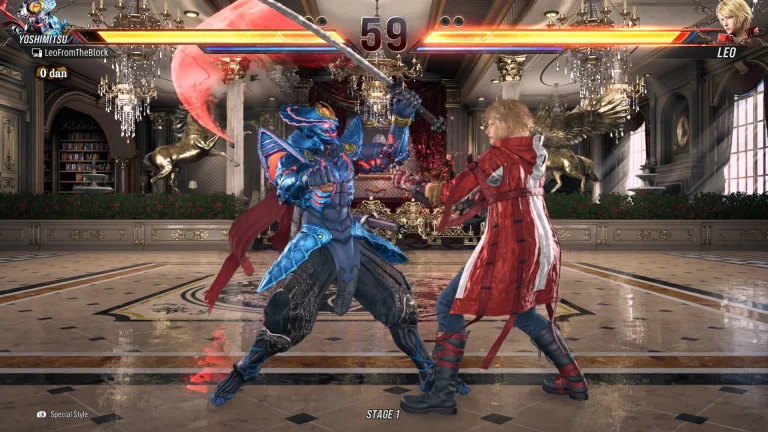
Unlike many other competitive titles, fighting games such as Tekken rely heavily on knowledge, prediction, and psychological reads. Success often depends on, understanding character matchups, frame data knowledge, spacing and positioning, conditioning opponents and adaptation over long sets.
These elements reward experience and pattern recognition, skills that can improve with years of play. While reaction speed still matters, it is not the only factor determining victory. Many top players win through strategic decisions rather than raw reflexes. This dynamic allows older players to remain competitive much longer than in many other esports.
Tekken’s Long Competitive History
The Tekken franchise itself helps explain why players across generations continue competing. Since its arcade debut in 1994, Tekken has built one of the longest-running competitive scenes in gaming. Many players who began competing in arcades during the late 1990s and early 2000s remain active in tournaments today.
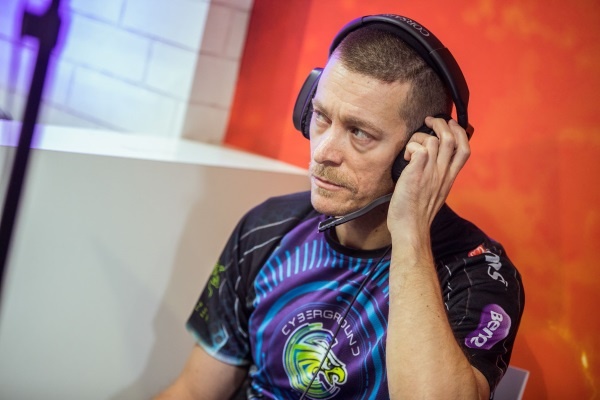
Because the game rewards long-term mastery, veterans often retain a deep advantage in matchup knowledge and game sense. The 48-year-old champion at Enders Zone Evolution 5 is part of this broader legacy, players who have spent decades refining their understanding of the game.
Fighting Games Have Seen Older Champions Before
The fighting game community has never strictly followed the traditional esports age curve. Some of the scene’s most respected players have remained competitive well into their thirties and even forties. For example, legendary Tekken player Knee won EVO 2022 at age 39, demonstrating that high-level performance can still be achieved long after most esports professionals retire.
Other fighting game veterans have continued competing across multiple generations of titles, often transitioning between games while maintaining strong tournament performances. Compared with many other esports ecosystems, the FGC has always embraced a broader range of competitors.
Another reason older players remain active is the structure of the fighting game community itself. Unlike franchise-based esports leagues, most fighting game tournaments operate with open brackets, meaning anyone can enter regardless of ranking or professional status. This structure keeps the competitive scene accessible to players of all backgrounds and ages.
Local tournaments, community events, and regional competitions continue to serve as the backbone of the scene, allowing veteran competitors to remain involved even if they are no longer pursuing full-time esports careers.
A Different Kind of Esports Longevity
The victory at Enders Zone Evolution 5 ultimately reflects something unique about fighting games.
In many esports titles, success is tied to peak reaction speed and intense mechanical execution. In fighting games, however, success often comes from understanding the opponent, predicting habits, adapting strategies, and maintaining composure under pressure.
These are skills that can improve over time. That is why the Tekken community continues to produce champions who have spent decades mastering the game.
A Reminder That Esports Is Evolving
As competitive gaming grows, its player base is also becoming more diverse.
The traditional narrative that esports is exclusively a young player’s field is gradually being challenged by stories like this one. A 48-year-old Tekken champion winning a European tournament may not be the norm, but it demonstrates that experience and dedication still matter in competitive gaming.
For the fighting game community, it is simply another reminder that mastery, not age, ultimately defines success.
NVIDIA has outlined an ambitious vision for the future of gaming graphics, suggesting that upcoming GPU architectures powered by AI and RTX technologies could eventually deliver up to a 1,000,000× improvement in path tracing performance compared to earlier generations.
The claim was shared during GDC 2026, where NVIDIA executives discussed the long-term roadmap for graphics rendering and the role artificial intelligence will play in shaping next-generation gaming experiences.
While the number represents a theoretical long-term target rather than an immediate generational jump, it highlights how NVIDIA expects AI-driven rendering techniques to dramatically reshape the future of game graphics.
Why Path Tracing Matters for Gaming
Path tracing is widely considered the most accurate method for rendering realistic lighting in computer graphics. Unlike traditional rasterization or standard ray tracing, path tracing simulates how light bounces across surfaces in a scene, producing highly realistic reflections, shadows, and global illumination.
However, the technique is extremely computationally intensive and historically impractical for real-time gaming.
Modern GPUs have begun making path tracing feasible through hardware acceleration and AI-assisted rendering technologies. NVIDIA’s RTX platform introduced dedicated RT cores for ray tracing and Tensor cores for AI processing, enabling real-time ray-traced graphics in modern titles.
From Pascal to Blackwell: The Evolution of RTX
During its presentation, NVIDIA showcased how GPU architectures have progressed over the past decade.
The timeline begins with the Pascal architecture, which powered the GTX 10-series GPUs released in 2016. While revolutionary at the time, Pascal relied on software-based ray tracing, making real-time path tracing impractical.
The major turning point came with the introduction of the Turing architecture in 2018, which launched the RTX platform and added hardware-accelerated ray tracing alongside AI-powered DLSS (Deep Learning Super Sampling).
Subsequent architectures continued improving these capabilities, culminating in the latest Blackwell-based GPUs in the RTX 50-series, which feature newer generations of RT cores and AI Tensor cores designed to handle complex graphics workloads.
According to NVIDIA, the current generation already delivers around a 10,000× improvement in path tracing performance compared with Pascal GPUs, thanks to advancements in ray tracing hardware, DLSS, and other rendering technologies.
AI Will Drive the Next Leap
Despite significant progress, NVIDIA believes traditional hardware scaling alone will not be enough to reach the next level of graphical realism.
Executives noted that Moore’s Law, the historical trend of doubling transistor performance every few years, is slowing down, making purely hardware-based improvements increasingly difficult.
Instead, the company is focusing on AI-assisted rendering, where neural networks help reconstruct and enhance images that are partially rendered by the GPU.
Technologies such as DLSS already use deep learning to upscale lower-resolution frames into higher-quality outputs, allowing games to maintain performance while delivering advanced visual effects.
Future rendering pipelines could rely even more heavily on neural networks, combining traditional graphics processing with AI-generated frames and lighting calculations.
If NVIDIA’s roadmap proves accurate, the next decade of GPU development could fundamentally change how games are rendered.
Instead of relying primarily on rasterization, the technique used by most current games, future titles may shift toward fully path-traced environments, where lighting behaves much closer to real-world physics.
Such improvements could bring cinematic-level visuals to real-time gameplay, enabling:
Fully dynamic global illumination
More realistic reflections and shadows
Highly detailed environments with complex geometry
Advanced lighting effects without manual optimization by developers
Several modern games have already experimented with partial path tracing, including visually demanding titles like Cyberpunk 2077 and Alan Wake 2.
NVIDIA’s long-term vision suggests that this approach could eventually become the standard across the gaming industry.
A Long-Term Vision for Graphics
Despite the dramatic claim of a 1,000,000× improvement, NVIDIA’s roadmap reflects a gradual evolution rather than a single breakthrough. Each generation of GPUs is expected to combine improved hardware with increasingly sophisticated AI-driven rendering techniques.
If these technologies mature as expected, the future of gaming graphics could be defined not only by raw GPU power but also by how effectively artificial intelligence can reconstruct and enhance complex visual scenes.
For players and developers alike, the shift could mark the beginning of a new era in AI-accelerated graphics rendering.
Valorant will be receiving a brand-new game mode alongside its upcoming Season 2026 Act 2 update, Riot Games confirmed earlier today.
The upcoming game mode, Knockout, arrived largely out of nowhere, with no prior leaks or hints surrounding its addition. The mode was revealed suddenly by Riot Games earlier today, catching Valorant fans off guard with a pleasant surprise for the game’s community.
Valorant Knockout: New Game Mode
Unfortunately, not much is known about the Knockout game mode in Valorant at the time of writing.
However, Riot has confirmed that the Knockout game mode will be officially revealed alongside the new Valorant Agent on the final day of Masters Santiago 2026.
The showmatch will take place just before the VCT Masters Santiago 2026 Grand Final on March 15, and will feature special guests like BUNT. and Megan from KATSEYE.
— VALORANT Leaks & News (@VALORANTLeaksEN) March 12, 2026
Valorant Knockout Release Date
The new Knockout game mode will be added to Valorant with the upcoming Season 2026 Act 2 update, which is set to hit the servers on March 18, 2026. The update will also see the addition of Agent 30 to the Valorant roster, alongside a new Battle Pass, cosmetics, and more.
It’s safe to say that the new mode has caught much of the community by surprise, especially since it hasn’t been long since the previous mode, 2v2 Skirmish, was introduced to the game. In fact, it wasn’t until February 17, 2026, with the release of Patch 12.03, that Skirmish was added to the regular matchmaking queues. Needless to say, fans are excited to see the new Valorant game mode in action.
With only a couple of days remaining till the official reveal of the highly anticipated Valorant Agent 30, new leaks have already started emerging on the internet, shedding light on what the newest Controller in the roster might bring to the table.
For the uninitiated, the new Valorant Agent is scheduled to be revealed on the final day of Masters Santiago 2026, via a showmatch just ahead of the Grand Finals. Alongside showcasing Agent 30, Riot will also be revealing a brand-new game mode, Knockout, on the same date.
While the detailed kit of Valorant Agent 30 hasn’t been revealed by Riot at the time of writing, prominent leakers in the community have shared several abilities that the new Agent is expected to have in his kit.
As per a recent leak from Valorant dataminer ‘valohabercisi,’ the new Agent will have the following abilities:
Unknown ability
Heal/Stun
Smoke
Ultimate (Details unknown)
Note that the heal and stun in his kit are tied to the same ability, if the leaks are anything to go by. According to the leaker, this implies that players will be unable to use the stun should they choose to heal their teammates and vice versa.
LEAK
New agent will feature stun ability.
So ability kit like this:UNKOWN,Heal or Stun,Smoke,ULT👀
i wrote heal or stun because, as far as I know, if you use your heal ability within a round, you can't use stun, or if you use stun, you can't use your heal ability in the same… pic.twitter.com/2BQXDmaSne
The new Valorant Agent will hit the live servers on March 18, 2026, alongside the game’s Season 2026 Act 2 update. The update will also bring with it a series of other changes to the shooter, including a fresh map pool, a new Battle Pass, cosmetics, and more.
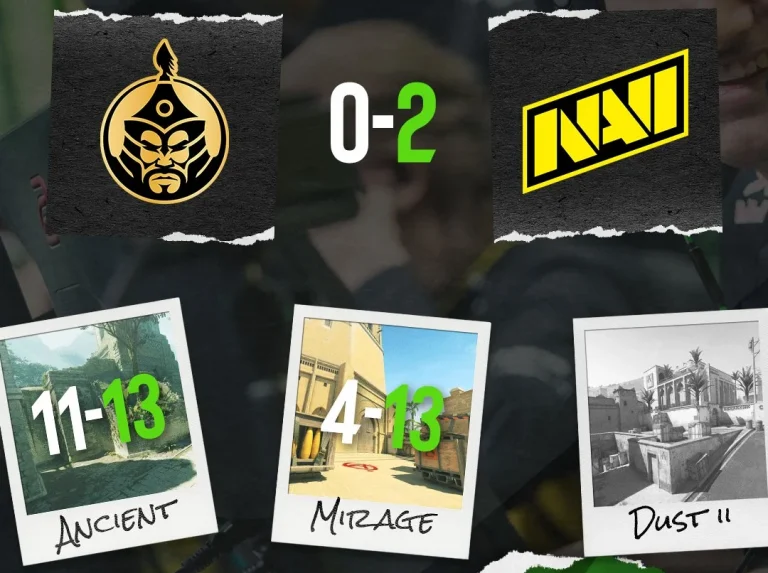
NAVI are through to the Semi-Finals of the ESL Pro League Season 23, beating Asian powerhouse MongolZ with a 2-0 scoreline. Rocky start on Map 1, followed by utter domination in Map 2, capped the MongolZ journey here as NAVI continue to build on their solid form.
Starting on the defense with a pistol round win, the MongolZ put NAVI to kick off their map pick. The proficiency of both teams in Ancient saw them post streaks of rounds as neither side was able to build momentum freely. NAVI levelled the scoreline to make it 5-5 before MongolZ won the final two rounds to edge out a narrow lead before switching sides with a 7-5 scoreline. Starting on the more favourable side of Ancient, NAVI levelled the scoreline with the conversion of the pistol before hitting double digits with MongolZ trailing at this point. Failing to pick up momentum on their offense, NAVI steamrolled them with the room space given to them to close the half with a 13-11 scoreline. Recording the highest impact, makazze pulled in 20 kills for his side to round out a solid NAVI performance in the playoffs.
Map 2: Mirage; Pick: MongolZ; Winner: NAVI
Following a hard-fought win on Map 1, NAVI dominated MongolZ on their defense to start the game with a 6-0 scoreline before MongolZ could put a round on the board. Losing their first round, NAVI hit back immediately in the following round to continue their momentum until the final round of the half, which the Asian side picked up to trail with a 10-2 scoreline before switching sides. MongolZ doubled their rounds by winning the pistol, but NAVI converting the first full buy round put a stop to the MongolZ comeback. Back-to-back three consecutive rounds to close the map gave NAVI a quick conclusion to the final map as they sent MongolZ home with a dominant performance, with makazze topping the charts yet again with 23 kills.
Losing Senzu is costing MongolZ dearly, and failing to replace him has only resulted in inconsistencies since the beginning of the season. While they are known to adapt well, only time can tell if they can reach the heights they did back in 2025.
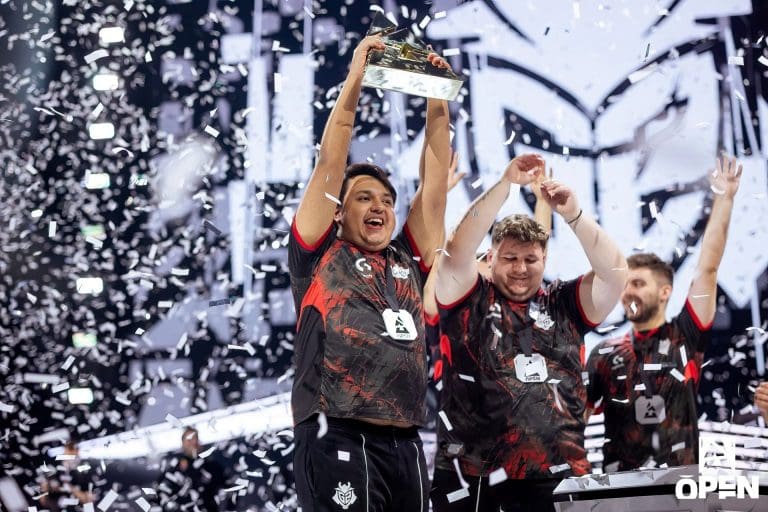
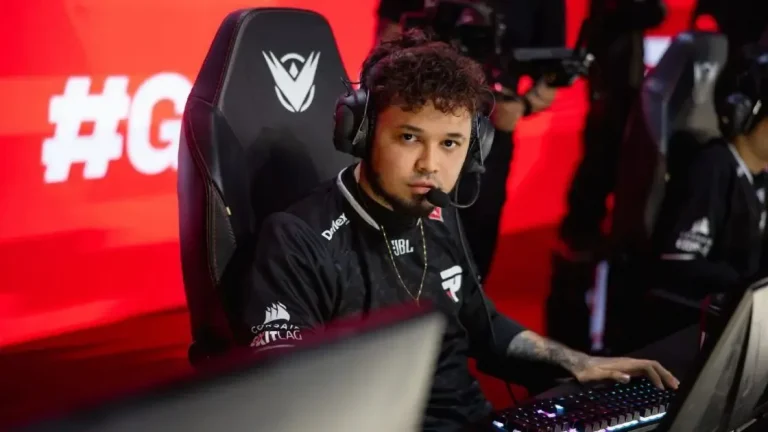
G2 has officially removed Mario “malbsMd” Samayoa from their active Counter-Strike 2 roster. The announcement comes after a rough stretch for the organization, which suffered back-to-back group stage eliminations at PGL Cluj-Napoca and ESL Pro League Season 23.
Why G2 Dropped malbsMd
The Guatemalan rifler was named the 12th best player in the world for 2024. That feels like a long time ago now. His numbers have slipped steadily since NiKo left the roster, and malbsMd was asked to carry more of the firepower load.
In 2024, while playing alongside NiKo, malbsMd posted a 1.13 HLTV rating. From the start of 2025, that number dropped to 1.05. In 2026, it fell further to 1.02, and against the top 10 opponents, he managed only a 0.94 rating.
The 23-year-old clearly struggled with the added responsibility. G2 now sit at 10th in the HLTV world rankings, and their two recent group stage exits forced the organization’s hand.
The Rumored NertZ Swap Deal
According to SPUNJ on the Talking Counter podcast, there are rumors of a straight swap between G2 and Team Liquid. Under this reported deal, malbsMd would head to Liquid while Guy “NertZ” Iluz would move in the opposite direction to join G2.
One of the main reasons this trade makes sense for Liquid is regional qualification. Adding malbsMd, a player from the Americas, would shift Liquid back into the Americas VRS rankings. That matters because Liquid have been struggling badly in the European regional standings, where they currently sit 26th, well outside the qualification zone for the IEM Cologne Major 2026.
G2 has not confirmed where malbsMd will end up. For now, the organization has listed him as inactive.
G2 Prepare for Life After malbsMd
G2 has already signed up for BC.Game Masters. The plan, reportedly, is to use that event to get five matches in with whoever replaces malbsMd on the active roster.
The remaining G2 lineup consists of Nemanja “huNter-” Kovac (IGL), Matus “MATYS” Simko, Nikita “HeavyGod” Martynenko, and Alvaro “SunPayus” Garcia, with Eetu “sAw” Saha coaching.
Liquid’s Major Qualification Crisis
Liquid has had a miserable 2026 so far. They bombed out of ESL Pro League Season 23 during Stage 1, placed 17th-20th at IEM Krakow 2026, and skipped PGL Cluj-Napoca entirely. Their current Valve Regional Standings position in Europe puts them 10 spots below where they need to be for a Major invite, and the April 6 cutoff is approaching fast.
If the malbsMd for NertZ swap goes through, Liquid would field NAF, EliGE, malbsMd, siuhy, and ultimate under coach flashie. The move to the Americas VRS could be Liquid’s last realistic shot at making the IEM Cologne Major 2026, which runs from June 2 to 21 in Germany with a $1,250,000 prize pool and 32 participating teams.
For NertZ, a move to G2 would reunite him with a European roster after spending over a year on Liquid. G2, ranked 10th in the world, would offer a more competitive environment than what Liquid has provided in recent months.
Both organizations are running out of time to sort this out before the Major qualification window closes.
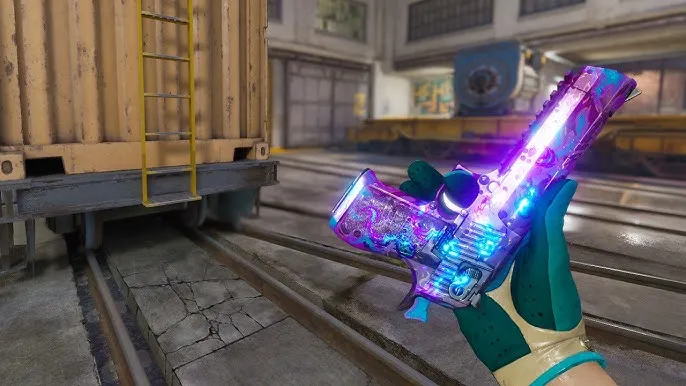
A Counter-Strike 2 skin creator known as “React” has responded publicly after reports surfaced that Valve paid him roughly $35,000 for a weapon skin added to the game. The skin in question is a Desert Eagle design that was included in the Dead Hand Collection.
The reported figure caught the attention of the CS2 community because it appears to be lower than what some skin artists earned under Valve’s older compensation model. Previously, certain creators received royalties tied to case key sales. That system gave them a cut of revenue every time a player opened a case that contained their skin. A flat payment of $35,000, if accurate, represents a very different deal.
Valve has not confirmed the exact amount paid to React.
React Says He Is Happy, But the Context Matters
React addressed the situation in a series of posts on X (formerly Twitter). He made it clear that he was not complaining about the money itself. What bothered him was how people discussed it without understanding the full picture.
He pointed out that he spent six years of his free time submitting skins to the Steam Workshop before one finally made it into the game. He also noted that some of his peers received different payouts under earlier structures, which made the comparison feel uneven.
In one post, he wrote that while he was content with the outcome, people did not grasp what six years of rejected submissions felt like. In another, he suggested that if people knew exactly how his payment compared to what regular case contributors received, they would likely feel differently about the number.
The CS2 Community Is Divided on Whether $35,000 Is Fair
The discussion spread quickly among players and fellow creators. Opinions were split.
One skin creator pushed back against anyone calling $35,000 a fair amount. Their argument was straightforward: most people do not realize how much time and effort goes into making a skin that actually gets accepted. According to them, many professional artists spend years trying and never get a single design into the game.
On the other side, another artist pointed out that earning $35,000 for two art pieces is rare in the graphic design and art world. From their perspective, the payout was good by industry standards, regardless of how it compared to what Valve paid others in the past.
How Valve’s Workshop System Works
Valve has used community-created weapon skins in Counter-Strike for years. Artists submit their designs through the Steam Workshop. If Valve selects a skin, it goes into an official in-game collection or weapon case.
These skins feed directly into CS2’s massive in-game economy. Players buy, sell, and trade them on the Steam Community Market, and some rare skins have sold for tens of thousands of dollars.
Despite the scale of this economy, Valve has never publicly disclosed how much it pays the creators whose work drives it. That lack of transparency has been a recurring point of friction among workshop contributors.
Valve Also Facing Legal Pressure Over CS2 Loot Boxes
Separately, Valve is currently dealing with multiple lawsuits related to its loot box mechanics in CS2. The lawsuits argue that weapon cases function as a form of gambling. Valve has pushed back against these claims, including a recent response to a lawsuit filed in New York.
The loot box controversy and the creator payout discussion are separate issues, but they both touch on the same broader question: how much money flows through CS2’s skin ecosystem, and who benefits from it.
The Civil Police of the State of São Paulo have opened a formal investigation into Alexandre “TitaN” Lima, the former ADC for paiN Gaming. The case involves complaints from three separate women and covers three distinct criminal charges: dissemination of pornography, rape of a vulnerable person, and sexual harassment.
The police report was filed on Sunday, March 8, 2026. Brazilian outlet VTV News, part of the SBT media group, published details of the investigation on the morning of March 10.
According to the VTV News report, the Public Security Secretariat of São Paulo (SSP-SP) confirmed the nature of the charges. The three victims reportedly chose to come forward together rather than individually, out of fear that going public alone would lead to social media backlash and unwanted exposure. TitaN is a well-known figure in the Brazilian League of Legends scene, and that visibility made individual complaints feel risky for each of the women involved.
What the Victims Have Alleged
The first accusation involves the alleged non-consensual sharing of intimate content. According to the report, TitaN told one of the victims he would send a video of himself engaged in a sexual act with a former girlfriend. He then reportedly sent a temporary file to the victim. This particular allegation had surfaced publicly earlier this year, when the victims indicated in January 2026 that they intended to file a joint legal complaint.
The second accusation is far more severe. One victim alleges that TitaN touched her while she was unconscious and unable to give consent. In conversations shared with VTV News, the woman confronted TitaN about what happened, reiterating that she was not conscious when the contact began. She also questioned him about whether he had used protection during the act.
The third victim is a 16-year-old girl. Her case was the one that first triggered TitaN’s suspension from paiN Gaming. According to previously leaked conversations, TitaN sent the minor messages with suggestive, double-meaning language, along with a semi-nude photograph. The girl cut off contact immediately after receiving the image and reported the incident to Gabriela Gabzuski, who was TitaN’s girlfriend at the time. The minor’s parents are reportedly backing her complaint fully and have stated they intend to see the legal process through to its conclusion.
Evidence supporting all three allegations reportedly includes images, videos, and audio recordings.
TitaN’s Earlier Response and His Firing from paiN Gaming
TitaN broke his public silence in February 2026. He admitted to cheating on his partner and acknowledged having conversations with a minor. On the same day, he stated publicly that he was not facing any criminal charges and had not committed any crime.
Salve, rapa!!
Tô aqui pra trocar uma ideia com vocês sobre o que fiz.
Não vou fugir nem tentar me justificar: eu traí, quebrei a confiança das pessoas que estavam ao meu lado e decepcionei todos ao meu redor. Isso inclui família, time, amigos e as pessoas que torce por mim.
Gabzuski pushed back on that framing at the time. She pointed out that the lawsuit was still being prepared and that the legal process takes time. She noted that TitaN was simply taking advantage of the fact that he had not yet been formally summoned to claim there was nothing to worry about.
That window closed on March 10, 2026, when paiN Gaming officially terminated TitaN’s contract. The organization released a statement on X (formerly Twitter) confirming his departure. paiN Gaming said the decision was grounded in its principles and the responsibility it holds toward its history, its community, and what the organization represents.
What Happens Next
The investigation remains active. The São Paulo Civil Police are continuing their work on the case, and no trial date or formal charges beyond the initial police report have been announced as of this writing.
This is a developing story. Updates will follow as the legal proceedings move forward.
Netflix confirmed on March 12, 2026 that KPop Demon Hunters is getting a sequel. Directors Maggie Kang and Chris Appelhans will return to write and direct the follow-up film, which will be produced once again by Sony Pictures Animation.
The sequel is the first project under a new exclusive multi-year writing and directing deal that Kang and Appelhans have signed with Netflix, focused entirely on animation. A 2029 release window has been reported, though no official date has been locked in yet. Given how long major animated productions take, that timeline could shift.
What We Know About the KPop Demon Hunters Sequel So Far
Plot details are still completely under wraps. Neither Netflix nor the directors have shared anything about the story, setting, or new characters. What we do know is that Kang and Appelhans are said to be in the early stages of development, with plans to focus on the project seriously after awards season wraps up.
In a statement shared through Netflix’s Tudum, Kang expressed personal pride in the project’s cultural impact. She called it meaningful that global audiences are asking for more from what she described as a Korean story with Korean characters, adding that the world they built still has much more to offer.
Appelhans said the characters feel like family to the creative team and that the filmmakers are looking forward to pushing how music, animation, and story work together in the sequel.
The Original Film: Netflix’s Biggest Movie Ever
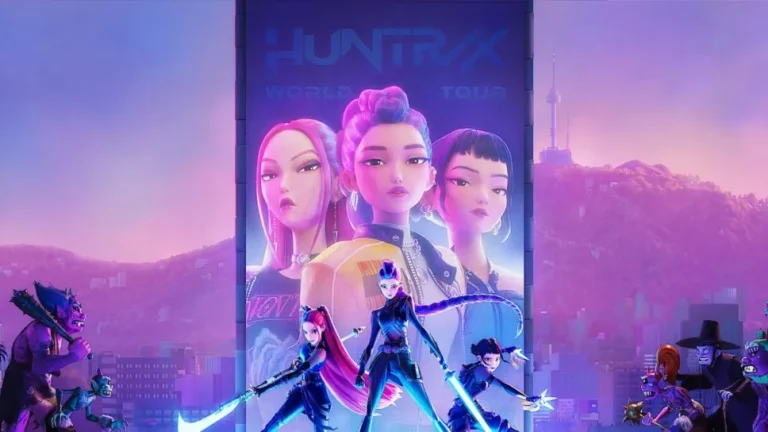
For anyone who somehow missed it, KPop Demon Hunters is an animated musical about HUNTR/X, a fictional K-pop girl group made up of Rumi, Mira, and Zoey. By day, they are global pop superstars. In secret, they battle demons using their music. The main villain is Gwi-Ma, a demon lord who sends the rival boy band Saja Boys to brainwash the world.
The film debuted directly on Netflix in June 2025 through a licensing deal with Sony Pictures Animation. It launched to relatively little fanfare but snowballed through social media word-of-mouth and the runaway success of its soundtrack. By the end of summer 2025, it had become a full-scale cultural event.
The voice cast includes Arden Cho as Rumi, May Hong as Mira, and Ji-young Yoo as Zoey. The singing voices behind HUNTR/X are EJAE, Audrey Nuna, and Rei Ami. Ken Jeong, Daniel Dae Kim, and Ahn Hyo-seop round out the supporting cast.
Record-Breaking Numbers on Netflix
The numbers behind KPop Demon Hunters are hard to overstate without sounding like a press release, so here they are plain:
The film crossed 325 million views in its first 91 days on Netflix. As of the sequel announcement, total views have surpassed 500 million, making it the most-watched movie in Netflix history. The previous record holder was Red Notice (2021), which had about 230 million views.
The soundtrack has been streamed around 11 billion times globally, according to Deadline. Netflix also released a sing-along theatrical version during fan events in fall 2025, which pulled in an estimated $18 to $20 million at the box office. That was a first for the platform.
Awards Season Dominance
KPop Demon Hunters has also torn through awards season. Here is what the film and its music have picked up so far:
The song “Golden” won the Grammy Award for best song written for visual media at the 2026 ceremony, making it the first K-pop song ever to win a Grammy. It was also nominated for Song of the Year. On the Billboard Hot 100, “Golden” hit No. 1 and held the top spot for eight consecutive weeks. It charted at No. 1 in over 30 countries. HUNTR/X became the first K-pop girl group to top the Billboard Hot 100.
At the Golden Globes in January 2026, the film won Best Animated Motion Picture and Best Original Song. It also won Best Original Song at the Critics’ Choice Awards. At the Annie Awards in February, KPop Demon Hunters swept all 10 categories it was nominated in, including Best Animated Feature.
The film heads into the 98th Academy Awards on March 15, 2026 with two nominations: Best Animated Feature and Best Original Song for “Golden.” It is widely considered the frontrunner in the animated category.
The Fortnite Connection and Brand Collaborations
KPop Demon Hunters moved well beyond just streaming. The film has had brand collaborations with Nongshim, Funko Pops, and a Fortnite crossover that brought HUNTR/X skins and cosmetics into the game. A second wave of Fortnite cosmetics tied to the franchise has also been reported.
The characters from the film were the most popular Halloween costumes of 2025, which says something about how deep the movie has cut into mainstream pop culture.
What This Means for Netflix Animation
Netflix CCO Bela Bajaria called out the film’s cross-cultural, cross-generational appeal in her statement about the sequel. Netflix Film Chairman Dan Lin credited Kang and Appelhans for telling a story that was deeply personal while breaking cultural barriers, saying it achieved what Netflix considers its goal: making someone’s favorite movie.
Sony Pictures Animation presidents Kristine Belson and Damien de Froberville also confirmed their studio’s continued involvement.
The multi-year deal with Kang and Appelhans suggests Netflix sees KPop Demon Hunters not just as a one-off hit but as a franchise and a creative partnership worth building around. Whether that means additional spinoffs, series, or projects beyond the sequel is unclear, but the deal covers animation broadly.
For now, the wait begins. If the 2029 target holds, fans are looking at roughly three more years before HUNTR/X returns to screens.