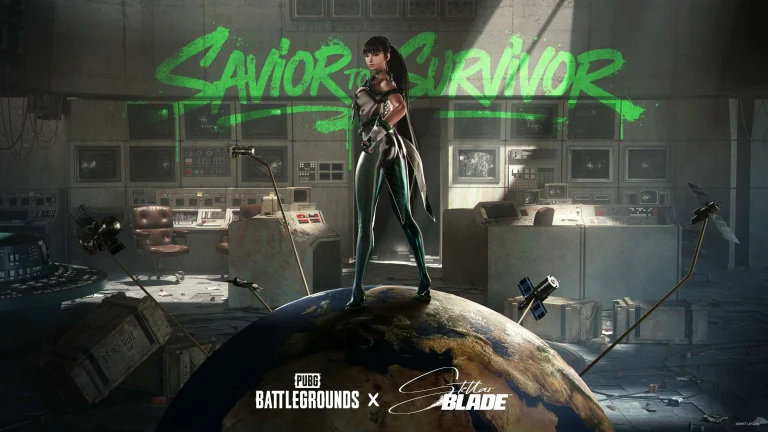
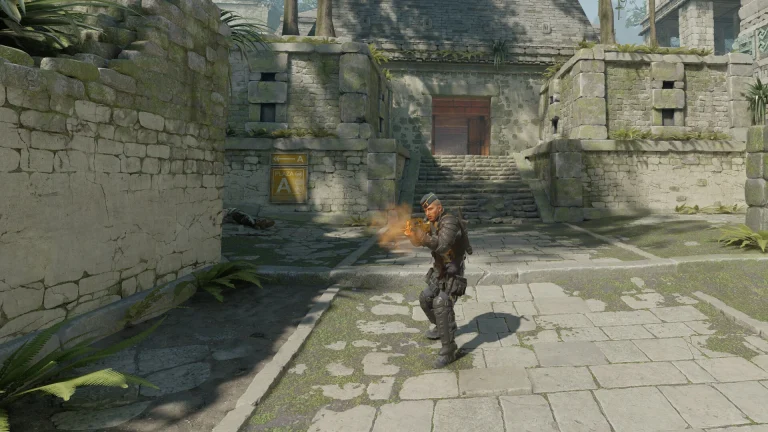
PUBG Studios has announced a new crossover with Shift Up’s action RPG Stellar Blade. The collaboration brings EVE, the game’s lead character, into PUBG: Battlegrounds as a premium cosmetic called Contender #003: EVE.
A trailer dropped on April 3, 2026, and it showed all three of EVE’s nano suits that players can unlock in the battle royale.
PUBG x Stellar Blade Collab
The collab adds EVE from Stellar Blade as a Contender skin in PUBG: Battlegrounds. Contender skins are premium cosmetics with a progressive unlock system. Players pay to access the base skin, then work through stages to unlock additional outfits tied to the same purchase.
PUBG x Stellar Blade Collaboration presents, Contender #003: EVE
From savior to survivor. In the Battlegrounds, survival is the only rule.
The event name is Contender #003: EVE. The official tagline used in the trailer reads: “From savior to survivor. In the Battlegrounds, survival is the only rule. EVE engaged. Survival begins.”
PUBG has run similar crossover events before, including past collaborations with Resident Evil and Lamborghini.
All Three EVE Nano Suits in PUBG
The trailer confirmed three nano suits from Stellar Blade available through the Contender skin:
Planet Diving Suit (7th): EVE’s suit from her first arrival on Earth. It has a clean, functional look tied to the game’s early narrative.
War Dress: A more combat-ready outfit from later in Stellar Blade’s story.
Comfort Force: A third outfit included in the Contender bundle.
The collaboration also includes a frying pan skin styled after EVE’s original green suit. Frying pans are a long-running cosmetic item in PUBG, so this one doubles as a nod to the source game.
PUBG x Stellar Blade Release Date
The content goes live on PC on April 8, 2026. Console players on PS5 and Xbox have to wait until April 16, 2026.
Both releases typically go live following scheduled server maintenance. On PC, that window is usually midnight PT. Console maintenance runs at 1 AM PT.
EVE Skin Price
PUBG Studios has not announced pricing for the Stellar Blade EVE skin yet. Contender skins in PUBG tend to cost more than standard cosmetics given their multi-stage unlock structure. No official figure was included in the trailer or any related announcements at the time of writing.
When the first trailers for Mumbai Gullies flickered across screens in 2020, they didn’t just represent a game; they represented a collective longing. For decades, Indian gamers had navigated the digital streets of Los Angeles, London, and Tokyo, always looking at a reflection of someone else’s culture. The promise of an open-world title set in the heart of Mumbai, built by Indians, for the world, felt like a definitive signal that the country was finally ready to move beyond the lucrative but creatively narrow confines of mobile gaming.
It was a moment of peak optimism, fueled by a rapidly expanding audience that was beginning to crave high-fidelity, domestic storytelling.
Burden of “Indian GTA” Label
However, years have passed, and that initial surge of adrenaline has cooled into a more complicated silence. The conversation is no longer about when the game will release, but rather about what its trajectory tells us about the current state of Indian game development.
While it is easy to look at the delays and the lack of concrete updates as a simple failure of a single project, the reality is far more nuanced. Mumbai Gullies has become a case study in the friction that occurs when massive ambition collides with the unforgiving logistics of the global games industry. There is a common tendency to blame the “Indian ecosystem” for these kinds of stumbles. The narrative suggests that a lack of funding or a shortage of veteran talent is what keeps these projects in development hell. Yet, this explanation feels increasingly hollow.
India is home to one of the most engaged gaming demographics on the planet, and the technical prowess of Indian developers is a matter of record in the global outsourcing market. We have already seen successful domestic breakouts like Raji: An Ancient Epic, which proved that a small team could deliver a world-class experience by exercising immense discipline. The developers at Nodding Heads Games didn’t try to replicate a massive sandbox; they focused on a specific aesthetic and a tight mechanical loop, and most importantly, they delivered a finished product.
The Logistics of Digital Sprawl
The struggle of Mumbai Gullies highlights a different problem, the dangerous allure of the “AAA” label. Open-world games are arguably the most complex undertaking in modern software engineering. They require a stable technological foundation, rigid development pipelines, and a massive scale of assets that must interact seamlessly.
When a project begins to experience “scope creep” the tendency for a game to grow larger and more complex than originally planned, the infrastructure required to support it must grow at the same pace. When reports began to surface of shifting development tools and a lack of consistent gameplay visibility, it signaled that the project’s ambition was beginning to outpace its process.
This was further complicated by the decision to position the game as “India’s GTA.” While this was a brilliant marketing move that generated instant visibility, it set a bar that few studios in the world, let alone a burgeoning independent one, could realistically clear. By inviting comparisons to Rockstar Games, a studio with decades of experience and billions in capital, Mumbai Gullies inherited the expectations of a global blockbuster without the decades of institutional knowledge required to build one. This created a rift between public perception and the reality of independent development, where every engine change or staff turnover can set a project back by years.
We are, however, seeing a shift in how these challenges are managed. The industry is maturing, and new projects are seeking more structured paths to the finish line. A prime example is the development of Mukti by Underdogs Studio. Unlike the localized, isolated development cycles of the past, Mukti is part of the Sony India Hero Project. This initiative provides a crucial layer of corporate oversight, mentorship, and milestone-based funding that was often missing in earlier Indian ventures.
This “structured ambition” suggests that the next generation of Indian developers is learning that vision alone isn’t enough; you need a roadmap that accounts for the inevitable technical hurdles of a multi-year development cycle.
“Trust Tax” Phenomena
The community’s response has also matured. The days of blind hype are being replaced by a healthy, if somewhat cynical, scrutiny. Indian gamers are no longer satisfied with being told a game is “Indian”; they want to know if it is good.
This cynicism is the “trust tax” that new developers must now pay. Every high-profile project that fails to materialize makes it harder for the next studio to secure funding or win over a sceptical audience. This isn’t a uniquely Indian problem, it’s a universal law of the industry, but it is felt more acutely in a region that is still trying to prove its legitimacy on the PC and console stage.
Ultimately, the story of Mumbai Gullies isn’t a tragedy about a lack of talent or a missing ecosystem. It is a lesson in alignment. The most successful games are those where the vision, the budget, and the technical capability are all pulling in the same direction. The goal for the Indian industry shouldn’t be to announce the biggest game ever made, but to cultivate a culture of execution.
We don’t need the first “Indian GTA” to be a sprawling, infinite simulation; we just need it to be a polished, finished, and playable reality. Ambition starts the fire, but only process and discipline can keep it burning until the credits roll.
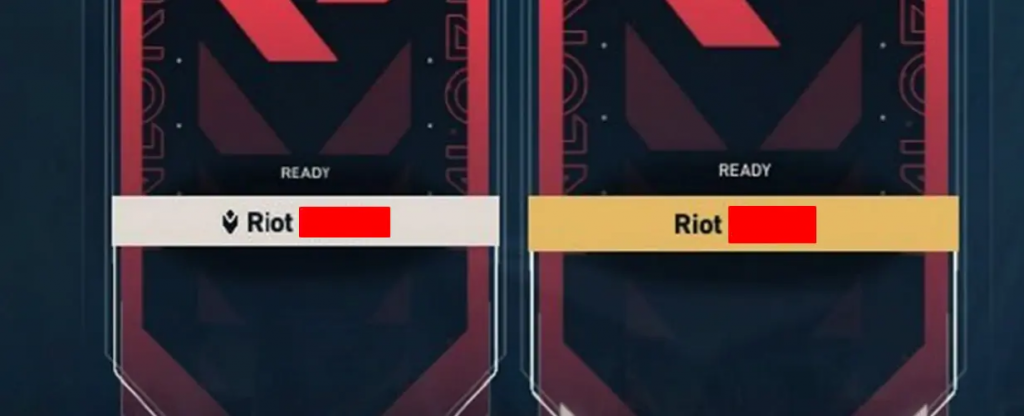
Recently, social media forums have been seeing a surge of unsettling screenshots about people impersonating Riot developers in Valorant while using obscene usernames and engaging in abusive text and voice communications. These incidents have left many players concerned about whether the accounts engaging in this behavior actually belong to Riot employees.
For the uninitiated, several screenshots circulating on platforms like X show players using extremely offensive usernames that begin with “Riot.” Typically, the “Riot” tag is reserved exclusively for employees of Riot Games, which led many players to believe the accounts belonged to official staff.
A video featuring one of these accounts bearing the “Riot” tag, hurling slurs at a streamer, has also recently gone viral on X. With many players initially believing the offensive remarks were coming from an actual Riot employee, the video quickly sparked outrage within the community.
Riot Games Fixes Dev Impersonation Bug
Fortunately, it didn’t take long for Riot to address this issue. According to a statement from Riot dev Stephen “Skram” Kraman, the bug that allowed players to impersonate the Valorant devs has already been patched. Kraman further confirmed that players who utilized this bug to commit voice or text comms abuse have been penalized.
“We caught a bug that allowed people to impersonate Riot names in-game,” the dev said in a statement. “This bug has been fixed, and all names have been changed. We are penalizing players who took advantage of this bug to commit voice or text comms abuse.”
Hey all, we caught a bug that allowed people to impersonate Riot names in-game. This bug has been fixed and all names have been changed. We are penalizing players who took advantage of this bug to commit voice or text comms abuse
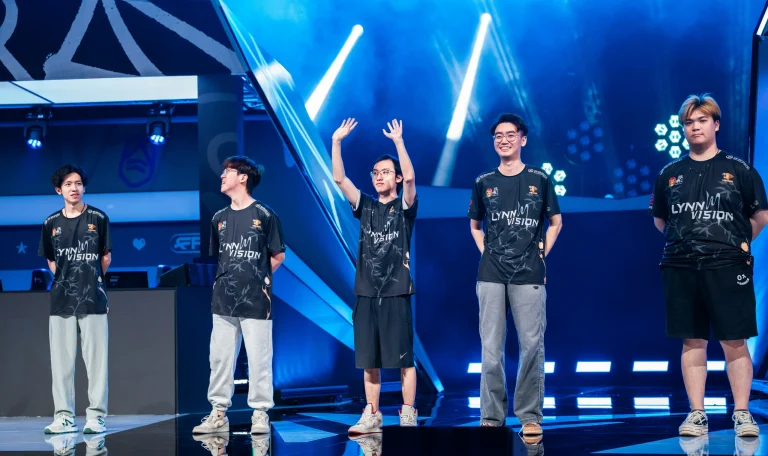
A massive controversy has erupted in the Chinese Counter-Strike competitive scene after Lynn Vision‘s surprising decision during the PGL Astana Closed Qualifier against Rare Atom that no one saw coming.
While many questioned the strange decision to forfeit a crucial match, Lynn Vision, thinking one step ahead, handed Rare Atom free Valve Region Standing points, sparking a debate in the community about the integrity of the system and the circumstances that led to this move.
Why did Lynn Vision Forfeit?
The decision was mainly devised due to how the VRS ranking system impacts qualifications in Majors. Rare Atom, at the time, was ranked second in Asia, which would give China an additional slot in the Major, and a loss to Lynn Vision would put their ranking at risk.
Losing the match on purpose would categorise this move under match-fixing, so choosing to forfeit this and declaring their motive for doing so ensured China retains the two spots at the Major without pulling additional scrutiny towards them.
How does this impact the CS2 Competitive Scene?
This incident sparked a widespread debate about fairness, as well as exposing the deep-rooted problems with the competitive structure of the game, more specifically, the controversial qualification system for the Major.
One can argue that this may be a tactful use of a legal loophole, but one can’t go without admitting that such manipulations of the system force teams to use untoward methods depending on the circumstances and tournament structure.
Now that this has been abused on the world stage, do not be shocked to see more and more teams take advantage of the loophole, and unless Valve chooses to make a cautionary tale out of this, the VRS system might need a big revision before it can be a system with integrity.
The latest CS2 beta has sparked general excitement within the CS2 community with the significant boost in FPS and stability it is presumed to bring, following highly positive first impressions.
Animgraph 2 Beta Performance
While this may not be another optimization fix, there is more to it than meets the eye. To achieve this, Valve Animgraph 2 was brought in to replace the existing animation framework and therefore pulls more FPS out of your existing hardware.
Animgraph 2 is set to reduce overall load on the CPU; it frees up more room for it to push FPS, which directly contributes to the performance and stability of your game.
The new system had all the animations rebuilt from scratch, which not only makes the transitions smoother but also reduces overall workload on the system, therefore bringing noticeable improvements to the game.
Today we're shipping (or launching 🚀) a beta build that updates CS2's animation system to Animgraph 2. Learn more: https://t.co/FA9RCs0f1y
The beta update that players got a taste of showed significant improvements in FPS as well as improved overall stability; a big part of it is because of the new animation framework introduced.
Not just a new animation framework, Valve has introduced broader engine-level improvements in the Source 2 engine, which also contributes largely to the new, improved game performance.
Gameplay Changes That Impact Competitive Play
The changes brought to the game with this update are as follows:
Improved height mechanics make the game more realistic in terms of interaction with slopes.
Any grand line-ups from slopes need to be revisited as they might not work the same.
Improved occlusion limits glitches that allowed vision through opaque objects.
What This Means for CS2 Players
The CS2 beta update signals a major step forward in performance optimization. With improved FPS stability, reduced system load, and refined gameplay mechanics, the game is moving closer to delivering a smoother and more competitive experience.
This update is a major testament to Valve’s efforts in making the game better and better. While they have got their fair share of criticism over a plethora of issues that still plague the game, a performance improvement of this magnitude is always a welcome change, and the positive reaction from the community speaks for itself.
The Free Fire OB53 update is finally on the way, and Garena has officially revealed the Free Fire OB53 update release date and time for all players. After the Advance Server testing ended on April 2, 2026, the full update is now ready to roll out globally.
The Free Fire new update will bring fresh content, including a new theme, gameplay changes, features, vehicles, and more exciting additions for players.
Free Fire OB53 Update Release Date and Time
The Free Fire OB53 update release date is set for April 8, 2026. The update is expected to go live in the morning at around 9:30 AM IST.
Before the update goes live, players may face a short maintenance period. During this time, the game servers will be down and players won’t be able to log in. Once the update is released, the game will be available again with all the new features.
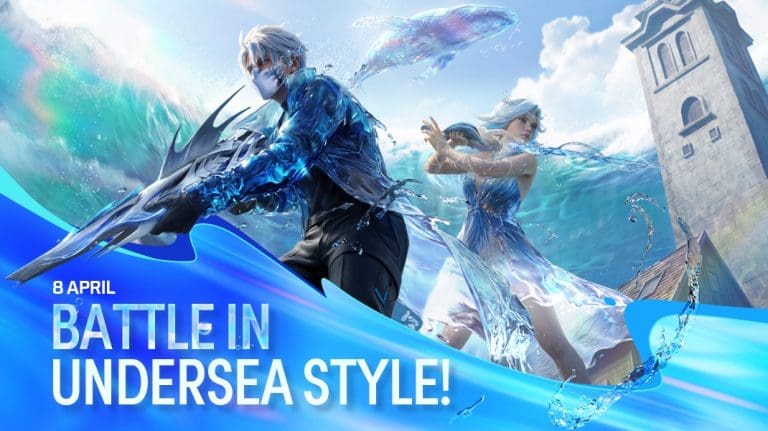
The Free Fire New update introduces a brand-new theme called Undersea Mystery, along with several gameplay improvements and new mechanics.
Undersea Mystery Theme
This update brings a water-based theme with unique features:
Fishing Ponds where players can catch fish and get loot
Bubble Airdrops with high-tier rewards
Hydro Blasters and water-based gameplay elements
Players can take a break from intense fights and collect buffs using fishing mechanics.
Whale Plane
The starting plane in matches is now designed as a whale, giving a fresh visual experience at the start of every game.
Undersea Realm
A special area will appear in Bermuda at Nurek Dam:
Offers high-tier loot
Includes an interactive sword statue
Players can use portals to return to the main map
Hydro Zone
The High-tier Loot Zone is replaced by a Hydro Zone:
Surrounded by water walls
Players can pass through without damage
Bullets can also pass through
Contains high-quality loot
Fishing Pond System
Fishing Ponds are spread across the map:
Players can catch fish for buffs
Fish follow the player after being caught
Eliminating enemies transfers their fish to you
In-Match Preset Selection
Players now get more flexibility during matches:
Choose presets and loadouts before the match
Select from preset options during the game
Cannot change skills after match starts
This feature helps players plan better strategies.
Quick Messages Update
Communication has been improved with faster quick messages:
Easier to give commands like attack or retreat
Helps teams coordinate better in fights
Other Gameplay Changes
Several balance changes and improvements are also included:
Mini Turret buff with faster fire rate and longer range
Tactical Market adjustments with new prices and limits
Launch Pads now have unlimited use but higher cost
New Heal UAV-Lite added
Reduced spawn rates for some items
Changes in med kits, inhalers, and cooldown timings
These changes aim to improve overall gameplay balance.
The Free Fire OB53 update is set to bring a fresh experience with its new Undersea Mystery theme, gameplay changes, and improved mechanics. With the Free Fire OB53 update release date and time confirmed for April 8 at 9:30 AM IST, players can get ready to explore all the new features soon.
ESL has confirmed the group draw and opening round matchups for IEM Rio 2026. The event runs from April 13 to 19. All 16 teams now know who they face on day one.
Format
The 16 teams are split into two groups of eight. Each group runs a double-elimination bracket where every match is best of three. This is the standard ESL format, though ESL has announced it will change to an eight-team playoff structure starting in 2027.
Group winners advance directly to the semi-finals. Teams that finish second or third in their group go to the quarter-finals instead.
Group A
Group A has three of the top four-ranked teams in the world right now. Vitality (ranked #1) opens against RED Canids. Spirit (#9) faces Team Liquid (#18). Falcons (#4) play 3DMAX (#15).
For Vitality, this event is the first of three chances this season to complete their second ESL Grand Slam. They arrive on a 22-map winning streak and open against RED Canids.
Group B
Group B has its own storyline before the event even starts. B8 face Natus Vincere in a rematch of their opener at BLAST Open Rotterdam. FURIA take on Passion UA. Aurora faces HOTU. Legacy open against MOUZ.
Schedule
All matches on April 13 start at 19:30 IST. Here is the complete opening day schedule:
Match
Teams
Vitality vs RED Canids
Group A
Gentle Mates vs G2
Group B
Spirit vs Liquid
Group A
3DMAX vs Falcons
Group A
FURIA vs Passion UA
Group B
B8 vs Natus Vincere
Group B
Aurora vs HOTU
Group B
Legacy vs MOUZ
Group B
Spirit vs Liquid is a matchup that has come up at several recent events. The B8 vs NaVi rematch adds some additional context, given their previous meeting at Rotterdam. Vitality’s run at a second Grand Slam starts here, with a favorable opener against RED Canids if their recent form holds.
FACEIT Rating launches on April 22 alongside Season 8. It is a new performance metric built to show how much a player’s actions changed the outcome of a match, not just what the final scoreboard looks like.
This is separate from Elo. It does not affect matchmaking or ranking, at least not yet.
Why FACEIT Built a New Metric
The existing stats system has a well-known blind spot. In CS2, not all kills carry equal weight, but the scoreboard treats them as if they do. An entry frag that opens a bombsite in a 5v5 round has far more value than an exit kill taken when the round is already decided. Farming eco kills can inflate stats without actually changing the game.
Right now, those two situations count the same in basic stats. That makes it hard to tell if a player actually performed well. FACEIT Rating is designed to close that gap.
How FACEIT Rating Works
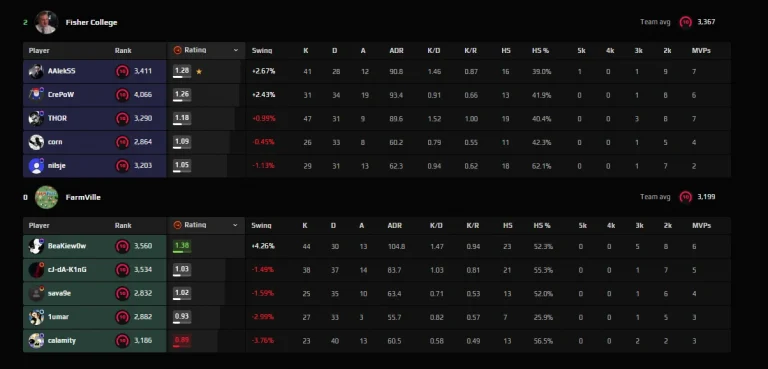
Instead of counting kills or damage alone, FACEIT Rating looks at how a player’s actions affect the match outcome while the game is being played. At any point in a match, both teams have a calculated chance of winning. That probability is based on what is happening in the round – the score, how many players are alive, their health, what weapons are equipped, and the economy.
When a player does something that shifts that probability, FACEIT Rating registers it. A clutch entry frag in a tight round counts for more than a cleanup kill on the last CT standing.
Does It Affect Elo or Matchmaking?
No, not in Season 8. FACEIT Rating does not affect Elo or matchmaking in Season 8, and no existing statistics will be removed. It will not change how much Elo a player gains or loses, and it will not influence matchmaking. It sits alongside the current level system to help players understand their performance, not to change who they get matched with.
FACEIT will monitor how it behaves in real matches before deciding how it could be used more broadly in future seasons.
Who Can See It
From Season 8, every player will have access to FACEIT Rating in their matches. Over time, players will be able to see how their performance compares to others at the same level and get a clearer picture of how they are actually playing at their Elo.
FACEIT has confirmed it will share more details on the exact calculation process closer to April 22.
Season 8 Also Brings Placement Matches and a Soft Elo Reset
FACEIT Rating is not the only change coming with Season 8. Season 8 starts on April 22, and for the first time, every player will begin the season with a soft reset and 10 placement matches to determine their new Elo.
When Season 8 begins, Elo will be temporarily hidden, and players will go through 10 placement matches. Once those are completed, the new level is revealed as the starting point for the season.
The reset is not equal across all levels. Top-tier Level 10 players will see the most significant adjustment. This compresses the top of the ladder to keep the highest levels of play competitive. Active players at Levels 1 through 9 who have been playing consistently will see a smaller reset and will likely start near the level they ended Season 7 at. Inactive players, regardless of level, will see a larger adjustment.
Sony Interactive Entertainment (SIE) announced on April 2, 2026, that it has agreed to acquire Cinemersive Labs, a UK-based machine learning and computer vision company. The deal is part of SIE’s ongoing push to improve visual quality in PlayStation games.
Founded in 2022, Cinemersive Labs is a specialized team focused on computer vision and machine learning. The company’s registered office is located in Ruislip, Greater London.
What Cinemersive Labs Will Do at SIE
Following the acquisition, the Cinemersive Labs team will join SIE’s Visual Computing Group (VCG) and contribute to the company’s broader efforts in advancing visual computing within PlayStation games. This includes applying machine learning to enhance gameplay visuals, improve rendering techniques, and unlock new levels of visual fidelity for players.
Cinemersive Labs also developed technology that converts a single photograph into a volumetric 3D immersive experience. The company’s Cinemersive AI turns a single photo into a real-time, interactive volumetric 3D experience, with support for platforms including Meta Quest and Apple Vision Pro.
What Is the Visual Computing Group?
SIE’s Visual Computing Group is not new. The VCG was formed in 2024 from the merger of the iSIZE team with parts of the SIE Game Platform Artificial Intelligence (GPAI) group. It brought together a team of R&D engineers with skills across neural networks, video coding, quality assessment, generative models, game rendering, and high-performance computing. The group’s mission is to design and deploy advanced neural networks and machine learning for game rendering and streaming systems at SIE.
The Cinemersive Labs team will now expand that group’s headcount and capabilities.
SIE has also launched a new initiative within the VCG to explore rendering and streaming in novel ways, aiming to go beyond current machine learning-based game rendering approaches by bringing together game rendering, AI, and distributed computing.
SIE has not disclosed the financial terms of the Cinemersive Labs acquisition. No completion date was given beyond the announcement of the agreement.
Only a few hours have passed since Valve shipped out the Animgraph 2 update for Counter-Strike 2, and dataminers have already managed to uncover some intriguing additions hidden within the game files that may potentially hint at a major update arriving in the near future.
Shortly after the April 1st update for the shooter went live, prominent CS2 leaker “ThourCS” shared a series of secret additions to the game that were hidden within the game files.
The leaks were shared on the dataminer’s X account, with the first leak revealing stacks of cash that were added to Counter-Strike 2 as part of the update. According to Thour, these cash stacks were found inside a folder labeled “gameplay,” suggesting they may be used in a future game mode rather than simply being a cosmetic addition.
The last time these stacks of cash appeared in the game was in the Danger Zone game mode back in the days of CS:GO. Could Valve be preparing to bring Danger Zone back in Counter-Strike 2? Or might an entirely new game mode be quietly brewing behind the scenes?
A series of paintball decals was also added to the CS2 game files in the latest update. At the time of writing, the intended purpose of these paintball decals is still unclear. However, players speculate that CS2 might be getting a new paintball game mode in the future.
Paintball Decals in CS2 ‼️
Here are all six Paintball Impact Decals added to the game files in today’s AnimGraph2 Beta update. pic.twitter.com/S11cC5FfLu
Lastly, two fan-favorite CS2 maps, Nuke and Vertigo, received some lighting changes in the Animgraph 2 Beta Branch. However, neither change was included in the official patch notes.
Nuke and Vertigo also have some lighting changes in today’s AnimGraph2 Beta Branch 💡