Home Blog Page 48

TEZ FFMIC 2026 Fall: Winners, MVP, Prize Pool Distribution, FFWS 2026 Qualified Teams and More

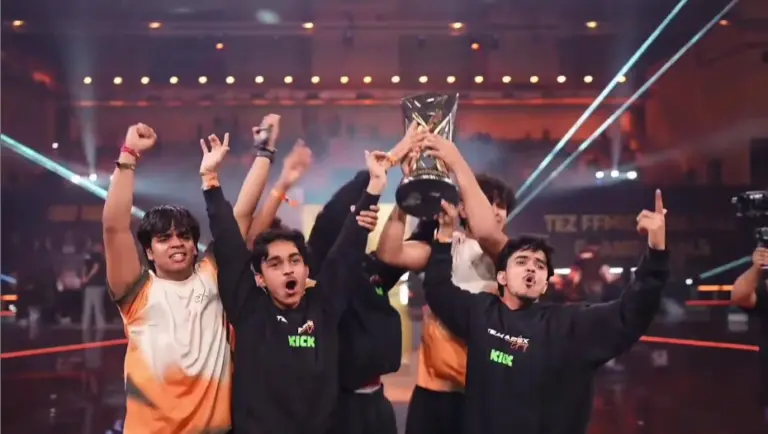
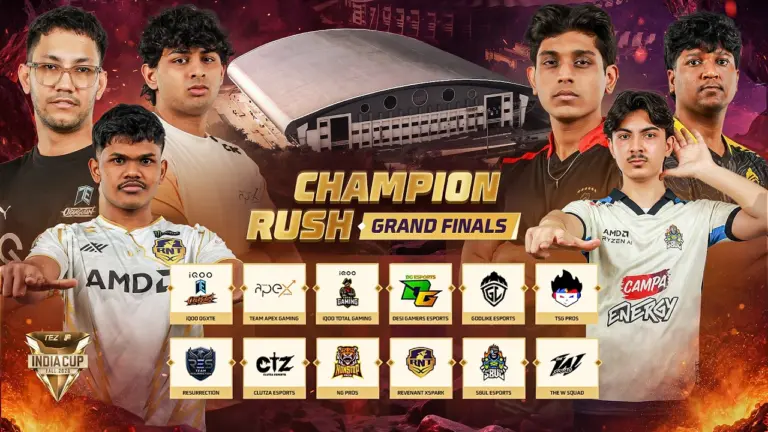
The TEZ Free Fire MAX India Cup (FFMIC) 2026 Fall concluded on September 27 at the Noida Indoor Stadium, Delhi-NCR, with Team Apex Gaming being crowned the champion. Apex secured the title through the Champion Rush format, while Resurrection and TSG Pros completed the top three. All three teams also earned qualification for the FFWS 2026 Global Finals in Bangkok, Thailand. The tournament featured a total prize pool of โ‚น1 crore, with โ‚น35 lakh going to the champions, while Apex Gaming’s KD was named the Grand Finals MVP and received an additional โ‚น1.5 lakh.

TEZ FFMIC 2026 Fall Winners and MVP

Award/PositionTeam/PlayerPrize MoneyQualification
ChampionTeam Apex Gamingโ‚น35,00,000FFWS 2026 Global Finals
2nd PlaceResurrection Esportsโ‚น17,00,000FFWS 2026 Global Finals
3rd PlaceTSG Prosโ‚น7,00,000FFWS 2026 Global Finals
Grand Finals MVPKD โ€“ Team Apex Gamingโ‚น1,50,000

Team Apex Gaming completed an impressive title defence in Noida. The roster had won FFMIC 2026 Spring under Team HIND and returned in the Fall season under the Apex Gaming banner to become champions again. Apex was among the last major title contenders to activate Champion Rush, but once it became eligible, it needed only one opportunity. The team secured the required Booyah and lifted the FFMIC Fall trophy.

Resurrection finished second after a brilliant Grand Finals run and ended with 151 points, while TSG Pros secured third with 146 points. Despite Resurrection recording the highest conventional points total, Champion Rush determined the tournament winner. Resurrection, Apex Gaming and TSG Pros will now represent India at the FFWS 2026 Global Finals in Bangkok this November.

KD of Team Apex Gaming was named the Grand Finals MVP and received โ‚น1.5 lakh for his individual performance. KD was part of Apex’s championship-winning lineup alongside Sahil, Shoto, Wolvin and Louis.

TEZ FFMIC 2026 Fall Prize Pool Distribution and Awards

TEZ FFMIC 2026 Fall featured a total prize pool of โ‚น1,00,00,000 (โ‚น1 crore). Prize money was distributed among the top 18 teams, while separate awards were given for the Grand Finals MVP and Team of the Day performances during the Knockout Stage.

Place/AwardTeam/PlayerPrize Money (INR)International Slot
1stTeam Apex Gamingโ‚น35,00,000FFWS 2026 Global Finals
2ndResurrection Esportsโ‚น17,00,000FFWS 2026 Global Finals
3rdTSG Prosโ‚น7,00,000FFWS 2026 Global Finals
4thClutza Esportsโ‚น5,00,000
5thOrangutan x Eliteโ‚น4,30,000
6thTotal Gaming Esportsโ‚น4,00,000
7thRevenant XSparkโ‚น3,75,000
8thNG Prosโ‚น3,50,000
9thS8UL Esportsโ‚น3,25,000
10thGodLike Esportsโ‚น3,00,000
11thDesi Gamers Esportsโ‚น2,75,000
12thThe W Squadโ‚น2,50,000
13thBlack Flag Armyโ‚น1,50,000
14th4 ENDSโ‚น1,30,000
15thNebula Esportsโ‚น1,10,000
16thInsane Powerโ‚น1,00,000
17thRackers Esportsโ‚น87,500
18thLR7 Esportsโ‚น77,500
Grand Finals MVPKD โ€“ Team Apex Gamingโ‚น1,50,000

The Knockout Stage also featured a โ‚น10,000 Team of the Day award. Revenant XSpark won it on Days 1, 3 and 7, Apex Gaming on Day 2, Orangutan x Elite on Day 4, Total Gaming Esports on Day 5, TSG Pros on Day 6, Clutza Esports on Day 8 and Resurrection Esports on Day 9.

TEZ FFMIC 2026 Fall ended with Team Apex Gaming successfully defending the roster’s FFMIC crown, taking home the trophy and โ‚น35 lakh. KD added another achievement for the team by winning the Grand Finals MVP and โ‚น1.5 lakh.

Resurrection secured second place and โ‚น17 lakh, while TSG Pros finished third and received โ‚น7 lakh. More importantly, Team Apex Gaming, Resurrection Esports and TSG Pros have qualified for the FFWS 2026 Global Finals, where the three teams will represent India against international competition in Bangkok.

EXCLUSIVE: Techno Gamerz on Racing Max Verstappen: โ€œIt Wasnโ€™t Even a Dream of Mineโ€

0

Ujjwal โ€œTechno Gamerzโ€ Chaurasia speaks exclusively to TalkEsport about racing Max Verstappen at Silverstone, finding his way through more than 100 karts, representing India at Max vs 100 and living an experience that he admits he had never even imagined possible.

There are experiences that sit somewhere on a career roadmap, however ambitious that roadmap might be, and then there are those so improbable that nobody thinks to put them there in the first place. For Ujjwal Chaurasia, better known to millions of viewers as Techno Gamerz, racing against Max Verstappen at Silverstone belonged emphatically to the latter category.

I caught up with Ujjwal shortly after he stepped out of the kart at Red Bullโ€™s Max vs 100, when the adrenaline of what had just happened had barely had time to settle. There was plenty to discuss: he had shared a circuit with a four-time Formula One world champion, negotiated the extraordinary traffic created by more than 100 karts and finished 39th in an international field in which all three Indian participants eventually placed inside the top 40.

Yet what struck me during our conversation was that Ujjwal seemed considerably less interested in where he had finished than in the sheer improbability of having been there at all. His career was built in virtual worlds, with gaming transforming Ujjwal Chaurasia into Techno Gamerz and eventually into one of Indiaโ€™s most recognisable digital creators, but even that remarkable trajectory had apparently never included the thought that one day he might find himself at Silverstone with Max Verstappen bearing down on his kart.

Red Bullโ€™s Max vs 100 placed Verstappen at the back of an extraordinary 101-kart field and asked him to work his way through 100 challengers drawn from gaming, sport, entertainment and creator culture. The format turned the conventional racing objective on its head because, for most of the field, the challenge was not realistically to beat Verstappen over a traditional race distance but to remain ahead of him for as long as possible.

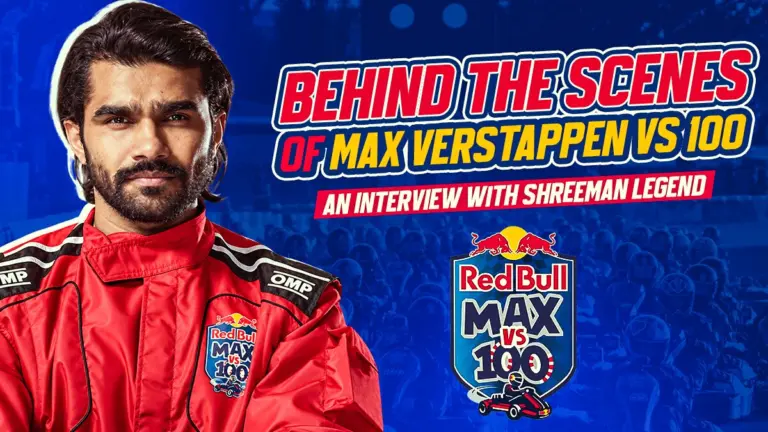
Verstappen eventually worked his way through the entire field, while Indiaโ€™s three representatives produced a respectable collective showing. According to Red Bullโ€™s official Max vs 100 classification, Shreeman Legend finished 32nd, Jonathan Gaming took 36th and Techno Gamerz placed 39th.

For Ujjwal, however, the finishing position told only part of the story. Watching Verstappen carve through a field on television is one thing; watching the gap disappear while sitting inside a kart yourself provides a rather different appreciation of the speed involved.

โ€œNow I understand what the other drivers must feelโ€

Q: Youโ€™ve watched Max race like the rest of us, but this time you were actually on the circuit with him. What did it feel like when he came past you?

โ€œNow I feel like I understand what the other drivers must feel when Max overtakes them! I got a little taste of that feeling.โ€

Techno Gamerz

It was a playful observation, but one informed by a perspective that very few people outside professional motorsport will ever acquire. Formula One broadcasts can show Verstappen closing a gap, provide the telemetry behind an overtake and replay the manoeuvre from several angles, whereas Ujjwal experienced the same basic sensation from the considerably less comfortable position of the person being hunted.

He had also been close enough to Verstappen on the circuit to appreciate just how surreal the circumstances had become. The Formula One champion was no longer somebody appearing through a broadcast feed or on a screen; his kart was immediately around him, turning something familiar from television into an experience that suddenly felt very real.

โ€œIt felt great driving with him โ€“ Maxโ€™s kart was literally just ahead of mine. It was crazy.โ€

Techno Gamerz

That perspective complemented what Shreeman Legend told me separately after Max vs 100. Shreeman had been struck by Verstappenโ€™s reactions and the speed with which he recognised opportunities in traffic, while Ujjwal found himself appreciating the same ability from the other side of the equation: as one of the drivers watching Verstappen rapidly arrive behind him.

A 101-kart traffic problem โ€” and a very Indian solution

Verstappen was not the only complication Ujjwal had to contend with. Putting more than 100 karts into the same event created a challenge that had as much to do with finding space and anticipating the drivers around you as it did with outright speed, particularly when those drivers arrived with vastly different levels of racing experience.

Q: Beyond Max himself, there were more than 100 karts involved in the event. What was it actually like trying to make your way through that much traffic?

Ujjwal did not need long to find an appropriately Indian comparison.

โ€œYou know who would do well in a race like this? Mumbaiโ€™s auto-rickshaw drivers!โ€

Techno Gamerz

The suggestion came with a laugh, although anyone who has watched an auto-rickshaw identify a seemingly nonexistent opening in Mumbai traffic could probably understand the logic behind it.

โ€œThere was so much traffic out there, and they know exactly how to find their way through it. I think theyโ€™d have finished inside the top 20!โ€

Techno Gamerz

The joke also captured something that the spectacle of Max vs 100 could easily obscure. A crowded circuit required the challengers to judge gaps, react to unpredictable movement and make decisions quickly, all while knowing that one of the finest racing drivers of his generation was steadily working through the field behind them.

That traffic also made Verstappenโ€™s eventual achievement rather more striking. In Red Bullโ€™s official account of Max vs 100, Verstappen completed his pursuit of the entire field after starting at the back, turning what began as an intentionally chaotic creator race into another demonstration of how efficiently an elite driver can process traffic.

โ€œThis is the kind of experience you canโ€™t buy with moneyโ€

Ujjwalโ€™s career has already taken him a considerable distance from the circumstances in which he began creating gaming videos. As Techno Gamerz grew into one of Indiaโ€™s largest gaming personalities, the opportunities around him expanded accordingly, but Silverstone appeared to have crossed a boundary even he had never contemplated.

Q: Gaming has already given you access to some extraordinary experiences, but where does racing Max Verstappen at Silverstone rank among them?

โ€œIโ€™ll always want to thank Red Bull because this is the kind of experience you canโ€™t buy with money.โ€

Techno Gamerz

What followed was perhaps the most revealing answer of our conversation because Ujjwal did not describe Max vs 100 as the fulfilment of a long-held ambition. The possibility had apparently sat beyond even the ambitions he had allowed himself to imagine.

โ€œI couldnโ€™t even have imagined this โ€“ actually, it wasnโ€™t even a dream of mine, because I never imagined something like this could happen.โ€

Techno Gamerz

There is an important distinction in that observation. A dream generally begins with the ability to picture an outcome, whereas Ujjwal was describing an opportunity that had existed outside the boundaries of what he thought a career built around gaming might eventually make possible. His journey to Silverstone was therefore not simply the fulfilment of an ambition conceived years earlier, but evidence that the possibilities surrounding a successful gaming career in India have expanded faster than even some of the people at the centre of that transformation expected.

Three Indians inside the top 40 at Max vs 100

The Indian story at Silverstone extended beyond Ujjwal. Shreeman Legend, Jonathan Gaming and Techno Gamerz all finished inside the top 40, with Shreeman emerging as the highest-ranked Indian in 32nd position, followed by Jonathan in 36th and Ujjwal in 39th.

Q: India had three representatives here and all three of you finished inside the top 40. What did it mean to see the Indian contingent perform together on an international stage like this?

โ€œAt the end of the day, three of us came here from India and made an impact. All three of us finished inside the top 40, and it was great to see three Indian flags up there.โ€

Techno Gamerz

The satisfaction did not prevent Ujjwal from immediately moving the target. Like any good gamer confronted with a completed objective, his instinct was to increase the difficulty rather than spend too long celebrating what had already been achieved.

โ€œWith some more practice, maybe next time we can make that the top 15.โ€

Techno Gamerz

That optimism was shared, in a slightly different form, by Shreeman, whose P32 made him Indiaโ€™s highest finisher at Silverstone. In our accompanying TalkEsport interview, Shreeman discussed what racing Verstappen taught him about the reactions and decision-making required at the highest level of motorsport, giving the Indian contingent two very different perspectives on the same extraordinary afternoon.

From virtual worlds to Silverstone

The presence of Ujjwal, Jonathan and Shreeman at Silverstone also said something about how far Indiaโ€™s gaming and creator ecosystem has travelled. Gaming personalities once occupied a relatively self-contained corner of digital entertainment, whereas its largest creators now increasingly find themselves alongside mainstream athletes, international sporting properties and entertainment figures.

Max vs 100 made that convergence unusually literal. Ujjwal did not arrive at Silverstone to play a racing game, operate a simulator or simply meet Verstappen for a piece of creator content; he put on a helmet, climbed into a kart and joined the same field as a four-time Formula One world champion.

That distinction seemed to matter considerably more to him than the number 39 beside his name on the final classification. When we spoke immediately afterwards, what remained was the disbelief of someone whose career had carried him into a situation that he had never thought to include among his ambitions, despite already experiencing the kind of opportunities that accompany becoming one of Indiaโ€™s largest gaming creators.

There is a wider significance to that journey because Indiaโ€™s gaming industry has spent years expanding beyond the boundaries traditionally assigned to it, with creators increasingly crossing into mainstream entertainment, sport and global brand culture. At Silverstone, that progression was no longer theoretical: three Indian gaming personalities were sitting on a grid at one of motorsportโ€™s most recognisable venues, preparing to be chased around a circuit by Max Verstappen.

For Ujjwal, however, the significance of the afternoon was ultimately much more personal. Gaming had already taken him into worlds he could once only experience through a screen, but Max vs 100 carried him somewhere he had never thought to imagine, let alone place on a list of career ambitions. Years after building Techno Gamerz inside virtual worlds, Ujjwal Chaurasia found himself at Silverstone racing one of the greatest drivers of his generation, and perhaps the most revealing thing he could say afterwards was that even dreaming about it would first have required believing that something like this was possible.

Exclusive: Shreeman Legend on Racing Max Verstappen and Emerging as Indiaโ€™s Best Finisher at Max vs 100

0

Siddhant โ€œShreeman Legendโ€ Joshi speaks to TalkEsport about racing Max Verstappen at Silverstone, experiencing the four-time Formula One world championโ€™s racecraft from the same circuit and finishing as the highest-placed Indian at Red Bullโ€™s Max vs 100.

Watching Max Verstappen work his way through a Formula One field offers one understanding of his ability, but sharing a circuit with him, watching the gaps disappear in real time and discovering just how quickly an opportunity becomes an overtake provides another perspective entirely.

That was the perspective Siddhant โ€œShreeman Legendโ€ Joshi carried with him when I caught up with him after Red Bullโ€™s Max vs 100 at Silverstone, where three of Indiaโ€™s best-known gaming personalities had traded their familiar competitive surroundings for racing helmets, karts and the rather unusual challenge of trying to stay ahead of a four-time Formula One world champion.

Shreeman finished 32nd overall, ahead of Jonathan Gaming in 36th and Techno Gamerz in 39th, making him the highest-finishing Indian among the 101 drivers who took part. It was a result that gave him some understandable bragging rights, although the finishing position was not what interested me most when we spoke after the event.

What Shreeman had just experienced was something television, telemetry and lap times cannot entirely reproduce. He had watched Verstappen attack the same corners, negotiate the same traffic and make decisions on the same stretch of asphalt that he was attempting to navigate himself, offering him an unusually close view of the instincts and reactions that separate an elite racing driver from almost everyone around him.

Red Bull designed Max vs 100 around precisely that contrast. Verstappen began behind 100 challengers drawn from gaming, sport, entertainment and creator culture, with the task of hunting them down across the circuit. According to Red Bullโ€™s official Max vs 100 classification, Shreemanโ€™s P32 eventually placed him ahead of Indiaโ€™s other two representatives and more than two-thirds of the original field.

For someone whose career was built in gaming rather than professional motorsport, however, the more compelling takeaway was not simply how long he remained ahead of Verstappen, but what those laps revealed about the way one of Formula Oneโ€™s defining drivers reads a race.

What Max Verstappen looks like when you are actually racing him

Q: We normally judge Max through lap times, race victories and what we see on television. Having now shared a circuit with him, what stood out to you most about the way he drives?

Shreemanโ€™s assessment centred on something that statistics struggle to communicate adequately: Verstappenโ€™s reactions and the speed with which he appeared to process everything developing around him.

Max vs 100 presented a particularly unusual test of that ability because Verstappen was not navigating a conventional field of professional racing drivers whose behaviour could be anticipated through years of experience at the same level. He was working through a crowded circuit containing competitors with dramatically different levels of karting and racing experience, meaning every encounter required him to assess the situation, recognise the available space and decide almost immediately whether an overtake was possible.

From Shreemanโ€™s position inside that same contest, the distinction became apparent very quickly. Verstappen was obviously faster, but outright speed alone was not what impressed him; it was how little time seemed to exist between the world champion recognising an opening and committing to it.

Racing Max is very different from watching Max

Q: Did actually racing against him change your understanding of the difference between somebody who can drive quickly and somebody operating at Formula One world-champion level?

That distinction formed much of the fascination surrounding Max vs 100. The field contained competitive personalities and several challengers with racing experience, but almost nobody could reasonably be expected to possess anything approaching Verstappenโ€™s lifetime of professional preparation. Putting everybody on the same circuit transformed an abstract difference in ability into something the participants could experience for themselves.

Inside the kart, there was no television director deciding which battle Shreeman would see, nor was there a timing screen reducing the performance difference to tenths of a second. Instead, he could watch Verstappen arrive behind traffic, understand the situation unfolding ahead of him and find a route through it before the opportunity disappeared.

For Shreeman, that proximity offered an appreciation of elite racecraft that would have been difficult to acquire through a simulator or television broadcast. Max vs 100 was conceived as an entertainment spectacle, but for those actually sitting in the karts, it also became an unusually direct demonstration of what years of elite motorsport experience look like when applied in real time.

Shreeman Legend finishes as the highest-placed Indian

Q: You finished 32nd and ended Max vs 100 as the highest-placed Indian, ahead of Jonathan and Ujjwal. How satisfying was that result once you realised where you had finished?

The final classification gave Shreeman a result worth remembering, with all three Indian representatives finishing inside the top 40 and his 32nd-place finish putting him at the front of that group. Jonathan Gaming followed in 36th, while Techno Gamerz finished 39th.

There is an obvious temptation to interpret P32 as one would the finishing order of a conventional motor race, although Max vs 100 operated very differently. The challengers arrived with varying levels of karting experience, while the format was fundamentally built around surviving Verstappenโ€™s pursuit rather than competing against one another over a traditional race distance.

The scale of Verstappenโ€™s pursuit helps put the classification into perspective. Red Bullโ€™s official account of the race records that Verstappen started from P101 and worked through the entire 100-driver field in 14 laps and approximately 35 minutes, making every additional position survived by the challengers increasingly difficult to hold.

Even with the unusual format taken into account, the result remains a useful marker of Shreemanโ€™s afternoon at Silverstone. Among the three Indian gaming personalities invited to participate, he remained in the contest longer than his compatriots and ultimately finished ahead of more than two-thirds of the original field.

Three Indian gaming creators found themselves racing at Silverstone

Q: You, Jonathan and Ujjwal came here primarily from Indiaโ€™s gaming ecosystem, and suddenly the three of you were racing at Silverstone against Max Verstappen. Did you have a moment where you realised just how unusual that was?

The circumstances surrounding Indiaโ€™s presence at Max vs 100 tell a broader story than the finishing order alone. Shreeman, Jonathan and Ujjwal did not reach Silverstone through the conventional motorsport ladder, yet their careers in gaming had carried all three into an event at one of the worldโ€™s most recognisable racing venues, sharing a grid built around one of the most successful Formula One drivers of his generation.

Indian gaming has changed substantially over the course of their careers, developing from a comparatively self-contained online community into an entertainment ecosystem that increasingly overlaps with mainstream sport, global brands and international creator culture. Three Indian gaming personalities putting on racing helmets at Silverstone and lining up against Verstappen illustrated that evolution rather more effectively than any industry presentation could have done.

Ujjwalโ€™s experience offered a particularly interesting counterpart to Shreemanโ€™s because the two arrived at Silverstone with their own expectations of what racing Verstappen would involve. In a separate conversation with TalkEsport, Techno Gamerz reflected on racing Verstappen at Max vs 100 and what the experience revealed once the competition moved from anticipation to the circuit itself.

The final classification added another satisfying dimension to Indiaโ€™s presence, with Shreeman finishing 32nd, Jonathan 36th and Ujjwal 39th, placing all three Indian representatives inside the top 40 of an international field assembled from gaming, sport and entertainment.

An education in racecraft that a finishing position cannot explain

Q: When you look back at Max vs 100 after the adrenaline has settled, what do you think you will remember most from the experience?

The result will inevitably remain part of Shreemanโ€™s memory of Silverstone, particularly because he left as the highest-finishing Indian, but the lasting value of an event such as Max vs 100 extends well beyond a number on the classification. A results sheet can establish that Shreeman finished 32nd; it cannot adequately describe what it feels like to sit inside a kart and watch Max Verstappen solve the same traffic, corners and racing situations that you are attempting to understand yourself.

That was ultimately what made the encounter so revealing. Shreeman did not require telemetry, an onboard comparison or a detailed analysis of Verstappenโ€™s lap times to understand the difference between somebody capable of driving quickly and somebody who has spent much of his life competing at the highest level of motorsport. For a brief period at Silverstone, he was able to observe that difference from within the same race, where every closing gap and rapidly executed overtake made Verstappenโ€™s racecraft considerably more tangible than it could ever appear on a television screen.

There is also a wider significance to the experience for Indian gaming. Shreeman, Jonathan and Ujjwal travelled to Silverstone because careers built largely within video games had expanded into opportunities that would once have appeared far removed from the Indian gaming ecosystem, and their presence alongside Verstappen demonstrated just how porous the boundaries between gaming, traditional sport and creator culture have become.

Shreeman can therefore leave Silverstone with the satisfaction of having finished ahead of Indiaโ€™s contingent, but P32 is unlikely to be the part of Max vs 100 that remains clearest years from now. The more enduring memory will probably be the rare opportunity to watch one of Formula Oneโ€™s finest drivers operate from only a few metres away, not from behind a television screen or through a simulator, but while attempting to negotiate the very same race himself.

India at Asian Games 2026 Esports: Results Tracker, Schedule and Team Status

0

India sent a 15-member esports contingent to the Asian Games 2026 in Aichi-Nagoya, Japan, across four medal events: eFootball, Puyo Puyo Champions, Pokรฉmon UNITE and League of Legends. The esports competition runs from September 22 to October 2 at the Aichi Sky Expo, with 11 medal events across 13 game titles.

This tracker lists every Indian result, the current status of each team and the remaining schedule. It will be updated after each Indian match.

India esports status at a glance

EventIndian PlayersStage ReachedStatus
eFootballDanial Patel, Chinmay SahooGroup stageEliminated
Puyo Puyo ChampionsParitoshQuarterfinalsEliminated
Pokรฉmon UNITERevenant XSpark rosterGroup stageEliminated
League of LegendsS8UL rosterGroup stage (starts Sept 29)Active

India medal count in esports: 0

League of Legends: India’s last event

India’s League of Legends team is the country’s final esports entry at Aichi-Nagoya 2026. The roster is drawn from S8UL Esports.

India League of Legends roster

PlayerIn-game name
Akshaj Shenoy (captain)Kat Bot
Aakash ShandilyaInfi
Mihir RanjanLotus
Sanindhya MalikDeadcorporal
Ahmed ShahidNero
Rahul BishtBob

India is in Group B with South Korea, Chinese Taipei and Hong Kong.

League of Legends schedule

StageDate
Group stageSeptember 29 and 30
SemifinalsOctober 1
FinalOctober 2

India qualified by winning the National Esports Championships (NESC) 2026, then topping the regional qualifiers with wins over Jordan, Sri Lanka and Kazakhstan. At Hangzhou 2023, a largely similar Indian lineup lost 2-0 to Vietnam in the quarterfinals.

Match-by-match results will be added here once the group stage begins.

Pokรฉmon UNITE: eliminated in the group stage

India’s Pokรฉmon UNITE team was the Revenant XSpark roster: Adnan Mohammed Badshah (Badshah), Reuben Godfrey Fernandes (Reuben), Sai Krishna Nalluri (Vulcan), Dipjyoti Laxman Nath (Disapple) and Rudra Narayan Nayak (Rex), with Deepkumar Vipulbhai Patel as substitute and Zeren Wang as coach. More on the squad is in our India Pokรฉmon UNITE Asian Games roster preview.

DateOpponentResult
September 25South KoreaLost 0-2
September 26Hong KongLost 1-2

India did not reach the knockout stage. Japan and Indonesia reached the final, while South Korea and the Philippines took bronze. There was no third-place match.

India had arrived as runner-up at the Pokรฉmon UNITE Asia International Tournament 2026, where it lost the final to Japan.

Puyo Puyo Champions: Paritosh out in the quarterfinals

Paritosh was India’s only entry in Puyo Puyo Champions, an individual puzzle event making its Asian Games debut.

DateStageResult
September 24Group B2 wins, 2 losses (3rd, qualified)
September 26Quarterfinal vs Kang Dongshin (South Korea)Lost 0-5

Full details are in our report on Paritosh’s Puyo Puyo quarterfinal at the Asian Games.

eFootball: out on goal difference after a forfeit win

India entered eFootball with Danial Patel on mobile and Chinmay Sahoo on console, playing in Group F.

DateOpponentResult
September 22UzbekistanDraw 0-0
September 22MongoliaWon 0-0 (forfeit)

Mongolia’s team leader reached the check-in point three minutes after the deadline. Under the competition rules, India was awarded a forfeit win recorded as 0-0. India asked to play the match instead, but officials refused. A review by a judge panel was available for a $500 fee, which the Indian players chose not to pay.

India and Uzbekistan both finished on four points. Uzbekistan went through on goal difference after beating Mongolia 6-3 on mobile and 12-0 on console. We have covered the full sequence in what happened to India’s eFootball team at the Asian Games.

India’s esports record at the Asian Games

EditionEsports StatusIndia Result
Jakarta 2018Demonstration sportTirth Mehta won bronze in Hearthstone (not counted in medal table)
Hangzhou 2023Official medal sportNo medal
Aichi-Nagoya 2026Official medal sportNo medal so far; League of Legends still active

A League of Legends medal would be India’s first official esports medal at the Asian Games.

How to follow India’s matches

Official results for all esports events are published on the Asian Games 2026 esports competition page, and India-specific scores are tracked by Olympics.com’s India esports schedule. For League of Legends brackets and game stats, see Leaguepedia’s Asian Games 2026 page.

FAQs

How many Indian esports players are at the Asian Games 2026?
India has 15 esports athletes across eFootball, Puyo Puyo Champions, Pokรฉmon UNITE and League of Legends.

Has India won an esports medal at the Asian Games 2026?
No. India has not won an esports medal so far. League of Legends is the only Indian event still running.

When does India play League of Legends at the Asian Games 2026?
India’s Group B matches are on September 29 and 30. The semifinals are on October 1 and the final is on October 2.

Why was India eliminated from eFootball despite not losing?
India’s win over Mongolia was a forfeit recorded as 0-0. It gave India points but no goals, and Uzbekistan went through on goal difference.

Who represents India in League of Legends?
The S8UL roster: Akshaj Shenoy, Aakash Shandilya, Mihir Ranjan, Sanindhya Malik, Ahmed Shahid and Rahul Bisht.

How FACEIT Calculates Round Swing

FACEIT offers several metrics to judge your performance, and Round Swing is one of them. While a random percentage figure might be confusing to look at, it captures a wide range of statistics. It summarises them into something a player can use to judge their performance on a surface level without digging deep.

What is Round Swing?

Round Swing, as the name suggests, is the difference between a player’s actions and the expected outcome. Every action, including but not limited to opening kills, clutches, or damage that leads to a round conversion, helps boost your Round Swing percentage. While the exact counting formula is not revealed by FACEIT, a realistic estimate would suggest that Round Swing = the change in round-win probability caused by a player’s action.

Assume your team has a 50% chance of winning a round, but your impactful kill turns the tide of the game. FACEIT’s Round Swing formula would see that as a high-impact move and count it as a positive action, increasing your swing percentage.

Why does this matter?

As every single kill reflects on the scoreboard, their impact can be vastly different. While one may rack up an ace in an eco-round, another might clutch a 1v5 to win an unwinnable round. In either case, the scoreboard shows 5 kills for both players and an MVP, but the difference in impact is readily apparent.

How to get a higher Round Swing?

As mentioned earlier in this article, FACEIT has no defined formula for how this value is calculated, so here is a list of possible actions that might see you earn a higher rating:

  1. Opening Kills
  2. Clutch
  3. Assists
  4. Kills that regain man-advantage

K/D has always been a popular metric among FPS players, but it fails to justify its impact in the game. Round Swing, by contrast, offers an interesting way to translate a player’s performance into statistics that capture invisible impact beyond kills.

Team Apex Gaming Wins TEZ FFMIC 2026 Fall, Defends Title in Noida

Team Apex Gaming has been crowned the TEZ Free Fire MAX India Cup (FFMIC) 2026 Fall champion after a thrilling Champion Rush finish at the Noida Indoor Stadium on September 27. Apex entered the championship race late but secured the title with a Booyah in Match 9 after becoming Champion Rush eligible only in the previous game. Resurrection finished on top of the overall points table with 151 points, followed by Apex Gaming with 149 and TSG Pros with 146. The top three also secured qualification for the FFWS 2026 Global Finals in Bangkok. The victory makes it back-to-back FFMIC titles for the Apex roster, which won the Spring edition under the Team HIND banner. Apex had also represented India internationally at the Free Fire World Cup earlier this year and will now return to the global stage at FFWS 2026.

Team Apex Gaming Wins TEZ FFMIC 2026 Fall

Apex Gaming’s road to the trophy was far from easy. In fact, they were the last among the major title contenders to activate Champion Rush, but they were the first to convert their opportunity into the championship.

The final day used the Champion Rush format with a 110-point threshold. A team first needed to reach 110 points and then secure a Booyah in a subsequent match to become champion.

Resurrection became the first team to activate Champion Rush in Match 6. They immediately became one Booyah away from lifting the trophy.

The championship race became much more intense in Match 7. TSG Pros, Clutza Esports and iQOO OGxTE also reached the required points and activated their Champion Rush, while Resurrection was eliminated early and missed its first opportunity to end the tournament.

Match 8 then completely changed the situation.

Clutza was eliminated early, while the other Champion Rush-eligible teams continued looking for the match-winning Booyah. Apex Gaming played a crucial role in stopping them, blocking the route into the zone and eliminating iQOO OGxTE and Resurrection, while TSG Pros was also eliminated.

But the biggest development for Apex was its own points tally. Team Apex Gaming crossed the 110-point threshold in Match 8 and activated Champion Rush.

They were late to the party, but they only needed one opportunity.

In Match 9, Resurrection was eliminated again, while S8UL Esports eliminated TSG Pros, taking another eligible team out of the championship race.

Apex continued surviving and eventually reached the final fight. With Champion Rush already activated, there was no second chance required. Apex won the decisive 4v4 battle, secured the Booyah and immediately became the FFMIC 2026 Fall champion.

Apex Gaming Defends Its FFMIC Title

This championship is even more special because it effectively completes a successful title defence for the roster.

The same lineup previously competed under Team HIND and won FFMIC 2026 Spring. Team HIND secured the Spring championship through Champion Rush as well, earning the roster its first FFMIC title of the year.

Now competing as Team Apex Gaming, the roster has repeated the achievement in the Fall edition.

That means the organisation name has changed, but the players have won back-to-back FFMIC championships in 2026.

Their journey has also gone beyond domestic Free Fire MAX. Team Apex Gaming was one of the Indian teams that represented the country at the Free Fire World Cup 2026 earlier this year.

Now, after winning FFMIC Fall, the team has secured another opportunity to represent India internationally, this time at the FFWS 2026 Global Finals in Bangkok.

From winning FFMIC Spring as Team HIND to competing internationally, joining Apex Gaming and then defending the Indian championship, it has been a remarkable year for the roster.

Resurrection, Apex Gaming and TSG Pros Qualify for FFWS 2026

Along with the FFMIC trophy, three slots for the FFWS 2026 Global Finals were available through the Fall edition. The top three teams from the overall standings earned those international slots.

The three qualified Indian teams are:

  1. Resurrection โ€“ 151 points
  2. Team Apex Gaming โ€“ 149 points
  3. TSG Pros โ€“ 146 points

Resurrection may not have won the FFMIC trophy despite being the first team to activate Champion Rush, but it finished with the highest overall points at 151 and secured its international qualification.

Apex finished just two points behind at 149, but its Match 9 Booyah after becoming Champion Rush eligible made it the tournament champion.

TSG Pros completed the top three with 146 points. TSG also had multiple opportunities after activating Champion Rush but could not secure the required Booyah before Apex closed the tournament.

Clutza Esports finished fourth with 134 points, narrowly missing out on an FFWS Global Finals spot.

FFMIC 2026 Fall Final Points Table

Despite Apex winning the championship, Resurrection finished first on the overall points table. Under Champion Rush rules, however, the trophy goes to the first eligible team that secures a Booyah rather than simply the team with the highest total points.

RankTeamTotal Points
1Resurrection151
2Team Apex Gaming149
3TSG Pros146
4Clutza Esports134
5iQOO OGxTE127
6iQOO TG120
7Revenant XSpark116
8NG Pros109
9S8UL Esports106
10GodLike Esports101
11Desi Gamers Esports77
12The W Squad68

FFMIC 2026 Fall Grand Finals Highlights

The Grand Finals produced several major moments, but Champion Rush made the final few games particularly intense.

Resurrection was the first team to reach the 110-point threshold in Match 6, giving it the earliest opportunity to become champion. Match 7 then brought TSG Pros, Clutza and iQOO OGxTE into the Champion Rush race.

Match 8 proved to be the turning point. Apex stopped multiple eligible teams from reaching the Booyah while simultaneously collecting enough points to activate its own Champion Rush.

That set up Match 9.

Resurrection was eliminated, S8UL stopped TSG Pros, and Apex Gaming survived until the final fight. Apex then won the last 4v4 battle and secured the only thing that mattered under Champion Rush โ€” the Booyah after becoming eligible.

The final points demonstrate just how close the championship race was. Only five points separated Resurrection, Apex and TSG, with the top three finishing on 151, 149 and 146 respectively.

But Apex made its opportunity count when it mattered most.

The roster started 2026 by winning FFMIC Spring as Team HIND, represented India internationally during the year, and has now ended the domestic season by becoming the TEZ FFMIC 2026 Fall champion and qualifying for another global tournament.

Live FFMIC 2026 Fall Champion Rush Points Table and Results

The Free Fire MAX India Cup (FFMIC) 2026 Fall Grand Finals is being played today, September 27, with 12 of the best Free Fire MAX teams in India competing for the championship. The final day features the Champion Rush format, making the title race different from a regular points-based Grand Final. Teams including S8UL Esports, GodLike Esports, Revenant XSpark, Team Apex Gaming, TSG Pros, Resurrection and others are in action. Fans can follow the FFMIC 2026 Fall Grand Finals live points table below, which will be updated after every match.

FFMIC 2026 Fall Grand Finals Live Points Table

Please refresh the page after each game:

After match 9:

  • 1st Place: Resurrection โ€“ 151 Points
  • 2nd Place: Team Apex Gaming โ€“ 149 Points
  • 3rd Place: TSG Pros โ€“ 146 Points
  • 4th Place: Clutza Esports โ€“ 134 Points
  • 5th Place: iQOO OGxTE โ€“ 127 Points
  • 6th Place: iQOO TG โ€“ 120 Points
  • 7th Place: Revenant XSpark โ€“ 116 Points
  • 8th Place: NG Pros โ€“ 109 Points
  • 9th Place: S8UL Esports โ€“ 106 Points
  • 10th Place: GodLike Esports โ€“ 101 Points
  • 11th Place: Desi Gamers Esports โ€“ 77 Points
  • 12th Place: The W Squad โ€“ 68 Points

The table above will continue to change throughout the day. Placement points, eliminations and total points will be updated as soon as each match concludes.

FFMIC 2026 Fall Grand Finals Teams

A total of 12 teams are playing in the FFMIC 2026 Fall Grand Finals:

  1. Resurrection
  2. TSG Pros
  3. Team Apex Gaming
  4. Clutza Esports
  5. Revenant XSpark
  6. iQOO OGxTE
  7. NG Pros
  8. S8UL Esports
  9. GodLike Esports
  10. iQOO TG
  11. Desi Gamers Esports
  12. The W Squad

All 12 teams have reached the final stage after competing through the earlier phases of FFMIC 2026 Fall.

FFMIC 2026 Fall Grand Finals Format

The FFMIC 2026 Fall Grand Finals are being played across two days.

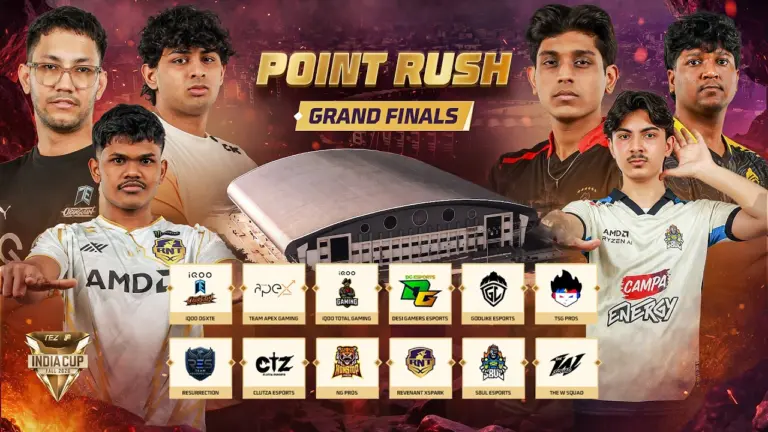
The first day, September 26, featured the Point Rush stage, where all 12 teams played six matches. The purpose of Point Rush was not only to determine the standings but also to award Headstart Points for the Champion Rush day.

The final day, September 27, features Champion Rush.

Instead of simply playing a fixed number of matches and crowning the team with the most points, teams first need to reach the Champion Rush threshold of 110 points.

Once a team reaches 110 points, it becomes Champion Rush eligible. However, reaching the threshold does not immediately make that team the champion.

The team must then secure a Booyah in a subsequent match to win the FFMIC 2026 Fall championship.

For example, if a team crosses 110 points during Match 4, it cannot become champion from the Booyah of that same match. It becomes eligible starting from the next match.

This format means the championship race can remain open even when one team builds a sizeable points advantage.

Point Rush Headstart Points

The September 26 Point Rush stage also gave teams an opportunity to earn extra points before Champion Rush.

The top six teams from Point Rush received Headstart Points based on their final positions.

The first-placed team received 10 points, second place received seven, third received five, fourth received three, fifth received two and sixth received one.

Teams finishing seventh through 12th received no Headstart Points.

These points become particularly valuable on the final day because they can help teams reach the 110-point Champion Rush threshold earlier.

Three FFWS 2026 Global Finals Slots at Stake

The FFMIC 2026 Fall Grand Finals are important for more than just the Indian championship.

Three international qualification slots are also on the line, with the top-performing teams getting the opportunity to represent India at the FFWS 2026 Global Finals in Thailand.

This makes the final standings important even beyond the fight for first place.

Teams are not only competing for the FFMIC championship but also for the opportunity to take Indian Free Fire MAX back onto the international stage.

Champion Rush Could Change the Title Race Quickly

The Champion Rush format makes today’s matches especially unpredictable.

A team can lead the overall standings but still not immediately win the championship. It first needs to reach 110 points and then find a Booyah.

At the same time, multiple teams can become Champion Rush eligible as the matches continue. Once that happens, any eligible team securing a Booyah in a subsequent match can end the tournament immediately.

This puts additional importance on both consistency and match-winning ability. Teams need enough points to reach the threshold, but once eligible, survival and securing the final Booyah become equally important.

FFMIC 2026 Fall Live Points Table Updates

The FFMIC 2026 Fall Grand Finals live points table at the top of this article will be updated throughout today’s matches.

Fans can return after every game to check the latest positions, placement points, eliminations and overall points for all 12 participating teams.

The table will also make it easier to track which teams are moving closer to the 110-point Champion Rush threshold as the Grand Finals progress.

The FFMIC 2026 Fall Grand Finals are being played today, September 27, with 12 teams fighting for the title and three international qualification slots.

The Champion Rush system adds another layer to the final day. Reaching 110 points is only the first task; teams must then secure a Booyah in a subsequent match to become champions.

With teams such as S8UL Esports, GodLike Esports, Revenant XSpark, Apex Gaming, TSG Pros and Resurrection in the lobby, the final day will decide both the FFMIC 2026 Fall champion and the teams moving forward on the international stage.

The live points table above will be updated after every match.

South Koreaโ€™s Arcade Generation Wins Asian Games Esports Gold Three Decades Later

0

Long before esports arenas, professional contracts and national teams became part of competitive gaming, South Korea’s fighting-game culture was being built in arcades. Players gathered around cabinets, reputations travelled from one neighbourhood to another, and becoming good enough often meant finding the strongest player in another arcade and going there to challenge them.

Three decades later, three players shaped by that generation have stood on an Asian Games podium with gold medals around their necks.

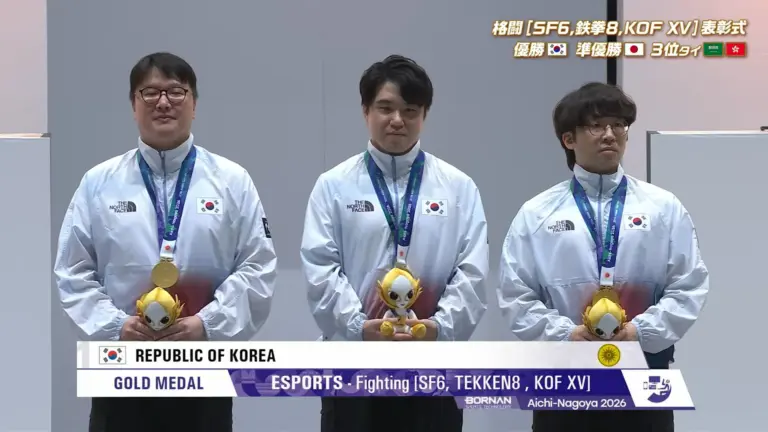
South Korea’s Bae “Knee” Jae-min, Yeon “DakCorgi” Je-gil and Lee “MadKOF” Gwang-no defeated host nation Japan 5-2 in the fighting games final at the Aichi-Nagoya Asian Games on September 26, winning South Korea’s first esports gold of the 2026 Games and becoming the inaugural champions of the new three-title team fighting-game event.

The ages of the three players โ€” Knee is 41, DakCorgi 39 and MadKOF in his mid-forties โ€” have understandably attracted attention, but treating their victory simply as a story about older esports players would miss what made it significant. These are specialists in games whose histories stretch back to the arcade boom of the 1990s, and their Asian Games victory represents something competitive gaming has only recently become old enough to produce: a generation that discovered fighting games as children and has remained good enough to represent its country decades later.

From Korean arcades to an Asian Games podium

Knee’s story perhaps captures that journey better than anyone’s. When the original Tekken arrived in 1994, Bae Jae-min was an elementary-school student already interested in fighting games. Tekken’s three-dimensional movement and combo system fascinated him, and as his ability improved, arcades became the competitive network through which he measured himself against other players.

There was no global Tekken World Tour, professional esports infrastructure or obvious career waiting at the end of that journey. Knee has recalled travelling around South Korea looking for strong opponents simply because beating good players mattered to him. As dedicated gaming broadcasters and organised competitions later emerged alongside South Korea’s esports boom, that obsession gradually became a profession.

Over the decades that followed, Knee became one of the defining competitors in Tekken history, collecting more than 100 trophies and reaching world No. 1 during a career that survived several generations of the series. Yet even after everything he had won, representing South Korea at the Asian Games carried a significance that the tournaments of his earlier career could never have offered.

Before the Games, Knee reflected on how implausible the moment would have sounded earlier in his career: the possibility that someone could one day win an Asian Games gold medal through Tekken would scarcely have been imaginable a decade ago. On September 26, in the country where Tekken was created, that possibility became his reality.

Three games, three specialists and one medal

The fighting games competition at Aichi-Nagoya 2026 is particularly interesting because South Korea did not simply assemble three players to compete in the same title. The event combines three of the genre’s defining franchises โ€” Tekken 8, Street Fighter 6 and The King of Fighters XV โ€” into one national-team competition, with each country selecting specialists capable of collectively navigating all three games.

Knee represented South Korea in Tekken 8, DakCorgi carried the Street Fighter 6 responsibility and MadKOF competed in The King of Fighters XV. Together, they represented three different branches of fighting-game culture that developed alongside one another through the arcade era and eventually matured into modern esports.

That structure also meant winning gold depended on more than having the strongest individual player. South Korea needed its three specialists to function as a team, understand where it held advantages against Japan and recover when individual matchups went against them.

The final demonstrated precisely that. Japan moved ahead early after Kojiro “Higuchi” Higuchi defeated DakCorgi in Street Fighter 6, before MadKOF answered by winning his opening KOF XV set against Akihito “SCORE” Sawada. Japan regained the lead when Daichi “NOBI” Nakayama defeated Knee in Tekken 8, leaving South Korea trailing 1-2 with the host nation holding the early momentum.

South Korea did not lose another set.

How South Korea turned 1-2 into 5-2

MadKOF first brought South Korea level again through KOF XV, giving the team the opportunity to return to Tekken with the score tied at 2-2. Knee, having lost his first encounter with NOBI, adjusted for their second meeting and used Bryan and Fahkumram to put South Korea ahead for the first time in the final.

DakCorgi then faced Higuchi again in Street Fighter 6 and reversed the result of their opening encounter, extending South Korea’s advantage to 4-2. Japan selected Tekken 8 for the seventh set, placing Knee and NOBI opposite one another for another meeting with the championship now within South Korea’s reach.

Knee finished it with Bryan. After overcoming NOBI’s Dragunov, he defeated his Steve to close the final and complete a run of four consecutive set victories for South Korea. What had briefly looked like a Japanese advantage at 2-1 had become a decisive 5-2 Korean victory.

The result also carried history from earlier in 2026. South Korea had twice lost to Japan at the Esports Championships Asia, making another meeting between the two nations on Japanese soil an especially significant final. This time, with an Asian Games gold medal at stake, Korea reversed the result.

They prepared for this like athletes because that is what the occasion demanded

The nostalgia surrounding the team’s arcade roots should not obscure how seriously the three players prepared for Aichi-Nagoya. Before the Asian Games, Knee, MadKOF and DakCorgi moved into a training camp in Busan and lived together for roughly a month, turning three specialists who had previously known one another largely through competition into a functioning national team.

Their schedule reportedly ran from around 6 a.m. until 8 p.m., combining extensive practice with the physical management required to sustain it. MadKOF later joked that after three or four hours of playing he would receive physical therapy, return to practice and then undergo treatment again, an amusing detail that nevertheless illustrates the seriousness with which the trio approached the tournament.

The preparation was also strategic. South Korea understood that the three-game format created different strengths and vulnerabilities against Japan, and coach Kang Sung-hoon’s plan was built around exploiting Korea’s strength in The King of Fighters, remaining competitive in Tekken and creating opportunities in Street Fighter. By the end of the final, that broad scenario had unfolded remarkably close to plan.

For players with families and lives established outside competition, spending weeks together away from home was not insignificant either. Knee and DakCorgi both spoke after the final about the sacrifices involved in the camp, making the gold medal the culmination not simply of decades spent playing fighting games, but of a concentrated period in which three individual careers had to become one national-team project.

For Knee, nothing in 30 years of gaming felt quite like this

Knee has competed internationally for years, accumulated trophies and experienced the pressure that comes with being one of the world’s best-known Tekken players, but he described the Asian Games final as carrying a different weight. Representing South Korea meant that defeat would not simply appear against his own tournament record; he was competing under the national flag at one of Asia’s biggest sporting events.

After winning gold, Knee described September 26 as the most meaningful day of a gaming career spanning more than 30 years. The statement is striking precisely because of everything that preceded it. For a player whose relationship with Tekken began in an arcade culture that existed before modern esports, the most important victory of his career arrived not at a traditional fighting-game major, but at the Asian Games.

That progression also illustrates how radically the status of competitive gaming has changed around the players themselves. Knee did not begin playing Tekken with the ambition of becoming an Asian Games champion because such a career path did not exist. The game survived, its competitive community survived, esports expanded around it, and eventually the sporting institution caught up with a generation that had already spent decades competing.

The Asian Games has now produced champions from very different generations

South Korea’s victory arrived on the same day that another esports result demonstrated the extraordinary generational breadth competitive gaming can now accommodate.

Japan’s Yuki Kurihara won gold in Puyo Puyo at just 11 years old, completing a remarkable run through a competition he entered as the youngest athlete Japan had ever sent to the Asian Games. TalkEsport had followed Kurihara’s progress earlier in the tournament as the fifth-grader topped his group before eventually becoming an Asian Games champion.

A few hours apart at the same Asian Games, esports therefore produced two very different portraits of competitive excellence. Kurihara represents a generation growing up in a world where esports is already professional, international and recognised at major multi-sport events, while South Korea’s fighting-game champions belong to a generation that helped carry competitive gaming through the decades before any of that infrastructure existed.

The contrast should not be reduced to a contest between youth and age, because neither achievement requires the other to become impressive. What makes their presence at the same Games meaningful is that competitive gaming has matured enough to contain both stories at once.

Fighting games have always rewarded knowledge accumulated over time

South Korea’s victory also offers a useful counterpoint to the assumption that esports inevitably belongs to the youngest competitors. Reaction speed matters in fighting games, as it does across competitive gaming, but these titles also reward matchup knowledge, pattern recognition, adaptation, spacing, timing and the ability to understand what another player is likely to do before the decisive moment arrives.

Knee acknowledged before the Games that his reactions were not identical to those of his younger years, but he also argued that experience had improved his ability to read opponents. Three decades of Tekken cannot stop time, but they can produce an enormous library of situations, tendencies and decisions from which an elite competitor can draw.

That is particularly relevant to fighting games because the genre has maintained unusually strong links with its own history. Tekken, Street Fighter and The King of Fighters are not simply nostalgic names revived for a modern audience; they remain active competitive franchises whose communities contain players who encountered their earliest versions in arcades and competitors who were born long after those games became established institutions.

A gold medal that took three decades to become possible

South Korea’s fighting-game gold is therefore more interesting than the novelty of three experienced players winning an esports tournament. Knee, DakCorgi and MadKOF belong to a generation that encountered fighting games when arcades were among the most important places to find serious competition, remained with those games as the scene migrated towards consoles, online play, global tournaments and professional esports, and were still competing when the Asian Games finally created a medal event capable of bringing their respective disciplines together.

For Knee in particular, the arc is difficult to separate from Tekken itself. He discovered the series as a schoolboy after its 1994 debut, travelled through Korea looking for stronger opponents, watched competitive gaming develop into a profession around him and eventually became one of the game’s most decorated players. More than 30 years after that relationship began, he was asked to wear his country’s colours and play Tekken against Japan for an Asian Games championship.

South Korea had fallen behind 1-2 in the final, but MadKOF restored parity, Knee put the team ahead, DakCorgi created championship point and Knee returned to finish the contest. When the final set ended, three careers rooted in the fighting-game culture of an earlier generation had produced something that did not exist when any of them began playing: an Asian Games team gold medal.

That is perhaps the most fitting way to understand South Korea’s victory. The players did not outlast fighting games; they grew alongside them, and on a September evening in Japan, the competitive culture they had spent decades helping to sustain finally carried them onto one of Asia’s biggest sporting podiums.
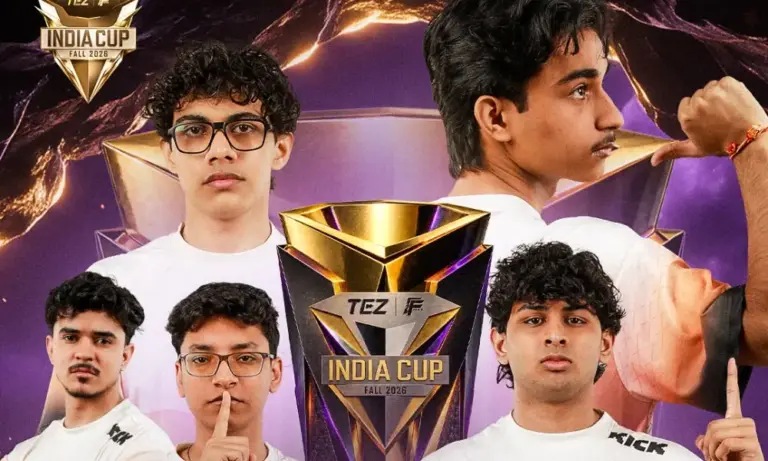
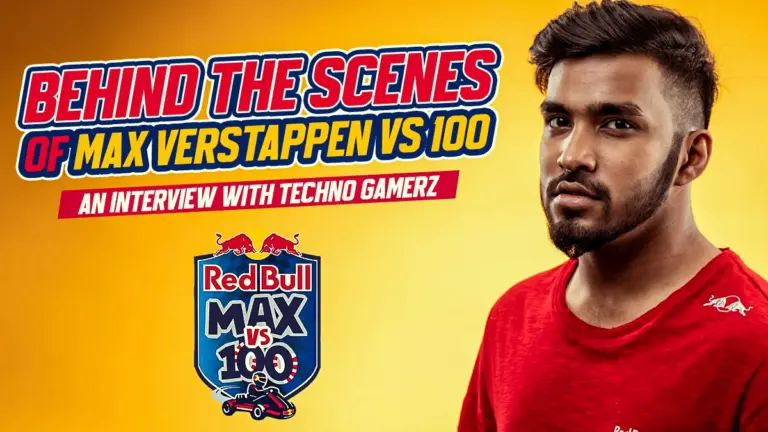
FFMIC 2026 Fall Grand Finals Day 2: Head-Start Points, Champion Rush Rules, Timings and How to Watch

0

The FFMIC 2026 Fall Grand Finals Day 2 is being played today, September 27, 2026, at the Noida Indoor Stadium in Delhi-NCR. Twelve teams will compete in the Champion Rush format for the Free Fire MAX India Cup title, a โ‚น35 lakh winner’s prize and three places at the Free Fire World Series (FFWS) 2026 Global Finals.

Day 1 set up the head starts. TSG Pros topped the Point Rush with 120 points and carry 10 bonus points into the final day. S8UL Esports and Revenant XSpark follow with 7 and 5 points.

FFMIC 2026 Fall Grand Finals Day 2 schedule

DetailInformation
DateSunday, September 27, 2026
Stream start2:30 PM IST
First match2:50 PM IST
FormatChampion Rush
Threshold110 points plus a Booyah
Scheduled matchesUp to 8
VenueNoida Indoor Stadium, Delhi-NCR

The official schedule lists up to eight matches. If a team meets the win condition early, the day ends before all eight are played.

FFMIC 2026 Fall head-start points for Day 2

Day 1 scores do not carry over. Only the head-start points from the Point Rush do. The top six teams from Day 1 received bonus points, and the other six start from zero.

Day 1 RankTeamDay 1 PointsHead-Start Points
1TSG Pros12010
2S8UL Esports1067
3Revenant XSpark905
4Team Apex Gaming793
5GodLike Esports772
6Desi Gamers741
7Orangutan X Elite720
8NG Pros720
9Resurrection690
10Clutza Esports630
11Total Gaming Esports500
12The W Squad350

For match-by-match results from the first day, see our FFMIC 2026 Fall Day 1 standings and Point Rush results.

How the FFMIC Champion Rush format works

The Champion Rush rules are simple:

  1. Teams earn points from placement and eliminations in every match.
  2. A team that reaches 110 points becomes eligible for the title.
  3. An eligible team must then win a Booyah in a later match to become champion.
  4. Hitting 110 points without a Booyah does not end the event.

TSG Pros begin 10 points closer to the 110-point mark than the six teams with no head start. The remaining positions from second to twelfth are decided by final points on the day.

All 12 teams in the FFMIC 2026 Fall Grand Finals

Six teams qualified from Knockout Week 2: Orangutan X Elite, Desi Gamers, Total Gaming Esports, Team Apex Gaming, TSG Pros and GodLike Esports.

The other six came through Knockout Week 3: Resurrection, Clutza Esports, NG Pros, Revenant XSpark, S8UL Esports and The W Squad. Resurrection topped that week with 292 points. Group details and earlier results are in our FFMIC 2026 Fall Knockout Stage coverage.

Day 1 recap: TSG Pros lead the Point Rush

TSG Pros scored 22 points in Match 1 and 21 in Match 2, then won Match 4 with 32 points. The team finished the day 14 points ahead of S8UL.

S8UL did not win a match on Day 1 but scored in double digits in every game covered by the broadcast. Revenant XSpark was the only team with two Booyahs, and those two wins brought in 68 of its 90 points.

Total Gaming Esports finished 11th with 50 points after topping Day 2 of Knockout Week 2 with 133 points. The W Squad finished last with 35.

How to watch FFMIC 2026 Fall Grand Finals Day 2

The final day streams live on the official Free Fire MAX Esports India YouTube channel. The broadcast starts at 2:30 PM IST, and the first match begins at 2:50 PM IST.

Fans in Delhi-NCR can watch in person at the Noida Indoor Stadium. Entry updates are posted on the official Free Fire MAX Esports India Instagram account.

FFMIC 2026 Fall prize pool

The Fall season has a total prize pool of โ‚น1 crore, shared among the top 18 teams.

PositionPrize
Championโ‚น35 lakh
Runner-upโ‚น17 lakh
Third placeโ‚น7 lakh
Grand Finals MVPโ‚น1.5 lakh

FFWS 2026 Global Finals slots

The top three teams from Day 2 will represent India at the FFWS 2026 Global Finals in Bangkok, Thailand. The event runs from November 6 to 28, 2026, with 24 teams from 11 qualifying competitions. More on this is in our report on India’s three slots at the FFWS 2026 Global Finals.

Full brackets from every stage are available on Liquipedia’s FFMIC 2026 Fall page. Players can download Free Fire MAX from Google Play.

FAQs

When is FFMIC 2026 Fall Grand Finals Day 2?
It is on September 27, 2026. The stream starts at 2:30 PM IST and the first match is at 2:50 PM IST.

Who has the most head-start points?
TSG Pros have 10 head-start points after finishing first on Day 1 with 120 points.

What is the Champion Rush point for FFMIC 2026 Fall?
The threshold is 110 points. An eligible team must then win a Booyah to take the title.

How many teams qualify for FFWS 2026 from FFMIC?
The top three teams qualify for the FFWS 2026 Global Finals in Bangkok.

What does the FFMIC 2026 Fall winner get?
The champion receives โ‚น35 lakh from the โ‚น1 crore prize pool.

Minecraft Gets Over 300,000 New Players Every Day, Xbox CEO Confirms

0

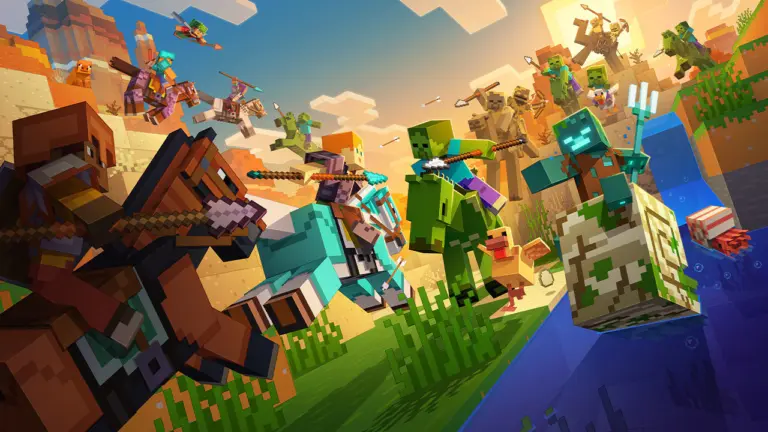
More than 300,000 people play Minecraft for the first time on an average day, according to Xbox CEO Asha Sharma. She shared the number on September 26, 2026, shortly after the Minecraft Live broadcast ended. She also said the game has now sold more than 425 million copies.

Minecraft first launched over 17 years ago. The 300,000 figure counts only players trying the game for the first time. It does not count total daily players.

What Asha Sharma said about Minecraft’s new players

Sharma posted the stats in a post on X summing up the Minecraft Live show. First she listed the show’s main news: Minecraft Dungeons II, the first new dimension in more than 14 years, new creator tools, and Minecraft on Nintendo Switch 2. Then she gave the player and sales numbers.

Mojang used the same figures in its own coverage of the event.

Minecraft statFigureShared by
First-time players on an average day300,000+Asha Sharma, Xbox CEO
Lifetime copies sold425 million+Asha Sharma, Mojang
Time since launch17+ yearsAsha Sharma
Last new dimension before the SiftOver 14 years agoMojang

How 300,000 new players a day adds up

Sharma called 300,000 an average, so the real number changes from day to day. At that average, the totals look like this:

PeriodEstimated first-time players
One weekAbout 2.1 million
30 daysAbout 9 million
One yearAbout 110 million

These totals are simple multiplication, not official figures. Xbox has not split the number by platform. It also has not said whether Game Pass players, Minecraft Education users or free trial players are included.

Where new players can play Minecraft

Minecraft is available on almost every current gaming device. That wide reach is one reason it keeps drawing in first-time players.

EditionPlatforms
Java EditionWindows, Mac, Linux
Bedrock EditionWindows, Xbox One, Xbox Series X|S, PS4, PS5, Nintendo Switch, iOS, Android, Chromebook, Amazon Fire devices
Nintendo Switch 2 EditionLaunches October 27, 2026, with a free upgrade path from Switch

New players usually learn the controls first, then the systems. Our guide to Minecraft commands covers the basics of cheats and world settings. Once you move past the early game, this list of the best enchantments for your gear in Minecraft helps with tools, weapons and armor.

What was announced at Minecraft Live September 2026

The player stats came alongside a busy Minecraft Live. Here is what Mojang confirmed:

AnnouncementDetailsRelease
Minecraft Dungeons IIOne connected world, jumping, four-player co-op, rifts that lead to the SiftSeptember 29, 2026
The SiftFourth dimension after the Overworld, the Nether and the EndJava and Bedrock, 2027
Ice caves game dropNew frozen cave biome with a frozen zombie variant and iciclesDate not announced
Minecraft on Switch 2Better performance and visualsOctober 27, 2026
Sound Effects PacksNew Minecraft Marketplace contentLater in 2026
Minecraft hotel and Escape the Nether rideAt Chessington World of Adventures Resort2027

Minecraft Dungeons II launches on PC, PS5, Xbox Series X|S, Nintendo Switch, Switch 2 and Game Pass. Xbox Wire’s post on the Sift confirms that players will see the new dimension in Dungeons II before it reaches the main game.

Mojang has not said how players will reach the Sift in Java and Bedrock, and has given no release date beyond 2027. For the full list of reveals, see our breakdown of everything announced at Minecraft Live. Mojang’s official Minecraft Live recap also covers the after show and the 10th anniversary of Minecraft Education.

Upcoming Minecraft release dates

Several of these releases are close. Minecraft Dungeons II arrives on Tuesday, September 29. The Switch 2 version follows on October 27. The Sift reaches the main game in 2027, and Mojang says it will share more at future Minecraft Live events.

FAQ

How many people play Minecraft for the first time each day?
More than 300,000 people on an average day, according to Xbox CEO Asha Sharma.

How many copies has Minecraft sold?
Over 425 million copies across all platforms since it launched more than 17 years ago.

When is the Sift coming to Minecraft?
The Sift comes to Minecraft Java and Bedrock Edition in 2027. You can explore it earlier in Minecraft Dungeons II from September 29, 2026.

When does Minecraft release on Nintendo Switch 2?
October 27, 2026. Switch owners get a free upgrade path.