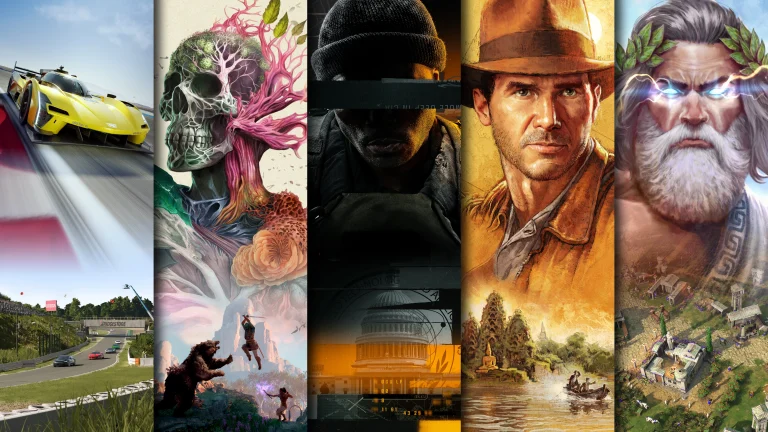
A new Xbox Game Pass tier with the codename “Triton” has appeared in Microsoft’s backend data. The find comes from X user @redphx, who regularly digs into Game Pass backend updates before they go public.
What Is Triton?
Triton appears to be a new Game Pass tier that would only include first-party games from Xbox Game Studios, unlike existing tiers, which also carry third-party titles.
The games listed under the Triton codename include DOOM Eternal, Dishonored 2, Fable Anniversary, Fallout 4, Fallout 76, Gears 5, Halo 5: Guardians, Halo Wars 2, Hellblade, Ori and the Blind Forest, State of Decay 2, and The Elder Scrolls Online.
Apparently this new Game Pass "TRION" program only includes games from Xbox Studios
New titles: – DOOM Eternal – Dishonored 2 – Fable Anniversary – Fallout 4, Fallout 76 – Gears 5 – Halo 5, Halo Wars 2 – Hellblade – Ori 1 – State Of Decay 2 – The Elder Scrolls Online https://t.co/7QkpJUq7zT
It is unclear whether Triton would include all Xbox first-party games or only a selected set. It is also possible that this is an internal experiment that never sees release. Price, timing, and other details are not available.
Why This Matters Now
Asha Sharma became CEO of Microsoft Gaming in February 2026. One of her priorities is making Game Pass more accessible, potentially reversing some of the frustration caused by last year’s price increases.
Microsoft raised Game Pass prices in October 2025, with the Ultimate tier jumping 50% to $30 per month.
The cheapest plan, Game Pass Essential, currently costs $10 a month and covers around 50 games. Ultimate at $30 unlocks over 500 titles, day-one releases, EA Play, and Ubisoft+.
A first-party only tier could sit below Essential, giving Microsoft a lower entry point without renegotiating third-party licensing deals.
Other Changes in the Pipeline
An ad-supported Xbox Cloud Gaming tier is also reported for 2026, letting players stream their own purchased games without needing an active Game Pass subscription.
Netflix CEO Greg Peters confirmed he has met with Sharma multiple times and that the two have discussed potential bundle ideas.
Microsoft has not officially acknowledged Triton or commented on its contents.
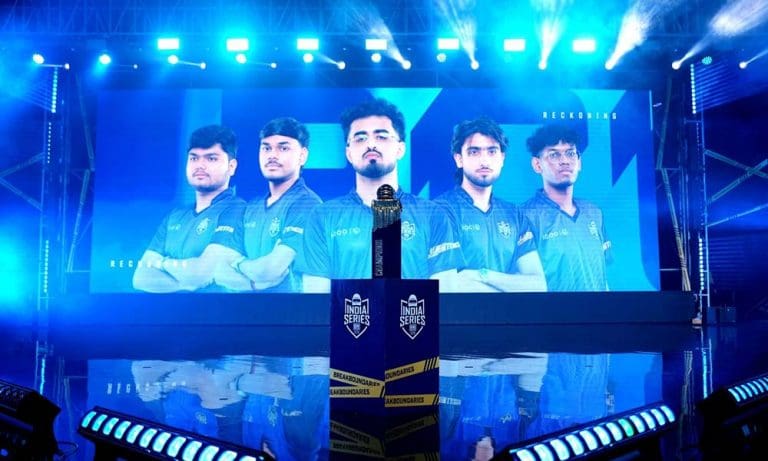
The fifth edition of the BATTLEGROUNDS MOBILE INDIA SERIES (BGIS) 2026 Grand Finals began on March 27 at the Chennai Trade Centre, marking the start of one of India’s biggest BGMI esports events of the year.
Day 1 featured six matches played across Rondo, Erangel, and Miramar, with all 16 qualified teams competing in front of a live audience, alongside viewers tuning in via the KRAFTON India Esports YouTube channel. The Grand Finals bring together eight teams from the Semifinals held in Hyderabad between March 12 and March 15, along with eight additional teams that qualified through the Survival Stage from March 16 to March 17.
Participating teams include iQOO Soul, GodLike Esports, Orangutan, Revenant XSpark, Genesis, Welt Esports, Nebula, Team Tamilas, and Wyld Fangs, among others.
Team Soul Tops Standings After Day 1
Following six matches, Team Soul leads the overall standings with 66 points. GodLike Esports sits in second place with 63 points, while Victores Sumus holds third position with 57 points.
https://www.youtube.com/watch?v=RhyQjTQh0Ps
The rest of the standings remain closely contested, with Wyld Fangs and Genesis completing the top five after Day 1.
BGIS 2026 Day 1 Overall Standings
Position
Team
Points
1
Soul
66
2
GodLike
63
3
Victores Sumus
57
4
Wyld Fangs
55
5
Genesis
54
6
Velocity Esports
48
7
Revenant Esports
42
8
Revenant XSpark
35
9
Orangutan
28
10
NinjaboiZ
26
11
K9 Esports
24
12
Myth Official
24
13
Welt Esports
21
14
Team Tamilas
20
15
LEFP
16
16
Nebula
14
All matches from BGIS 2026 are being streamed live on the KRAFTON India Esports YouTube channel, with coverage available in multiple languages including English, Hindi, Tamil, Telugu, Kannada, Marathi, Mizo, and Malayalam.
Day 2 of the Grand Finals is scheduled to resume on March 28, with matches expected to begin around 1:00 PM IST.
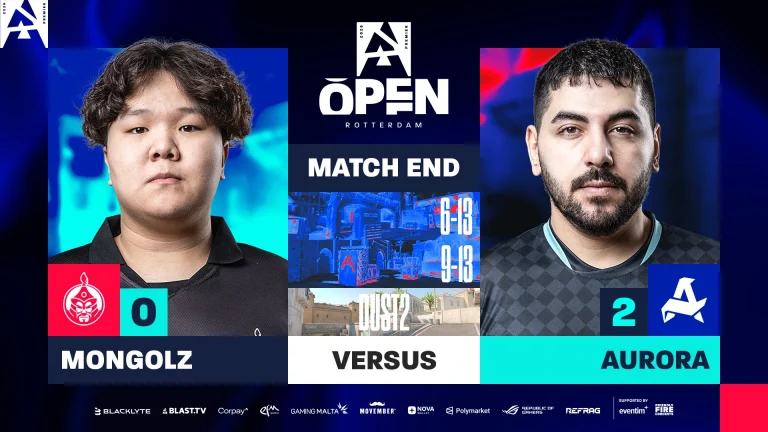
Aurora is finally going to the semi-finals of the BLAST open Rotterdam, beating Asian giants MongolZ with a 2-0 scoreline. Waiting for them is Vitality, setting up for a smashing semi-finals, and will arguably be the toughest challenge for the Turks so far in the event.
Aurora hit the board by converting their 2nd round force-buy after the MongolZ managed to win the pistol round. Levelled scoreline saw Aurora pull ahead before MongolZ managed to muster up a few rounds by the end of the first half. Winning the final round of the half, MongolZ managed to level the scoreline before switching sides. Having fought back in the first half, Aurora completely dominated MongolZ in the second half as the Asian side failed to win a single round. The 910 AWP, becoming the saving grace in the first half, failed to make much of an impact from the T side, leading to a quick conclusion of the map with a 13-6 scoreline.
Map 2: Mirage; Pick: MongolZ; Winner: Aurora
Following a rock-solid defence, Aurora continued the momentum on Mirage, going 5-0 up before MongolZ could hit the board. As the half progressed, MongolZ roped in 2 more rounds by the end of the half as Aurora won the final round to go to their offense with an 8-4 lead. By winning the pistol, Aurora went 3-0 up before MongolZ hit the board with the first gun round. As MongolZ started winning rounds, Aurora was 2 rounds away from the finish line, and after beating a few rounds, they pushed the game over the line with an effortless close. Wicadia, with 23 kills, proved to be the starman on Mirage that saw Aurora reach the semi-finals against Team Vitality.
MongolZ has fallen off significantly, and failing to replace senzu is the only way to justify this drop in form. Cobrazera’s addition has not yielded the best results, but only time can tell if there is a fix to be found.
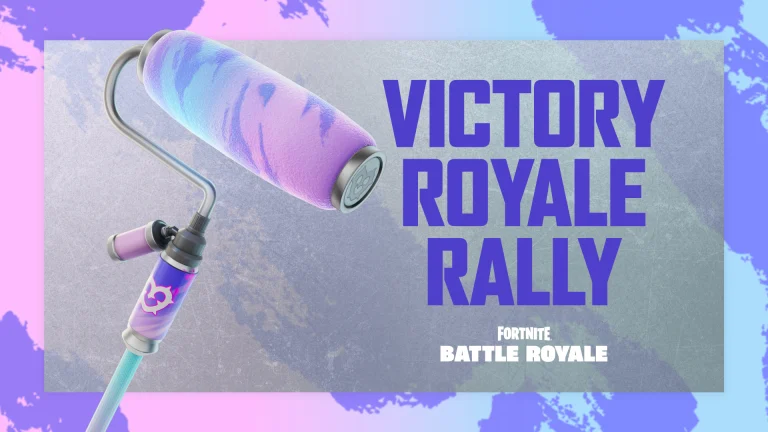
Epic Games is giving away various free cosmetics to Fortnite players, including the Soft Roller Pickaxe, as part of the new Victory Royale Rally event, but you may not have much time left to claim it.
The Fortnite Soft Roller Pickaxe is only available to obtain between March 27 and March 30, so you’ll need to be quick if you wish to add this limited-edition item to your locker.
If you’re looking to get the Soft Roller Pickaxe for free in Fortnite, we’ve got you covered.
How To Get the Free Fortnite Soft Roller Pickaxe
To claim the Fortnite Soft Roller Pickaxe for free, all you need to do is log into the game between the aforementioned dates and get a Victory Royale.
Upon getting a win in either the Battle Royale or Zero Buildgame modes, you’ll automatically get the Soft Roller Pickaxe alongside the new Victory Umbrella.
Note that both items will automatically be added to your Fortnite Locker upon the conclusion of the Victory Royale Rally event on March 30, at 8 am ET.
Paint those dubs! Secure a Victory Royale in Battle Royale > earn the Soft Roller Pickaxe
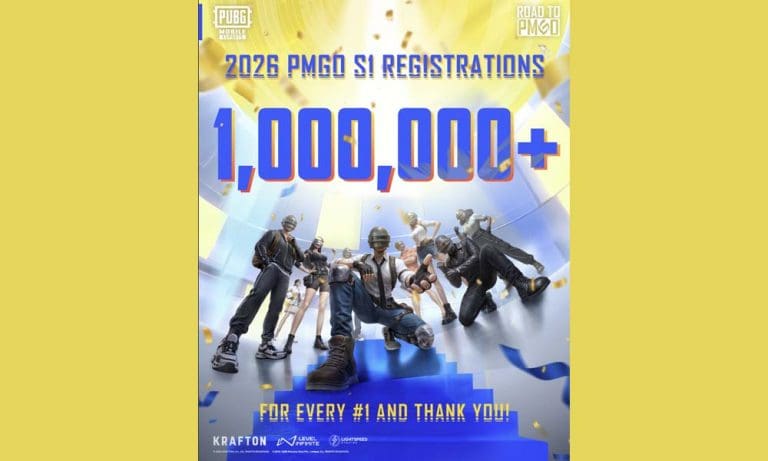
PUBG Mobile Esports has announced that the 2026 PUBG MOBILE Global Open (PMGO) Season 1 has surpassed 1 million registered participants worldwide, marking a record for the open-entry tournament.
The milestone coincides with PUBG MOBILE’s eighth anniversary and reflects the scale of participation in its global competitive ecosystem.
Registrations for PMGO Season 1 opened on February 5, with players from more than 200 countries and regions entering the competition. The tournament is currently in its qualification phase, with national and regional qualifiers running through March to May.
Teams are competing for limited qualification spots, with only top-performing squads advancing to the main event.
Jakarta to Host $500,000 Main Event
The PMGO Season 1 Main Event will take place from June 2 to June 7 in Jakarta, Indonesia. Qualified teams will compete for a total prize pool of $500,000.
The event will feature both established professional teams and newly qualified amateur squads, following the open qualification pathway. PMGO Season 1 follows a multi-stage structure beginning with open registrations, followed by regional qualifiers and culminating in the main event.
The tournament forms part of the broader 2026 competitive calendar, which will also include major international events such as the PUBG MOBILE World Cup (PMWC) and the PUBG MOBILE Global Championship (PMGC). The tournament continues to operate on an open-entry format, allowing players across regions to participate in the qualification process.
With registrations exceeding one million, PMGO 2026 Season 1 stands as one of the largest participation-driven tournaments in mobile esports to date.
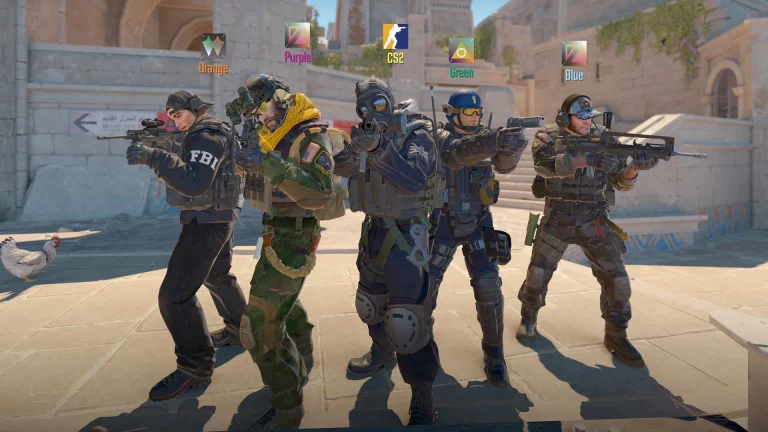
Nearly a million bot accounts in Counter-Strike 2 have been banned in the past day, Valve has confirmed.
CS2 has long struggled with a bot problem, and it’s not uncommon for players to find the occasional bot player running around in Deathmatch servers, headshotting anyone unfortunate enough to step into their line of sight.
No, we’re not talking about the official Valve-implemented bots that are generally used in offline lobbies or practice sessions. We’re referring to malicious accounts that rely on scripts or AI, and are designed to farm drops by queuing into Deathmatch servers or coordinated casual lobbies.
In fact, videos of entire bot farms dedicated to farming drops in CS2 have also surfaced on the internet in the past. Since these CS2 drops often sell on the marketplace for a decent chunk of money, these bot farms can generate significant profits with minimal effort by simply farming drops on hundreds of accounts at once.
Luckily, Valve has decided to intervene on this issue, rolling out a massive ban wave aimed at removing these bot accounts from the game.
Valve Bans 1 Million CS2 Bot Accounts
As confirmed by a CS2 developer on Reddit, Valve has banned a whopping 960,000 bot accounts over the course of the past day.
This marks the biggest ban wave we’ve seen so far in 2026.
“Yesterday we banned 960,000 farming bot accounts,” CS2 dev ido said in a Reddit thread. “This was the result of a bunch of investigation that benefited from user reports. Thank you”
The dev also encouraged CS2 players to continue reporting bot activity they come across while playing the game, informing players that reports regarding bots can be sent to the dev team via the provided email address.
Did It Impact CS2 Player Count?
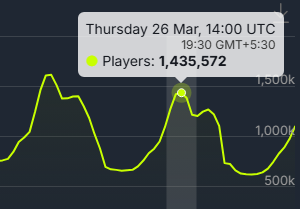
Interestingly enough, despite the large ban-wave, the concurrent player count of the Valve shooter barely moved, continuing its regular trajectory and hitting a peak player count of 1.43 million players on Thursday.
Note that the heightened player activity on Wednesday is likely a result of the weekly drop reset occurring on that day.
Unfortunately, despite the massive ban wave, the bot problem of CS2 hasn’t been eradicated, and several reports indicate that bots persist in deathmatch lobbies, albeit to a lesser extent.
For now, though, the March 26 bot crackdown is definitely a step in the right direction.
The Battlegrounds Mobile India Series (BGIS 2026) Grand Finals are officially underway at the Chennai Trade Centre, and every match counts toward the final BGIS 2026 Points Table. Bookmark this page as we will update it live after every single match so you always have the most accurate rankings.
BGIS 2026 Points Table (Live Updated)
This table reflects the overall BGIS 2026 Points Table standings and will be updated after every match throughout all three days of the Grand Finals.
Rank
Team
Placement Points
Finish Points
Total Points
1
GodLike Esports
21
38
59
2
Genesis Esports
10
44
54
3
Wyld Fangs
18
30
48
4
Team Soul
15
32
47
5
Victores Sumus
13
31
44
6
Reckoning Esports
17
23
40
7
Vasista Esports
11
23
34
8
Revenant XSpark
5
26
31
9
Meta Ninza
8
16
24
10
Myth Official
9
13
22
11
Welt Esports
8
12
20
12
Orangutan
7
13
20
13
K9 Esports
8
11
19
14
Team Tamilas
5
13
18
15
Nebula Esports
4
7
11
16
Learn From Past
1
10
11
We will update the scores live after each match. Bookmark this page and refresh for the latest BGIS 2026 Points Table standings.
Tournament Overview
The Battlegrounds Mobile India Series 2026 Grand Finals bring together 16 of the best BGMI squads in the country. The event runs from 27 to 29 March, 2026, at the Chennai Trade Centre, Nandambakkam, making it a full LAN experience with a live crowd. A total of 18 matches are all set to take place across three days, six matches per day, and the team with the highest cumulative points at the end of Day 3 will become the BGIS 2026 Champion.
The prize pool for this edition stands at a massive ₹4,00,00,000 INR, the biggest incentive yet for Indian BGMI teams. 16 teams qualified through two routes: the top 8 from the Semifinals stage earned direct entry, while the remaining 8 earned their spots through the Survival Stage.
BGIS 2026 Grand Finals Schedule
Each day of the BGIS 2026 Grand Finals features six matches starting at 2:40 PM IST. The format rotates maps between Erangel, Miramar, and Rondo across the three days, testing every team’s versatility across all major BGMI maps.
An industry projecting $4.8 billion in global revenue for 2025, with an audience of over 640 million viewers, should not be hemorrhaging talent, shutting down organisations, and watching its most prominent brands collapse.
And yet, that is exactly where esports finds itself. The numbers, on the surface, tell a growth story.
PwC’s Global Entertainment & Media Outlook has tracked esports revenue surging five-fold from $194 million in 2014 to $980 million by 2019, projecting continued double-digit growth through the mid-2020s. PwC’s Strategy& arm, in its 2024 report Passion into Profit, forecast global esports revenue reaching $1.86 billion by 2025 at a 13.4% CAGR. Deloitte’s Let’s Play! 2024 study, surveying over 14,000 respondents across 20 markets, found esports awareness at 94% in Southeast Asia alone, with the broader global audience exceeding 500 million.
FaZe Clan, once valued at $725 million during its 2022 SPAC merger, was acquired by GameSquare for roughly $17 million in late 2023. A 98% decline in valuation. The Overwatch League, Blizzard’s flagship franchise experiment, was dissolved in November 2023, costing Microsoft an estimated $120 million in compensation payouts to its 20 franchise teams. Riot Games cut 530 employees, 11% of its workforce, in January 2024, shutting down Riot Forge and cancelling the Riot Esports Network entirely. Evil Geniuses went through three rounds of layoffs in under a year. 100 Thieves shed 20% of its staff and spun off its energy drink and game development divisions just to stay afloat.
These are not fringe players. These were the industry’s flagship organisations. And the audiences that powered their rise? Still there. Still watching. Still engaged. That is the contradiction at the centre of esports in 2026. The attention economy works. The business model does not.
The Revenue Structure Is the Problem
Strip esports down to its financial core, and the imbalance becomes immediately visible.
Sponsorship and advertising remain the dominant revenue stream, contributing an estimated 60% or more of total esports income at the organisation level. According to multiple industry analyses, sponsorship revenue reached approximately $935 million to $1.1 billion globally in 2025. At the team level, that concentration is even more severe, with some organisations historically deriving 80–90% of their revenue from brand partnerships alone.
That is dependency more, than the delusion of diversification.
The remaining revenue landscape is thin. Media rights account for roughly $500 million, significant in aggregate, but fragmented across publishers, leagues, and regions with no unified distribution model. Merchandise and ticketing combine for approximately $300 million globally, streaming platform revenues contribute a fraction of that.
Compare this to traditional sports, where media rights alone constitute the largest and most predictable revenue stream, often secured through multi-year, multi-billion-dollar deals. The English Premier League’s domestic broadcast rights alone are worth over £6.7 billion across a three-year cycle. The NFL’s media deals exceed $100 billion over their full term. These agreements provide the financial stability that allows leagues, teams, and supporting infrastructure to plan, invest, and grow over decades.
Even if the structural problems outlined above were addressed tomorrow, a deeper question would remain. Where does the money actually come from, and what does it cost the industry to accept it? Over the past several years, the most aggressive investors in esports have come from gray sources, gambling-adjacent platforms, cryptos, NFTs and tokens, funds with strategic agendas. Neither represents the kind of capital that builds long-term institutional credibility.
What replaced crypto was not markedly better. Gambling and casino-adjacent brands now represent one of the fastest-growing sponsorship categories in esports. Betting revenue alone is projected at $2.8 billion in 2025, making it the single largest segment in many market estimates. But that revenue flows primarily to operators, not to the teams and leagues producing the content. More critically, it raises fundamental questions about audience protection. Esports viewership skews young, and the integration of betting into competitive ecosystems introduces gambling exposure to audiences that include minors.
On the other end of the spectrum sits sovereign-backed investment, most prominently from Saudi Arabia through entities like the Saudi Esports Federation and the Savvy Games Group. The Esports World Cup ($45 million ENC 2026), Riyadh-hosted majors, and direct team investments have injected significant capital into the ecosystem. But this level of concentration carries its own structural risk. When a single external funding source becomes the most reliable provider of large-scale capital in an industry, the ecosystem’s long-term independence becomes a legitimate concern. Dependency on any single source, regardless of origin, introduces fragility of the kind the industry is already trying to move away from.
The result is an ecosystem where the cleanest and most sustainable money, direct consumer spending, brand partnerships from non-endemic sectors with genuine marketing intent, and diversified media rights, remains the hardest to secure. The money that is available tends to come with reputational risk, regulatory uncertainty, or structural dependency.
This leads to another uncomfortable reality that is already reshaping the economics underneath. The broader digital economy has moved decisively toward subscription and rental models, and gaming has followed. Players increasingly own nothing. Game libraries exist on platforms that can revoke access. In-game purchases are licenses, not assets. Content exists behind paywalls that can change terms at any time. For the end consumer, this is the final stage of monetisation extraction, a model where recurring revenue is maximised and ownership is eliminated entirely. There is very little beyond this model left to monetise, which means the ceiling for consumer-side revenue growth may be closer than market projections suggest.
The question is not whether AI will be integrated, it will. The question is whether, five years from now, brands will see value in partnering with human creators and teams when AI-driven channels can produce equivalent content at a fraction of the cost and at limitless scale. If the answer shifts even partially, the monetisation model for creators and organisations contracts further, precisely at the moment when the industry needs it to expand.
Against this backdrop, one structural experiment deserves closer examination than it typically received. The Esports World Cup, and the broader competitive framework that Saudi Arabia’s esports infrastructure is attempting to build. From a purely structural standpoint, it represents one of the few models in global esports that provides direct operational funding to organisations, guarantees participation revenue independent of sponsorship cycles, and allows competitive outcomes to be determined on merit within the tournament itself.
The uncomfortable truth is that esports, as it stands, is caught between money that comes with strings and a future where the value of human participation itself is being questioned. Solving the monetisation crisis requires not just new revenue streams, but cleaner ones, and a credible answer to what happens when the cost of producing content, competition, and engagement continues to fall toward zero.
The Ownership Constraint No One Wants to Address
At the structural core of this crisis lies a constraint that is both fundamental and largely unresolved, esports do not own the product it is built around.
PwC’s analysis identifies this directly, game publishers have historically been reluctant to outsource esports operations to third parties, worried about losing control over intellectual property and facing reputational risk. That reluctance, PwC notes, has resulted in operational complexity, limited economies of scale, and has prevented specialised esports leagues and event organisers from fully exploiting their expertise for growth and monetisation.
Games are intellectual property controlled by publishers. Riot Games decides the format, schedule, and commercial terms of every League of Legends and Valorant competition globally. Valve determines who operates Dota 2 and Counter-Strike 2 events, and on what terms. Epic Games controls the Fortnite ecosystem end to end. Publisher decisions, on game updates, competitive formats, title longevity, or even whether to continue supporting esports at all, can reshape entire competitive ecosystems overnight.
Distribution sits with platforms. Twitch, YouTube, and an emerging set of challengers determine how content reaches audiences, what gets promoted, and how creators and organisations can monetise. Discovery is increasingly governed by algorithms that reward virality and recency over consistency and depth.
Revenue, in most cases, is generated externally, through sponsors whose budgets are tied to marketing cycles, not to the health of the esports ecosystem itself.
The result is an industry where even the most successful organisations operate with remarkably limited control over their own trajectory. Teams cannot guarantee the longevity of the titles they compete in. Tournament organisers negotiate terms set by publishers. Media companies build audiences on platforms they do not own. This is the architecture of the industry. And it has consequences.
When Riot cancelled the Riot Esports Network in 2024, third-party tournament organisers immediately faced increased pressure. When Activision Blizzard dissolved the Overwatch League, franchise owners who had paid upwards of $20 million per slot received $6 million in compensation, less than a third of their initial investment, before accounting for years of operating costs. When publishers shift competitive priorities, the downstream impact on teams, talent, and commercial partners is immediate and often irreversible.
In traditional sports, teams own perpetual franchise rights. Leagues collectively negotiate media deals. Revenue-sharing models distribute value across stakeholders. Esports has none of these structural protections.
The Gaming Media Parallel That Explains More Than You Think
Gaming media, at its peak, occupied a critical position in the ecosystem. It was the bridge between audiences, publishers, and brands. It had reach, cultural relevance, and traffic at scale. In theory, it should have been one of the most commercially stable pillars of the industry.
In practice, it was among the most fragile. The model depended on search engines for discovery, social platforms for distribution, and advertising for revenue. Gaming media companies did not control any of these levers. When Google adjusted its algorithm, traffic shifted overnight. When social platforms changed their feed logic, distribution collapsed. When advertisers tightened budgets, revenue evaporated, regardless of audience size. The response was predictable. Output accelerated. Headlines sharpened. Volume replaced depth. The incentive structure quietly shifted from building trust and authority to maximising impressions and clicks. Visibility began to outweigh credibility, and virality consistently outperformed substance.
This is not an indictment of individual publications. It is a description of what happens when an industry builds its business on infrastructure it does not own and monetisation models it cannot control. The outcome was a repeating cycle, rapid growth on traffic, failure to convert that traffic into stable revenue, and eventual contraction.
Esports is now living through the same dynamic at a larger scale. The audience numbers are real. The engagement is genuine. But the underlying revenue architecture, dependent on external platforms, publisher goodwill, and cyclical brand budgets, mirrors the same fragility that hollowed out gaming media.
The India Question?
In markets like India, this structural tension is amplified further.
Deloitte’s 2024 research highlights the paradox clearly across South and Southeast Asia, the region boasts the highest esports awareness globally (94%) and a young, mobile-first audience that is deeply engaged, yet the conversion from awareness to consistent monetisation remains the industry’s weakest link. Esports viewers in Southeast Asia demonstrate greater willingness to pay for subscriptions and live events compared to the general population, but the infrastructure to capture that willingness largely does not exist.
But the monetisation layer underneath remains thin. The ecosystem still runs primarily on brand-funded tournaments and short-term commercial partnerships. There is limited infrastructure for media rights monetisation, no established revenue-sharing model between publishers and ecosystem stakeholders, and minimal development of direct-to-consumer revenue streams like subscriptions, memberships, or premium content.
India’s esports economy, in many ways, represents the global challenge in concentrated form, a large, passionate, and growing audience operating within a commercial framework that has not yet matured to match the scale of attention it commands. The opportunity is substantial. But realizing it requires moving beyond the current model of visibility-driven growth toward building the commercial infrastructure, media rights, direct monetisation, diversified revenue, that can sustain an ecosystem of this size over the long term.
What Comes Next Is Not More Growth. It Is Better Architecture.
This is not a story of decline. The global esports audience continues to expand. Viewership for the League of Legends World Championship peaked at nearly 7 million concurrent viewers in 2024. The Esports World Cup in Riyadh drew 3 million on-site attendees and 750 million online viewers in 2025. Investment in esports infrastructure exceeded $240 million in 2025, particularly in the Middle East and Southeast Asia.
The attention economy is working. The question still remains… whether or not the business can be built to match it.
The next phase of esports can not be defined by audience growth. It has to be defined by structural decisions, whether publishers and ecosystem stakeholders can develop unified media rights frameworks, whether organisations can build diversified revenue beyond sponsorship dependency, whether direct-to-consumer models can emerge at meaningful scale, and whether the industry can establish the kind of long-term value creation that traditional sports achieved through decades of institutional development.
The esports winter of 2023–2024 was not a temporary downturn. It was the consequence of an industry that scaled its audience before it scaled its business model. The correction was necessary. What matters now is what gets built in its wake. Esports industry has proven, conclusively, that it can capture attention at a global scale.
The question that remains is more fundamental, and more difficult, can it convert that attention into a business that endures? It remains a spectacular demonstration of what happens when growth outpaces structure.
Chess is officially set to return to the Esports World Cup (EWC) in 2026 after a successful debut last year, marking a significant step in its growing integration into the global esports ecosystem.
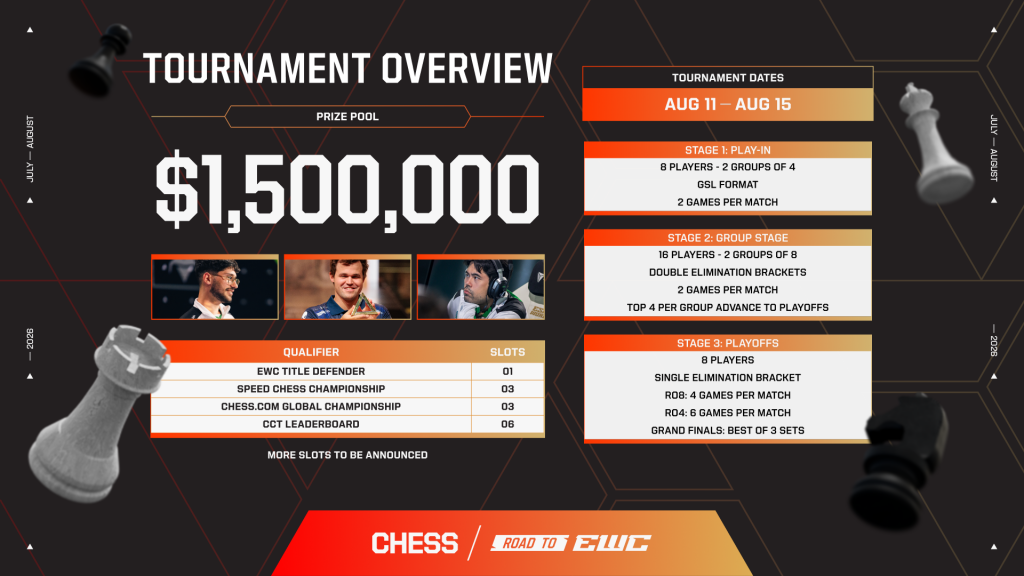
Following its inclusion in 2025, where it drew strong viewership and filled arenas, the classic strategy game is now expanding its competitive format. The 2026 edition will feature a 21-player pool, introducing a play-in stage ahead of a restructured group stage and playoffs, signalling a more competitive and layered tournament structure.
Road to EWC 2026: Qualification Pathway Explained
Defending champion Magnus Carlsen is set to return to defend his title, once again entering as the player to beat. The Norwegian grandmaster, widely regarded as one of the greatest players in modern chess history, headlines a competitive field that is already beginning to take shape.
Joining him are top performers from the latest Speed Chess Championship, including Alireza Firouzja and Denis Lazavik. With Carlsen already qualified as the reigning champion, additional qualification slots are expected to be redistributed as the pathway progresses.
The remaining spots for the main event will be filled through multiple global circuits and tournaments. The Chess.com Open Championship, running from March to April, will play a crucial role in determining top contenders, while rankings from the Champions Chess Tour (CCT) will allocate further slots based on circuit performance. Additional qualification opportunities will emerge from DreamHack Atlanta and the EWC Last Chance Qualifier, ensuring a diverse and competitive field.
Players can also accumulate CCT points through events such as the Titled Tuesday Grand Prix Spring Split, adding another layer to the qualification race ahead of the final rankings cutoff.
Looking Back At Carlsen’s Dominance at EWC 2025
The inaugural Chess tournament at the Esports World Cup in 2025 was defined by Carlsen’s dominance. Representing Team Liquid, he secured the title without dropping a single set throughout the competition.
His toughest challenge came against long-time rival Hikaru Nakamura of Team Falcons, in a closely contested match that required seven games to break a deadlock. Carlsen ultimately advanced and delivered a commanding performance in the final, defeating Firouzja with back-to-back 3-1 victories.
The win not only cemented Carlsen’s position at the top of the esports chess scene but also contributed to Team Liquid’s strong showing in the overall Club Championship standings.
Key Players to Watch in 2026
Heading into EWC 2026, Carlsen remains the clear favourite. As both the defending champion and the recent Speed Chess Championship winner, expectations around his performance remain exceptionally high. With over two decades at the top level of competitive chess, anything short of a title defence would be seen as a major upset.
Firouzja continues to emerge as one of the most dynamic challengers in the field. Since being recognised as a rising star, he has consistently pushed the limits against elite competition and remains one of the few players capable of challenging Carlsen at the highest level.
Meanwhile, Nakamura’s presence adds further intrigue to the competition. Currently among the top players in the Champions Chess Tour standings, his likely qualification sets up the possibility of another high-stakes rivalry on the global stage.
With Team Falcons fielding both Firouzja and Nakamura, the organisation enters the tournament with one of the strongest lineups, raising the question of whether they can collectively challenge Carlsen’s dominance.
A Bigger Stage for Chess in Esports
The return of chess to the Esports World Cup reflects a broader shift in how competitive gaming is being defined. By blending traditional strategy titles with modern esports infrastructure, the EWC is expanding the boundaries of what constitutes competitive entertainment. With an expanded format, a deeper player pool, and growing global interest, Chess at EWC 2026 is shaping up to be one of the most compelling events on the calendar.
As the road to Riyadh unfolds, all eyes will remain on whether anyone can dethrone Magnus Carlsen, or if the reigning champion will once again assert his dominance on esports’ biggest stage.
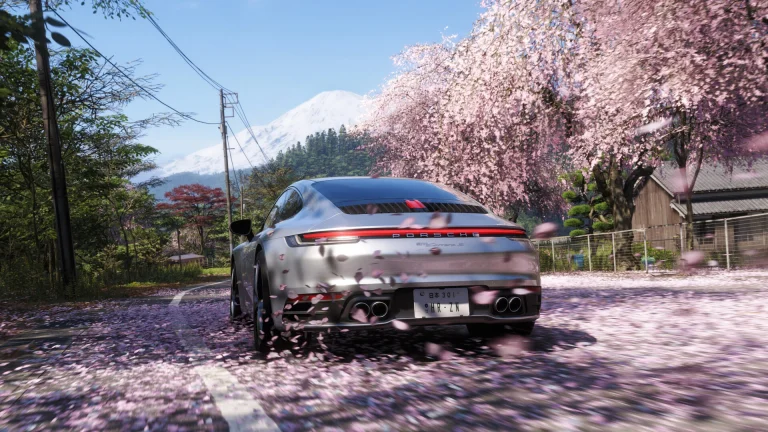
Playground Games has officially revealed the PC system requirements for Forza Horizon 6. The game launches on May 19, 2026, on PC and Xbox Series X|S. A PS5 version is also confirmed, but will arrive at a later, unannounced date within 2026.
Playground Games said their team has made “significant improvements to the custom PC engine that delivered excellent performance in Forza Horizon 5, pushing graphical fidelity and quality further than ever before.”
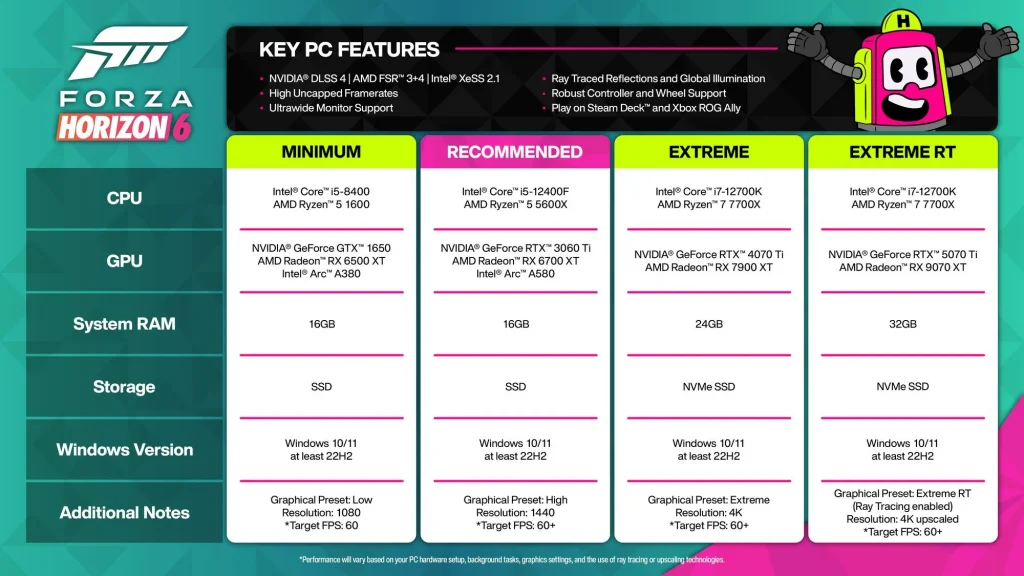
The full spec list covers four tiers: Minimum, Recommended, Extreme, and Extreme with Ray Tracing.
Minimum PC Requirements
The minimum spec targets 1080p at 60 FPS on low settings.
Component
Requirement
CPU
Intel Core i5-8400 / AMD Ryzen 5 1600
GPU
Nvidia GTX 1650 / AMD RX 6500 XT / Intel Arc A380
RAM
16 GB
Storage
SSD required (size TBA)
OS
Windows 10/11 (22H2 or later)
The GTX 1650 is a budget card, and most AAA titles have already moved past it for base-level requirements, which only shows how confident Playground Games is in FH6’s optimization.
Recommended PC Requirements
The recommended spec targets 1440p at 60 FPS on high settings.
The extreme tier targets 4K at 60+ FPS with maximum visual settings.
Component
Requirement
CPU
Intel Core i7-12700K / AMD Ryzen 7 7700X
GPU
Nvidia RTX 4070 Ti / AMD RX 7900 XT
RAM
24 GB
Storage
NVMe SSD required (size TBA)
OS
Windows 10/11 (22H2 or later)
Extreme Ray Tracing Requirements
Enabling ray tracing at 4K upscaled resolution demands the highest hardware tier.
Component
Requirement
CPU
Intel Core i7-12700K / AMD Ryzen 7 7700X
GPU
Nvidia RTX 5070 Ti / AMD RX 9070 XT
RAM
32 GB
Storage
NVMe SSD required (size TBA)
OS
Windows 10/11 (22H2 or later)
The jump from Extreme to Extreme RT is steep. The GPU requirement moves from an RTX 4070 Ti to an RTX 5070 Ti. RAM goes from 24 GB to 32 GB.
PC-Exclusive Features
On PC, Forza Horizon 6 will support Nvidia DLSS 4, AMD FSR 3 and 4, and Intel XeSS 2.1. The game also targets ultrawide monitor support, uncapped framerates, and ray-traced reflections and global illumination.
Nvidia GPU users get additional options. DLSS 4 with Multi-Frame Generation is available on RTX 50 Series cards. RTX 40 Series cards get DLSS Frame Generation. All GeForce RTX cards support DLSS Super Resolution, DLAA, and Nvidia Reflex.
PC players also get live previews for graphics settings, meaning no restarts are needed to see how visual changes look in-game.
Handheld Support Confirmed
Players planning to game on the go can also play on Steam Deck or ASUS ROG Xbox Ally handhelds. Native support is confirmed for both devices, with full cross-save progression included.
Release and Setting
Forza Horizon 6 will release for PC and Xbox Series X|S on May 19, 2026. A PS5 version has been announced but will arrive at a later point in 2026 with no confirmed date.
The game is set in Japan and features over 550 real-world cars. Players start as tourists and work their way through the Horizon Festival to become a Horizon Legend.
Pre-purchasing the game on Steam grants four days of early access before the May 19 launch.