Despite being a 13-year-old game, Valve’s Dota 2 remains one of the most popular multiplayer games in the world to this day, consistently ranking among the top titles on Steam Charts with massive player counts.
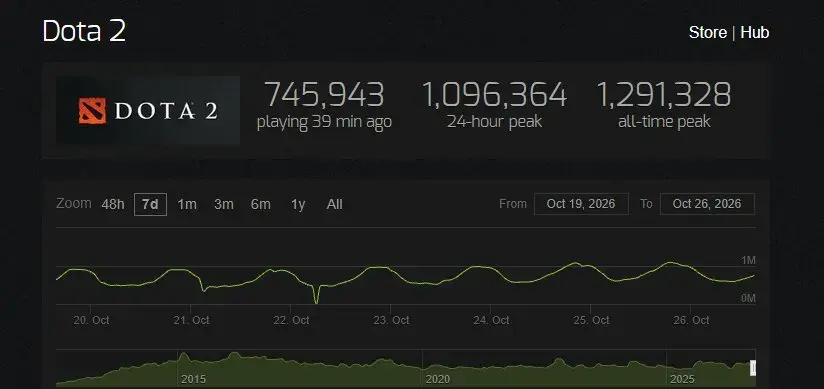
In fact, the popularity of Dota 2 might be reaching an all-time high, as the game is nearing a whopping 1.1 million active concurrent player peak for the first time in a decade. As per data from Steam Charts, the MOBA recorded a peak concurrent player count of 1,096,364 players on October 25, 2026, second only to Counter-Strike 2, which had a peak of just over 1.3 million active players.
The last time Dota 2 reached these kinds of numbers was back in 2016, when the game reached its all-time player peak of 1.29 million. This sudden surge of Dota 2 players ten years later is certainly surprising, but a welcome sight for any avid fans of the title.
If Dota 2 continues to grow at this pace, it’s only a matter of time before the title surpasses its all-time peak and sets a new milestone for itself.
Dota 2 reached 1,082,982 concurrent players for the first time since 2016. I guess the game isn't that dead after all… pic.twitter.com/2qEMXrfwUr
The exact reason behind the sudden influx of Dota 2 players is still unclear, with some players claiming that bots are taking up a good chunk of the player count. However, it’s also worth mentioning that over the past few months, Valve has given players plenty of reasons to return and for newbies to give Dota 2 a try by providing a steady stream of updates to the game.
The Dark Carnival event and TI Compendium, the Quartero’s Curios autumn cosmetic update, the brand-new Tidehunter Arcana, and a number of crucial balance patches and quality-of-life improvements have kept the game fresh. The player count also followed the end of The International 2026 in Shanghai, which ended in a five-game final between Team Spirit and Team Vision.
Together, these updates give both returning and new players a good reason to jump into the game.
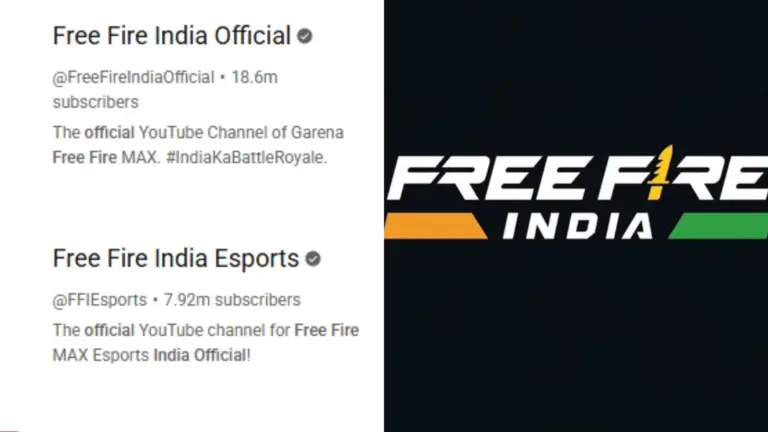
On Monday, October 26, 2026, Garena officially renamed its YouTube channels to “Free Fire India Official” and Free Fire India Esports hinting at the highly anticipated launch of the game.
After some time, Desi Gamers and Assassinarmy shared reels on their Instagram accounts confirming the Free Fire India launch.
Desi Gamers, who has over 17.7 million subscribers on YouTube, revealed, “A couple of days ago, Munna, Nayan (Assassin Army), Ritik, Delete, and I travelled to Dubai for a Free Fire India shoot.” According to him, Garena invited the creators to Dubai to feature in a secret promotional video for Free Fire India.
“The game is set to launch soon on the Google Play Store and App Store,” He added.
Assassinarmy revealed the Free Fire India Release Date
Assassinarmy, aka Nayan, who was with Desi Gamers for the official Free Fire India shoot, revealed the Free Fire India release date for 28 October 2026 on his Instagram reel video.
He said, “A few days ago, we participated in a shoot for Free Fire India, and we are now hearing reports that the game could launch on October 28, 2026.”
Notably, both of these creators are under the official creators program of Garena. So we can count them as a near-official source.
From rename to creators videos, all of the wind is flowing in only one direction, and it is the highly anticipated launch of Free Fire India.
Millions of fans have been waiting for the release for the last 3 years. The game was supposed to launch on 5 September 2023, but the delays never stopped. Now all of the gamers have new hope that their game will launch soon, and if all the hints are true, then on 28 October 2023.
Free Fire India, the India version of the popular battle royale game Free Fire, was announced 3 years ago in August 2023. However, the game never launched, and Garena did not provide any clarification on its status. Many gamers have also lost hope that the game will be released. Now, after 3 years of waiting, Garena dropped a major hint about the Free Fire India release.
Free Fire India Launch Soon? Garena drops a major hint
On Monday, 26 October 2026, Garena changed its YouTube channel names to “Free Fire India Official” and “Free Fire India Esports.” This sparked major speculation on the internet about the FF India release.
Additionally, the Garena Free Fire India Google Play listing reportedly received an update on 24 September 2026. This is also a major hint that the developers might be preparing to launch one of the most anticipated games in the country.
Notably, both channels originally had the Free Fire India name. However, as Garena shifted its focus toward Free Fire MAX esports, they were renamed to Free Fire MAX. Now, both channels have returned to their original Free Fire India branding, further fueling speculation about the game’s comeback.
This comes after the conclusion of the Free Fire MAX Asia Invitational (FFMAI) 2026 on Sunday, October 25.
There is no doubt that Garena is now fully into Indian esports. Since 2025, they have woken up the Free Fire esports scene in the country with 3 editions of the Free Fire MAX India Cup (FFMIC) and four editions of the Free Fire MAX Asia Invitational (FFMAI).
However, it is still available on the Google Play Store to pre-register. Many fans, creators, and even esports players raised their voices to Garena about why the game is not releasing. Still, Garena remains silent.
However, after three years, the name change is the biggest hint India gaming community has got. This clearly indicates that Garena is planning something big for the Indian Free Fire community.
Indian Free Fire MAX esports is also on a good track. This year, three Indian teams, Team Apex Gaming, Total Gaming Esports, and S8UL, played the Esports World Cup 2026, and Apex Gaming and Total Gaming also qualified for the Grand Finals. Now, three more teams Team Apex Gaming, TSG Pros, and Resurrection- are set to represent India at the Free Fire World Series 2026 Global Finals.
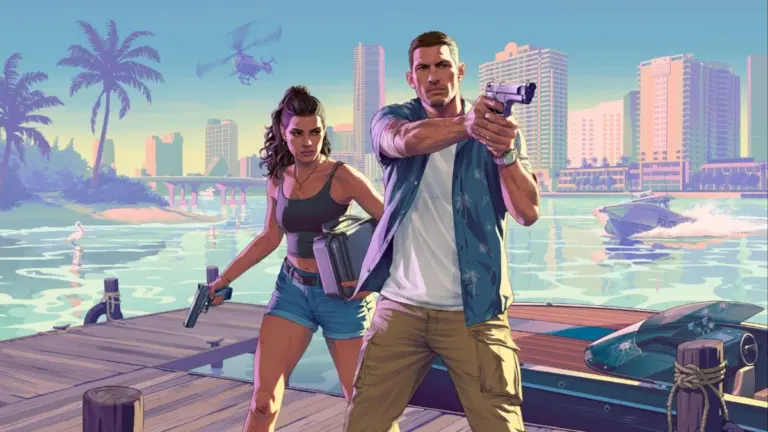
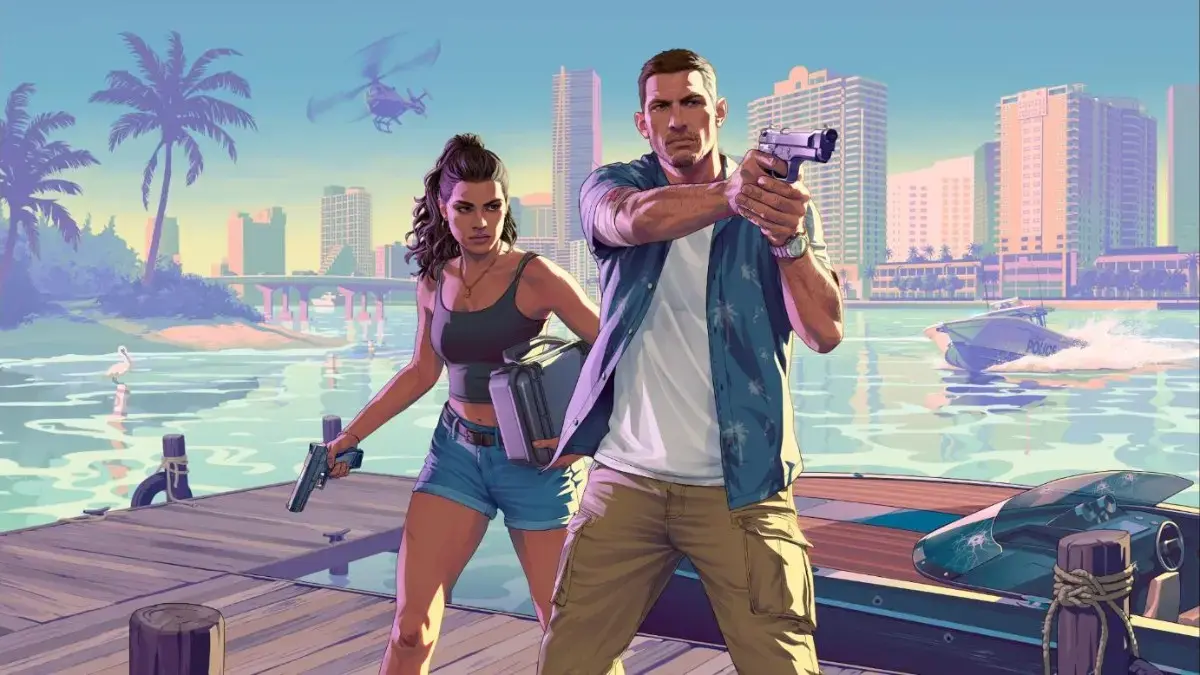
Rockstar Games ran GTA 6 ads on the pitchside LED boards at El Clásico on October 25, 2026, putting the game’s logo and the line “Coming November 19” in front of one of the biggest TV audiences in club football. Real Madrid won the match 2-1 at Spotify Camp Nou, with Kylian Mbappé scoring both goals. Rockstar has not commented on the placement, but it fits a clear pattern: the GTA 6 campaign is now leaning hard on live sport in its final weeks before launch.
Here is what appeared during the match, how it ties into Rockstar’s wider marketing push, and why sport has become the main stage for the GTA 6 rollout.
What GTA 6 ads appeared at El Clásico?
The ads ran on the rotating LED boards around the pitch at Spotify Camp Nou in Barcelona, and showed up several times during the broadcast. They carried the Grand Theft Auto VI logo with a “Coming November 19” message, a simple reminder that the release date is still locked in.
Fans spotted the boards on international streams of the match, including Brazilian broadcaster CazeTV’s coverage, and clips spread on social media soon after the final whistle. There was no shirt sponsorship or in-broadcast TV spot tied to the match, as far as has been reported. The placement was limited to the stadium boards.
Image credit: Rockstar Games
How did El Clásico 2026 go?
Real Madrid beat Barcelona 2-1 in LaLiga Matchday 10, which kicked off at 9 PM local time in Barcelona. Mbappé opened the scoring before half-time, Raphinha equalised just after the hour, and Mbappé scored the late winner. It was Barcelona’s first league defeat of the season after nine straight wins, and it cut Real Madrid’s gap to the top of the table to three points.
That drama helped Rockstar. A tight Clásico with a late winner keeps people watching to the final minute, and every replay of the key moments shows the boards behind the action.
Is this part of a bigger GTA 6 marketing push?
Yes. El Clásico is the latest in a run of sports-led placements over the past week:
Date
Where
What Rockstar did
October 20, 2026
NBA opening night on NBC Sports
First GTA 6 TV commercial, a trimmed cut of the launch trailer
October 25, 2026
El Clásico, Spotify Camp Nou
Pitchside LED board ads with “Coming November 19”
2026
Miami Heat
Official GTA 6 Vice City apparel line at the Heat store
November 18, 2026 (reported)
Miami Heat vs Milwaukee Bucks
A GTA 6-themed “A Night in Vice City” game, the day before launch
Why is Rockstar advertising GTA 6 at football and basketball games?
Live sport is one of the few places left where huge audiences still watch in real time, which makes it hard to skip the ads. El Clásico reaches fans in Europe, Latin America, the Middle East, Africa and Asia in a single broadcast, a far wider spread than a US-only TV slot. The NBA covers the US, Rockstar’s home market and the setting for Vice City.
Sports fans also make up a big share of console players, which is why games like EA Sports FC and NBA 2K top the charts every year. Pairing the Vice City setting with the Miami Heat makes the link even more direct, since the game’s map is based on Miami and Florida.
Demand is clearly not the problem. Sensor Tower estimated GTA 6 pre-orders at around $630 million before launch, as we reported in our story on GTA 6 pre-order estimates. The sport ads work as a reminder campaign, aimed at making sure every casual fan knows the date.
Image credit: Rockstar Games
When does GTA 6 come out?
GTA 6 launches on November 19, 2026 for PS5 and Xbox Series X|S, with digital pre-loads from November 12. The standard edition costs $79.99 and the Ultimate Edition $99.99, according to Rockstar’s official pre-order announcement. Times by region are in our GTA 6 release date guide, and the full game page is on Rockstar’s official GTA VI site.
FAQ
Did GTA 6 advertise at El Clásico?
Yes. GTA 6 ads with the message “Coming November 19” ran on the pitchside LED boards at Spotify Camp Nou during El Clásico on October 25, 2026.
Who won El Clásico on October 25, 2026?
Real Madrid beat Barcelona 2-1 at Spotify Camp Nou. Kylian Mbappé scored both goals, and Raphinha scored for Barcelona.
Where else has GTA 6 been advertised?
Rockstar aired its first GTA 6 TV commercial during NBA opening night on October 20, and has partnered with the Miami Heat on Vice City apparel.
When is the GTA 6 release date?
GTA 6 releases on November 19, 2026 for PS5 and Xbox Series X|S.
You can get the Beetlejuice skin in Fortnite by buying it from the Item Shop for 1,500 V-Bucks, or by picking up the full Beetlejuice Bundle for 2,400 V-Bucks. The set arrived on October 23, 2026 at 5 PM PT (5:30 AM IST on October 24) as part of Fortnitemares 2026. There is no free version and no quest that unlocks it.
Here is what each option includes, how much the bundle really saves you and how long the set should stay in the shop.
How much is the Beetlejuice skin in Fortnite?
The Beetlejuice outfit costs 1,500 V-Bucks on its own, and that offer also includes the Beetlejuice’s Marquee back bling. The full bundle costs 2,400 V-Bucks. Epic’s official Beetlejuice Bundle listing puts the regular value of everything inside at 5,300 V-Bucks, so the bundle knocks 2,900 V-Bucks off.
Option
Price
What you get
Beetlejuice outfit
1,500 V-Bucks
Outfit plus Beetlejuice’s Marquee back bling
Beetlejuice Bundle
2,400 V-Bucks
Every item in the set (listed below)
Image credit: Epic Games
What is in the Fortnite Beetlejuice Bundle?
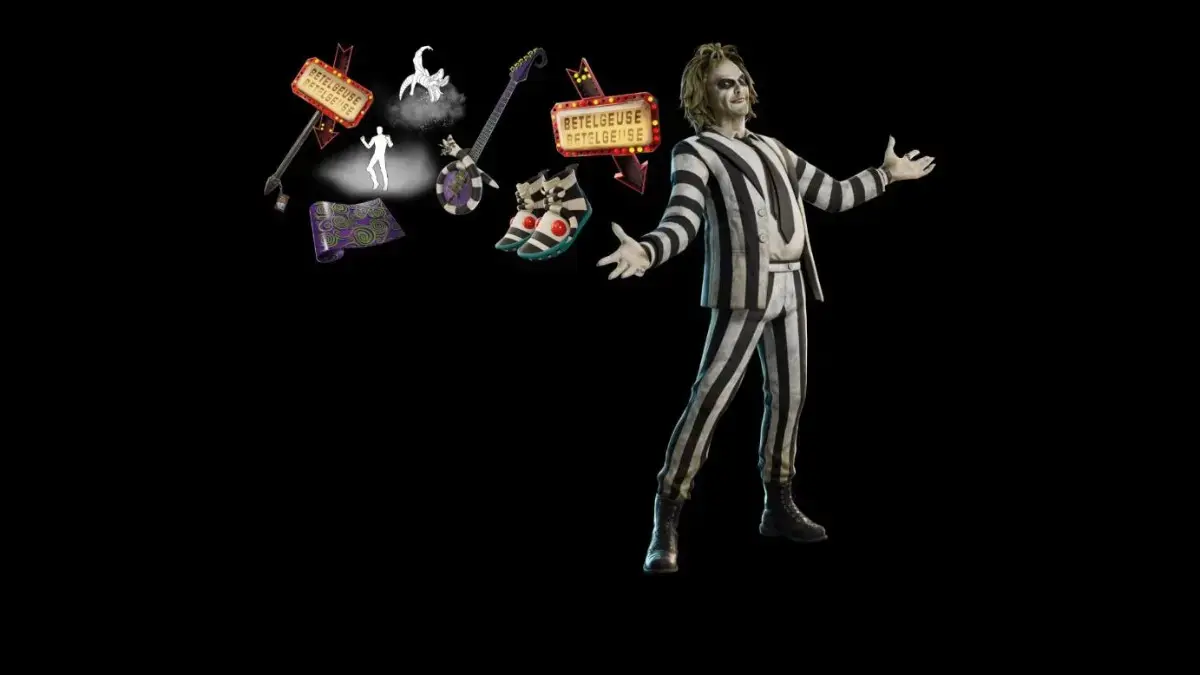
The bundle covers the whole set. According to Epic’s shop listing, it includes:
Beetlejuice (Outfit)
Beetlejuice’s Marquee (Back Bling)
Marquee Masher (Pickaxe)
Six-Stringed Sandworm (Guitar)
Sandworm Sneakers (Kicks)
Beetlejuice Spirals (Wrap)
Day-o (Emote)
Sandworm Surfer (Emote)
The outfit is an Epic-rarity skin, and its in-game description is a nod to the films: “Say his name three times.” The sandworm items reference the striped creature from the films, and the marquee pieces spell out the character’s name in a flashing sign.
Is the bundle worth it?
By our math, the bundle costs 900 V-Bucks more than the outfit on its own and adds six more items: the pickaxe, guitar, kicks, wrap and both emotes. Measured against the 5,300 V-Bucks regular value, the bundle discount works out to about 55%. If you only care about the skin, the 1,500 V-Bucks offer is enough. If you want the extras too, the bundle is the better deal by a wide margin, since those six items carry a regular value of 3,800 V-Bucks and you pay only 900 more for them.
Image credit: Epic Games
How to buy the Beetlejuice skin in Fortnite
Launch Fortnite and open the Item Shop tab from the lobby.
Scroll to the Fortnitemares section, where the Beetlejuice outfit and bundle are listed.
Select the outfit or the bundle and check the V-Bucks price on the right.
Buy V-Bucks first if your balance is short, then confirm the purchase.
Go to the Locker and equip Beetlejuice from the Outfit slot.
The skin works across every platform you play on with the same Epic account. You can also gift it to a friend from the Item Shop, as long as both accounts meet Epic’s gifting rules.
When does the Beetlejuice skin leave the Fortnite Item Shop?
Epic does not publish exit dates for shop items. Item Shop trackers currently list the Beetlejuice set as leaving in early November, around November 2 to 3 depending on your time zone. The shop can extend or pull items without notice, so buy it before then if you want it.
The files for the set were first found in Fortnite update 42.40, which added most of this year’s Halloween content.
Image credit: Epic Games
What other Fortnitemares 2026 collabs are in the shop?
Beetlejuice is one of several horror crossovers this Halloween. Slender Man joined around the same time, and our guide to when Slenderman comes to Fortnite covers its release time and price. Leaks also pointed to Nikki from Obsession, which we covered in our piece on the leaked Nikki bundle. Anime fans still have the Black Clover skins from earlier in October to consider too.
The Beetlejuice outfit costs 1,500 V-Bucks and includes the Beetlejuice’s Marquee back bling. The full bundle costs 2,400 V-Bucks.
Is the Beetlejuice skin free in Fortnite?
No. There is no free version or quest reward for the Beetlejuice skin. It is only available through the Item Shop.
When was the Beetlejuice skin released in Fortnite?
The Beetlejuice skin arrived in the Fortnite Item Shop on October 23, 2026 at 5 PM PT, which was October 24 at 5:30 AM IST.
What comes with the Beetlejuice Bundle?
The bundle includes the Beetlejuice outfit, Beetlejuice’s Marquee back bling, Marquee Masher pickaxe, Six-Stringed Sandworm guitar, Sandworm Sneakers, Beetlejuice Spirals wrap and the Day-o and Sandworm Surfer emotes.
How long will Beetlejuice be in the Fortnite Item Shop?
Epic has not announced an exit date. Shop trackers list the set as leaving around November 2 to 3, 2026.
Popular YouTuber Shirrako has sparked rumours that GTA 6 is already in creators’ hands after a cryptic post on X that fans read as a hint he has early access. Russian outlet iXBT.games went further, suggesting he may have broken an agreement with Rockstar. So far, though, nobody has shown that Shirrako has the game, and he has not posted any GTA 6 footage. Rockstar has not commented.
Here is what he posted, what is known about GTA 6 review copies and the embargo, and how to avoid spoilers before the November 19 launch.
What did Shirrako post about GTA 6?
Shirrako runs a YouTube channel known for full, no-commentary walkthroughs of big games, often uploaded the moment early access or a review embargo lifts. Notebookcheck puts the channel at around 2.6 million subscribers.
On his X account, he posted a message made of a game controller emoji and a palm tree emoji. Fans took the palm tree as a reference to Vice City and flooded the replies, asking for gameplay, frame rates on PS5 Pro and whether the weapon wheel had been changed. He did not answer those questions with footage or screenshots.
That is the full extent of the evidence. The post does not mention GTA 6 by name, and neither Shirrako nor Rockstar has confirmed that he received a copy.
Image credit: Rockstar Games
Did Shirrako break an agreement with Rockstar?
There is no proof that he did. iXBT.games framed the story around a possible breach, noting that anyone given early access normally signs a strict confidentiality agreement with heavy penalties for leaks. That part is standard practice across the industry, and Rockstar is known for guarding its games closely.
An emoji post, on its own, does not reveal any content from the game. If Shirrako has a code under embargo, hinting at it is a grey area at most. If he does not have one, there was nothing to break. Until he posts footage early, or Rockstar or Take-Two responds, the breach claim is speculation.
Why fans are nervous about Shirrako
The concern comes from his track record. According to Notebookcheck, his channel has uploaded major story moments right as early access opened for games including Elden Ring, Final Fantasy 16, Resident Evil Requiem and Call of Duty: Modern Warfare 4, and his thumbnails have sometimes shown key plot points. For a story-heavy game like GTA 6, players worry a full walkthrough could land the moment the embargo lifts.
Image credit: Rockstar Games
When will GTA 6 review copies and reviews go out?
Rockstar has not announced a review schedule. The current picture comes from leakers and should be treated as unconfirmed:
Date
What is expected
Source
By October 31
Review codes sent to media
Leaker NateTheHate, reported by Insider Gaming
November 12
Digital pre-load opens
Rockstar (official)
November 18
Review embargo lifts, around 6 to 7 AM ET
Unverified ResetEra user BlackBate
November 19
GTA 6 launches on PS5 and Xbox Series X|S
Rockstar (official)
By our count, if codes go out on October 31 and reviews land on November 18, reviewers get about 18 days with a very large open-world game. The same leak claimed some sites and YouTube channels may have to wait until launch day to publish. That would matter most for walkthrough channels like Shirrako’s.
If you want the confirmed dates and times for your region, our GTA 6 release date guide has the full breakdown, and Rockstar’s official GTA VI site lists the editions and pre-order details.
How serious is Rockstar about leaks?
Very. The studio has dealt with leaks for years. Arion Kurtaj, the hacker behind the 2022 GTA 6 footage leak, faces trial on November 9, as covered in our story on the Kurtaj trial. Earlier this month a group calling itself Cyberleek threatened to leak a full GTA 6 build. With that history, any creator who shares embargoed content early should expect Rockstar and Take-Two to act fast.
Image credit: Rockstar Games
How to avoid GTA 6 spoilers before launch
If Shirrako or anyone else does post story content early, these steps cut the risk:
Mute words like “GTA 6 ending,” “GTA 6 spoilers,” “Jason,” “Lucia” and “Shirrako” on X and other apps that support keyword filters.
Turn off YouTube autoplay and avoid the GTA 6 search page, where walkthrough thumbnails show up first.
Leave Reddit and Discord GTA 6 servers until you finish the main story, or join only spoiler-tagged channels.
Read text reviews from established outlets on November 18, which usually avoid late-story details.
The game is huge, and most players will take weeks to finish it, so a few days of caution around launch goes a long way. Our look at GTA 6’s hundreds of explorable interiors covers what Rockstar has shown so far without story spoilers.
FAQ
Does Shirrako have GTA 6 early?
It is not confirmed. Shirrako posted a controller and palm tree emoji on X, which fans took as a GTA 6 hint, but he has not shown any footage and Rockstar has not commented.
Did Shirrako break Rockstar’s NDA?
There is no evidence of a breach. An emoji post does not reveal game content, and it is not even confirmed that he has a review copy.
When does the GTA 6 review embargo end?
Rockstar has not announced it. An unverified leak points to November 18, 2026, the day before launch.
When do GTA 6 review copies go out?
Leaker NateTheHate said Rockstar would send review codes to media before the end of October 2026. Rockstar has not confirmed this.
When does GTA 6 come out?
GTA 6 launches on November 19, 2026 for PS5 and Xbox Series X|S, with digital pre-loads from November 12.
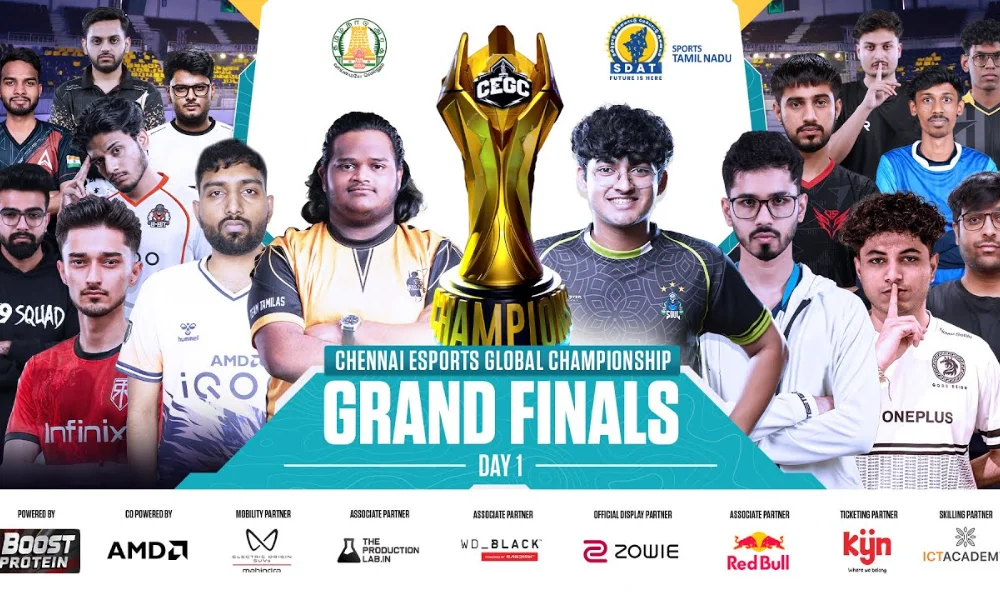
The Skyesports Chennai Esports Global Championship (CEGC) 2026 BGMI Grand Finals and the PUBG Mobile Global Championship (PMGC) 2026 Grand Finals will both run on December 11, 12 and 13. Skyesports founder and CEO Shiva Nandy confirmed the overlap on X on October 24, and two days later said the CEGC dates cannot be moved. That puts any Indian team that reaches the PMGC Grand Finals in Istanbul at risk of missing the CEGC finale in Chennai.
Team SouL, the defending CEGC champions, already hold a PMGC 2026 place, so the clash could hit the title holders directly.
What did Shiva Nandy say about the CEGC and PMGC dates?
On October 24, Nandy posted the two schedules side by side: “CEGC – Grand finals December 11,12,13. PMGC – Grand Finals December 11,12,13.” The post, followed by a string of emojis, passed 100,000 views.
CEGC – Grand finals December 11,12,13 PMGC – Grand Finals December 11,12,13.
On October 26 he followed up in plain terms. Skyesports has no flexibility, he wrote, and has no intention of clashing with anyone. The week before the CEGC finals is already blocked by another event, and the week after is unavailable too. He added that Skyesports locked the dates on September 2, not in the last week, and that changing them at this stage is “extremely difficult.”
Unfortunately, we don’t have any flexibility with the dates. We have no intention of clashing with anyone, but we’re left with no other options.
The previous week is already blocked due to another event, and the week following CEGC is also unavailable. We finalised these dates…
Which Indian teams could miss the CEGC 2026 Grand Finals?
India can send up to three BGMI teams to PMGC 2026. One spot is already filled:
PMGC 2026 route
Team
PMGC stage
BMSD 2026 champion
Team SouL
Gauntlet
BMIC 2026 champion
Decided on November 1
Gauntlet
BMIC 2026 runner-up
Decided on November 1
Group Stage
Only teams that reach the PMGC Grand Finals face a direct clash, as long as the earlier PMGC stages, which start on November 23, wrap up before December 11. A Group Stage or Gauntlet exit would leave a team free to fly back for Chennai, provided it has qualified for the CEGC finale. If SouL or another Indian side reaches the final 16 in Istanbul, it cannot play both events.
The exact qualification picture for India’s last two PMGC places is explained in our breakdown of what happens if Team SouL wins BMIC 2026, which runs from October 30 to November 1 in Mumbai.
Why Team SouL is the most exposed
SouL won CEGC 2025 in Chennai and BMSD 2026 in Hyderabad, which is how it earned its PMGC Gauntlet spot. That makes it a leading contender to defend the CEGC title and also India’s best bet for a deep PMGC run. Unless the schedules change, it may have to pick one, or field a different lineup in one of them.
CEGC 2026 vs PMGC 2026: Key details
Detail
CEGC 2026 (BGMI)
PMGC 2026
Organiser
Skyesports, with the Tamil Nadu government
Krafton / PUBG Mobile Esports
Event starts
November 3, 2026
November 23, 2026
Grand Finals
December 11 to 13
December 11 to 13
Grand Finals location
Chennai
Istanbul, Turkiye
Prize pool
Reported at Rs 1.25 crore
$3,000,000
Broadcast
Kick (exclusive)
PUBG Mobile Esports channels
By our math, the PMGC 2026 prize pool is roughly 20 times the size of CEGC’s, using an exchange rate of about Rs 88 to the dollar. For a team that qualifies for both, that gap makes the choice fairly obvious if the two finals do collide.
CEGC 2025 Grand Finals poster. Image credit: Skyesports
Why the clash matters for CEGC
CEGC is one of the biggest third-party BGMI events in India, and it is billed as the country’s first major state-backed esports IP, with the Tamil Nadu government as a partner. Its draw depends on the top teams turning up. Last year’s edition finished in mid-November, well before PMGC 2025, so there was no conflict. Our coverage of the CEGC 2025 Grand Finals shows how stacked that lobby was.
Viewership is the other worry. Indian fans who follow both events will have to choose between the PMGC broadcast, with an Indian team possibly in contention, and a home LAN on the same evening. CEGC is also streaming exclusively on Kick this year instead of YouTube, which adds another hurdle for casual viewers.
Can the dates still change?
Nandy has said no, at least from Skyesports’ side. We have not seen a public response from Krafton on the overlap, and PMGC dates are set around an international venue booking, so a change on that end looks unlikely too. The more realistic outcome is that teams in both events plan around it, either by prioritising one event or by splitting rosters. We will update this story if either organiser changes its plans.
More than 40 games are 90% off in the Xbox Shocktober Sale 2026, which runs on the Xbox Store until November 4. The cheapest picks cost less than $2, the full Tomb Raider survivor trilogy is $4.99, and Battlefield 2042 Elite Edition drops to $9.99. The sale is Microsoft’s yearly Halloween promotion, and deal trackers count well over 1,000 discounted items in total.
Below is every 90%-off game with its US and UK price, plus the best of the 80% and 85% tiers and a few numbers we worked out ourselves.
When does the Xbox Shocktober Sale 2026 end?
The sale went live on October 22 and 23, depending on region, and ends on November 4, 2026. Prices apply on Xbox One and Xbox Series X|S, and every deal is listed on the official Shocktober Sale page on Xbox.com. Deal tracker GG.deals listed 1,164 discounted entries at launch, a mix of full games, bundles and add-ons.
Prices vary by region. The figures below are US and UK store prices at the start of the sale, so check your own store before buying, especially if you shop on the Indian Xbox Store.
Image credit: Electronic Arts / Xbox Store
Every Xbox game that is 90% off in Shocktober 2026
Game
US price
UK price
Back 4 Blood
$5.99
£5.99
Battlefield 2042 Elite Edition
$9.99
£8.99
Borderlands 3: Next-Level Edition
$6.99
£6.49
Dead Island Series Bundle
$8.99
£7.99
Dying Light Essentials Edition
$2.49
£1.99
Flipping Death
$1.99
£1.59
Fobia: St. Dinfna Hotel
$2.99
£2.49
Goetia
$1.99
£0.83
Gotham Knights: Deluxe
$8.99
£7.99
Hollow
$1.99
£1.67
Injustice 2: Legendary Edition
$5.99
£4.99
INSIDE
$2.49
£2.09
Killing Floor 2
$2.99
£2.49
Lara Croft and the Guardian of Light
$1.49
£1.19
Lara Croft and the Temple of Osiris
$1.99
£1.49
LIMBO
$1.24
£1.04
Mad Max
$4.99
£2.99
Middle-earth: The Shadow Bundle
$6.99
£5.99
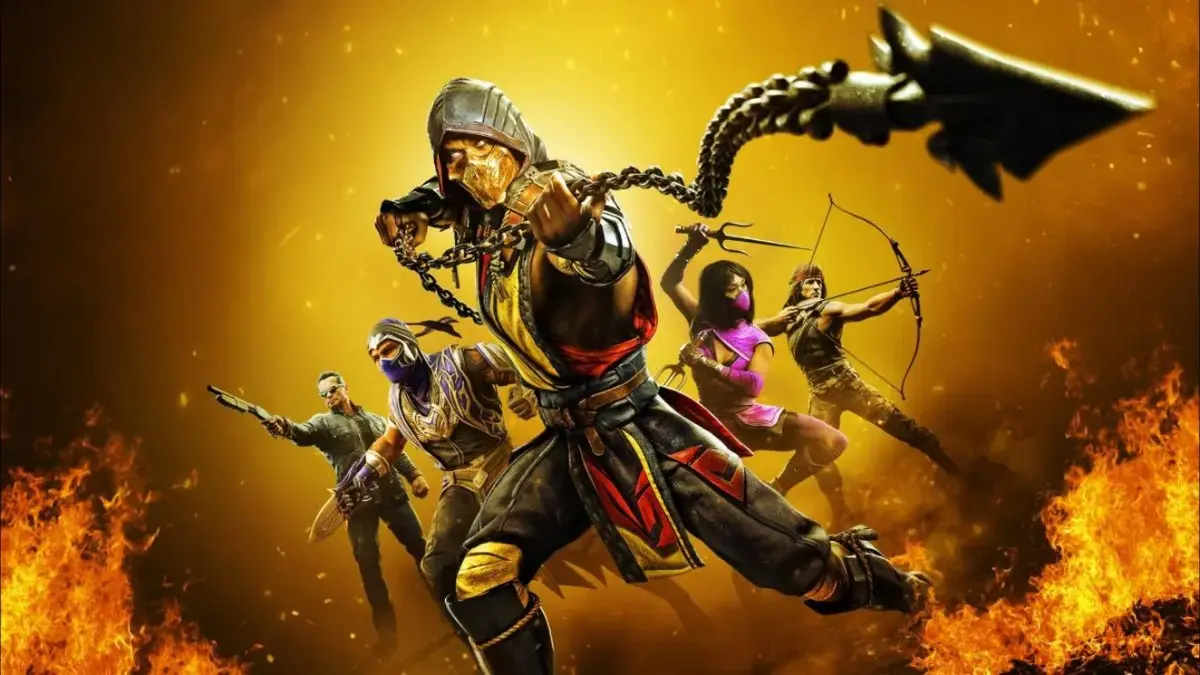
Mortal Kombat 11 Ultimate
$8.99
£4.99
Painkiller
$3.99
£3.34
Painkiller: Deluxe Edition
$4.99
£4.17
Puppet House
$1.79
£1.49
Rogue Lords
$1.99
£1.59
Saga of Sins
$1.99
£1.67
Sherlock Holmes The Awakened: Deluxe Edition
$4.99
£4.99
Sherlock Holmes Chapter One: Deluxe Edition
$5.99
£4.99
Slain: Back from Hell
$1.49
£1.19
Soulstice
$3.99
£3.49
Soulstice: Deluxe Edition
$4.99
£4.49
Steelrising
$3.99
£3.49
Stories Untold
$0.99
£0.83
Suicide Squad: Kill the Justice League Deluxe
$9.99
£9.99
The Church in the Darkness
$1.99
£1.67
The House of the Dead: Remake
$2.49
£2.09
The Lord of the Rings: Gollum
$2.99
£2.49
The Outlast Trials: Deluxe Edition
$4.99
£4.17
The Quarry: Deluxe Edition
$7.99
£7.49
Tomb Raider: Definitive Edition
$1.99
£1.57
Rise of the Tomb Raider: 20 Year Celebration
$2.99
£2.49
Shadow of the Tomb Raider: Definitive Edition
$3.99
£3.49
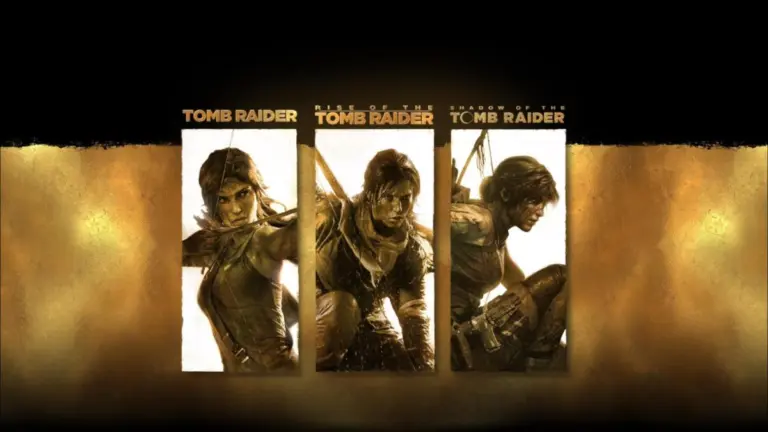
Tomb Raider: Definitive Survivor Trilogy
$4.99
£4.49
Tomb Raider: Anniversary
$1.99
£1.59
Tomb Raider: Underworld
$1.99
£1.59
What the 90% tier adds up to
By our count there are 43 games in this tier. Buying every one of them at US prices would cost $179.12, a little more than two new $79.99 releases. Fifteen of the 43 cost less than $2, and 32 are under $5.
The Tomb Raider bundle is the clearest saving. Bought one by one, the three reboot games (Definitive Edition, Rise and Shadow) come to $8.97. The Definitive Survivor Trilogy packs all three for $4.99, so you keep about $4 by picking the bundle. Add Anniversary, Underworld and both Lara Croft spin-offs and you can own seven Tomb Raider games for $16.43.
Image credit: Techland / Xbox Store
Which Shocktober deals are worth buying?
Best for horror fans
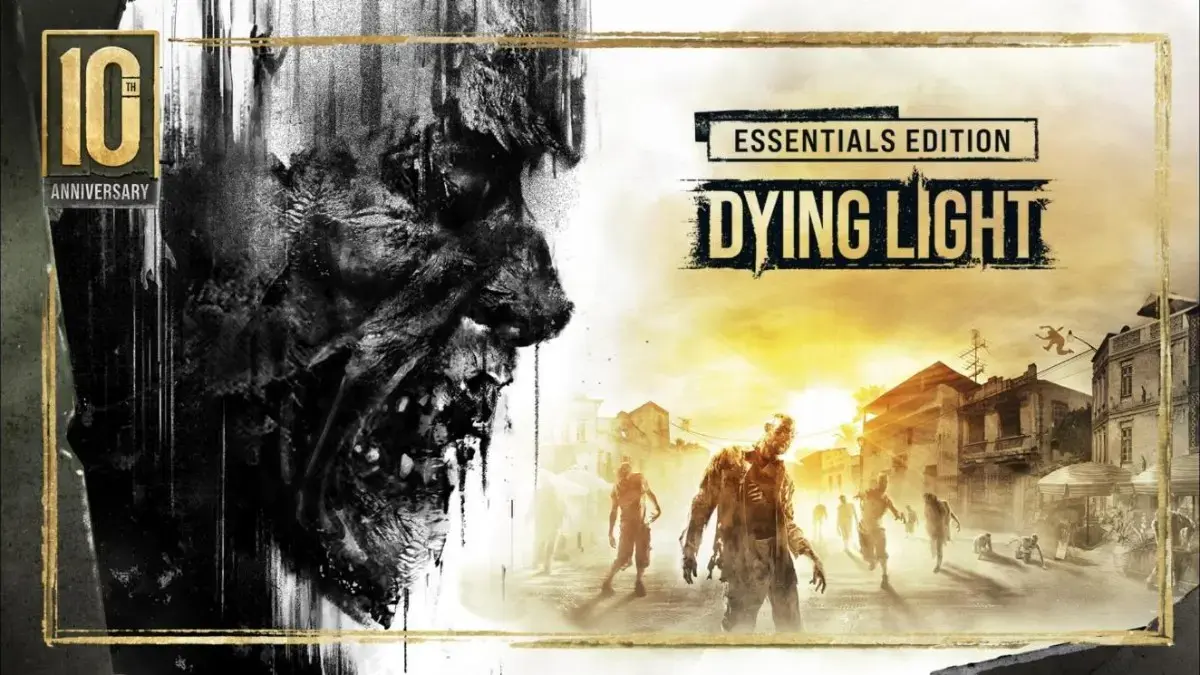
The Outlast Trials: Deluxe Edition at $4.99 is the standout. It’s a new all-time low on Xbox, according to deal trackers. Dying Light Essentials Edition at $2.49 and the Dead Island Series Bundle at $8.99 cover the zombie side, while The Quarry: Deluxe Edition is a good pick if you want a choice-driven horror story to play with friends.
Best for multiplayer
Battlefield 2042 Elite Edition at $9.99 and Back 4 Blood at $5.99 are the big co-op and online picks, and Killing Floor 2 at $2.99 is still one of the cheapest ways to get a group of friends together for an evening of wave-based shooting.
Best for single-player value
Middle-earth: The Shadow Bundle, Mad Max and Gotham Knights all sit under $9. LIMBO and INSIDE? $3.73 for both. Each is short enough to finish in a weekend.
Image credit: Warner Bros. Games / Xbox Store
Why are so many Warner Bros. games on sale?
Six of the 43 games in the 90% tier carry the Warner Bros. Games label: Gotham Knights, Injustice 2, Mad Max, Middle-earth: The Shadow Bundle, Mortal Kombat 11 Ultimate and Suicide Squad: Kill the Justice League. Most are several years old, and Warner Bros. Games has also changed hands this year, as covered in our story on Skydance taking over Warner Bros. Games.
Other notable Shocktober discounts
Discount
Games
85% off
Alan Wake Remastered, Choo-Choo Charles, Dead Rising 4, Ghostbusters: The Video Game, Metro Redux Bundle, The Sinking City Remastered Deluxe Edition
80% off
Destroy All Humans! 2 Reprobed, Dying Light 2 Stay Human Reloaded, Mortal Kombat 1 Definitive Edition, Nobody Wants to Die, Resident Evil 2, Tomb Raider I-VI Remastered
The sale lands in a tough year for Xbox hardware, with Circana’s August data showing Xbox sales at a record US low. If you would rather pay nothing at all, our list of free games for October 2026 covers what you can still claim on PC. Microsoft also posts each week’s Xbox deals on Xbox Wire.
FAQ
When does the Xbox Shocktober Sale 2026 end?
The Xbox Shocktober Sale 2026 ends on November 4, 2026.
How many games are 90% off in the Shocktober Sale?
43 games are listed at 90% off, including Battlefield 2042 Elite Edition, Mortal Kombat 11 Ultimate and six Tomb Raider listings.
What is the cheapest game in the Xbox Shocktober Sale?
Among the 90%-off games, Stories Untold is the cheapest in the US at $0.99. In the UK, Stories Untold and Goetia tie at £0.83.
Is the Tomb Raider trilogy on sale on Xbox?
Yes. Tomb Raider: Definitive Survivor Trilogy is $4.99, which covers Tomb Raider, Rise of the Tomb Raider and Shadow of the Tomb Raider.
Do I need Game Pass for Shocktober discounts?
The prices in this article are standard Xbox Store sale prices, so you can buy them without a Game Pass subscription. Check each store page for any extra member pricing in your region.
GTA 6 will have hundreds of interiors that players can walk into and explore, according to Rockstar. The figure came out of a studio demo at Rockstar North that Bloomberg’s Jason Schreier attended, where the developers said there are “hundreds” of these little spaces to find. It is one of the clearest upgrades over GTA 5, where most of Los Santos sat behind closed doors.
Rockstar has not given an exact number. Here is what the studio has said, what the demo showed and how the interiors tie into robberies.
How many interiors will GTA 6 have?
“Hundreds” is as precise as Rockstar has been. During the Bloomberg demo, a Rockstar developer described “so many of these little interiors” that players can explore, putting the count in the hundreds. Any specific figure you see online beyond that, including lists claiming 700 or more enterable buildings, is fan speculation and not something Rockstar has confirmed.
The studio also stressed how those rooms were built. In an August interview with The New York Times, Rockstar North’s Aaron Garbut said that someone thought about every room in the game, down to who is sitting where and the marks left on a table. That points to interiors designed one by one, as opposed to copied from a template.
Image credit: Rockstar Games
How is that different from GTA 5?
GTA 5 had plenty of buildings, but most were facades. You could enter a handful of shops, safehouses, mission locations and a few set pieces, and the rest of the city stayed shut. Rockstar has never published an official count for GTA 5, so we are not putting a number on it, but anyone who played it knows how often a door led nowhere.
Feature
GTA 5 (2013)
GTA 6 (2026)
Enterable interiors
A limited set of shops, safehouses and mission spaces
“Hundreds,” per Rockstar
How interiors are used
Mostly missions and store robberies
Scouting, robberies, side activities and free roam
Robbery targets
Convenience stores and liquor stores
“Pretty much anything,” per Rockstar North’s Rob Nelson
Main platforms at launch
PS3, Xbox 360
PS5, Xbox Series X|S
Playable leads
Michael, Franklin, Trevor
Jason and Lucia
The map is the less dramatic part of the jump. Reports from the previews suggest Leonida is not hugely larger than Los Santos and Blaine County, and most of the extra work went into density: narrower roads, more buildings and more of them open to the player. Our breakdown of GTA 6’s biggest new world details covers the weather and wildlife side of that.
What can you do inside GTA 6’s interiors?
The demo gave a clear example. Jason walked into a bank to see whether it was worth robbing, counted the guards and decided against it. He and Lucia then slipped into the back office of a gas station instead, disabled the alarm and took the cash without tripping the police.
An interior in GTA 6 is a space you can case, plan around and back out of, and that is the main gameplay reason the count went up. Rockstar North co-studio head Rob Nelson told IGN earlier this month that players “can rob pretty much anything,” from a headphone shop to a bank, which we covered in our GTA 6 robberies explainer.
Cash from those jobs carries risk too. Reports from the same demo say money is held on the character until it is deposited at an ATM, so a botched getaway can cost you what you just stole.
Image credit: Rockstar Games
Interiors outside crime
The demo also showed downtime. Jason and Lucia walked through a park, visited a gym and simply hung out together. Schreier wrote that the story feels closer in tone to Red Dead Redemption 2 than to GTA 5, and the quieter interior spaces fit that. Our guide to GTA 6’s extended look goes through the relationship side of the game in more detail.
Why could Rockstar build so many interiors this time?
Team size is a big part of it. In a video discussing his reporting, Schreier said the art team behind GTA 6’s world is around 65 people, compared with roughly five or six on the equivalent team for GTA 5. Some Rockstar artists have reportedly worked on the game since around 2015. By our math, that is roughly a tenfold increase in the people building the world, and hundreds of hand-made rooms is where a lot of that effort shows up.
It also costs money. Estimates of the game’s budget run from $1 billion to $1.5 billion, as we reported in our look at GTA 6’s development cost.
Image credit: Rockstar Games
When does GTA 6 come out?
Grand Theft Auto VI launches on November 19, 2026 for PS5 and Xbox Series X|S. Rockstar confirmed the date, the $79.99 standard price and the $99.99 Ultimate Edition when it opened pre-orders in June, according to its official pre-order announcement. Digital pre-loads start on November 12. There is no PC version announced yet, and the full game page is on Rockstar’s official GTA VI site.
FAQ
How many interiors are in GTA 6?
Rockstar says there are “hundreds” of explorable interiors in GTA 6. It has not given an exact number.
Can you go inside every building in GTA 6?
No. Rockstar has said hundreds of interiors are enterable, which is far more than GTA 5, but it has not claimed that every building can be entered.
Who confirmed the hundreds of interiors in GTA 6?
Rockstar developers said it during a studio demo at Rockstar North attended by Bloomberg’s Jason Schreier, whose report was published on October 16, 2026.
Can you rob any store in GTA 6?
Rockstar North’s Rob Nelson told IGN that players can rob “pretty much anything,” including shops, banks and payday loan offices, without needing a scripted mission.
When is the GTA 6 release date?
GTA 6 releases on November 19, 2026 for PS5 and Xbox Series X|S.
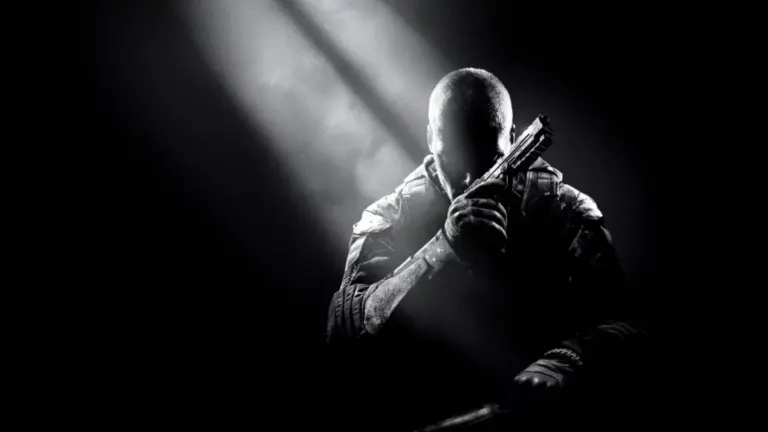
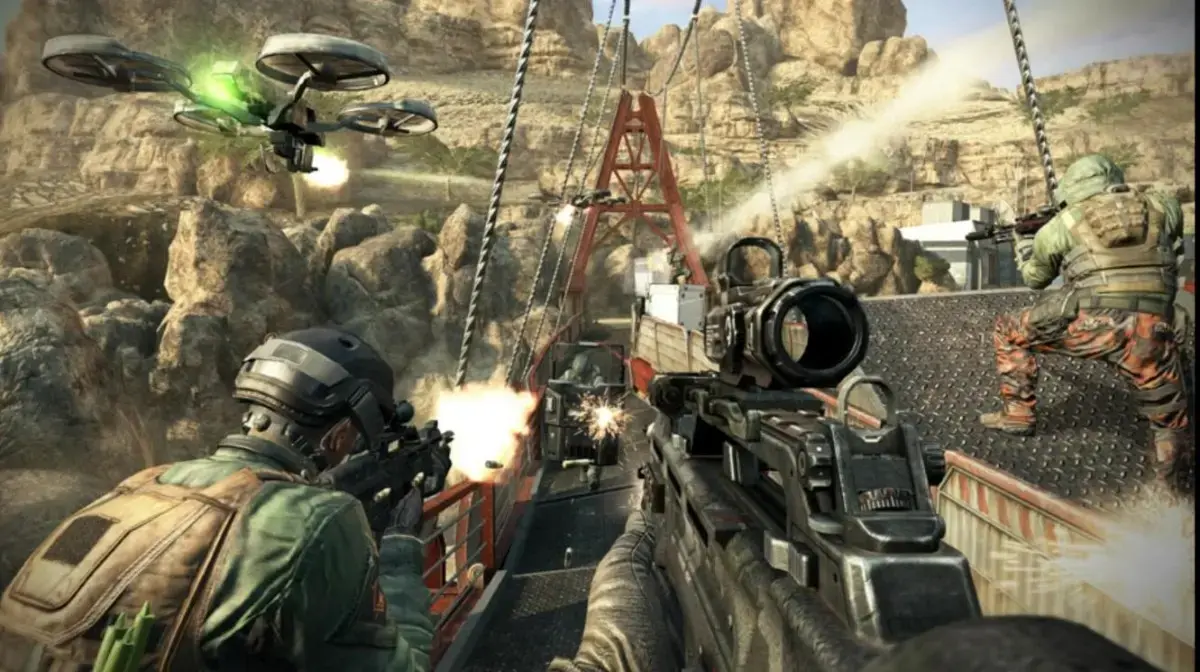
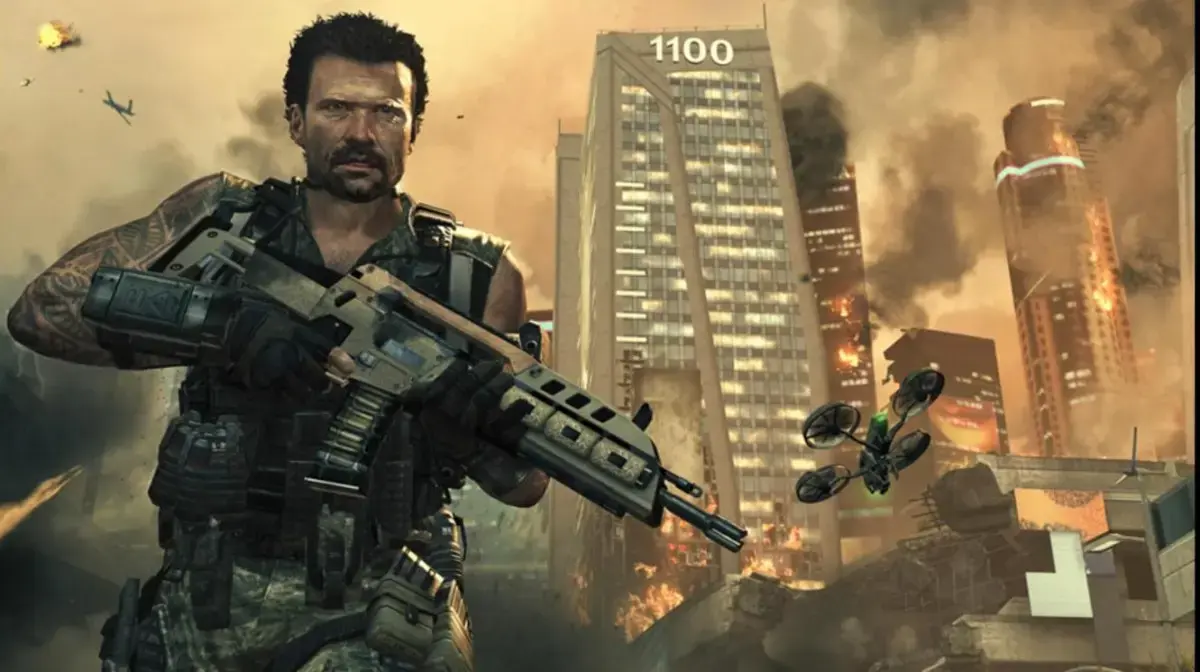
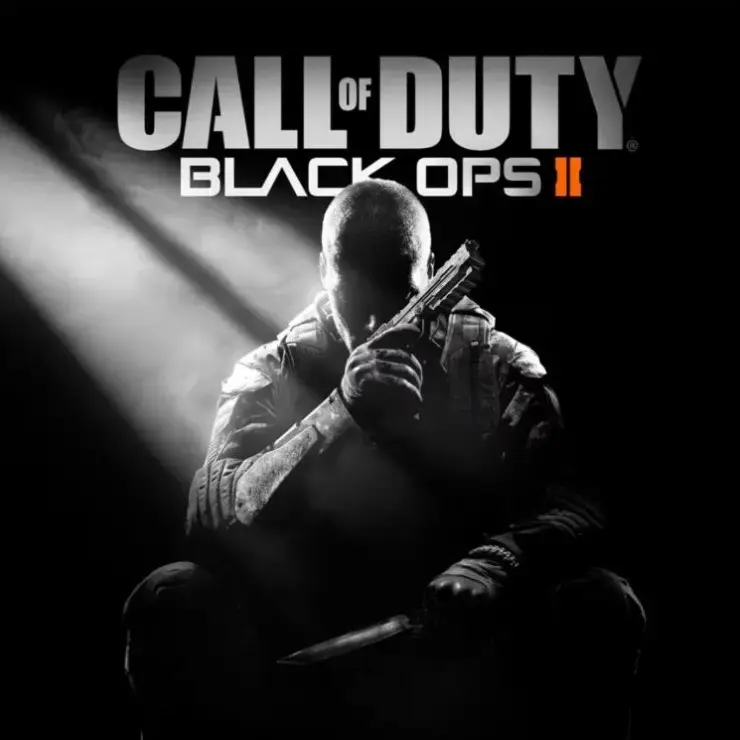
Call of Duty: Black Ops II, a game that first launched in November 2012, is the sixth best-selling game of 2026 in the US so far. Circana’s year-to-date chart through September puts it ahead of Forza Horizon 6, Tomodachi Life and Pokemon Pokopia, almost entirely on the back of the PS4 and PS5 port that Activision released on July 9. Those new PlayStation versions sent a 14-year-old shooter to the top of the US monthly chart in July.
Here is where it sits, how it got there so fast and why it matters for Call of Duty.
What are the best-selling games of 2026 in the US so far?
These are Circana’s projected US best-sellers for January to September 2026, ranked by dollar sales across physical and full-game digital purchases. Mobile games and add-on content are not counted.
Rank
Game
Publisher
1
NBA 2K27
Take-Two Interactive
2
Resident Evil Requiem
Capcom
3
007 First Light
IO Interactive
4
MLB The Show 26
Multiple publishers
5
Crimson Desert
Pearl Abyss
6
Call of Duty: Black Ops II
Microsoft
7
Forza Horizon 6
Microsoft
8
Tomodachi Life: Living the Dream
Nintendo
9
LEGO Batman: Legacy of the Dark Knight
Warner Bros. Games
10
Pokemon Pokopia
Nintendo
Marvel’s Wolverine, which topped September after launching mid-month, sits 11th for the year. We covered that launch and the PS5 hardware bump in our September Circana breakdown.
Image credit: Activision
Why is Black Ops II selling so well in 2026?
Because PlayStation owners could not buy it before July. Black Ops II originally came out on PS3, Xbox 360, PC and Wii U, and the PS3 version never ran on PS4 or PS5. Xbox players kept access through backward compatibility, and PC players through Steam. Anyone on a modern PlayStation was locked out for over a decade.
Activision fixed that on July 9 with surprise PS4 and PS5 releases of both Black Ops and Black Ops II. Treyarch and Iron Galaxy handled the ports. Each game includes the campaign, multiplayer and Zombies, while the original map packs are sold separately through a season pass. Launch pricing was $19.99 per game until August 6, after which the standard price became $39.99.
The jump was absurd. In June, Black Ops II was ranked 67th on Circana’s monthly chart, a long-tail seller from older platforms. In July it was number one, beating EA Sports College Football 27, Assassin’s Creed Black Flag Resynced and Halo: Campaign Evolved. The original Black Ops landed fifth that same month, up from 150th.
Circana chart
June 2026
July 2026
September 2026
Monthly rank
67th
1st
Outside top 10
Year-to-date rank
130th
5th
6th
By our count, that is a climb of 125 places on the year-to-date list in a single month, built on about three weeks of sales. The only game to pass it since is NBA 2K27, which went straight to first place for the year after launching in September.
Image credit: Activision
How many people are playing the Black Ops ports?
Activision has not released official sales or player numbers for the ports. Within their first week, figures from a weekly player tracker shared by beta program members suggested about 5.25 million Black Ops II players and nearly 2 million for the original Black Ops. Treat those as unconfirmed. The scale is believable given the Circana rankings, but the tracker’s exact scope (US only or worldwide, PS5 only or both consoles) was never made clear.
The interest extended beyond the official release too. Fans had already been running unofficial versions of older Call of Duty titles, and Activision moved against some of them in October, as we reported when the company shut down AI-built browser ports of Call of Duty games.
Is Black Ops II on Xbox Series X|S?
There is no native Xbox Series X|S version. Xbox owners play the 2012 Xbox 360 release through backward compatibility, so Microsoft’s chart entry for Black Ops II is driven almost entirely by PlayStation buyers. That is an odd result for a game Microsoft now owns after the Activision Blizzard deal. Two Microsoft titles sit in the top 10, Black Ops II and Forza Horizon 6, and one of them sold mostly on Sony’s console.
It also lands during a rough year for Xbox hardware. Circana’s August report showed Xbox Series hardware at a record low in the US, which we covered in our August sales story, and September units were down 27% year on year.
Image credit: Activision / PlayStation
What does this mean for Call of Duty?
A straight port with no remaster work and a $39.99 list price outsold every new release in its launch month and is still in the yearly top 10 three months later. That is a clear signal about the value of the back catalogue. Older Call of Duty games that never reached PS4 or PS5, such as World at War or the 2011 Modern Warfare 3, are obvious candidates if Activision wants to repeat it.