Since the dawn of Counter-Strike 2 Majors, only the five names on a team’s official starting roster have been eligible to get the Major champion trophy. Stand-ins, no matter how many maps they played or how much they contributed to the team, have always been left out.
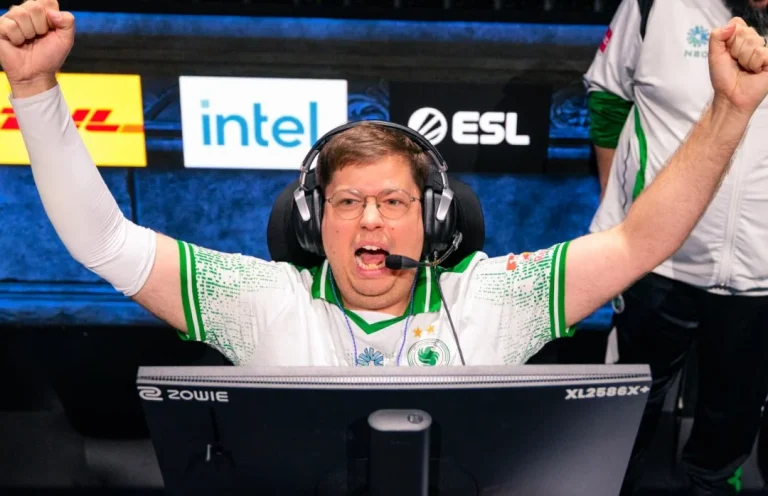
Finn “karrigan” Andersen joined Team Falcons roughly two months before the IEM Cologne Major 2026, stepping in as a substitute for Abdul “kyxsan” Khalimi rather than a locked-in roster member. Karrigan went on to lead the team through a dominant, map-loss-free run to the title, closing out the grand final against FURIA with a score of 3-0.
This marked his second Major championship as an IGL, following his win with FaZe Clan at Antwerp in 2022, and it made him the oldest player ever to lift a Major trophy.
Under Valve’s long-standing policy, none of this would have mattered for in-game recognition, as stand-ins are considered eligible to receive a champion trophy. The precedent was set before the BLAST.tv Austin Major 2025, when Valve confirmed that stand-ins would not receive champion trophies even if their team won.
This policy held firm when Oleksandr “s1mple” Kostyliev played the entire Austin event as FaZe’s substitute and helped the team throughout its run. However, the trophy still went to broky.
However, following the Cologne 2026 Major, when Valve released the Major’s commemorative in-game items, Karrigan was awarded the champion trophy despite his stand-in status, becoming one of the first substitute players in CS2 history to receive it.
karrigan got the Cologne Champion Major trophy in-game instead of kyxsan ‼️
> If Valve were to do it like they did in previous Majors, kyxsan would have gotten the trophy > kyxsan is still receiving the sticker money & got a 'Champion' sticker as well pic.twitter.com/8CM1KZ8bY3
On the other hand, kyxsan, the Falcons player Karrigan effectively replaced, did not receive the in-game trophy, even though he remains entitled to sticker-related earnings and was given a Champion sticker of his own.
During the same event, Timur “FL4MUS” Marev also received a quarterfinal-placement trophy in place of Pavel “S1ren” Ogloblin for BetBoom.
Valve has not issued any statement explaining the sudden change to their previous policy at the time of writing, nor have they confirmed whether this reflects a permanent update to how substitute players are treated at Majors.
Less than 24 hours after the CS2 Premier Season 5 update went live, Valve has already started deploying hotfixes to the shooter in an attempt to fine-tune the new mechanics introduced as part of the previous update.
For the uninitiated, the Season 5 patch brought with it a bunch of exciting new changes to CS2, including a complete rework to the bomb explosion system, changes to the Armory, a fresh map pool, and more.
The July 10 CS2 update isn’t nearly as big as the one we saw yesterday, as it only includes some minor adjustments to the C4 explosions alongside a bunch of other fixes.
Without further ado, let’s check out the full list of changes Valve has added to CS2 with its latest update.
CS2 July 10 Update: Patch Notes Revealed
Below, we have listed the official patch notes for the CS2 July 10 update, as confirmed by Valve:
[ GAMEPLAY ]
Removed map-wide minimum one point of damage from new C4 explosions.
Fixed a case where new C4 damage was calculated incorrectly near boundaries to other map areas.
New C4 explosions now apply more force to dropped weapons.
[ ARMORY ]
Adjusted the “Sniper Ahead” sticker visibility when scraped.
[ MISC ]
Fixed a case where season medals were missing their gold tint on one of the bars.
Fixed a case where the scoreboard wouldn’t update while open.
As the 2026 summer esports season reaches full swing, three titles continue to dominate global conversations: League of Legends, Counter-Strike 2 (CS2), and VALORANT. Each game has enjoyed a busy first half of the year, but which one is leading the summer season as of 10 July 2026?
The answer depends on what metric matters most—viewership, competitive depth, or community engagement.
League of Legends Maintains Its Global Reach
League of Legends remains one of the biggest esports in the world. The ongoing Mid-Season Invitational (MSI) has once again attracted millions of viewers, with top teams from every major region competing for international glory.
Strong storylines, established rivalries, and consistent production quality continue to make Riot Games’ flagship MOBA a major attraction. MSI has also generated significant discussion across social media, helping League stay at the center of the esports conversation.
Counter-Strike 2 Continues Its Momentum
Counter-Strike 2 has enjoyed another strong year thanks to packed tournament schedules and constant roster activity. The competitive scene remains highly unpredictable, with several elite teams capable of winning premier events.
Outside official tournaments, transfer rumors and roster changes have kept fans engaged throughout the summer. The game’s long-standing legacy and loyal fanbase continue to make CS2 one of the healthiest esports ecosystems in the industry.
VALORANT Keeps Growing
VALORANT continues to establish itself as one of the fastest-growing esports titles. International events have showcased emerging talent from multiple regions, while the game’s tactical gameplay attracts both experienced FPS fans and new viewers.
Riot’s structured competitive ecosystem has helped create consistent storylines throughout the season. The balance between established organizations and rising challengers has made every tournament difficult to predict.
Which Esport Leads the Summer?
There is no clear winner.
League of Legends still leads in terms of global reach and international event prestige. Counter-Strike 2 remains the benchmark for competitive first-person shooters with an unmatched tournament ecosystem. Meanwhile, VALORANT continues to close the gap by attracting new audiences and expanding into more regions.
As of 10 July 2026, all three esports are thriving for different reasons. League offers the biggest international spectacle, CS2 delivers unmatched competitive consistency, and VALORANT continues its rapid rise.
With several major tournaments still ahead in the second half of the year, the battle for esports supremacy is far from over.
A new leak suggests Valve may be bringing back Clan Tags in CS2, a feature that let players shorten their group or team names in CS:GO. The discovery comes from data found inside the game’s Premier Season 5 update.
Clan Tags let players attach a short label to their in-game name, showing which clan or group they belonged to. This helped full squads identify themselves to other players as soon as they joined a server. The feature disappeared with the move from CS:GO to CS2, and many players assumed it was gone for good.
Leaker Finds Clan Tag Code In Premier Season 5
Dataminer Gabe Follower says the Premier Season 5 update contains hidden back-end references to Clan Tags. According to the leaker, this points to Valve actively developing the feature for CS2. Gabe Follower shared the finding in a post on X on July 8, 2026.
Valve has not confirmed the feature or explained why it decided to bring it back. There is also no word yet on a release date. For now, the leak is the only sign that Clan Tags are on the way back to CS2.
KRAFTON India today announced that Naruto, one of the world’s most celebrated anime franchises, will make its landmark debut in BATTLEGROUNDS MOBILE INDIA (BGMI) as part of the Version 4.5 Update, available from July 16 to September 14, 2026. Bringing together iconic locations, unforgettable characters, legendary jutsu, and immersive storytelling, the collaboration transforms the Battleground into a living extension of the Hidden Leaf Village for the very first time
For BGMI’s 260 million players in India, this is far more than a themed update. It is a complete reimagining of the Battleground, where every drop, every fight, and every victory unfolds against the backdrop of one of anime’s most beloved worlds – and BGMI’s most ambitious anime collaboration to date.
The Hidden Leaf Village
The collaboration transforms Erangel and Livik into an immersive world inspired by Konohagakure, blending familiar BGMI landscapes with iconic Naruto landmarks designed for exploration, discovery, and unforgettable moments. Players will be able to discover:
Hidden Leaf Village – the bustling heart of the Battlegrounds, reimagined with authentic ninja architecture
Hokage Rock – the legendary mountain overlooking the village with its iconic carved faces
Ichiraku Ramen Shop – Naruto’s favourite ramen spot, recreated for memorable player interactions
Naruto’s Apartment – step inside Naruto’s home and relive moments from the anime
Ninja Academy – train where every shinobi’s journey first begins
Great Naruto Bridge, Chunin Exam Arena, and Valley of the End – battle across the locations that shaped Naruto’s greatest rivalries and defined his destiny
Underground Secret Rooms and Urban Renovations – hidden spaces and familiar BGMI zones transformed with a distinct Hidden Leaf identity
The experience extends well beyond exploration. Cinematic moments and interactive spaces bring Naruto’s most unforgettable memories to life – from the Valley of the End Animation recreating Naruto and Sasuke’s legendary final confrontation, to the Kurama Memory Space, a Group Photo Mode with cinematic backdrops, an anime-inspired Naruto In-Flight Sequence to begin every match, a Ninja Gathering Ceremony, and Naruto-themed lobby music that instantly evokes the universe.
Every landmark, animation, and environmental detail has been designed to make players feel like they are no longer playing inside BGMI, but living inside the Hidden Leaf Village itself.
Become a Shinobi. Face a Legend
This collaboration doesn’t simply introduce Naruto-themed cosmetics – it fundamentally changes how players move, fight, and experience combat. Legendary ninja abilities become part of the Battlegrounds, and one of anime’s most feared creatures arrives as an unforgettable boss encounter. Players will be able to master:
Rasengan – unleash Naruto’s signature attack in explosive close-range combat
Chidori – charge forward with electrifying speed and devastating impact
Flying Raijin Jutsu – teleport across the battlefield with lightning-fast precision
Great Fireball Jutsu – engulf enemies with towering walls of flame
Shadow Clone Jutsu – confuse opponents with lifelike ninja clones
Earth Style Mud Wall – summon protective barriers to reshape every engagement
Reanimation Jutsu – an exceptionally rare ability to bring teammates back into the fight
Tailed Beast Cloak and Ninja Run – harness Kurama’s power to enhance combat, and sprint across the Battleground with unmistakable shinobi agility
Alongside these abilities, players can take on entirely new gameplay experiences – including the multi-phase Kurama Boss Battle against the mighty Nine-Tailed Fox, the Nine-Tails Special Match, Valley of the End solo duels, and the cooperative Defend Konoha Mode. In a first for the collaboration, Voice-Activated Ninjutsu lets players trigger signature jutsu simply by speaking into their microphone.
Collect the Legacy of Naruto
The collaboration introduces one of BGMI’s most comprehensive anime-inspired collections, giving players countless ways to personalise their journey through exclusive rewards, collectibles, and progression systems.
The Naruto Gold Spin headlines the collection with Naruto Sage Mode, the legendary Naruto Six Paths Mode, the upgradeable Nine-Tails Fury AUG infused with Kurama’s power, and returning fan-favourite Naruto cosmetics.
The Naruto Mini Royale Pass offers Red-tier and Pink-tier character sets earned through seasonal progression, alongside a distinctive Naruto-themed Monster Truck.
Naruto Collectibles complete the experience with the ultra-rare Kurama Card, plus Naruto, Sasuke, and Sakura Cards to bring Team 7 together, and the signature Blazing Sun Karambit Card
VALORANT Agents Ranked lists the best characters to pick in 2026 based on beginner-friendliness, solo queue value, and role flexibility. With VALORANT constantly changing through agent and balance updates, the strongest pick is not always the most complicated one. Riot currently divides Agents into four roles: Duelist, Initiator, Controller, and Sentinel, with each role serving a different purpose. In this guide, we rank the best VALORANT Agents for new players, ranked matches, solo queue, and each role, while explaining why every pick is worth learning.
VALORANT Agents Ranked: Best Picks in 2026
The best VALORANT Agents Ranked below are based on how easily players can get value from their abilities, how useful they remain in solo queue, and how much they can contribute without perfect team coordination.
Riot’s recent updates have also changed the balance between roles. Patch 13.00 buffed several Sentinels and reduced signature cooldowns for multiple Initiators, while later patches continued making smaller agent adjustments.
Here are the best Agents to learn in 2026:
10. Brimstone – Best Simple Controller
Brimstone is one of the easiest Controllers for beginners because his kit is straightforward. His smokes can block important sightlines, while his Stim Beacon and Incendiary give him useful tools for taking or defending a site.
He is especially good for players who want to learn the fundamentals of playing Controller without immediately dealing with complicated teleport mechanics or map-specific utility.
Brimstone is also useful when teammates do not communicate much because you can place his smokes yourself and execute a basic site strategy without needing elaborate coordination.
9. Cypher – Best Sentinel for Information
Cypher is a strong choice for players who enjoy gathering information and protecting areas of the map. His Trapwires and other defensive tools can make flanking much harder for the enemy.
His value has increased with Riot’s recent Sentinel-focused changes. Patch 13.00 reduced Trapwire’s windup time, helping Cypher punish attackers more quickly.
Cypher is particularly effective in solo queue because his utility can continue providing information even when teammates are not actively communicating.
8. Jett – Best Duelist for Experienced Players
Jett remains one of the most recognizable Duelists in VALORANT. Her mobility allows confident players to take aggressive fights and escape dangerous situations.
However, Jett is not the easiest beginner Agent. Her value depends heavily on movement, aim, positioning, and quick decision-making.
For players who already understand FPS fundamentals and want to develop an aggressive playstyle, Jett is one of the best long-term Duelists to learn.
7. Killjoy – Best Beginner Sentinel
Killjoy is one of the safest Agents for beginners because her abilities can protect areas without requiring constant mechanical input. Her Turret and Alarmbot can provide information, while Nanoswarm can help control important positions.
Riot also buffed Killjoy in Patch 13.00. Her Turret received a 50% rate-of-fire increase, while Nanoswarm duration increased from 4 seconds to 5 seconds and Alarmbot’s movement speed increased by 50%.
This makes Killjoy a strong option for players who want to contribute through utility while improving their aim.
6. Sova – Best Initiator for Learning Information
Sova is a great Initiator for players who want to understand how information affects a round. His Recon Bolt can reveal enemy positions, while his other abilities help clear or pressure areas.
He does have a higher skill ceiling because experienced players can learn lineups and advanced utility combinations. Beginners should focus on the basics first instead of trying to memorize dozens of setups.
Riot reduced the signature ability cooldown for Sova and several other Initiators from 60 seconds to 50 seconds in Patch 13.00.
5. Phoenix – Best Beginner Duelist
Phoenix is one of the best Duelists for beginners because his abilities are relatively easy to understand and can support independent plays.
His flashes help create opportunities, while his healing abilities can reward players who understand when to take fights. His ultimate also gives him an opportunity to make aggressive plays without risking the same consequences as a normal life.
Phoenix is particularly useful in solo queue because he can create his own opportunities instead of relying completely on a teammate to set up every fight.
Riot made a small adjustment to Phoenix’s ultimate in Patch 13.02 to reduce how frequently it could be used, while keeping his overall balance intact.
4. Gekko – Best Initiator for Beginners
Gekko is one of the easiest Initiators to recommend to a new player. His abilities are simple to understand, but they can still provide strong value during attacks and retakes.
His creatures can help with clearing areas, applying pressure, and creating opportunities for teammates. Gekko can therefore teach beginners how Initiators support their team without requiring complicated lineups.
His abilities can also be reclaimed in certain situations, giving players additional opportunities to use utility during a round.
For a player who wants an Initiator that feels accessible while still being useful at higher levels, Gekko is an excellent starting point.
3. Sage – Best Agent for Beginners
Sage is arguably the safest first Agent for a completely new VALORANT player. Her abilities are easy to understand, and she can contribute even when she is not getting many kills.
Her healing provides sustain, Slow Orbs can delay enemies, and her Barrier Orb can block or reshape important areas. Her ultimate can also bring a teammate back into the round.
Sage received a Sentinel buff in Patch 13.00, with her self-heal-over-time increased from 50 to 100.
For beginners, Sage teaches several important VALORANT concepts at once: positioning, defensive utility, timing, and supporting teammates.
2. Clove – Best Agent for Solo Queue
Clove is one of the strongest choices for players who mainly solo queue. Controllers normally have significant responsibility because their smokes can determine how a team enters or defends a site.
Clove makes that role more forgiving because the Agent can still create value around fights rather than playing entirely as a traditional backline Controller.
That makes Clove particularly attractive in ranked games where communication can be inconsistent. You can help your team with Controller utility while still playing proactively.
Community discussions around solo queue frequently highlight Clove because of the Agent’s straightforward utility and ability to create value without requiring perfect coordination.
1. Omen – Best Overall Agent for Solo Queue
Omen takes the top spot because he combines strong team utility with excellent individual playmaking potential.
As a Controller, Omen can block enemy vision and help his team take sites. At the same time, his teleport abilities allow creative positioning and unexpected plays.
His Paranoia can also help teammates take fights by reducing the vision range of affected enemies. Riot continues to make small gameplay-clarity adjustments to Omen, including changes to the audio of Shrouded Step in Patch 13.00.
Omen is not necessarily the easiest Agent in the game, but he has one of the best combinations of team value, solo play potential, and long-term learning value. For players who want one Agent to seriously master for ranked, Omen is an excellent choice.
Best VALORANT Agents for Beginners
If you are completely new to VALORANT, you do not need to start with the most mechanically demanding Agent.
The best beginner options are:
Sage – Simple abilities and strong team value.
Brimstone – Easy-to-understand smokes and utility.
Gekko – Beginner-friendly Initiator with useful abilities.
Phoenix – Good for learning aggressive fights.
Killjoy – Strong defensive utility with low mechanical requirements.
Sage is the safest overall starting point, while Phoenix is better for players who want to focus more on gunfights.
Best VALORANT Agents for Solo Queue
Solo queue requires Agents that can create value without depending completely on teammates.
The best options are:
Omen – Strong utility and individual playmaking.
Clove – Controller value with a more independent playstyle.
Phoenix – Can create his own fights and plays.
Cypher – Excellent information and defensive control.
Jett – High individual carry potential for mechanically strong players.
There is no Agent that guarantees wins in ranked. Your map knowledge, crosshair placement, positioning, communication, and decision-making remain more important than simply selecting a strong Agent.
Best VALORANT Agent for Every Role
Role
Best Agent
Why
Duelist
Phoenix
Easy to learn and effective in solo plays
Initiator
Gekko
Simple utility with strong team value
Controller
Omen
Flexible smokes and high playmaking potential
Sentinel
Killjoy
Easy defensive utility and strong site control
Best Duelist: Phoenix
Phoenix is the best Duelist for beginners because his kit is straightforward and encourages players to learn aggressive fundamentals.
More experienced players can move toward Jett, Raze, or other mechanically demanding Duelists once they become comfortable with movement and gunfights.
Best Initiator: Gekko
Gekko provides an easy introduction to the Initiator role. His abilities can help teammates enter sites and create opportunities without requiring extensive lineup knowledge.
Sova is a strong alternative for players who want to specialize in information gathering.
Best Controller: Omen
Omen offers one of the best combinations of team utility and individual playmaking. He can smoke important areas while also using his mobility to create unpredictable plays.
Clove is another excellent choice, especially for players who prefer a more aggressive solo queue style.
Best Sentinel: Killjoy
Killjoy is an excellent defensive Agent for new players because her utility can watch areas and provide information while you focus on positioning and aim.
Cypher is a stronger alternative if you prefer gathering information and controlling enemy movement.
Which VALORANT Agent Should You Main?
Your main should match the way you naturally like to play.
Choose Sage or Killjoy if you prefer defensive and supportive gameplay. Pick Gekko or Sova if you enjoy gathering information and helping teammates take fights.
If you want to control the pace of a round, Omen or Clove are strong Controller choices. If getting kills and taking aggressive fights is your priority, start with Phoenix before moving toward more mechanically demanding Duelists.
You also do not need to main only one Agent. Learning 2-3 Agents across different roles is often more practical, especially when another player selects your preferred Agent.
The best VALORANT Agent depends on your experience and playstyle, but Omen is the best overall choice for solo queue, while Sage is the safest beginner Agent. Gekko is an excellent first Initiator, Killjoy is a strong Sentinel for new players, and Phoenix provides an accessible way to learn the Duelist role.
For players looking to climb ranked, mastering a small group of Agents is more useful than constantly switching between the entire roster. Start with a simple Agent, learn the fundamentals, and expand your Agent pool as your game sense improves.
As the competitive Counter-Strike 2 meta started to grow stale and the game suffered from a lack of content updates over the past few weeks, players have been eagerly awaiting the launch of CS2 Premier Season 5.
Luckily, players don’t have to wait any longer, as Valve officially kicked off the CS2 Premier Season 5 earlier today.
For the uninitiated, CS2 Season 4 wrapped up on July 6, 2026, with the servers going offline for a couple of days as the devs prepared to ship out the new season. Valve has finally brought the Premier queues back online today, 9th July, and Season 5 is now live.
As with every other Premier season, CS2 Season 5 brings with it a ton of new changes to the competitive shooter. The highlights of the new Premier season include an Active Duty map pool update, new community maps, Armory changes, and a rework to the bomb explosion.
As already confirmed by Valve last month, Overpass has been dropped from the Premier pool after registering the lowest pick rate at the IEM Cologne Major, making way for Cache’s return to competitive play for the first time since 2019.
The following seven maps will be a part of the active map pool for Premier Season 5: Cache, Dust 2, Mirage, Inferno, Nuke, Ancient, and Anubis.
Note that you’ll still be able to play other maps in regular Competitive, Casual, and other game modes.
Season Four of Premier ends on July 6th.
You must have 25 Season Four Premier wins and a visible CSR when the Season concludes to earn your Premier Season Four medal.
Alongside the map swap, CS Rating has also been reset across the board. Players will start the new season with a fresh slate, and everyone will need to work through their placement matches again to get their new rating.
Valve hasn’t announced any major weapon balance changes or anti-cheat updates for this cycle, so outside of the new map, the core Premier experience should feel largely familiar.
Based on past seasons, Season 5 is expected to run roughly six months, likely closing out around the next Major.
Grand Theft Auto 6 is now just months away from launch. But Australian players may need to prove their age before they can jump into Rockstar’s next open-world game.
Under new online safety laws in Australia, games with an R18+ classification must verify that users are adults. If Rockstar Games fails to comply, the company could face steep financial penalties.
Why Age Verification Applies to GTA 6
Australia introduced its Age-Restricted Material Code in 2026. The rule requires platforms hosting R18+ content to check that users are old enough before granting access.
GTA 6 has not received its final Australian rating yet. But its predecessor, GTA 5, carries an R18+ classification in the country. Given the series’ mature content, GTA 6 is widely expected to receive the same rating.
Games rated M for Mature by the ESRB and 18+ by PEGI typically fall into this R18+ category under Australia’s Classification Board. That rating would legally restrict GTA 6 to adult players in Australia.
The Potential Fine
According to reports, game publishers that fail to follow the age verification rules can face civil penalties of up to AU$49.5 million per breach. Converted to US dollars, that fine is close to $35 million, as reported by the BBC.
The penalty applies per breach, which means repeated non-compliance could add up quickly for any publisher, including Rockstar.
It is not yet confirmed whether the age verification requirement will apply to GTA 6’s single-player story campaign, its expected online multiplayer mode, or both.
GTA Online, the multiplayer component tied to GTA 5, already requires ID verification for Australian players. Given that history, a similar system is expected to carry over once GTA 6 launches its own online features.
Rockstar has not detailed exactly how it plans to verify player ages for GTA 6. Age verification does not necessarily mean uploading a government ID directly to the company. Verification methods can vary, and other platforms have used third-party systems instead of collecting documents directly.
Grand Theft Auto 6 is set for release on November 19, 2026. With the launch date approaching, questions around regional compliance, including Australia’s age verification law, are becoming more relevant for both Rockstar and players.
For now, Australian fans hoping to play GTA 6 should expect some form of age check, particularly for any online features, similar to what current GTA Online players already go through.
Valve has rolled out a major Counter-Strike 2 update that changes how the C4 explosion works on every official defusal map. The patch also kicks off Premier Season 5 and swaps one map in the Active Duty pool for another.
New C4 Shockwave Explosion Explained
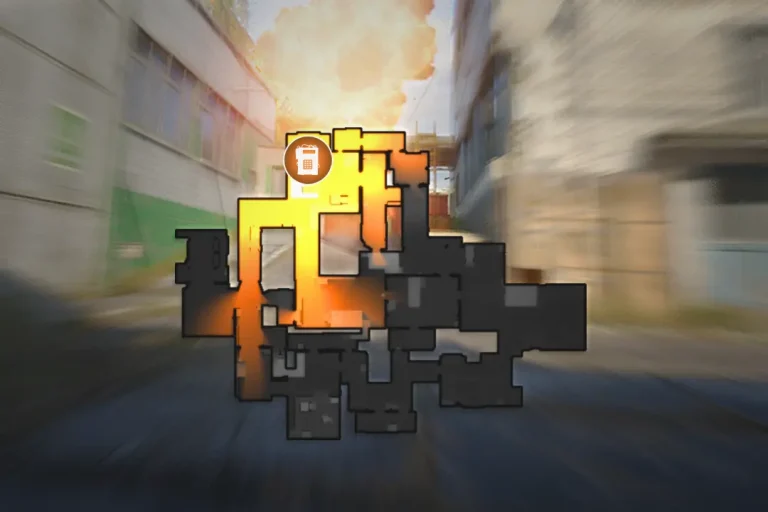
The old instant explosion is gone. In its place, Valve added a shockwave that starts at the plant spot and spreads outward over time.
Damage now follows precomputed simulation values that are baked directly into each compiled map. This means the blast reacts differently depending on the map’s layout.
Walls and corners now affect the shockwave. Players will also see their health bar flash before the explosion hits, giving them a preview of how much damage they are about to take.
Alongside the bomb rework, Valve launched Premier Season 5. Cache has entered the Active Duty map pool, while Overpass has been removed.
Valve reduced the performance cost of showing the scoreboard. Previously, opening it could nearly cut a player’s frame rate in half.
The game’s engine code was also updated to the latest version of Source 2. Other fixes include a case where material blending effects disappeared at close range, such as the dirt texture on the barrels in Inferno’s Banana area. Sticker rotation precision was increased to allow half-degree adjustments on the application screen.
A bug where picking up dropped weapons through the Buy Menu would fail to complete has also been fixed.
To find out all the changes, please check out the patch notes below:
The highly anticipated Counter-Strike 2 Premier Season 5 is now live, and players have already started the grind to reach the top ranks and secure themselves the collectible medal for the new season.
The brand-new CS2 Premier Season 5 has introduced a ton of exciting new changes to the competitive shooter, including a revamp of the bomb explosion, a fresh map pool for Premier, several new community-made maps, and a series of new additions to the Armory.
Without further ado, let’s check out everything you need to know about the CS2 Premier Season 5 and all its changes.
One of the biggest highlights of the CS2 Premier Season 5 is the complete rework of the bomb damage radius. Moving forward, when the C4 explodes, a wave of destruction will flow from the bombsite throughout the map. The shockwave from the bomb explosion dissipates around corners and doesn’t go through walls.
As a quality-of-life improvement, players can now check their health bars to anticipate the amount of damage they’ll take from the bomb explosion.
Notably, players take a minimum of 1 HP damage regardless of how far away they are from the C4 explosion.
CS2 Premier Season 5 Map Changes
The map pool for the Premier mode is seeing a change with the CS2 Season 5 update.
As already confirmed by Valve a few weeks earlier, Overpass is leaving the Premier map rotation while Cache makes its entrance. This marks the first time Cache is added to the active map pool since the release of CS2 in 2023.
Season Four of Premier ends on July 6th.
You must have 25 Season Four Premier wins and a visible CSR when the Season concludes to earn your Premier Season Four medal.
Apart from the Premier mode, CS2 is also receiving five brand-new community-made maps in Casual, Competitive, and other game modes.
The new CS2 update will see Boulder, Fachwerk, and Shelter being added to Competitive, Casual, and Deathmatch modes, while Debris and El Dorado will be playable in Wingman.
Armory Changes
The much-anticipated Armory update that the devs have been teasing for the past two months is now live, bidding farewell to four skin and sticker collections while welcoming in some new ones.
The CS2 Season 5 update brings in the following new collections to the Armory:
Spy Tech Collection
Arabesque Collection
Auto Racing Stickers
Fruits and Veggies Stickers
All the collections are now available to claim from the Armory in-game.
Alongside the aforementioned changes, CS2 Premier Season 5 also brings a rank reset to the shooter. Players will have to win ten calibration games to see their new CS rating.