

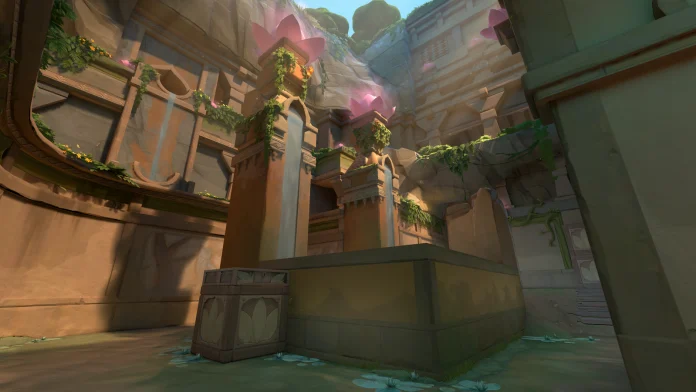
Since the dawn of tactical shooters, the bomb defusal mode in video games has been characterized by maps with two bombsites located opposite each other, divided by a middle area. While a few other titles have attempted to deviate from this formula, none were able to match the success of Riot Games’ flagship FPS, Valorant, which not only challenged the formula but also brought it into the mainstream with maps like Haven and Lotus.
Haven was one of the three Valorant maps present in the game at the time of its closed beta, and immediately stood out from the crowd due to its three-site layout. While the community was divided regarding its competitive viability in the Valorant map pool, most still appreciated the devs’ efforts to experiment with fresh, unorthodox designs.
Nearly three years later, Lotus was introduced as the ninth map in Valorant’s pool, and the second to feature three bombsites. Its launch reignited some long-standing concerns about the three-site layout, eventually prompting Riot to remove it from rotation for a rework. However, even in its initial state, Lotus stood out for its unique rotating doors and creative use of verticality, which was certainly a breath of fresh air for many players.
This brings us to the real question: are maps like Haven and Lotus truly viable for competitive play, or should the devs stick to the tried-and-tested formula of two-bombsite maps that games like CS have refined over the years?
The Concept of the 3-Site Map
If you’ve never played Valorant before, or you’re new to the genre, you might be confused about what a “3-site map” is. In simple terms, it’s a map with three bombsites, giving Attackers more planting options and replacing the traditional single mid-area found in most two-site maps.
But why did Riot decide to deviate from the working formula of maps with two bombsites?
The likely design goals behind introducing three-site maps in Valorant were to increase tactical variety, reduce the predictability of early-round pushes, and spice up the rotations from both the Attackers and Defenders. By adding an extra site, the devs may have aimed to create more uncertainty for Defenders, forcing them to adapt on the fly while also opening up fresh strategic possibilities that aren’t possible on traditional layouts.
Apart from differing in layout compared to two-site maps, three-site maps also encourage different defender spreads and economy management. In most cases, though, they give Attackers an upper hand with more entry options, often forcing the Defending side to play for a retake instead.
Case Study: Haven
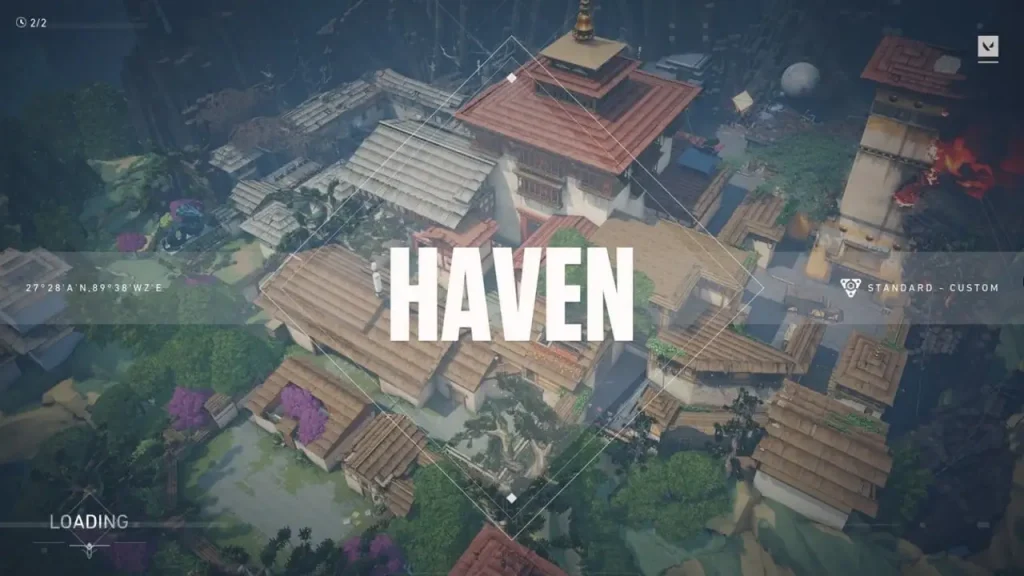
As mentioned earlier, Haven was one of the first few maps added to Valorant that featured a three-site layout. Five years later, the layout of the map remains identical to its original version, with little to no adjustments made since its debut. This is a strong indicator that Haven is a well-balanced map providing no significant advantage to either side despite its unique layout that, on paper, should favor the Attackers.
Haven is characterized by its large overall size, a wide and exposed mid-section that encourages early skirmishes, and long sightlines toward A-Main and C-Long, where Vandals, Guardians, and snipers reign supreme. The presence of three bombsites forces Defenders to split resources in a different manner compared to traditional two-site layouts, while also providing them with fast rotation options.
In pro play, the attacking meta often revolves around securing early mid control and executing with heavy utility. While the Operator can be a great tool for the defending side on this map, it’s not uncommon for Defenders to completely give up a bombsite, only to retake it later with a coordinated utility dump.
Haven’s biggest weaknesses are its tendency to punish poor communication and its potential to become Attacker-favored if Defenders lose early map control. However, at the time of writing, Haven actually leans slightly toward Defenders in high-ranked pubs, with win rates of 51% for Defenders and 49% for Attackers, according to Blitz.gg.
Case Study: Lotus
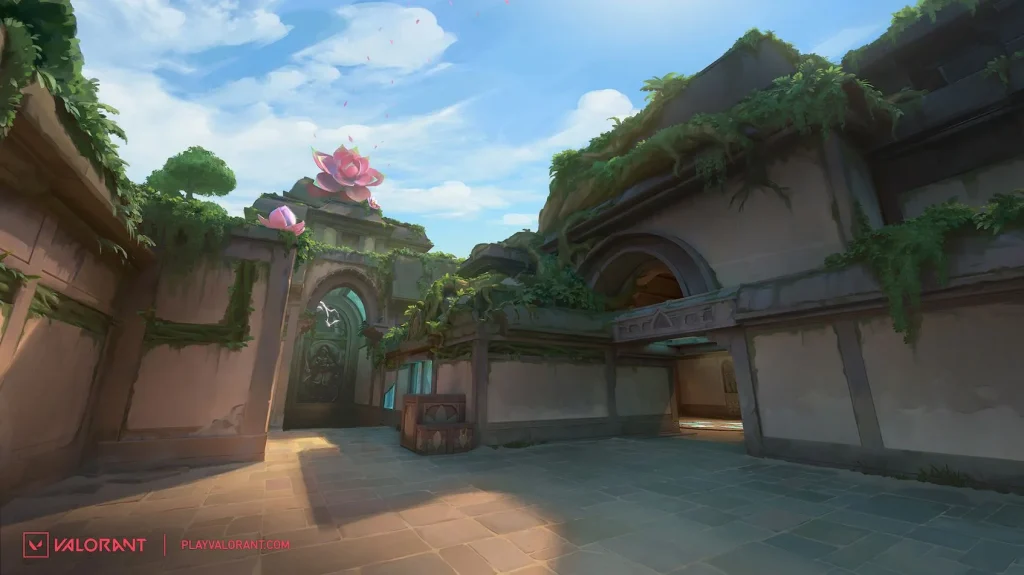
Nearly three years after the launch of Valorant, Lotus was added to the game’s map pool as its second three-site map. It introduced the unique gimmick of rotating doors to the shooter and is still the only map to feature them to this day.
It differentiated itself from Haven in a number of key aspects. Not only is it slightly smaller than its predecessor, but it also has fewer initial entry points for the Attackers onto bombsites. As a result, Defenders can often anchor the B and C bombsites with a solo Sentinel, while A-main control becomes a pivotal objective for both sides.
In most cases, the Defenders will set up a 3-1-1 structure, with three players trying to deny the A-Main space to the Attackers. Similar to Haven, early rotations and heavy utility-oriented retakes are also common in this map.
The initial reception to Lotus within the Valorant community was mixed, to say the least. Many players criticized its layout, arguing that it was too Attacker-sided. As a result, Riot removed the map from the competitive pool for a few months before reintroducing a revamped version aimed at addressing these concerns.
At the time of writing, the Defender side in Lotus holds a win rate of 49.5% in high-ranked pubs, with Attackers narrowly leading at 50.5% as per Blitz, making it one of the more balanced maps in the game.
Competitive Viability
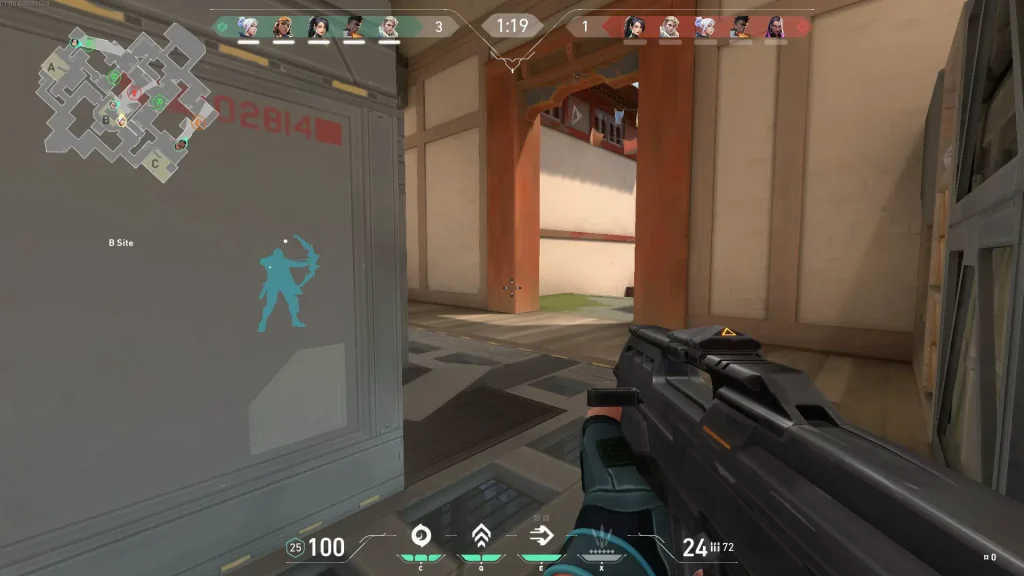
Now that we’ve taken an in-depth look at both Haven and Lotus, now might be a good time to check out the pros and cons of three-bombsite maps in Valorant and see how they fare against their traditional counterparts.
Kicking off with the pros, three-site maps certainly feel like a breath of fresh air in a genre long dominated by A and B-site layouts. They allow for more creative playmaking on both the attacking and defending sides, and place greater emphasis on communication and teamwork.
Additionally, taking mid control becomes far more important, and repetitive hits on the same site are far less common, resulting in a more engaging experience for viewers as well.
On the downside, defending on three-site maps in Valorant can be more challenging, as it’s generally harder when you’re trying to gamble on a site, and makes five-stacking much less viable on eco rounds. Losing momentum can also put the defending side at an even greater disadvantage.
Furthermore, site holds and retakes on these maps often become overly reliant on utility spam rather than mechanical skill, which can be a turn-off for many players. This also creates a steeper learning curve compared to other maps in the Valorant pool
The Future of 3-Site Design in Valorant
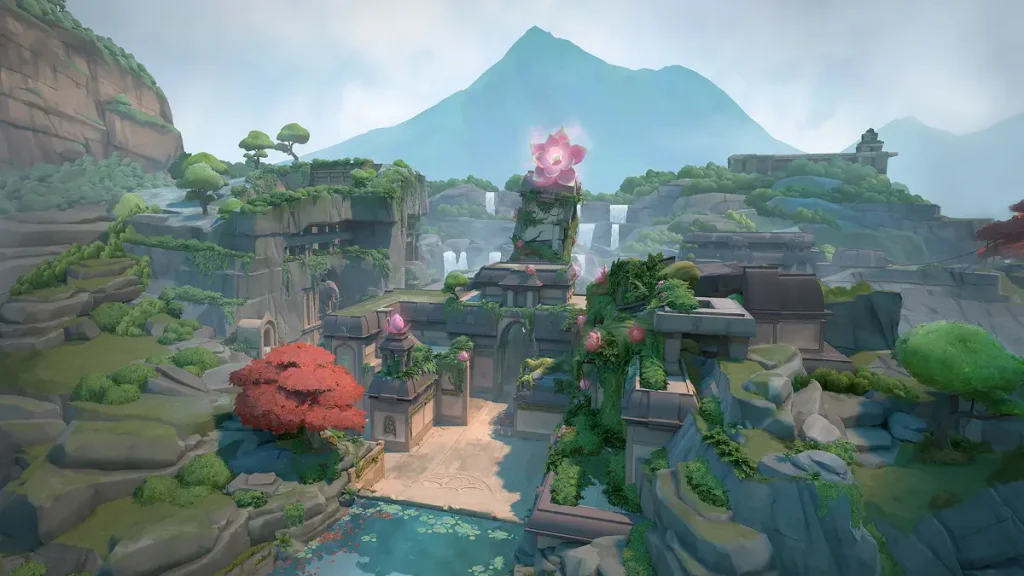
Over the past few years, both Haven and Lotus have proven that three-site maps can, in fact, work in a tactical shooter. But does that mean Riot should add more of them to Valorant’s ever-expanding map pool?
Before we try to answer this question, it’s worth considering that part of what makes these maps special is their rarity. Three-site layouts stand out precisely because they deviate from the norm, forcing teams to constantly adapt, keeping the game fresh and exciting. If Riot were to flood the game with them, it could easily turn into stale, repetitive, and an overall inferior design choice compared to the standard two-site meta.
There’s also an argument to be made for three-site maps acting as “meta disruptors.” When a meta grows stale, introducing a layout that changes the rules of positioning and rotations can breathe new life into both ranked play and pro matches. In this sense, they work best when sparingly placed throughout the map pool to shake things up without redefining the game entirely.
Lastly, should Riot decide to introduce more three-site maps in the future, they should take the lessons learned from Haven and Lotus to heart. Issues like the three-site layouts being inherently Attacker-sided, overly punishing Defender rotations, and over-reliance on utility spam during retakes need to be addressed. Fine-tuning chokepoint placements and adjusting site accessibility options can go a long way in helping Riot preserve the creativity of three-site layouts while minimizing their drawbacks.
Verdict
So, the big question is upon us: are maps with three bombsites truly viable in competitive Valorant?
Both Haven and Lotus have been part of Valorant’s active map pool for a significant amount of time, and they’ve been played enough in the pro scene to show that three-site layouts can work if they’re designed well.
At the same time, one could also argue that these maps are inherently weaker for competitive balance compared to traditional two-site layouts, which have remained a genre staple for decades for good reason.
Yet, perhaps that’s the point. Three-site maps aren’t meant to replace the traditional formula; they’re meant to shake up the stagnant metas and keep players on their toes. And as long as they remain rare in Valorant’s map pool, their pros might just outweigh their flaws.
Regardless, the Valorant community will still be eagerly looking forward to the next three-site map that Riot dares to introduce.