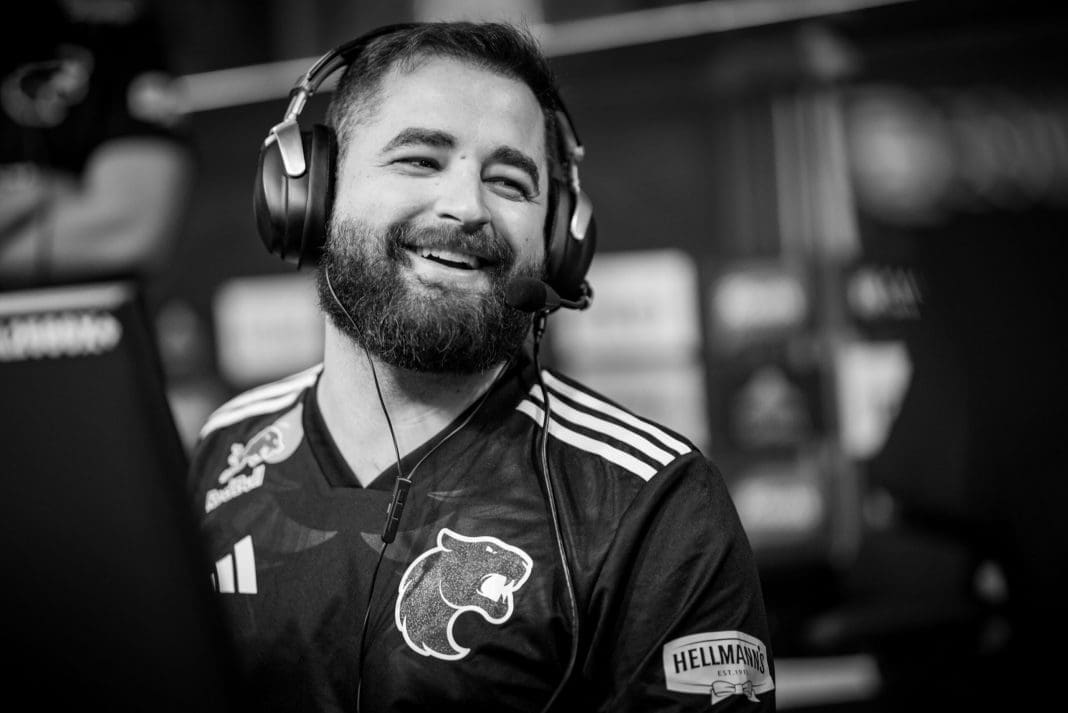
I learned how to hold A-site on Mirage from a FalleN demo. Not from a coach. Not from a teammate. Not from a scrim against a better team. From a YouTube video, watched on a 60 FPS monitor in a cyber café in 2016, between ranked matches I was already losing. Every Indian CS kid I know who took the game seriously in that era has a version of this story. The Professor never came to India. His classroom did.
On April 17, 2026, at the Farmasi Arena in Rio de Janeiro, Gabriel “FalleN” Toledo announced he would retire from competitive Counter-Strike at the end of 2026. Twenty-three-year career. Two-time Major champion. HLTV Top 20 in 2016 and 2017. The man who put Brazilian CS on the global map and then spent a decade making sure it stayed there. Two hundred and forty-seven days left on the clock.
For Indian CS:GO players my age, the news lands differently than it does for Brazilians or Europeans. It is not just the end of a great career. It is the end of the specific era where a kid in Mumbai, Delhi, Pune, or Bangalore could pretend that watching enough FalleN demos was going to be enough to bridge the gap. It never was. We kept pretending anyway.
The Professor, Briefly
For readers who came to competitive gaming through Valorant or BGMI, a short version of who FalleN is.
FalleN started in Counter-Strike 1.6 in 2005, competing in Brazilian domestic events before moving to international LANs with teams like FireGamers and CompLexity. He transitioned into CS:GO leadership roles, making the playoffs of every Major from ESL One: Katowice 2015 to Katowice 2019. In 2016, he captained Luminosity Gaming and then SK Gaming to back-to-back Major titles at MLG Columbus and ESL One Cologne. That eighteen-month stretch was the Brazilian golden era.
Beyond the trophies, FalleN built the infrastructure. He founded Games Academy to develop Latin American talent. He ran Brazilian domestic events. He coached, mentored, and made himself available to the next generation in a way almost no other superstar pro ever did. The nickname “The Professor” was not marketing. It was a description.
None of that existed in India when I was playing. Some of it still does not exist now.
What India Had Instead
The Indian competitive CS scene has a history. It is just not a particularly good one.
In 2013, ATE Gaming attended ESWC with a CS:GO roster carrying forward one player, RiTz, from the 1.6 lineup. They lost to Fnatic, Astana Dragons, and Team Alternate. In 2014, two Indian teams attended international LANs as invited entries.
Team Wolf went to ESL One Cologne and lost to Hellraisers and the eventual champions NiP in groups. Virtual Impact went to ESWC 2014 and got 16-0’d by LDLC (the roster that became EnvyUs) and Virtus.pro.
For most of the CS:GO era that mattered globally, which is roughly 2014 to 2020, India had no team in any Major, no player on any significant European roster, and no domestic league structure remotely comparable to what Brazil, the CIS region, or even Turkey had built. We had ESL India Premiership, a handful of Cobx and Skyesports events, and a rotating cast of 10 to 15 players who played against each other in the same local brackets year after year.
The closest India came to the global conversation was 2018, and that one is still painful.
In October 2018, OpTic India was playing at eXTREMESLAND ZOWIE Asia CS:GO. It was one of the first times an Indian CS:GO roster under a major global brand had a real platform at an Asian regional event. Mid-match, against the Vietnamese team Revolution, Nikhil “forsaken” Kumawat was caught using aimbot on an open desktop by the admin on stage. The prize pool was $100,000. OpTic India was disqualified. The footage went global within hours.
Every Indian CS player reading this knows exactly where they were when that clip dropped. I was in a café in Mumbai. The room went quiet in a way I have not seen before or since. The forsaken moment did not create the credibility problem Indian CS had. It just put a permanent photograph on it.
Why India Did Not Build a FalleN
The honest answer has multiple layers, and none of them involve a lack of talent.
The critical period for global CS:GO dominance ran from roughly 2014 to 2018. That is the window where Luminosity-SK, Astralis, Fnatic, NiP, and the other flagship rosters were built. That is also the window where Brazilian CS went from regional curiosity to world champions. India’s esports infrastructure in that exact window was nascent. There were no franchised leagues. No salaried rosters outside a tiny handful of orgs. No publisher investment. No tier-2 tournament circuit that paid enough to let a promising 17-year-old turn down engineering coaching. The window closed. India showed up to the next decade with Valorant and BGMI.
The structural gaps mattered more than the talent gap. Even if India had been producing FalleN-level individual players in 2015, the country had no pipeline to put them on a global roster. No academy system. No coaches with international experience. No regular bootcamp culture. No route to a European team trial that did not depend on the player’s own money and family tolerance.
Brazil’s golden generation happened because a specific group of players got picked up by Keyd Stars, then Luminosity, then SK, and were given contracts, salaries, and international exposure at the exact moment they needed it. No equivalent path existed for any Indian player in the same period.
Parental culture was real, and I am not going to pretend otherwise. Indian families, with rare exceptions, did not treat competitive gaming as a career through the 2010s. A kid spending six hours a day on Counter-Strike was a problem to be managed, not a professional being developed. By the time that perception started shifting, around 2021 and 2022 with the first BGMI tournaments and the rise of creator culture, the CS ship had sailed. The players who could have been India’s FalleN, generation either quit, switched titles, or aged out.
Infrastructure was laughable compared to Europe. I played on machines I had begged my family for, in cafés with 8 Mbps connections, against European opponents on 200 Mbps fibre. That is not a complaint, it is a statement of fact. The hardware gap alone was worth 30 ping and a generation of mechanical skill. Indian servers did not exist for Valve matchmaking until late in the CS:GO cycle. Every scrim against a European team came with a handicap built into the network layer.
And publisher support never arrived. Valve famously runs a hands-off ecosystem. ESL and BLAST chose European cities and Asian hubs (Shanghai, Seoul) that were not India. Riot, by contrast, built a South Asia Valorant pipeline the moment the game launched. That is why VCSA exists and VCL South Asia has a structured pathway to Pacific Ascension. CS:GO never had a publisher willing to do that work for India, so it never happened.
What FalleN’s Videos Actually Taught Us
Here is the uncomfortable thing. FalleN’s content, the demos and the tutorials and the Games Academy videos and the stream VODs, genuinely raised the level of Indian CS players who took it seriously. I am not exaggerating that. The Tier 2 Indian scene I played in around 2016-2018 had a noticeable skill floor lift because of what we could learn from watching FalleN break down Mirage, Inferno, and Train.
We learned utility usage. Default setups. How to lurk. How an IGL actually thought about economy. Stuff that nobody in India was teaching because nobody in India had been in that room before. FalleN, and by extension coldzera, fer, and TACO, were our long-distance coaching staff. Free, accessible, and completely one-directional.
The problem is that demos teach you what a good player does. They do not teach you how to become a good player inside a system that produces more good players. You cannot watch your way into Tier 1. You have to play against Tier 1 regularly, under pressure, with something real on the line. The best Indian CS players of my generation were all fundamentally self-taught. We were students in a classroom where the teacher was a stranger on YouTube and our classmates were each other. That produces a ceiling, and we all hit it.
I played against players who, on pure mechanical skill, could have competed in EU Tier 2. Aim, movement, game sense, individual fundamentals: genuinely world-class ability wasted in a context that had nowhere to send them. What we did not have was a single coach with Major experience, a single analyst who had worked a top-ten team, a single IGL who had ever called a map on a stage bigger than Gurgaon. FalleN’s videos cannot replace that. Nothing can replace that. You have to build it.
Brazil built it. India did not. That is the entire story.
The forsaken Shadow
The forsaken moment in 2018 is worth sitting with for a minute, because it tells you something specific about how the Indian CS scene was held together.
OpTic India existed because a major American org decided to gamble on South Asia. The roster was assembled, salaried, and given a real platform. It was, at that moment, the single best shot the country had ever had at a sustained Tier 2 international presence. One player cheating, on stage, with his desktop visible to an admin, did not just disqualify that one team. It made every global org and every tournament organiser think twice about the next Indian roster for years.
I am not going to pretend that was the only reason India never produced a FalleN. The structural gaps I described above would have limited the country regardless. But forsaken set the conversation back in a way that was measurable. The reputational damage was real. Indian CS rosters had to spend the next four years proving they were not the forsaken story, before they could even get to the stage of proving anything else.
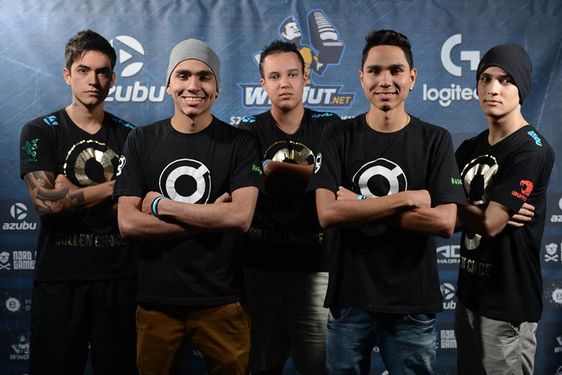
In Brazil, FalleN was building Games Academy and lifting coldzera and fer onto the global stage. In India, we were explaining, for the tenth time, why our scene was not a joke. Those are not equivalent inheritances.
Where Indian CS Actually Went
The scene that should have produced India’s FalleN, in terms of talent and passion, exists. It just switched games.
Most of the 2015-2018 Indian CS talent pool is now either retired, doing content, or playing Valorant. The ones who stayed in FPS competitively mostly pivoted to Valorant because Riot gave South Asia a structured path and Valve did not. VCSA 2025-2026 carries a cumulative prize pool over Rs 1 crore. That is not large by global Valorant standards, but it is larger than anything Indian CS:GO ever sustained in its best years. Players followed the money. Players always follow the money. They should.
BGMI ate the other half of the country’s FPS attention. BGMI ecosystem produced 930 million views in India in 2025, with KRAFTON’s structured four-tournament calendar feeding directly into the PUBG Mobile World Cup slot at EWC 2026. The kids who would have been practising FalleN demos in 2026, if the CS scene had survived its own structural failures, are now grinding BGIS qualifiers on their phones.
The PC CS scene in India still exists. Skyesports is still running events, although it cancelled its 2026 Tier 1 CS2 plans to focus on Tier 2 and grassroots development. The Chennai Esports Global Championship 2025 drew 90,000 peak concurrent viewers on the CS2 side with Tamil Nadu government backing. These are real numbers, but they sit on a scene that has fewer top-tier practising teams than it had in 2017.
FalleN’s retirement hits this smaller scene harder because it was already hanging on. The kids still playing Indian CS today grew up on the same demos my generation did. The VODs are going to stay online. The Games Academy content is not going anywhere. But the live competitive presence of the player who taught them is ending. The syllabus is finalised. There will be no new chapters.
What We Actually Owe Him
I want to be careful here, because nationalist nostalgia is cheap and real respect is not.
FalleN never played a tournament in India. He never coached an Indian team. He never, to my knowledge, made a public statement about the Indian scene specifically. His contribution to Indian CS was entirely accidental, a byproduct of him being the most generous teacher the global Counter-Strike scene has ever produced. He made content because he wanted to grow the game. That content reached us. We learned from it. We remain indebted whether or not he ever knew about it.
That is the part the standard tribute pieces are going to miss. FalleN’s retirement is not just a Brazilian story or a global CS story. It is quietly an Indian story, because thousands of players in a scene he never visited learned the game from him. The country that he probably does not think much about when he thinks about his career is losing its longest-serving, highest-impact coach when he steps off the server in December 2026.
We should say thank you, and we should be honest about why the thank-you has to be directed at a YouTube channel rather than at a school we built ourselves.
The Obvious Question
If FalleN had been Indian, would things have been different?
This is the unanswerable hypothetical, but it is worth sitting with for a minute. Would a FalleN-level player, born in Pune or Chennai instead of São Paulo, have changed the trajectory of Indian CS the way FalleN changed the trajectory of Brazilian CS?
The honest answer is: probably not, on his own. FalleN’s Brazilian golden era worked because the player existed and the structure around him could absorb his impact. Keyd Stars existed. Luminosity picked up the roster. MIBR existed later. Brazilian sponsors, tournament organisers, and publisher attention were already leaning in when FalleN became a superstar. One great player is necessary. Alone, he is not sufficient. Messi needs La Masia. Dhoni needs the Ranji Trophy.
India in 2015-2018 had no La Masia, no Ranji, no Keyd Stars. A FalleN-equivalent born into that vacuum would have been another great individual player without a country that could hold him. He would have moved to Europe if he could, or switched to Valorant, or quit. The structural gaps we are discussing do not just prevent the player from emerging. They prevent the player from mattering even if he does emerge.
That is the real weight of the retirement for anyone who played Indian CS:GO. FalleN’s career is a reminder of what a country can produce when it decides to produce it, and of what our country did not produce because it never made that decision.
The Last 247 Days
FalleN has a final stretch with FURIA. The team has a realistic shot at IEM Rio, the PGL Major Singapore 2026, IEM Cologne, and potentially one more deep run at EWC 2026 in Riyadh. If FURIA win anything this year, it will be the farewell the scene wants for him. If they do not, it will not change what he built.
After December, FalleN moves into whatever comes next. He has already said he plans to stay involved in CS, likely through Games Academy or coaching or ownership. Brazilian CS will miss him on the server. It will not miss him from the ecosystem, because the ecosystem is what he built and he is not going anywhere.
Indian CS will miss him in a smaller, quieter way. The Indian kid who discovers Counter-Strike 2 in 2027 will not have a live FalleN to watch. They will have the archive. They will find the demos, the same way I did. The archive is large and the archive is excellent, but the archive is closing.
For my generation, and I mean this precisely: we never produced a FalleN, and we kept hoping FalleN’s videos would be enough. They were not. They were never going to be. We did not lose because we did not have the talent, we lost because we did not build the thing that turns talent into a FalleN. The difference between those two failures is the difference between not being ready and not being serious. India’s CS scene was the first. It was, for a long and expensive decade, also the second.
Two hundred and forty-seven days. Watch him while you can. The Professor is closing the class.