

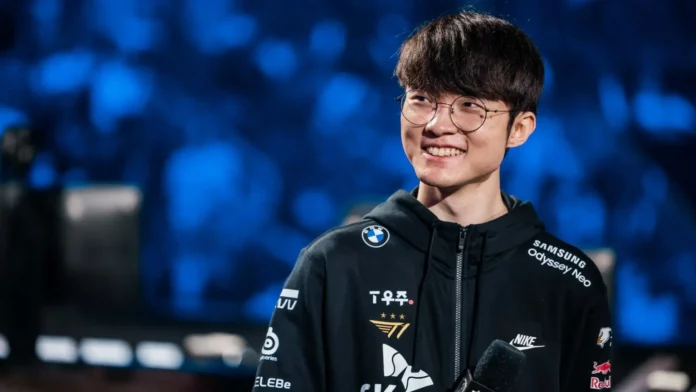


South Korea will not compete as an official national team at the Esports Nations Cup (ENC) 2026. The Korea Esports Association (KeSPA) has cut ties with the event after a falling out with organizers over player selection. The Esports Foundation confirmed it ended the formal partnership with KeSPA. It now plans to recruit Korean players directly, completely bypassing the association. The Korean Sport & Olympic Committee (KSOC) has responded clearly: any team built outside the official system cannot use the South Korean flag, the “Team Korea” name, or national representative status.
The story broke on April 27, 2026, through South Korean outlet Sports Seoul. It has since spiraled into one of the biggest controversies in esports governance this year.
What Is KeSPA and Why Does Its Role Matter?
KeSPA is the official governing body for esports in South Korea. It acts as a regulator, promoter, and tournament organizer, and sits under the authority of the Korean Sport & Olympic Committee. The association has been selecting South Korean national esports teams since 2018 using a performance-based points system built around competitive results.
When the Esports Foundation launched the ENC’s National Team Partner program in January 2026, KeSPA applied and was formally appointed as South Korea’s national team partner in March. Its responsibilities covered every operational aspect of the South Korean national team: selecting coaches across all 16 game titles, nominating players through those coaches, and acting as the official point of contact between the country and ENC organizers.
Just days before the dispute went public, KeSPA had already submitted coaching nominations. Former KT Rolster coach Kang “Hirai” Dong-hoon was named as South Korea’s League of Legends coach. NongShim RedForce coach Kim “SilKanoN” Gyeong-min was appointed for VALORANT. Those appointments are now on hold.
Why Did KeSPA Pull Out of Esports Nations Cup 2026?
The partnership broke down over how the national roster would be assembled. According to Sports Seoul, the Esports Foundation allegedly pushed to include specific high-profile players in South Korea’s team lineup, interfering directly with KeSPA’s independent selection process.
KeSPA did not treat this as a minor disagreement. Its selection system is built on competitive merit. Outside pressure to include specific names cuts against that system entirely.
“The Esports Nations Cup did not align with the values and direction of the national team selection system we have built,” a KeSPA representative said. “It is regrettable that we can no longer continue our collaboration.”
An unnamed Korean esports official quoted by Sports Seoul was even more direct: “Interfering with the composition of a national team is crossing the line. Every country has its own system, and this is a sign of disrespect.”
One detail worth noting: it was the Esports Foundation, not KeSPA, that formally ended the partnership. The Foundation confirmed it “informed KeSPA that we would not be moving forward together as our national partner for the Esports Nations Cup 2026.” KeSPA did not walk out. The Foundation cut them loose.
What Did the Esports Foundation Say in Response?
The Esports Foundation issued a full statement after the news spread. It acknowledged the split, cited KeSPA’s busy schedule around the Asian Games, and insisted South Korean participation in ENC 2026 is still its goal.
“The Esports Nations Cup exists to bring the world’s best players together under the colors of their country or territory, and to give fans the experience of national pride and the honor of representation in competitive esports,” the statement read.
On the selection process, the Foundation tried to clarify how its own system works: national team managers select coaches; coaches select players; and in some titles, selections are made on a merit basis using international and domestic results.
“The commitment to Korean players’ participation in ENC26 is unchanged,” the Foundation said. “Over the coming week, we will engage directly with stakeholders across the Korean esports ecosystem, and with coaches and players, to align on the path forward.”
After the controversy broke, the ENC website was updated. South Korea’s country page was restored to the site, but with one key change: there are no longer any National Team Managers or National Team Partners listed for Korea.
For background on what the ENC 2026 is and how it was structured, see TalkEsport’s breakdown of the Esports Nations Cup 2026 format and qualification system.
What KSOC’s Position Means for Any Korean Team
The Korean Sport & Olympic Committee has backed KeSPA on this. Its position removes any ambiguity around what the Esports Foundation can actually do without official support.
“Only athletes selected through an official member organization are recognized as national team members,” an KSOC representative told Sports Seoul. “It is impossible for a team that has not participated through the association to represent Korea. If they participate as individuals or as a private team, they cannot use the Taegeukgi, the ‘Team Korea’ brand, or the title of national representative.”
That is not a soft warning. It is a hard legal line. Even if the Esports Foundation assembles a group of Korean players independently, those players would compete without a flag, without the “Team Korea” name, and without any official recognition from their country.
The position of national team manager for South Korea is also currently vacant. With KeSPA out and KSOC firmly against the Esports Foundation’s approach, recruiting someone to fill that role becomes a very awkward task. As InvenGlobal reported, the job risks becoming what insiders are calling a “poisoned chalice”: a high-profile position with no institutional backing and direct conflict with the country’s official governing bodies.
The ENC’s own rules do offer one potential workaround. Countries without an active National Team Partner or Manager can still have players and coaches submit rosters directly, under the supervision of EWCF-appointed regional managers. Whether that path would satisfy KSOC’s requirements is a separate question entirely.
Is Faker at the Center of This Dispute?
No official party has confirmed what player the Esports Foundation wanted included. But speculation in the community has moved quickly, and most of it points to one name: T1’s Lee “Faker” Sang-hyeok.
Multiple social media accounts and community figures raised the theory shortly after the news broke. The logic: Faker is South Korea’s most recognizable esports figure globally. His inclusion in any roster would carry massive marketing value for a debut event on this scale. Some speculation also pointed toward the original ZOFGK roster as a possible request.
No statement from Faker, T1, KeSPA, or the Esports Foundation has confirmed or denied this.
What is confirmed: Faker was part of South Korea’s gold medal squad at the 2022 Hangzhou Asian Games. He was sidelined through most of the competition due to illness, with Jeong “Chovy” Ji-hoon carrying the stage games. South Korea still won gold. Given Faker’s profile, any perceived attempt to place him on a roster through external pressure would be a major flashpoint for KeSPA.
China, Taiwan, and Hong Kong Are Also Missing
South Korea is not the only major esports region missing from ENC 2026. China, Taiwan, and Hong Kong have all been quietly removed from the ENC website. All three were listed as national team partners in earlier announcements.
No explanation has been provided for their removal. The Esports Foundation has not addressed it publicly.
The absence of China and South Korea together is not a minor gap. In League of Legends, VALORANT, PUBG, and Honor of Kings, these two countries produce the strongest national talent pools in the world. Their combined absence raises real questions about the competitive depth of the inaugural event.
The Esports Nations Cup 2026 runs from November 2 to November 29 in Riyadh, Saudi Arabia. It is backed by a $45 million operating budget from the Esports Foundation, with a $20 million prize pool distributed to players, coaches, and national programs. The event covers 16 game titles across four weeks, including VALORANT, League of Legends, Dota 2, Counter-Strike 2, Mobile Legends: Bang Bang, Rocket League, Street Fighter 6, and more. Over 100 countries were originally set to participate.
What Happens Next?
The Esports Foundation says it is reaching out to Korean players and coaches directly. The roster submission deadline, originally April 30, has been extended to May 10. That gives a narrow window for the Foundation to sort out what a Korean presence at ENC 2026 actually looks like.
KeSPA’s public position has not shifted. Its 2026 priority is the Nagoya Asian Games. The association says ENC’s direction simply does not match its values.
Whether any Korean players compete at ENC 2026 at all, and under what banner, remains open. The Foundation has a system that technically allows rosters to be assembled without a national partner. But without KSOC recognition, competing as “Team Korea” is not an option.
As things stand, one of esports’ strongest national programs is sitting out the debut of the tournament that was supposed to be the sport’s version of the Olympics. The fallout is still unfolding, and the roster deadline is days away.
For the full breakdown of confirmed games, formats, and schedules at ENC 2026, see the complete ENC 2026 event guide on TalkEsport. For the official ENC governance rules and NTP program structure, the Liquipedia ENC 2026 page has a detailed breakdown. The original controversy was first reported by Sports Seoul and followed up by Insider Gaming, who also published the Esports Foundation’s full official statement.
Frequently Asked Questions
Why did KeSPA pull out of Esports Nations Cup 2026? The Esports Foundation allegedly pushed to include specific high-profile players in South Korea’s national team roster, bypassing KeSPA’s established selection process. KeSPA said ENC’s direction did not align with its values. The Foundation then confirmed it ended the formal partnership, not KeSPA.
Can South Korea still compete at ENC 2026 without KeSPA? Technically, ENC’s rules allow countries without a National Team Partner to have players and coaches submit rosters under a regional manager. However, the KSOC has said any team assembled outside the official system cannot use the Korean flag, “Team Korea” branding, or the national representative title.
Is Faker involved in the KeSPA-ENC dispute? Community speculation points to Faker as the player the Esports Foundation may have requested. No official party has confirmed this. Faker is South Korea’s most prominent esports figure and competed at the 2022 Hangzhou Asian Games, where Korea won gold.
Why is China also missing from ENC 2026? China, Taiwan, and Hong Kong have been removed from the ENC 2026 website without explanation. No statement has been issued from the Esports Foundation or Chinese authorities addressing the removals.
What is the ENC 2026 roster deadline? The original player roster submission deadline of April 30, 2026, has been extended to May 10, 2026. The Esports Foundation says it will use that window to engage directly with Korean esports stakeholders.
