Crosshair settings are arguably the ones that every Counter Strike player has fiddled with, trying to get their shots to hit. While everyone has a preference of their own, we often look up to the best players in the world when picking our crosshair in hopes that we can mimic a fraction of their skills.
Current Meta in Crosshair Settings
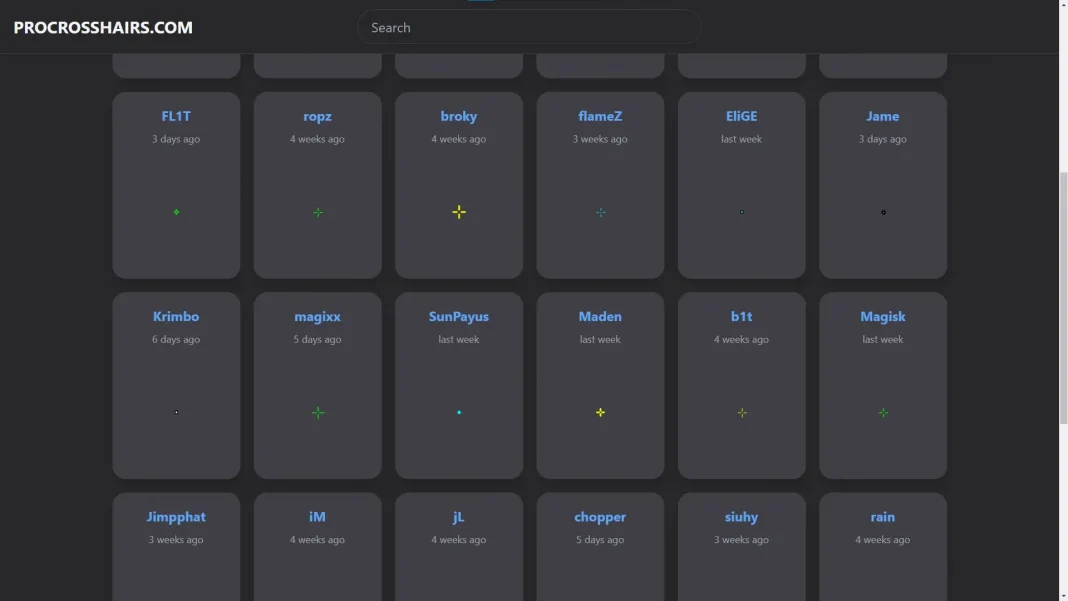
Given that Crosshair settings are extremely personal, there are several similarities that we have come to see among pros over the course of the game’s history. In this article, we will try to understand how the current CS2 crosshair trends differ from those used by the old guard. According to an analysis released, the following features are in the crosshairs of most modern pros.
- Small static crosshair
- Green or cyan color
- Thin lines without an outline
- Small negative gap
- No center dot
Fundamentally, they are small, crisp, and aligned towards accuracy over consistency, given we associate smaller crosshairs with sharpshooters.
How did the Old Guard do it?
The older-generation crosshairs would have some similarities, as we have come to see with some of the OGs who are still active. Taking the example of karrigan, his crosshair somewhat reflects his experience, as they are mostly bigger, with a gap, and their aiming mechanics were adapted to the same, explaining why some of them continue with it despite modern trends flowing in a different direction.
Players like NiKo, who have reigned at the apex of Counter-Strike over multiple iterations of the game, have adapted their crosshair as per the metas over the course of recent years. However, when looked at closely, they have mostly been small and static like the aimstars of today, like Donk and Kyousuke.
While trends are good to follow, crosshairs should always be personal and developed as per a player’s own mechanics. Consistency is what ultimately rewards you, and while constant adjustment helps, stay consistent with one once you find the right one for you to get the most bang for your buck.