

When Riot Games launched Valorant in 2020, it did something that many studios had attempted but few had managed to achieve. It entered a genre that had been dominated by Counter-Strike for more than two decades and immediately captured the attention of the global FPS community. Tactical shooters had always been notoriously difficult to disrupt because their appeal rests on a delicate balance of precision, discipline, and competitive clarity.
Counter-Strike had refined that formula over multiple generations. Riot approached it from a different angle and, for a time, the gamble paid off.
Valorant arrived with a clear understanding of how modern competitive games grow. The game was free to play, backed by Riot’s experience in running global esports, and launched at a moment when streaming platforms were becoming central to gaming culture. Within weeks of the closed beta, the game dominated Twitch viewership and drew in players from several established competitive scenes.
Professional players from Counter-Strike, Overwatch, and other FPS titles began exploring Riot’s new tactical shooter. Esports organizations moved quickly to establish rosters, and Riot’s promise of a structured international circuit created confidence in the long-term viability of the game. For a moment, the narrative across the industry was that Valorant might represent the next evolution of tactical shooters.
The Early Balance That Made Valorant Work
What made Valorant compelling during its early years was the way it combined familiar gunplay with a carefully controlled layer of abilities. Riot borrowed the skeletal structure of a traditional tactical shooter and added agents whose tools could shape the flow of a round without overwhelming it.
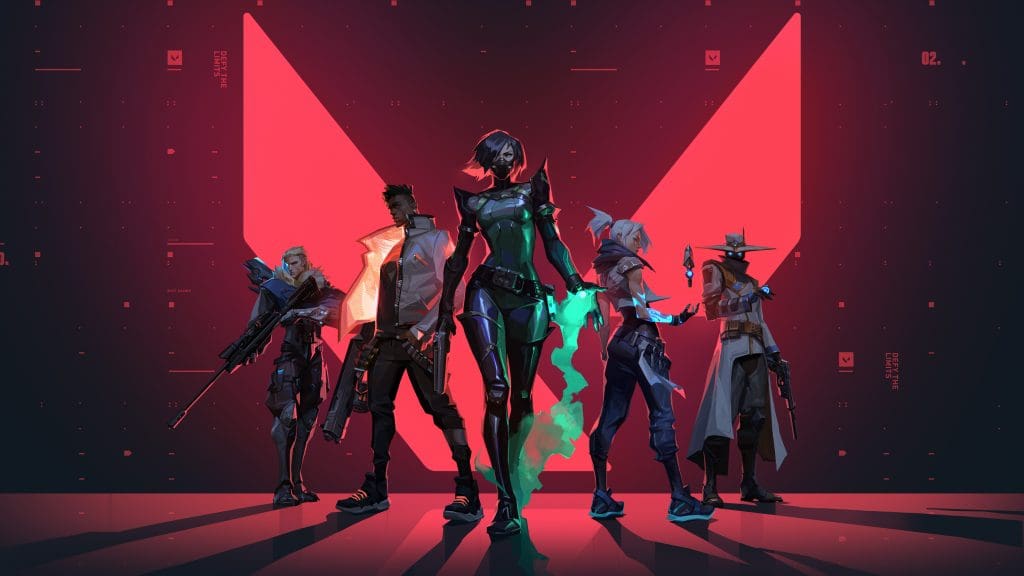
Abilities acted as instruments of information and control. Recon tools revealed enemy positions, smokes reshaped sightlines, and traps slowed aggressive pushes. These mechanics expanded the strategic possibilities of the genre while still allowing gunfights to remain the defining moment of most engagements.
Just as importantly, the early roster of agents was manageable. Players could quickly understand what each character contributed to a team composition. Matches remained readable for both participants and spectators, and the tactical rhythm of rounds still revolved around positioning, timing, and mechanical precision.
This balance helped Valorant attract players who were curious about ability-driven design but still appreciated the discipline of tactical shooters.
When Complexity Begins to Grow
Over the years, Riot has continued expanding Valorant’s agent roster, introducing characters with increasingly distinct mechanics and playstyles. Each addition has brought fresh strategic possibilities, but it has also added another layer to the game’s already complex ecosystem.
Today, rounds often involve multiple abilities interacting simultaneously. Recon tools expose positions, movement skills disrupt defensive setups, traps deny areas of the map, and ultimate abilities can reshape entire engagements. None of these mechanics are inherently problematic, yet the sheer number of systems that can influence a round has increased significantly compared with the game’s early days.
For veteran players who have followed the game since launch, adapting to these changes is part of the evolving competitive experience. For newer players, however, the learning curve can feel steeper than it once was. Understanding how to play around each agent’s abilities requires not only mechanical skill but also familiarity with an expanding library of interactions.
This gradual accumulation of mechanics has led some players to wonder whether the game’s design philosophy is shifting away from the simplicity that initially defined it.
A Different Design Philosophy From Counter-Strike
The contrast becomes clearer when Valorant is placed alongside Counter-Strike. Valve’s series has remained remarkably consistent in its approach to design. Maps evolve and graphics improve, but the core framework of the game changes very little. Players rely on a limited set of grenades, precise gunplay, and coordinated team movement to create advantages.
That minimalism has helped Counter-Strike maintain a strong competitive identity. Matches are easy to follow even for casual viewers, and the mechanics that determine victory remain transparent. Complexity arises from how players use the same tools rather than from introducing entirely new ones.
Valorant takes a more dynamic approach. Riot regularly introduces new agents and mechanics, keeping the meta fluid and encouraging players to explore different compositions. This philosophy has helped the game remain fresh, but it also places greater pressure on maintaining clarity within the competitive environment.
The result is a tactical shooter that occupies an unusual middle ground. It retains the emphasis on gunplay and map control that defines the genre while continuing to evolve through character design.
The Challenge of Sustaining Momentum
Despite ongoing debates about complexity, Valorant remains one of the most prominent titles in modern esports. Riot’s global league system has provided a structured competitive calendar, and international events consistently attract large audiences. The game has secured its place among the most influential FPS titles of the decade.
At the same time, the conversation around its design direction reflects a natural stage in the lifecycle of competitive games. Early growth is often driven by novelty and innovation. As a game matures, players begin paying closer attention to the systems that shape its long-term identity.
Valorant proved that the tactical shooter genre could evolve beyond its traditional boundaries. The challenge for Riot now is ensuring that the expansion of agents and abilities continues to enhance the game rather than obscure the qualities that made it compelling in the first place.
Finding that balance between innovation and clarity will likely determine how Valorant’s next chapter unfolds.