

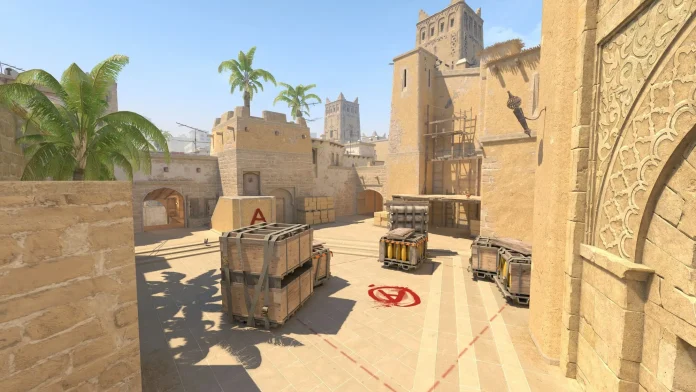
The professional landscape of Counter-Strike has seen a seismic shift since the release of Counter-Strike 2 in September 2023. As the community enjoyed the technological leap to the Source 2 engine, there may be no part of this change that has been more impactful than the complete reworking of the competitive maps for the game. What came out of this revolution wasn’t just a bunch of nicer textures and better lighting; it was a radical redefinition of how professional organizations go about strategy, preparation, and competitive greatness.
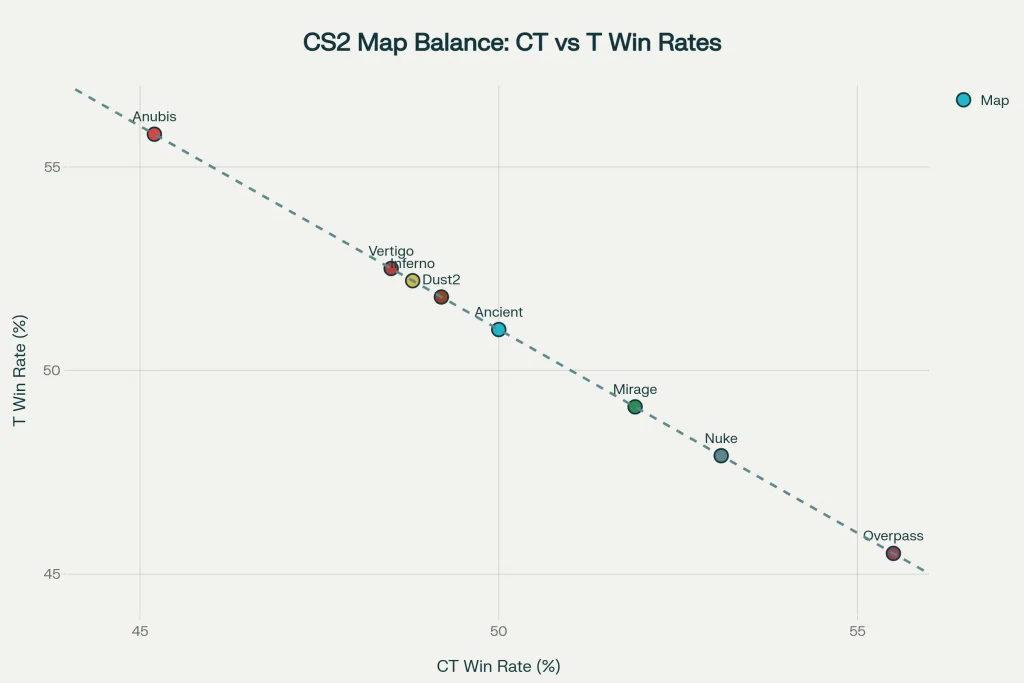
The statistics speak for themselves. Ancient’s 50-50 competitive split in a thousand or more pro-level games is an achievement in game design if ever there was one, and the deliberate removal of uneven maps like Anubis speaks volumes about Valve’s priority on competitive integrity over sentimentalism. But beneath these figures exists a murkier tale of innovation, adaptation, and the fine line between maintaining Counter-Strike’s tactical heritage while expanding the frontiers of competitive evolution.
A Story of Three Philosophies

Valve categorizes map remakes into three categories: Touchstone, Upgrade, and Overhaul. This was not a shotgun modernization but a strategic attempt to reduce competitive turmoil while maximizing aesthetic and gameplay upgrades.
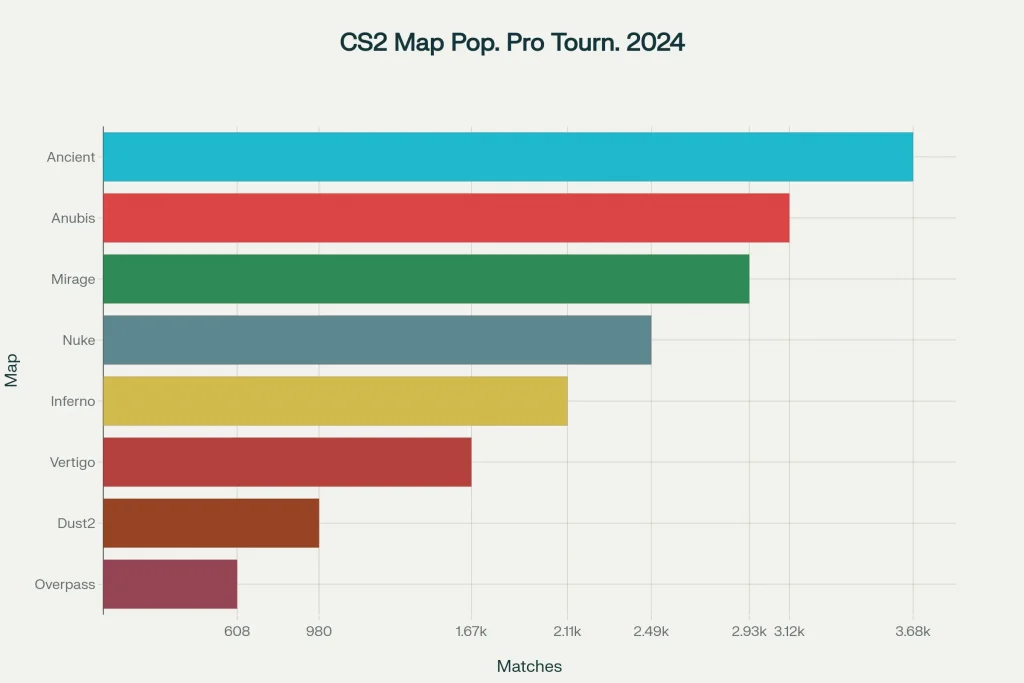
The Touchstone philosophy exercised exemplary restraint. Maps such as Dust2 and Mirage were updated with negligible structural changes, retaining the tactical blueprints that teams had developed over decades. Dust2’s conservative approach held its 49.2% CT win percentage, assuring that gentle upgrades could enhance the competitive experience without dismantling established strategic models. But this preservation was at a price. Dust2’s appearances in tournaments dropped to as few as 980 matches in 2024, indicating that graphical upgrades alone could not hold up professional interest without strategic variation.
The Upgrade strategy took a middle path, as seen in Nuke’s makeover. Significant visual enhancements improved the viewer experience while maintaining the complicated strategic dynamics that rendered Nuke a tactician’s utopia. The map’s ever-present 53.1% CT-side bias is indicative of its classic defensive slant, yet improved visual fidelity has brought these complex strategies within the realm of view and accessibility for all viewers and players.
Most spectacularly, the Overhaul category marked Valve’s desire to rethink legendary battlegrounds. Inferno’s full redesign scrapped long-standing utility lineups and strategic tendencies, compelling professional teams to effectively relearn one of Counter-Strike’s most popular maps. The result, a fair 48.8% CT win rate, proved the upheaval worthwhile, but the transition phase revealed the actual cost of such drastic alterations.
The Ancient Anomaly
No other feature may better demonstrate the power of well-considered map design than Ancient’s outstanding competitive achievement. The map’s 50-50 balance in 3,678 professional games is a statistical marvel in competitive gaming, in which small asymmetries become lasting advantages for one side or another.
Ancient’s success lies in core design principles that favor competitive balance over nostalgic value. The archaeological appearance of the map creates a unique visual identity, and its double-site design facilitates authentic strategic decisions by both attack and defense teams. Unlike typical Counter-Strike maps, which often favor one side due to spawn locations or site layouts, Ancient’s balanced nature compels teams to rely on mere tactical skill rather than exploiting structural advantages.
This equilibrium has significant consequences for competitive integrity. When FaZe Clan and Natus Vincere fight on Ancient, the result hinges solely on strategic planning, personal ability, and tactical adaptation, and not on which side they begin on. This makes more engaging competitive stories and equitable tournament results, which is the best that competitive map design can achieve.
The Cost of Innovation
But the path to such a competitive utopia has been far from cost-free. The financial implications of map redos go well beyond program development budgets to effectively reshape how professional organizations organize their plans.
Teams now need specialized resources for quick adaptation to map changes, with franchises such as Team Liquid hiring specialist coaching staff solely to deal with increased strategic complexity. It develops a competitive arms race where success relies more and more on institutional resources instead of raw talent and ingenuity. More recent professional teams, with already modest budgets, also have further obstacles as preparation needs extend past conventional practice timetables.
Regional differences in adaptation rates have produced novel competitive dynamics. The quicker adaptation of European teams to dominate overhauls of maps such as Inferno illustrates their traditional focus on strategic preparation, whereas the success of Brazilian teams on Ancient demonstrates how symmetrical design can maximize regional styles and play. Such trends indicate that remakes of maps do not merely alter tactics. They have the power to redefine the international competitive stratification by rewarding specific styles of team development and strategic preparation.
Technical Troubles
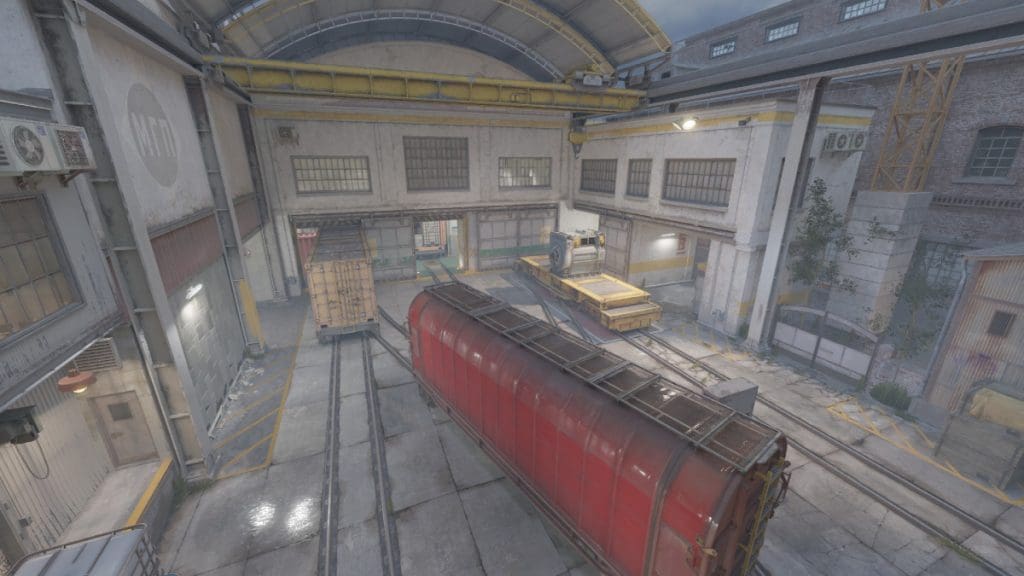
The technical challenges of remaking maps unveil another degree of sophistication to competitive balance. Train’s comeback generated nostalgic hype but performance volatility that compromised competitive integrity. Technical glitches in frame rates during heavy action sequences compelled some teams to shun the map during critical tournament moments, illustrating how tech issues can directly become competitive handicaps.
The reaction of Valve to these challenges reflects the thin line between innovation and stability in competitive gaming. Optimisation updates were provided regularly to address issues with performance, but the transient period of technical ambiguity reflected the risks involved in ambitious remake initiatives. Superior hardware setups were enjoyed by teams that delivered brief leads, while others suffered from limitations in performance, affecting their choices of strategy.
Map overhauls accompanied the release of dynamic smoke grenades to introduce compounding adaptation problems. Teams had to learn new map designs and groundbreaking utility mechanics simultaneously, essentially doubling the preparation stress for competitive teams. This overlap of changes put the professional circuit to the test and emphasized the need for collaborative development methods.
The Human Element
Professional player insights uncover the practical and emotional nuances of map remake adaptation. Robin “ropz” Kool’s admiration for the redesign of Train shows more widespread professional respect for nuanced improvements that add strategic depth without compromising competitive integrity. His particular admiration for eliminating problematic features, such as the ladder room, shows how players prioritize functional enhancements over aesthetic modifications.
In contrast, veteran players’ frustrations over the speed of change reflect real concerns about competitive fairness. When constant map rotation benefits teams with greater support staff and prep resources, the playing field gets uneven in a way that goes beyond individual talent and strategic imagination. These views make a compelling case for balanced methods of competitive evolution that take the whole professional environment into account and not merely gameplay mechanics.
The tournament results of competitions such as the Perfect World Shanghai Major 2024 show how professional adaptation happens in real-time competitive settings. Ancient’s short-term CT-side bias during the Opening Stage (56.9% defensive rounds) was in complete contrast to its overall balanced statistics and implies that tournament pressure and short preparation time can short-term distort competitive balance. But the Elimination Stage revealed how quickly professional teams were able to adapt, with Mirage implementing almost perfect balance (51.9% T-side rounds) as players grew acclimatized to tournament play.
Verdict
The statistics identify that successful reboots need more than enhanced graphics or minor gameplay tweaks. They need basic respect for competitive balance, professional readiness demands, and popularity approval. The Valve classification model offers a useful template for future development, but the actual lesson is the fine balance between innovation and stability that characterizes long-term competitive evolution.
As Counter-Strike 2 evolves, lessons from the last two years provide essential direction for upholding competitive integrity alongside securing strategic novelty. The professional community’s successful transition to varied remake strategies proves formidable resilience but also illustrates the role of institutional strength and resource investment in competitive victory.