

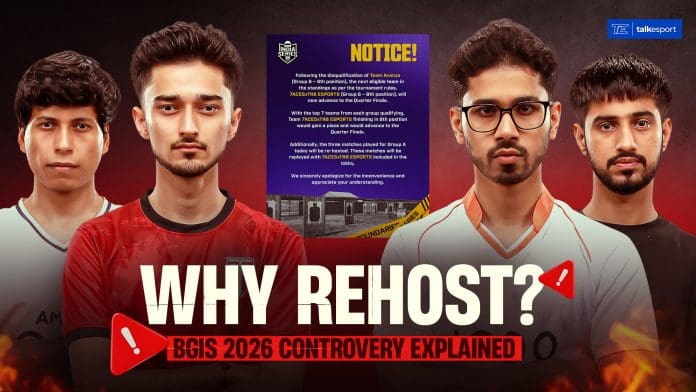

Rule 6.3.13 has become one of the most talked about rules in Indian BGMI esports after several teams were disqualified under it during the Battlegrounds Mobile India Series (BGIS) 2026. Most recently, a disqualification under this rule led to the cancellation and rehost of all Group A Quarterfinal matches. But what does this rule actually mean, and what kind of conduct does it cover? Here is a complete breakdown based on the official BGMI Competition Rulebook.
Rule 6.3.13 in the BGMI Rulebook: Full Explanation
Rule 6.3.13 falls under Section 6.3 of the Battlegrounds Mobile India Official Competition Rules. This section deals with Unprofessional Behavior. The rule is officially titled “Term of Use” and it covers a broad range of violations.
According to the BGMI Official Competition Rulebook (Version 1.0.0, December 15, 2025), Rule 6.3.13 states that any conduct that (a) violates the Terms of Use for Battlegrounds Mobile India, (b) violates any guidelines or any policy posted on the official websites or social media accounts for Battlegrounds Mobile India, or (c) interferes with the use of Battlegrounds Mobile India by others, is prohibited and counts as a violation of the General Rules.
In simple words, if a player or team member does anything that goes against the game’s Terms of Use, breaks any official policy shared by Krafton on its website or social media, or disrupts other players’ experience in the game, they can be punished under this rule.
Why Is Rule 6.3.13 Important in BGMI Esports?
This rule is significant because it acts as a catch-all provision. While rules like 6.2.2 (Cheating) or 6.3.8 (Bribery) target specific offenses, Rule 6.3.13 covers any behavior that violates the broader Terms of Use of BGMI. This gives Krafton the authority to take action against conduct that may not fit neatly under other specific rules but still goes against the game’s official policies.
For example, activities like unauthorized purchase of in-game currency (commonly known as UC carding), account sharing, or any policy violation listed in the BGMI Terms of Use can all fall under this rule.
Where Does Rule 6.3.13 Sit in the BGMI Rulebook?
The BGMI Official Competition Rulebook is organized into multiple sections. Section 6 is titled “Code of Conduct” and it contains three main subsections. Section 6.1 covers general conduct standards. Section 6.2 lists Prohibited Conduct, which includes cheating (6.2.2), collusion, ringing, and other gameplay-related violations. Section 6.3 covers Unprofessional Behavior, which includes a range of off-gameplay violations.
Under Section 6.3, here are some of the key rules that sit alongside Rule 6.3.13:
Rule 6.3.6 covers Illegal Activity, requiring team members to comply with all applicable laws. Rule 6.3.8 covers Bribery, prohibiting team members from offering gifts, cash, or rewards to influence match outcomes. Rule 6.3.9 covers Gifts, preventing team members from accepting rewards from other teams. Rule 6.3.11 covers Match-Fixing, prohibiting any conspiracy to fix tournament results. Rule 6.3.12 covers Document Submission, requiring team members to provide accurate information and proper documentation to the tournament organizer. And Rule 6.3.13 covers Term of Use violations, as explained above.
All of these rules fall under the broader Unprofessional Behavior category, and violations can lead to disciplinary action under Section 6.4 of the rulebook.
What Happens If a Team Violates Rule 6.3.13?
Section 6.4 of the BGMI Competition Rulebook outlines the disciplinary actions and sanctions that can be applied for any rule violation. These can include disqualification from the ongoing tournament, forfeiture of any prizes earned, loss of qualification spots secured for future events, and forfeiture of points scored during the tournament.
In the context of BGIS 2026, teams found violating Rule 6.3.13 have been immediately disqualified and their slots have been given to replacement teams.
Teams Disqualified Under Rule 6.3.13 in BGIS 2026
Rule 6.3.13 has been enforced multiple times during the BGIS 2026 so far. Here are the confirmed cases.
During BGIS 2026 Round 3, GenOfMiracle and Super Esports were both disqualified under Rule 6.3.13. In the case of GenOfMiracle, reports surfaced that two of its players, Aiden and Sharan, had their BGMI accounts banned. Initial online discussions suggested hacking as the reason. However, a source from within the team later clarified that the ban was allegedly related to UC carding, which refers to unauthorized purchase of in-game currency. UC carding is a serious violation under BGMI policies and directly impacts a team’s tournament eligibility. No official detailed statement was released by the players at the time.
In the Quarterfinals stage, Team Avanza was also disqualified for violating Rule 6.3.13 during Round 4. This disqualification triggered one of the biggest controversies of BGIS 2026 so far.
How Rule 6.3.13 Led to BGIS 2026 Quarterfinals Group A Rehost
Team Avanza had finished in 6th position in Round 4 Group 6, which was good enough to qualify for the Quarterfinals as the top 7 teams from each group advanced. However, after the disqualification under Rule 6.3.13, their slot became vacant.
According to the tournament format, the next eligible team from the same group should have taken the vacant spot. In Group 6, 7ACESxTRB Esports had finished in 8th position, making them the rightful replacement.
However, when the Quarterfinals Day 1 matches began, fans noticed something unexpected. Instead of 7ACESxTRB Esports, a team called BTD was added to the Group A lobby in Avanza’s place. BTD played all three scheduled matches and scored 12 points. Both Group A and Group B completed their Day 1 matches without any visible issues.
Shortly after, Krafton released an official notice clarifying that 7ACESxTRB Esports would officially replace Avanza in the Quarterfinals. At the same time, all three Group A matches from Day 1 were cancelled, and a complete rehost was announced. The previous results of Group A would not count, and the matches would be replayed with 7ACESxTRB Esports in the lobby.
This rehost created major pressure for teams that had performed well on Day 1. Autobotz Esports had topped the Group A table with 37 points, while Team Tamilas had secured 32 points. Both teams now had to replay those matches with no guarantee of repeating their performance. On the other hand, teams that had struggled in the initial matches received a fresh opportunity to improve.
The official notice did not explain why BTD was initially added instead of 7ACESxTRB Esports. It remains unclear whether it was an administrative error, a communication gap, or a technical issue.
This incident highlighted the real-world impact that a Rule 6.3.13 disqualification can have, not just on the violating team but on the entire tournament bracket.
How Is Rule 6.3.13 Different from Rule 6.2.2 (Cheating)?
This is a common point of confusion among BGMI fans. Rule 6.2.2 falls under the Prohibited Conduct section and specifically targets cheating. It prohibits the use of any cheating hardware, device, cheat program, modified game clients, or similar methods during official competition. It also prohibits downloading cheat programs to the device used for matches.
Rule 6.3.13, on the other hand, falls under the Unprofessional Behavior section. It is broader in scope and covers any conduct that violates the BGMI Terms of Use, official guidelines, or policies. While cheating through hacks or third-party software is covered under 6.2.2, activities like UC carding, account-related violations, or breaches of BGMI’s published policies typically fall under 6.3.13.
In short, Rule 6.2.2 is about in-game cheating. Rule 6.3.13 is about broader Terms of Use violations that may not involve direct gameplay manipulation.
Other Key Rules That Have Led to Disqualifications in BGIS 2026
To understand the full picture of Krafton’s rule enforcement during the BGIS 2026, here is a quick summary of the other major rules that have been cited.
Rule 2.1.5 (Single Team Exclusivity) states that a team member can only compete for one team at a time and cannot be listed on the roster of more than one team. Rule 6.2.2 (Cheating) prohibits the use of any unauthorized software, modified game clients, or cheat programs. Rule 6.3.8 (Bribery) prohibits offering gifts, cash, or rewards to influence match outcomes. Rule 6.3.12 (Document Submission) requires accurate documentation and penalizes teams for submitting false information. Rule 6.2.4 covers Technical and Administrative Violations. Rule 4.3 covers Equipment and Apparel violations, including use of unauthorized peripherals or gear.
Across all rounds of the BGIS 2026, over 25 teams have been disqualified for violating one or more of these rules.
Where Can Players Read the Full BGMI Rulebook?
The complete Battlegrounds Mobile India Official Competition Rulebook (Version 1.0.0, December 15, 2025) is publicly available on the official Krafton India Esports website at esports.battlegroundsmobileindia.com. Players and teams competing in any official BGMI tournament are required to read, understand, and agree to the rulebook before participating.
