

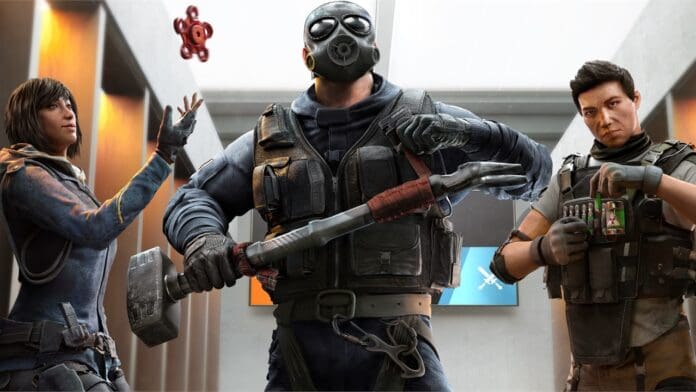

Ubisoft was forced to take Rainbow Six Siege offline globally after a severe backend security breach allowed hackers to inject billions of R6 Credits into player accounts, unlocking rare and developer-exclusive cosmetics and triggering widespread system instability.
The incident, which unfolded between December 27 and December 29, 2025, prompted an emergency global shutdown of Siege servers and its in-game marketplace. Ubisoft has since restored service following a full rollback, but the scale of the breach has raised serious questions around backend security, especially for a title entering its second decade of live service operations.
How the Rainbow Six Siege Hack Happened: A Timeline
According to internal investigations and community-verified reports, attackers gained access to Ubisoft’s backend administrative tools around 6:00 AM ET on December 27. This was not a client-side exploit or cheat injection. Instead, hackers manipulated internal economy systems directly, bypassing normal safeguards.
Within hours, compromised accounts began receiving an estimated 2 billion R6 Credits, a sum valued at roughly $13 million USD based on in-game pricing. The breach enabled:
- Instant unlocking of ultra-rare and developer-exclusive skins
- Massive inflation of the Siege marketplace
- Manipulation of internal moderation feeds, resulting in random bans across PC, PlayStation 5, and Xbox
Ubisoft detected unusual activity by 9:10 AM ET and initiated a staged response. Servers and the Siege X marketplace were taken offline globally within hours as engineers began isolating the affected systems.
Crucially, Ubisoft confirmed that the breach stemmed from compromised internal tools, not stolen player credentials. All major data centres across the US, UK, and Europe were affected simultaneously, highlighting the centralised nature of the attack.
Rollback and Recovery: What Happened to Player Accounts
To contain the damage, Ubisoft executed a full economic rollback to the pre-breach state, effectively resetting Siege’s backend to conditions before 6:00 AM ET on December 27.
As part of the recovery process:
- All illicit R6 Credits were removed
- Hacked cosmetics and marketplace trades were erased
- Legitimate purchases made outside the breach window were preserved
- The ban ticker and automated moderation systems were temporarily disabled
Ubisoft made a notable decision to remove all bans issued during the incident, even for players who unknowingly traded hacked items. The focus, the publisher said, was on restoration and system integrity rather than enforcement.
After more than 24 hours of internal testing and validation, Siege servers began returning online on December 29, with marketplace functionality restored in phases. Ubisoft has stated that live monitoring will continue as further audits are completed.
Is Rainbow Six Siege Safe to Play Now?
Ubisoft has assured players that Siege is currently operating under normal conditions, with backend vulnerabilities patched and additional safeguards deployed. The company has also confirmed there is no evidence of stolen account credentials or leaked personal information, differentiating this incident from earlier Ubisoft security lapses.
From a security standpoint, industry analysts have noted that Ubisoft’s rapid global shutdown likely prevented deeper data compromise. However, the breach still exposes ongoing risks tied to internal access control and tool management.
For now:
- Ranked play, progression, and matchmaking are considered safe
- Marketplace activity should be approached cautiously until Ubisoft completes a full audit
- Further backend hardening updates are expected in January 2026
Compared to the 2020 Ubisoft data leak, which exposed user emails, this incident was economy-focused and avoided large-scale personal data exposure.
Impact on US, UK, and European Players
The timing of the outage proved particularly disruptive.
In North America, servers went down during a high-engagement holiday window, cutting into ranked grinds and competitive preparation. In the UK and wider Europe, where holiday play traditionally drives free-to-play progression and cosmetic sales, the outage wiped out peak seasonal sessions.
Esports teams and competitive players across NA and EU regions reported delayed scrims and practice schedules, with some viewers shifting temporarily to alternative titles on Twitch. Several organisations and pro players publicly criticised the disruption, highlighting Siege’s continued importance in the Western tactical shooter ecosystem.
What Players Should Do Next
Ubisoft has not issued mandatory action items, but players are advised to take basic precautions:
- Review account login history through Ubisoft Connect
- Enable or confirm two-factor authentication
- Avoid high-value marketplace trades until Ubisoft issues a full security clearance
- Monitor upcoming patch notes for permanent backend security updates
Previous Rainbow Six Siege Security Incidents at a Glance
| Incident | Date | Type | Player Impact | Resolution |
| Backend Economy Hack | Dec 27–29, 2025 | Internal tools breach | Billions of credits erased, false bans | Servers restored Dec 29 |
| Ubisoft Data Leak | 2020 | Credential exposure | 100,000+ emails leaked | Patched over weeks |
| Ban Wave Glitch | 2024 | Auto-moderation error | Mass false bans | Same-day rollback |
A Wake-Up Call for a Decade-Old Live Service
Rainbow Six Siege has proven remarkably resilient for a ten-year-old competitive title, maintaining relevance across casual, ranked, and esports ecosystems. This incident, however, underscores the growing importance of proactive security audits as live-service games age and internal systems become increasingly complex.
Ubisoft’s swift response limited long-term damage, but trust now hinges on transparency and sustained investment in backend security. For Siege’s players and esports stakeholders, the expectation is clear: stability and integrity must match the game’s competitive legacy.
