

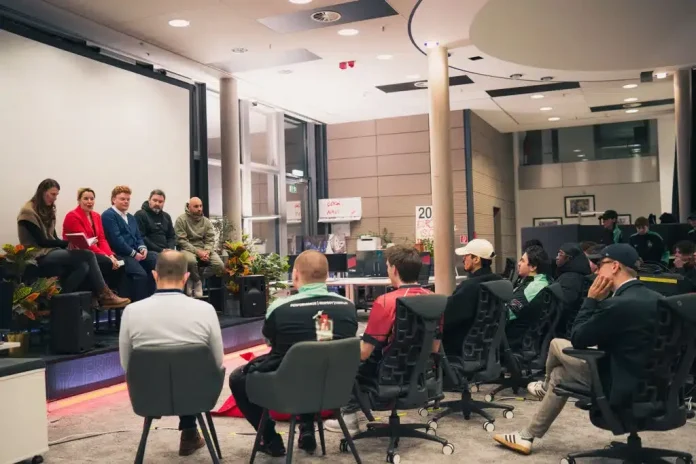

European esports organization G2 Esports brought together government officials and industry leaders at its Berlin headquarters to examine the future of esports infrastructure in Germany. The evening panel brought together key figures from both the public and private sectors to address critical questions about how Germany can strengthen its position in the global esports landscape.
Key Participants in the Berlin Esports Panel
The panel featured G2 Esports CEO Alban Dechelotte alongside Franziska Giffey, who serves as Berlin’s Senator for Economic Affairs, Energy and Public Enterprises. The discussion also included former FIFA World Champion Mohammed ‘MoAuba’ Harkous and Julions Althof, who holds the position of Managing Director at the Esports Player Foundation.
G2 Esports Chief Operating Officer Sabrina Ratih moderated the panel discussion, guiding conversations between the assembled experts.
Focus on Sustainable Growth and Player Support
The panel centered on how Germany’s existing esports ecosystem can be improved to encourage sustainable, long-term growth. Participants examined the structures required to support players across all competitive levels, from grassroots participation through to professional careers.
One major topic addressed how Germany can position itself as an international hub for organizations and tournament organizers looking to host events. The discussion looked at what infrastructure and support systems would make Germany an attractive destination for major esports competitions.
Germany’s Non-Profit Esports Classification
Panel participants discussed Germany’s recent move to classify esports as a non-profit activity and examined the wider impact this change will have on organizations operating in the country. In September 2025, the German government approved a proposal recognizing esports as a non-profit activity. This decision aims to strengthen fair play principles and encourage a healthy approach to digital media use.
The conversation also touched on the shift toward non-profit models in esports and explored how the industry can promote diversity and inclusion in Berlin specifically.
Government and Industry Collaboration
The panel addressed how Germany can remain competitive with global esports hubs through effective collaboration between government and industry stakeholders. Franziska Giffey highlighted the House of Games initiative, which she has supported as a central hub for the games industry in Berlin.
According to Giffey, the gaming industry has become a key driver of innovation, digitalization, and economic growth. Berlin has committed over 6 million euros in state funding for the industry, with the goal of attracting studios, game companies, startups, and developers to strengthen the city’s position as a leading European innovation hub.
Germany’s Track Record Hosting Major Tournaments
Germany has established itself as a destination for high-profile esports tournaments in recent years. The country has hosted major events including Dota 2’s The International and the Rainbow Six Siege Fall Major.
This year, the city of Cologne will host the 24th Counter-Strike Major operated by ESL FACEIT Group. The tournament marks the fifth time that the premier event for Valve’s first-person shooter title has taken place in Germany, cementing the country’s reputation as a popular destination for tournament organizers.
Benefits of Government-Industry Dialogue
Hosting panels that bring together industry stakeholders and government officials enables productive discussions that can shape the future of esports in Germany. These conversations allow both sectors to understand each other’s perspectives and work together on policies and infrastructure that support esports development.
The G2 Esports panel represents one example of how esports organizations and government representatives can engage in dialogue about the regulatory environment, funding opportunities, and strategic positioning that will determine Germany’s role in the international esports scene. Organizations like G2 have been central to European esports across multiple titles, making their input particularly valuable for policymakers looking to support the industry’s growth.
