

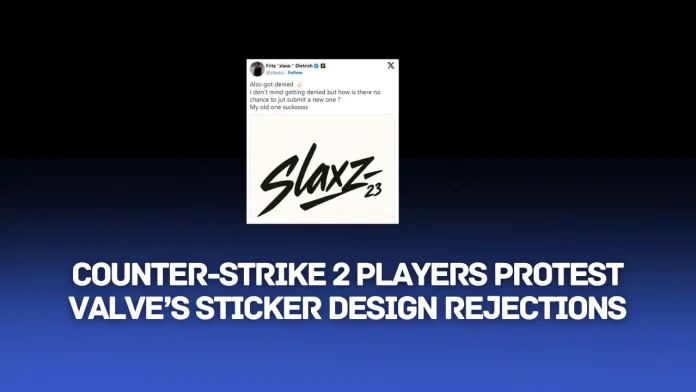

As the StarLadder Budapest Major draws near, multiple pro players in Counter-Strike 2 have publicly criticised Valve’s decision to reject their personalised autograph stickers. Several shared screenshots of denial notifications and said they were given no clear reason or opportunity to resubmit.
Many players argue that these stickers are more than cosmetic items; they represent their individual brand, performance, and potential earnings via sticker sales. One player noted, “I don’t mind getting denied, but how is there no chance to just submit a new one?”
Sticker Submission Rules: Restrictive and Unclear
Valve’s policy states that autograph stickers must resemble a quick, hand-written signature completed in 5-10 seconds, cannot use computer-generated art, fonts, or complex drawings, and must be drawn by the player themselves.
Players say that while the rules are public, the enforcement is inconsistent and the appeal process is nonexistent. For instance, one player claimed their submission, “completely hand-drawn in under five seconds,” was still rejected with no explanation.
Impact on Players and Esports Ecosystem
The sticker marketplace has real financial implications for competitors, especially those below the top tier. A rejected design can mean lost income, fewer branding opportunities, and potentially less visibility.
Moreover, the lack of transparency and appeal may strain player-organiser relations and affect faith in the system. If players feel their creativity and identity are being curtailed, that could have ripple effects in the broader Counter-Strike community.
What’s Next: Calls for Change
Players are calling for clearer guidelines, a transparent review process, and the ability to resubmit rejected designs. Some are hoping Valve will respond ahead of the Major to avoid further discontent. As one veteran player put it: “They don’t even give you a chance to correct it, let alone provide a reason.”
Given how important fan engagement and merchandise are to esports, a failure to adapt could hamper growth and alienate talent.
The protest by Counter-Strike 2 players over rejected Major sticker designs shines a spotlight on the intersection of creativity, player branding, and platform policy in esports. Valve’s rigid rules and opaque process may protect consistency, but the backlash suggests that the cost might be higher than anticipated. If the ecosystem wants to thrive, listening to player voices may not just be wise; it might be essential.
