


Counter-Strike demonstrates role-based gameplay more than any other FPS, and players would thrive only if they can fit into the tactical demands of their team. For years, this has been a fundamental part of the game, where each player had mastery over a certain role and clear specialisation. However, taking a deep dive into the roles of players in Vitality and Team Spirits, one would notice that a player excels in more than one role. Not only does this help improve mid-rounds, but it also makes the overall gameplay of the team more adaptive and unpredictable.
The new meta would dictate the rise of flexible players, where one would be tasked with the responsibilities of more than one player despite being anchored to a definite role. The rise of these flex players suggests that roles will become increasingly vague in the coming years, and this will not only impact teams, strategy, and the overall future of professional Counter-Strike but also affect the esports scene holistically.
The Origins of Role Specialisation in Counter-Strike
To look at why we are witnessing the rise of flex players, we must understand the history of tactical evolution in Counter-Strike esport. For years, the division of labour looked like the golden rule: every player would focus on their area of interest and focus on their part alone, while trusting their teammates to do the same with the roles they are entrusted with.
Unlike Valorant, there is little to no fresh content being introduced in the game every year, rendering old tactics predictable by nature. With little evolution to the tactical approach, teams and players are forced to come up with new strategies, and the latest in a long list of tactical evolutions is the large-scale introduction of flex players.
The division of responsibilities worked for a while, but it would get picked apart against a modern team with a more dynamic approach. Adaptability is key, and modern teams would like nothing more than to have 2 flex players around the core of the team that would establish stronger fundamentals for their players.
The Rise of the Flexible Player
Being a flexible player doesn’t mean they will know everything about every role present on the map, but to be able to do the needful with the situation calls for it at an extremely high level would require the mastery of multiple roles.
Example: NiKo and ropz
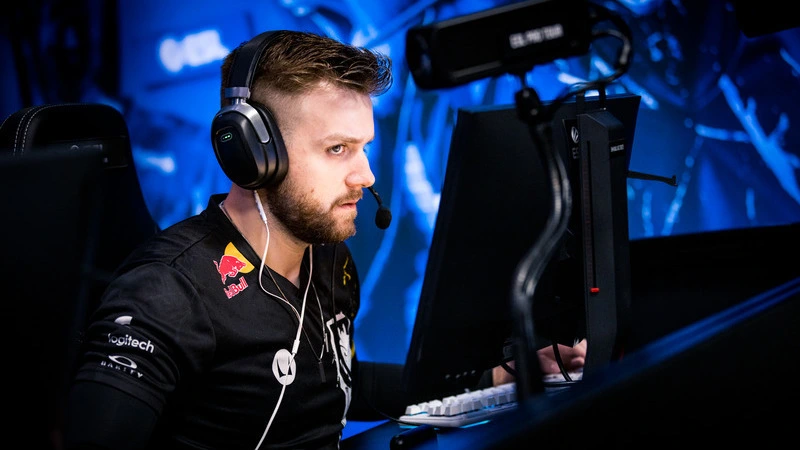
Players like NiKo (Falcons) and ropz (Vitality) have built reputations on being hybrid stars. While both can be attributed to lurking roles, they can deliver top-level performances doing every role based on the tactical requirement of the team. NiKo has always served as Secondary Caller and Entry Fragger in addition to being a Lurker, while ropz has excelled in AWPing and Anchor roles.
Example: ZywOo and m0NESY
Traditional AWPers like ZywOo (Vitality) and m0NESY (G2) are also evolving. They no longer sit back and wait for duels and remain aggressive hybrid AWPers who can rifle when necessary. This is the new standard that elite players are setting, which not only helps the team adapt to different opponents but also makes them more unpredictable.
Why This Matters
Tactical adaptability provides a significant amount of flexibility for an IGL to adjust their team’s positioning, making the game unpredictable and more challenging to deal with from an opponent’s perspective. Role shifts can be considered the modern meta, and the more flexible players of the team are, the coaches and IGLs have easier time to keep opponents from figuring out their playbook.
The Role Specialisation Crisis Explained
To break down the problems for players who cannot perform in multiple roles, these are the most common areas they get exploited in the server.
- Pure AWPers who cannot rifle are targeted for isolation and rushes.
- Dedicated supporters who lack fragging power become a strategic weakness, having been targeted by opponents as a weak point.
- One-dimensional entry fraggers fail to deliver during a tricky mid-round situation where a cerebral player would benefit from reading the gameplay.
While role specialists do deliver in their area of specialisation, a team can no longer afford players who cannot be adaptive to the demands of the situation.
The Impact on Team Building
1. Star-Stacking vs. Balanced Rosters
While stacking a team with specialists would seem like a good idea on paper, a balanced roster in modern definition would have a core of players who can easily slide into multiple roles, making the team tactically versatile instead of being rigid in their playstyle. While rigidity may ensure consistency but that holds little value in modern meta.
2. Player Market Value
The star players aside, the most in-demand players are those who can deliver in multiple roles. To take an example, the market is scarce of fragging IGL as they get picked up by teams in no time, and those who can frag while calling the shots have no shortage of offers in the modern market.
3. The Decline of “Glue Guys”
Once upon a time, Support Players were praised for their silent contributions to the game, but that is no longer the case because hardly any team has players dedicated to the support roles, as their responsibilities get divided among everyone in the team. The excuse that support players are weak in the fragging department would land a player out of the team in the modern meta.
Verdict
The role specialisation can be attributed to the modern meta of Counter-Strike 2. While this dynamic approach can lead to problems like role overlap, ego clashes, and overburden of responsibilities, the upside, if it is executed correctly, makes its weight worth in gold. The game we grew up playing has become unrecognisable in many areas as modern meta would call for fluid decision-making, dynamic strategies, and relentless adaptability.
While many would call this a crisis, we see it as nothing more than evolution for a game that has maintained its core fundamentals for over a decade. Valorant can bring in new agents and change the meta, CS2 bets on its playerbase to find new ways to play the same game.
