

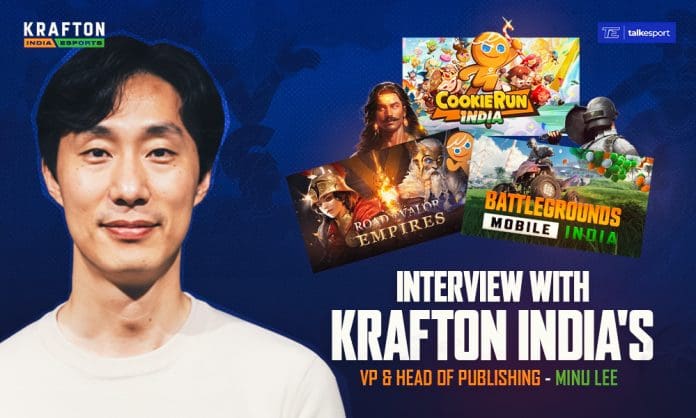
Since 2021, Krafton has invested more than $200 million in India, making the country one of its biggest global priorities. Now, with a renewed pledge of $50 million annually from 2025, the company is doubling down on the region’s potential. At the heart of this journey is Minu Lee, VP and Head of the India Publishing Department at Krafton Inc.
In an in-depth conversation with TalkEsport, Minu Lee shared why India matters, how Krafton decides which games to bring here, the challenges and surprises of the market, and his vision for the future.
Interview With Minu Lee, VP and Head of India Publishing, KRAFTON India
Minu Lee, who has been closely involved in shaping Krafton’s India journey, has a front-row view of the country’s rapid transformation into a gaming powerhouse. Over the years, he has witnessed firsthand why India holds such a unique place in Krafton’s global roadmap.
Why India is The Future of Global Gaming
For Minu, the answer is clear, “India is the fastest-growing mobile-first gaming market in the world. It has a young population, affordable data, and a strong community-driven culture. Together, these factors make us confident that India is not just a kind of a regional market in the gaming industry, but it will be the future of the global gaming industry.”
This belief drives Krafton’s investments, from capital and content to nurturing startups and IPs born in India. “Starting from 2025, we have announced an annual investment of 50 million USD, which will go into the India startup ecosystem, local contents, the new IP and overall ecosystem development,” he said.
Fun, Fit, and Accessibility: Krafton’s Framework for Choosing Games for India
When asked how Krafton decides which titles from its portfolio to bring to India, Minu laid out a simple but strict framework: fun, fit, and accessibility. Talking about the first criteria, i.e. fun, he said, “The most important factor is how fun the game is. It is very important that the core gameplay itself should be very good. That’s why we are looking at the games that already make a meaningful result in the traditional gaming regions like the US, Japan or Korea.
Coming on to the next criteria, i.e. fit, he said. “We need to consider whether the game aligns well with the preference of Indian players. It includes, but is not limited to the art style, a way of monetization, and initial user journey.”
He then spoke about the final criteria, “Accessibility is critical. Many players in India still use low-spec devices and sometimes face network limitations. So, the game must be very well optimized and easy to enjoy even in those kinds of difficult conditions.”
Cookie Run India: Global Originality with Local Flavor
One of Krafton’s most ambitious localization efforts is Cookie Run India, which features Hindi voice acting, Indian festivals, and culturally resonant characters. “We want Indian players to feel familiar and comfortable when they play our games, and we also want to make them feel a cultural connection in our game. Local Indian elements could be a very good way to achieve this. But, you know, this Indian element should blend naturally without harming the original work,” Minu said. To achieve that, Krafton worked closely with Cookie Run’s developer, DevSisters, even inviting the CEO and original designer to India for a week-long immersion.
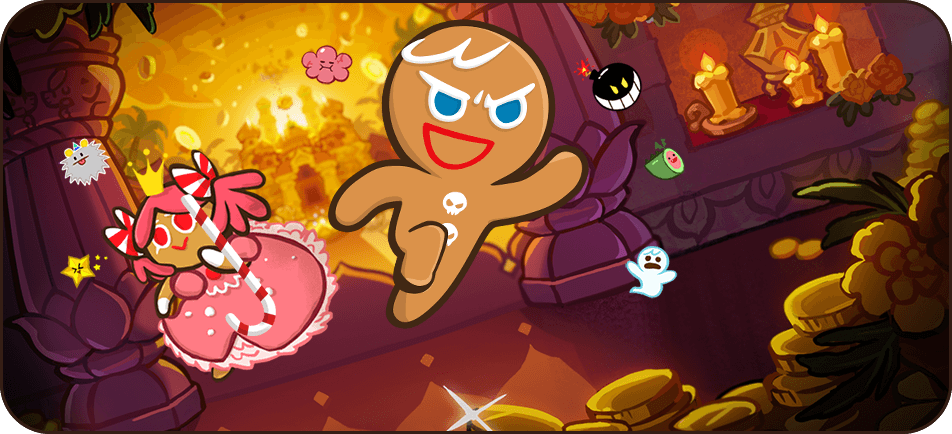
Together, they explored local culture and created characters like Gulab Jamun and Kaju Katli for the game. “These additions fit seamlessly into the game,” he explained.
Surprises In the Indian Market
India, Minu admitted, has constantly surprised him. The rapid growth of tier-2 and tier-3 city gamers, the youthful passion for esports, and the social way games are consumed all stood out. “The most important part is the rapid growth and the young and passionate users and the way they consume games. All are quite surprising for me,” he said. “The Indian gaming industry has been expanding significantly year after year. In particular, we are observing huge growth of gamers in tier 2 and tier 3 cities. It is truly remarkable. I think this is clear evidence of the strong potential of the Indian gaming industry.”
“Another important thing is young and passionate users. When you attend a BGMI (Battlegrounds Mobile India) Esports event in person, you will feel the strong and interesting passion of users. It gave us a feeling that it’s not just a game, it’s more than just a game,” Minu added.
Minu further explained how the consumption behavior of Indian gamers is different from Korean gamers. “The way they consume games is totally interesting. Usually in Korea, people play the BGMI to win. But here in India, of course they want to win the game, but they focus more on relaxing and having a conversation with their friends. They consume the game as a kind of social media. That was quite an interesting part for me”, he said.
Challenges Unique to India
Despite the potential, India comes with its own hurdles. When asked about challenges faced in the Indian industry, Minu was quick to highlight the infrastructure-related challenges. “Because BGMI is developed on Unreal Engine, it requires high-spec devices. But many young gamers in India still use low-end phones, as parents don’t buy premium devices for them. This makes smooth gameplay difficult. In addition, the network infrastructure isn’t yet fully prepared to handle growing demand, which creates obstacles in delivering an optimal gaming experience,” Minu explained.
Managing Krafton’s Diverse Portfolio
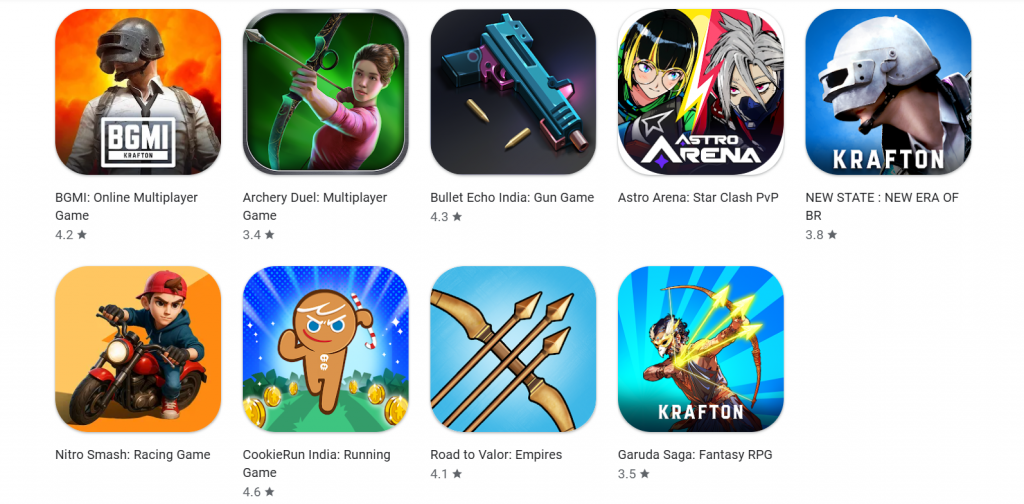
Krafton today manages a diverse mix of genres in India; battle royale with BGMI, casual with Cookie Run India, and strategy with Road to Valor: Empires. But rather than seeing overlap, Minu sees opportunity. “Each title targets a different audience and has its own objectives. They complement each other, and managing multiple genres actually gives us more insight into Indian players. Our goal is not just to be the publisher of BGMI, but to become a leading gaming company in India. Releasing a wide variety of games is critical for that, and we’ll continue to introduce more going forward.”
What’s Next for Indian Players
Without revealing too much, Minu hinted at what’s to come. “We’re focusing on genres that strengthen social play and community experience. Games will be fun, fit, and accessible, with multiplayer at the core.”
Supporting Local Developers Through KRAFTON India Gaming Incubator (KIGI)
Krafton is also investing in the Krafton Gaming Incubator (KIGI), aimed at nurturing Indian talent. “Indian developers can bring unique cultural perspectives and fresh ideas. Our vision is to develop great games in India and export them to the world. That’s why I look forward to excellent games emerging from KIGI and publishing them under the Krafton name.”
The Power of Community Feedback
The Indian community is famously vocal, and Krafton sees that as an advantage. “Feedback from the Indian gamers can sometimes be very harsh. But if you read and listen carefully about the feedback from the Indian viewers, I can easily realize that the feedback mainly came from affection and passion. If they didn’t care, they wouldn’t complain. That’s why we monitor feedback closely and incorporate it as much as possible. In fact, the gaming community is our true core development partner.”
Minu also shed light on how Krafton is leveraging feedback to improve the game and user experience. “For BGMI, for every update, we run a massive scale of user surveys and more than 200,000 users reply to that survey. We can learn many things from those kinds of surveys. Along with this, we are also focus groups trying to host focus group interviews to understand the more underlying demands or needs or difficulty users are facing.”
Krafton’s Goals For 2026 And Beyond
Looking ahead, Minu’s vision is for Krafton to be recognized not just as a publisher, but as a partner in India’s gaming ecosystem. “Sustaining BGMI’s growth is important, but another key goal is to work with local developers to create globally successful games from India. I recently set up a team for this initiative, and we’ve already started investing in it.”
Minu’s Advice for aspiring publishers in India
For aspiring game publishers, Minu emphasized that succeeding in India requires far more than just following global playbooks. “It’s very important to truly understand the market and the users. India is not a single, uniform market. Each region and state has its own unique preferences. If you approach India as one homogeneous market, it’s very difficult to succeed. I often explain to my team in Korea and HQ that they should think of India like Europe. Just as each European country has its own tastes and culture.”
Understanding India’s young and passionate users is equally vital. “They see games as social media. Publishers need to create opportunities to meet players directly, listen to their needs, and understand their pain points.”
Flexibility, he stressed, is another cornerstone. “India is one of the fastest growing markets, and everything here changes at a rapid pace. Regulations, payment systems, platform environments, even art and genre preferences evolve quickly. For example, Indian players previously preferred realistic art styles, but now they are embracing anime-style characters. If an organization just sticks to previous experience, it will struggle to succeed. Agility and adaptability are essential.”
Finally, Minu underscored the importance of building strong networks. “It is extremely difficult for a publisher to succeed in India alone. You need to collaborate with key partners like platform providers, payment solution companies, and adjacent industries. Building a strong business development team, forging partnerships, and nurturing those relationships is one of the key success factors for publishing in India.”
Also read: Inside BGMI 4.0: Interview with Karan Gaikwad, Lead of Product Team, KRAFTON India
Minu Lee’s words reveal the scale of Krafton’s ambition in India: an investment-driven, community-focused, and deeply localized approach that sees India not just as a market, but as the future of global gaming.