

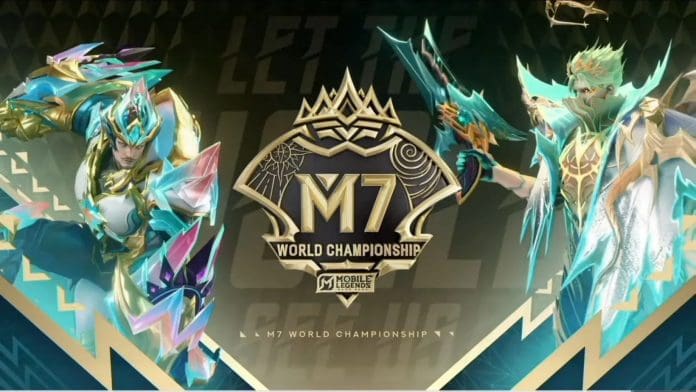

Since its inception in 2019, the Mobile Legends: Bang Bang World Championship, commonly called the M Series, has evolved into the pinnacle of competitive mobile gaming.
Organized by Moonton, this annual global tournament brings together top teams from across Southeast Asia, Europe, and beyond to compete for the title of world champion.
From a modest starting roster in M1 to over 22 teams by M6 and M7, the championship has grown not just in size but also in prestige, prize pools, and international viewership.
The first edition, M1 in Kuala Lumpur, featured 16 teams and a traditional group-to-playoff format, with EVOS Legends of Indonesia claiming the inaugural crown. Prize money then was $250,000, a substantial sum at the time for mobile esports.
At M2 (2021) in Singapore, the Philippines entered the global stage with a bang, as Bren Esports became the first Filipino team to capture the world title, beginning a streak that has defined the M Series ever since.
Over the next editions, prize pools swelled to $1 million for M6 and M7, while peak concurrent viewership jumped to over 5.6 million, cementing Mobile Legends Worlds as a marquee esports event.
The rapid growth in audience numbers also reflects the increasing accessibility of esports streaming platforms, which allow fans from multiple regions to watch games live in high quality.
The Filipino Dynasty
Since M2, Filipino teams have dominated every world championship, creating an unmatched legacy of consistency and skill. Each team brought its own flavor to the global stage:
- Bren / AP.Bren: Champions of M2 and M5, Bren set the standard for Filipino excellence. M5 was especially memorable, with the team clinching the title on home soil in Manila amidst roaring crowds. Their roster demonstrated remarkable synergy and adaptability, often making clutch plays in high-pressure moments.
- Blacklist International: M3 champions, renowned for innovative team-fighting strategies, they elevated Filipino play to a meta-defining level. Their disciplined rotations and ability to control objectives consistently put opponents on the back foot.
- ECHO Philippines: M4 winners, their 4–0 sweep of the finals showcased the depth of talent beyond established stars. The team’s success highlighted how emerging talents could quickly adapt to world-stage pressure while introducing new strategies to surprise veteran teams.
- Fnatic ONIC Philippines: M6 winners, combining veteran experience and strategic draft mastery to extend the Filipino streak. They were praised for their composure in the long series and for successfully integrating new players into a championship-winning lineup.
- Aurora Gaming: M7 champions, the latest example of fresh talent blending with seasoned players to continue the dynasty. Aurora’s decisive victories reinforced the Philippines’ reputation as the global standard for Mobile Legends competitive play.
This dominance stems not just from raw skill but from a strong local ecosystem.
The Mobile Legends Professional League Philippines (MPL PH) consistently produces world-class talent, while the country’s cultural embrace of mobile games provides the fanbase, sponsorship, and competitive spirit for teams to thrive.
Local training programs, coaching staff, and scrimmage networks further ensure that players are prepared for the international stage, creating a continuous pipeline of champions.
Growth of the Competition
Over the years, the World Championship has evolved to include a wildcard stage, Swiss-stage groupings, and double-elimination playoffs, giving more teams multiple paths to success.
The tournament also expanded geographically, from Kuala Lumpur to Singapore, Jakarta, Manila, and, for M8, the upcoming Istanbul, reflecting the global popularity of the game.
These format changes have increased competitiveness, ensuring that every match has high stakes and that even wildcard teams can make deep runs into the Main Stage.
Prize pools rose alongside the tournament’s prestige, from $250,000 in M1 to $1 million by M6 and M7, while record viewership figures, peaking at 5.68 million during M7, show the competition’s massive reach.
Streaming numbers, fan engagement on social media, and international media coverage all demonstrate that Mobile Legends has become a global phenomenon.
The growing global audience is a testament not only to the game’s accessibility but also to the skill, passion, and strategy that teams bring to the table, with meta shifts and strategic innovation keeping the competition exciting year after year.
Filipino Gaming Culture
Filipino dominance in esports isn’t accidental. Strong local leagues, a culture that celebrates mobile gaming, and a history of learning from each championship have created a pipeline of disciplined, high-level competitors.
The Philippines has turned Mobile Legends Worlds into a national stage, producing legendary moments year after year.
It’s also worth noting na ang tongits ay isa sa pinakasikat na card game, a game widely played socially. This popularity highlights how deeply the love for strategy and social interaction is embedded in Filipino culture.
While Tongits is not connected to esports, its wide appeal demonstrates the same playful competitive spirit that fuels pro tournaments, showing that Filipinos enjoy testing their skills both casually with friends and professionally on the global stage.
It also reinforces how gaming in the Philippines is both a social pastime and a platform for honing focus, patience, and decision-making.
Plus, have you seen them in basketball? Not the best, but, by god, are they passionate.
History Tells Us the Future
From M1 to M7, the Mobile Legends World Championship has grown into a global esports spectacle, while the Philippines has emerged as an unmatched powerhouse.
Teams like Bren, Blacklist International, ECHO, Fnatic ONIC, and Aurora Gaming have built a legacy of dominance, proving that Filipino strategy, teamwork, and competitive spirit shine on the world stage.
At the same time, games like Tongits remain a popular pastime, highlighting how Filipinos embrace competition in both casual and professional arenas alike.
This combination of passion, talent, and cultural enthusiasm continues to define the Philippines as a leading nation in the world of competitive gaming.
