
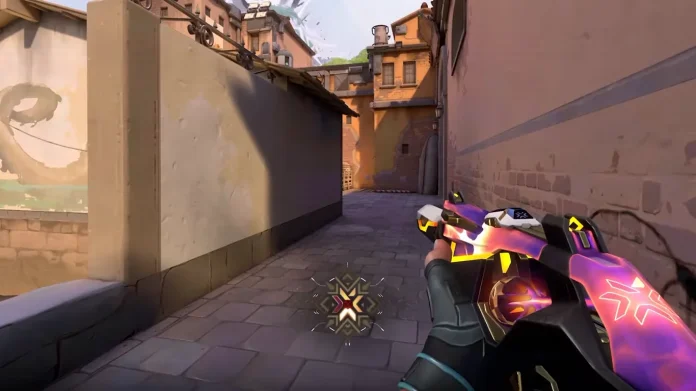

Valorant was designed with a 16:9 aspect ratio in mind, but the community has never received that memo. From CS pros to ranked players, stretched resolutions are still one of the hottest contested edges of Riot’s tac-shooter – and you can still play this way in 2026 without worrying about a ban in casual play.
Stretched resolutions (usually 4:3, such as 1280×960 or 1024×768) give the impression of wider character models on your screen. This is often preferred by players who feel it is easier to track and micro-manage, especially if they have experience playing CS with years of muscle memory on a stretched resolution. You’ll give up horizontal FOV and image quality for the illusion of “bigger targets” and a slight FPS increase.
How to Play Valorant in Stretched Resolution?
- Create a custom resolution in your GPU panel.
- Force the image to fill the screen.
- Match it in Valorant.
In-game, go to Settings → Video → General, select the same resolution and set Aspect Ratio to Fill, then apply. If your desktop and GPU scaling are configured correctly, Valorant will now appear stretched.
Optimal Stretched Resolutions for Valorant
If you’re unsure about which resolution to choose, here are a few commonly used ones:
- 1600×900
- 1440×1080
- 1280×960
The 1440×1080 resolution is particularly popular as it doesn’t overly pixelate the game on high-res monitors.
The decision to use stretched resolution ultimately depends on your personal preferences and needs. While it can offer higher FPS, lower input lag, and a larger crosshair, it doesn’t provide a competitive advantage. The models’ proportions, crosshair, and environment remain the same as with the native resolution.
