

Counter-Strike has forever required the quickest reflexes, the best aim, and the most cerebral strategy. In Counter-Strike 2 (CS2), though, an age-old controversy flared again with a ferocity never seen before: Peeker’s advantage. What had been a niche netcode idiosyncrasy is now the focal point of rage, pro-tier debate, and demands for structural re-engineering.
This article examines why Peekers’ advantage is significantly more painful in CS2, drawing on hard numbers, technical specifications, and personal experience to identify what’s broken and what could be improved.
What Is Peeker’s Advantage?
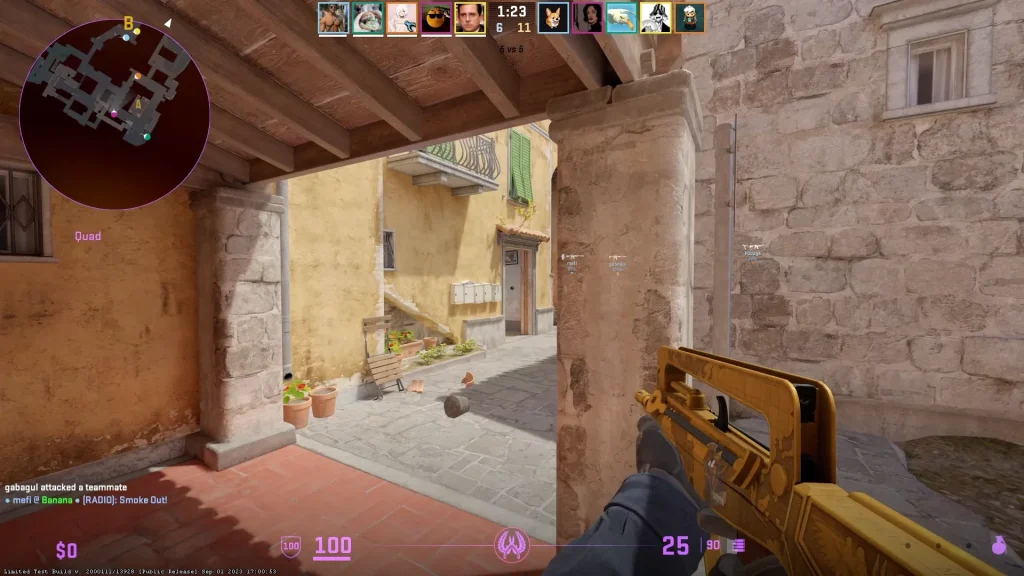
Fundamentally, Peekers’ benefit is a result of the way information moves on the internet. When two players confront each other, one in possession of an angle, the other swinging out to the moving player (the “peeker”) will usually see the defender a fraction of a second earlier before being seen in return. This split-second advantage occurs due to the inherent lag of networked play – latency, data packet journeying, and server response. During the heat of combat, it can be the difference between a clutch-kill and an instant death.
But in CS2, however, this advantage doesn’t just exist, it overwhelms, and not in a manner that feels like a reward for skill. Instead, all ranks have generally indicated that defending in CS2 feels like an exercise in futility; holding angles or “anchoring sites” is severely punished, even for the best prepared.
The New Netcode: Hope, Hype, and Harsh Reality
Valve introduced CS2 with the promise of a netcode revolution. The traditional tick-based update scheme was replaced with a new sub-tick architecture. It was intended to remove the so-called “odd tick,” a kind of technical glitch that could slow down or make certain actions less reliable. Rather, the server would now handle movements, shots, and interactions in “real-time,” essentially introducing parity between the peeker and the defender.
However, as the community soon found out, this improvement introduced a new generation of inconsistencies and lag-induced inequalities:
- Sub-tick mechanics do not provide for instantaneous communication. Players continue to suffer from delays based on their ping, packet loss, and the fluctuations of their internet route.
- Ping is king: In CS2, the delay between interactions is dependent on both players’ pings. Practically speaking, this results in having your opponent with a high ping, and you get sucked into their “lag world”, experience delays, and occasionally you die before you even catch sight of the enemy model.
Ping vs. Experience in CS2
| Ping | Experience |
|---|---|
| <30ms | “Perfect”; minimal peeker’s advantage |
| 30–60ms | Excellent; slight but fair delays |
| 60–100ms | Playable, delays noticeable, peeker’s advantage grows |
| 100–150ms | Problems are evident, and unfair fights are common |
| >150ms | Strong lag, severe peeker’s advantage |
What was supposed to be an equalizer has become a new fault line for inequality in every match you play.
The most significant effect of SMGA is perhaps felt within CS2’s strategy and game meta. In all of Counter-Strike’s rich history, having angles and holding out for an enemy to step over your crosshair was a discipline-based, map-reader, patience-oriented skill. In CS2, it gets rewarded. The peeker, fueled by systemic lag and at times erratic hit registration, can swing out and get the kill before defenders have time to realize what’s occurring.
The Birth of the Movement Meta
With static defense demoted by the rules of internet packets and code, players have adapted out of necessity. The “jiggle peek,” a rapid left-right movement to bait out shots or information, has become a core mechanic, not just a tactical flourish.
- Passive playstyles are dead: Holding a tight angle increases your vulnerability; the game’s very architecture gives the edge to whoever moves first.
- Aggression is all: The netcode change has shifted the meta to hyper-aggressive, unpredictable swings. This lowers the skill ceiling for site-holding, a core component of CS identity.
Technical Problems Outside of Ping
Peeker’s strength in CS2 doesn’t happen in a vacuum; its frustration arises from technical issues elsewhere:
- Hitbox and animation desync: The player’s “hitbox,” the area that detects a bullet hit, has been found by community-tested research to not always overlap precisely with the model viewed by opponents. Crouching, sudden leaning, or exotic movement (erratic strafing) will have the defendable model lagging, or shots that fail to land even after correction. Valve has fixed some of these, but not all.
- Packet loss and choke: Monitoring the network in CS2 (through net_graph) often reveals bursts of packet loss, where data just doesn’t get to the server. Each lost packet can lead to a brief freeze or stutter, which affords the moving and shooting player yet another advantage.
Can Peeker’s Advantage Be Mitigated?
True fairness is a fantasy, but pragmatic measures can reduce the hurt. Selecting local servers, playing with wire, and closing extraneous internet use can move experiences back into the “<60ms ideal.”
The net graph in-game is your ally. Look for packet loss or choke (above 1% is a warning sign) and fix router or connection problems. Get on board with the new meta jiggle peeking, uncertainty, and aggro. Nature punishes hesitation, not only opponents. The clearer Valve is about netcode updates and how they affect things, the better the community can adjust, provide feedback, and develop new solutions.
CS2 In the World of Today’s Shooters
Peeker’s edge is not unique to CS2. Other tactical shooters VALORANT, Rainbow Six Siege, and even Call of Duty, struggle with the same challenges. But within the world of Counter-Strike, where millisecond accuracy is critical, the stakes and emotions are higher.
In VALORANT, such defender disadvantages have pushed the meta in that direction, but Riot’s quick patch cycles and increased transparency with ping and network software have mitigated the backlash. Rainbow Six developers noted peeker’s advantage as an intrinsic part of online play, proposing server optimizations and player awareness as stopgaps. Nonetheless, no other franchise has the legacy or such lofty player expectations for fairness that Counter-Strike does.
Verdict
For the time being, Peekers’ edge persists as a sour fact, but one that has CS2 gamers united in a peculiarly shared battle. Reddit forums seethe, pro games hinge on lightning-fast peeks, and all clutch play is analyzed not only for mechanical mastery, but for potential errors within the code.
Can things improve? Optimists hold out hope that Valve’s sub-tick system, if adequately polished, could one day live up to its initial promise. Realists argue that the physical realities of the internet, the variability of gaming hardware, and the heterogeneity of worldwide player connections ensure that unfair deaths are always in the mix.