

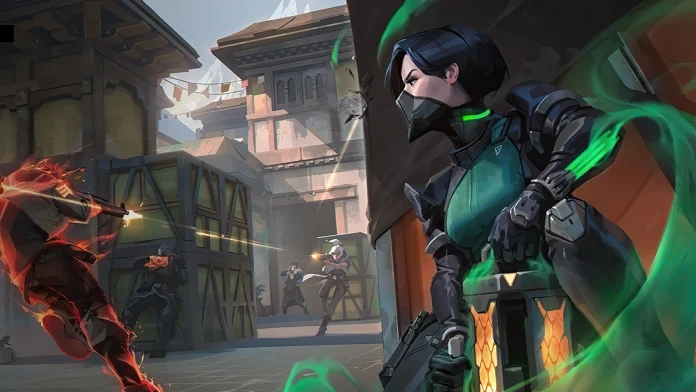
In Valorant, regardless of how good your aim is or how high your rank may be, there are times when you’ll find yourself losing gunfights to bronze players or failing to hold your site against a well-coordinated execute by lower-ranked opponents.
Contrary to other tactical shooters like Counter-Strike 2, it’s not uncommon to see raw mechanical aim taking a backseat when it comes to winning rounds in Valorant, while factors like ability usage, game sense, and team synergy often reign supreme.
As a result, even the finest aimers can find themselves struggling to climb up the ranked ladder of the Riot Games title, while others with minimal experience in the genre can reach Immortal through dedicated practice and a good grasp of the fundamentals.
While mechanical skill is, without a doubt, a crucial aspect to master in Valorant, it is still far from the only ingredient for success. As we have already discussed in our prior articles, Valorant heavily rewards strategy, teamwork, and decision-making, rather than forcing players to rely solely on mechanical skill and aim.
Before we delve further into the topic, it’s important to mention what typically constitutes mechanical skill. Mechanical skill in Valorant, and FPS games in general, usually refers to a player’s raw technical ability with the mouse and the keyboard. This includes factors like aiming, flicks, tracking, crosshair placement, reaction time, and even movement to an extent.
With that being said, let’s check out why a high mechanical skill won’t always translate to success in Valorant.
Valorant’s Unique Design
As we mentioned earlier, Valorant distinguishes itself from the typical tactical shooters by incorporating elements of hero shooters into its gameplay. It feels like a blend of Counter-Strike 2 and Overwatch 2, where you need not only raw aim, but also mastery of your Agent’s kit to perform well.
In fact, in many cases, utilities like flashes, smokes, and walls can often nullify any raw aim advantage that a player may have against another. A well-placed Raze nade, Yoru flash, or a Breach stun onto a couple of enemies can easily net you a few free kills even if you have subpar aim.
This kind of “killer utility” is often complemented greatly by the information-gathering abilities of Initiators. While a Sova drone or a Skye dog can’t directly eliminate enemies, combining them with aggressive utility often puts your team at a significant early-round advantage by revealing enemy positions or forcing them out of cover.
The Skill Gap Isn’t Just Mechanical
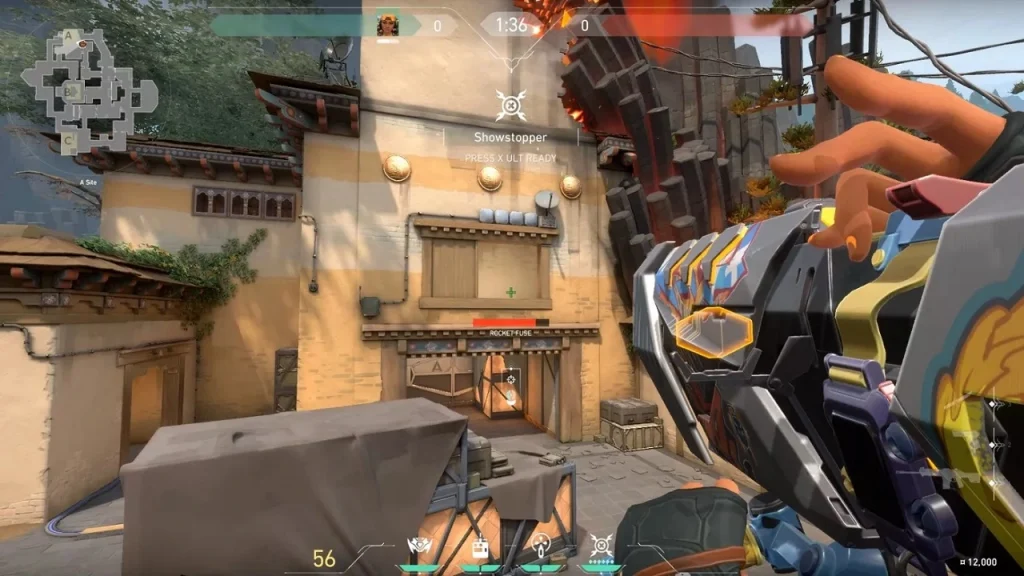
There’s no doubt that mechanical skills play a huge role in individual performance and clutch situations, but in a game like Valorant, they’re only one piece of the puzzle. The skill gap in Valorant isn’t just mechanical — far from it. It’s shaped by a player’s ability to read the game, strategize effectively with their teammates, understand the game’s economy, and make smart decisions under pressure, all of which can easily outweigh raw aim in most situations.
Game sense, which can be gathered by simply playing Valorant and putting conscious effort, can help you read enemy rotations, time your pushes, lurk effectively, or bait out early utility.
Being able to strategize with your teammates is also crucial, and it includes picking the right Agent comps, communicating effectively, and coordinating executes and retakes.
Lastly, an economic understanding of the game is a must if you’re looking to climb the ranked ladder of Valorant. You have to know when to go on a full-eco, when to force-buy despite being on an economic disadvantage, when to commit to a full-buy, and relay the same to your team.
All of these factors, alongside numerous others, can not only help you compensate for having a bad aim but also give you a consistent edge over mechanically superior players.
The Overemphasis on Aim in the Community
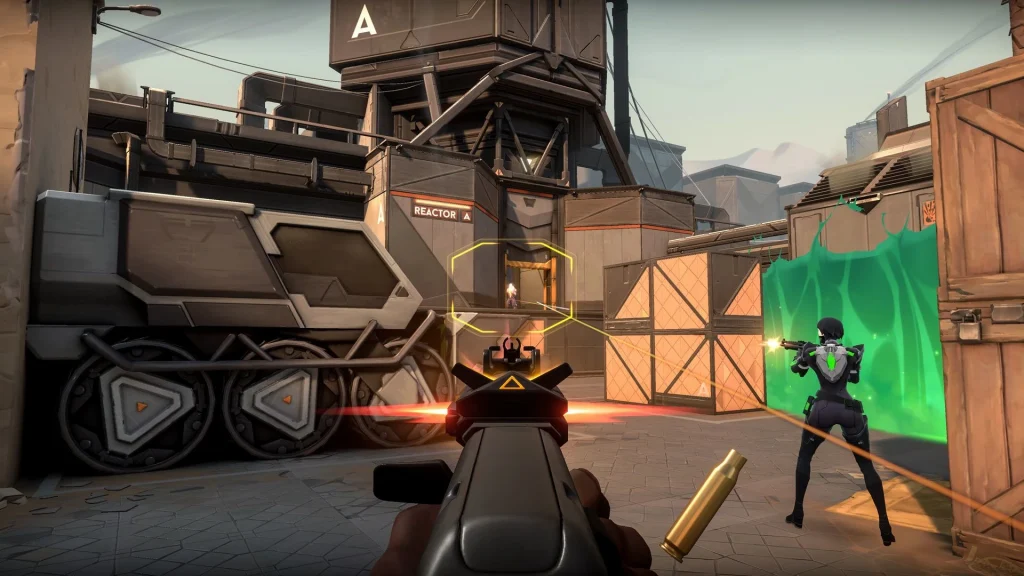
Take a few minutes to scroll through a Valorant community on any social media of your choice, and you’ll be able to see just how much emphasis is placed on raw aim rather than other aspects of the game.
The highlight-reel culture of platforms like Twitch and YouTube places an early misconception among newer players that flashy aim and 1v5 clutches are the key to climbing ranks, even though that couldn’t be farther from the truth.
As a result, players often get hyperfixated on improving their aim that they often tend to ignore other skills that are less flashy, yet far more important to have compared to their mechanics. It’s not uncommon for players to spend hundreds, if not thousands of hours, in third-party aim trainers trying to beat their personal best score, only to find out that the improvement doesn’t translate to success in actual ranked games.
In a tactical FPS like Valorant, precise tracking and flashy flicks can only get you so far if you lack a fundamental understanding of how each round plays out. A cracked Reyna means little without proper setup from a smart Initiator or Controller, which becomes increasingly apparent as you reach the higher ranks.
The Reality of Ranked
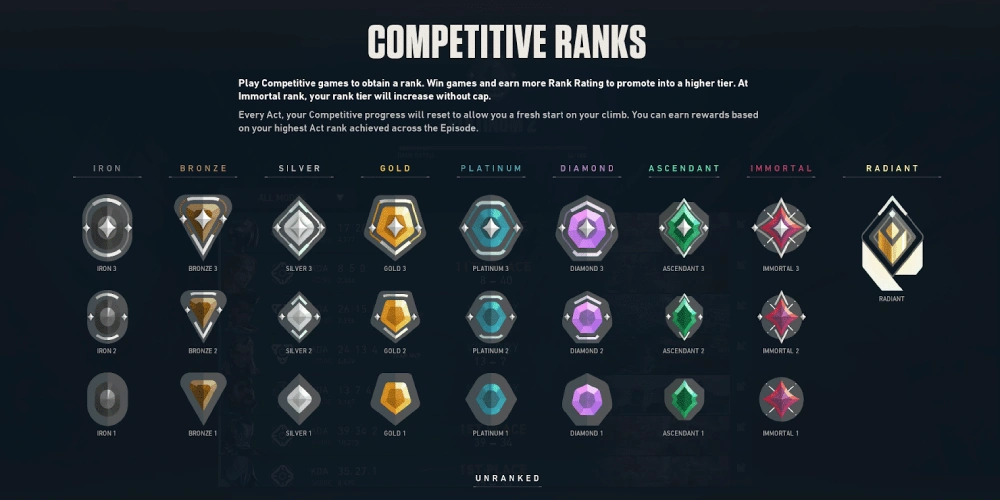
As we’ve already talked about earlier, having a good aim is important if you’re looking to climb the ranked ladder in Valorant. However, you don’t need to be the best aimer if you have a strong grasp on the fundamentals.
While pros like Tyson “TenZ” Ngo and Adil “ScreaM” Benrlitom are renowned for their flashy 1-taps and mechanical skills, others like Pujan “FNS” Mehta and Gustavo “Sacy” Ross aren’t necessarily aim gods, but have made a name for themselves due to their leadership skills or macro plays.
In your ranked games, top-fragging Duelists with 25+ kills can easily cost you games if they’re tunnel visioned or hyper-focused on chasing kills, while a Breach with 8 kills can also have more impact with well-placed stuns and flashes.
If you’re constantly fixated on topping the scoreboard, you’ll eventually find yourself losing games you should’ve won and blaming your teammates, rather than recognizing the importance of playing for the team.
What Actually Wins Valorant Games
So, if aim training won’t get you to Immortal, what will? What actually wins your ranked Valorant games if it’s not just the Reyna dropping 25 kills?
Valorant is an incredibly complex game, and if you’re serious about improving, there are numerous factors to keep track of beyond just your aim. But when you shift your focus away from pure mechanical skill, the three key pillars that you should primarily focus on are teamwork, adaptability, and the mental game.
Being a 5v5 shooter, being able to work alongside your team is absolutely crucial if you’re aiming for the higher ranks in Valorant. You’ll need to communicate with your teammates to find the right team comps on each map, rally information effectively, and make coordinated plays when trying to take control of an important choke point. Make it a habit to call out enemy positions as soon as you spot them, announce your utility usage before entering a site, and formulate strategies for eco/force-buy rounds.
Adaptability is a vital part of mastering any tactical shooter, but in a game like Valorant, where Agent comps and strategies are constantly changing, it’s more important than ever. You have to focus on adjusting your gameplay based on the tempo of any given round, while trying to read your enemies’ positioning based on whatever information you have available. Opponent playstyles can also vary drastically depending on their team comp, so being able to shift your approach on the fly is key to staying one step ahead.
Apart from the ongoing mechanical battle, there’s also a constant mental game playing out in every match of Valorant. Learning how not to get tilted despite the situation, staying calm and composed during clutches, and trying to get in your enemies’ heads to figure out their tactics are all crucial parts of mastering it.
Final Thoughts
In Valorant, even the sharpest aim can’t hit what the brain doesn’t see coming. No matter how high your mechanical skill is, you’ll eventually hit a plateau where your lack of understanding of the game’s finer mechanics will hold you back.
Does that mean you should stop grinding your aim?
Absolutely not. As we’ve mentioned multiple times in this article, aim is undoubtedly a crucial part of improving your rank. However, you’ll have to grind the other aspects that we’ve mentioned just as hard.
Work on your decision-making, communication, and game knowledge. Analyze your replays and actively look for mistakes you’re making in the heat of battle. Focus on fixing one issue at a time, and sooner or later, you’ll find yourself rapidly climbing the ranked ladder and getting closer to your dream rank in Valorant.