

Counter-Strike 2’s inaugural year has demonstrated a disturbing trend. As Valve makes record revenue from the game’s monetization tools, the underlying player experience remains in decline. With more than $1 billion taken in from case openings in 2023 alone and March 2025 pulling in over $100 million from loot boxes, Valve’s attention seems strictly on profit maximization instead of pushing to solve core gameplay issues that have lost the game 36% of players since its zenith.
The Billion-Dollar Case Opening Machine
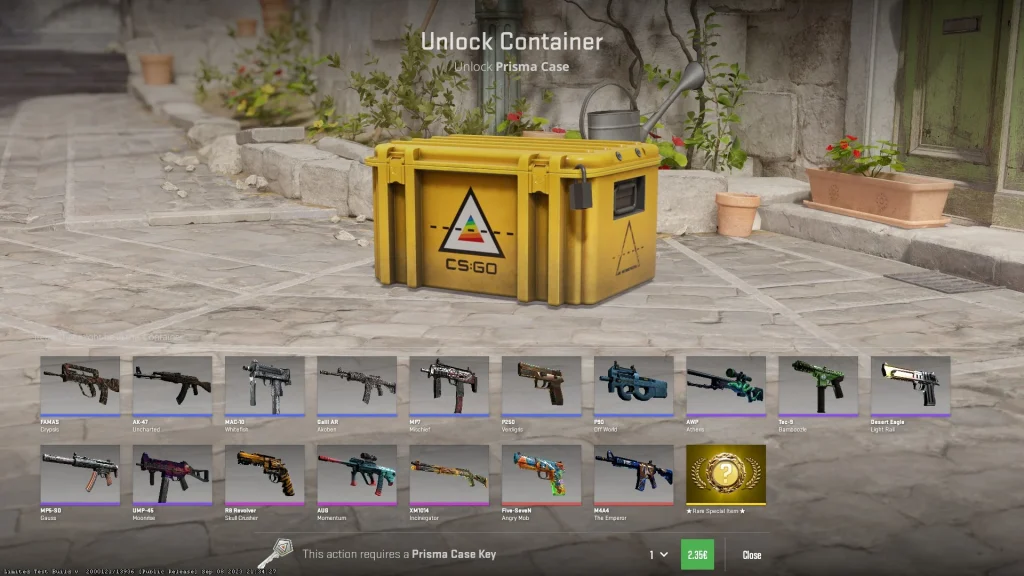
The figures behind Counter-Strike 2‘s monetization show the enormity of Valve’s revenue generation. In 2023 alone, players cracked an incredible 400,318,821 cases at about 12 per second globally. Each case costs a $2.50 key, resulting in over a billion dollars in direct key sales alone. The number is even more astounding when other revenue sources are taken into account.
March 2025 was no exception, with more than 32 million cases opened by players, and netting the company nearly $82 million just on key sales. When Steam’s marketplace transaction fees and various other miscellaneous expenses are factored into the calculation, Valve’s overall profits from case-related activities exceeded $100 million for the month alone.
The Steam Community Market also increases these gains through its two-tiered fee system. Valve takes a 5% “Steam Transaction Fee” and a separate 10% “game-specific fee” for Counter-Strike merchandise, making a total of 15% commission on all marketplace trades. This setup makes Valve gain not just from the initial opening of the case but from all the trades that follow, generating a constant revenue stream from the same virtual good.
The skin economy on CS2 has increased to historic highs, with the market boasting a record April 2025 market cap of $4.5 billion. The Dreams & Nightmares Case alone represented 13% of all case openings during 2023, netting out approximately $126 million in expenditure while only returning $39 million in skins to players. This 31% return rate underscores the lottery-like system, wherein the house wins every time.
Player Experience Takes a Backseat
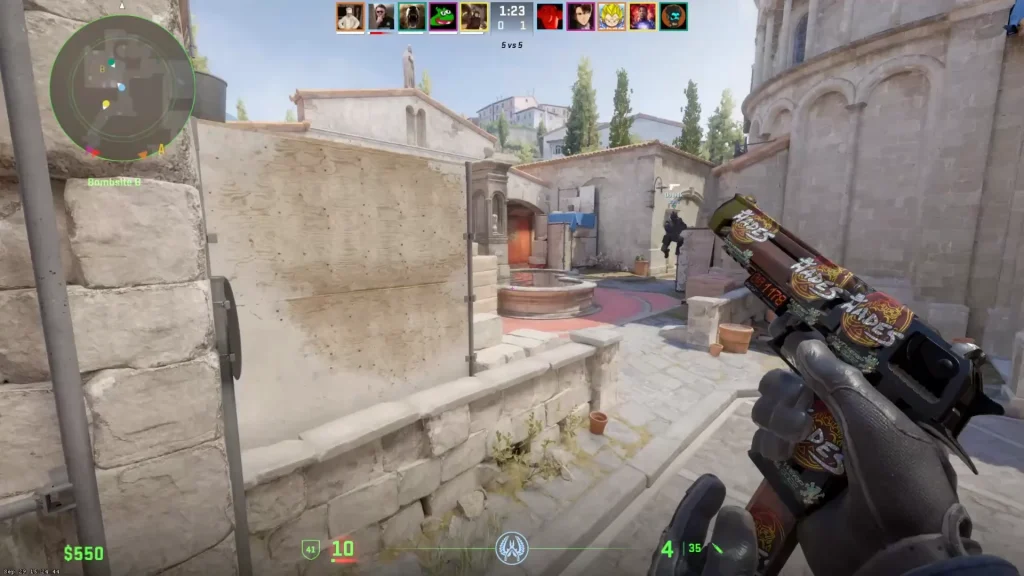
As Valve’s profits boom, the gaming experience itself has taken a great hit. Counter-Strike 2’s average player count has dropped 36% from its all-time high, a drop during a time that saw continued technical problems and the absence of substantial content improvements. The optimization of the game is still an issue, with players noting that even top-of-the-line hardware configurations can’t maintain steady performance.
The technical failings are especially lamentable considering Valve’s enormous profit margins. Frame time woes beleaguer the game, with CS2 having the worst frame time of 6 milliseconds of all existing FPS games, against Valorant’s 2-3 milliseconds. Competitive players have publicly decried these technical failures in interviews, detailing how the game handles less responsively than the previous iteration.
Map optimization problems continue a year since launch, with Ancient’s water areas still recording severe FPS drops that can gain competitive perks through movement, indicating the presence of the enemy. Such basic issues imply a development team more interested in monetization functions over basic gameplay stability.
The frustration of the community goes beyond the technical. Updates recently have been focused on cosmetic additions and monetization adjustments, leaving anti-cheat issues behind. Players are reporting hackers in roughly a third of Premier matches. The ratio is an erosion of competitive integrity that directly harms the player experience Valve purportedly values.
Ethical and Regulatory Issues
The gambling-like aspects of CS2’s monetization have received a lot of attention from regulators and child safety activists. Studies presented in scholarly journals show that skin gambling is a strong predictor of problematic gambling in teenagers, with underage players having greater rates of symptoms of gaming disorder.
Recent work by creators such as Coffeezilla has revealed the far-reaching network of rogue gambling sites that take advantage of CS2’s skin economy. Those sites have weak checks on age, and minor players can gamble with their in-game assets. “KYC procedures” are put in place on some sites only when users buy internal money, so children lose their money without being able to use it.
The legal environment is moving against the model of Valve. In December 2023, an Austrian court held that Counter-Strike loot boxes are forms of illegal gambling and directed Valve to reimburse a player more than $15,400. Belgium and the Netherlands already have loot boxes defined as illegal gambling, and other jurisdictions are on the path to follow suit.
Money laundering issues have also been noted, with cyber experts pointing out that valuable CS2 skins present an ideal platform for the legitimation of illicit proceeds. The intangibility of these items, coupled with their high real-world value and limited regulation, presents an environment conducive to financial crimes.
Development Priorities Indicate Profit Focus
Valve’s latest development choices further demonstrate its profit-over-player stance. The business unveiled modifications to creator revenue models that focus on the Armory system as opposed to case drops in the classical sense. This change indicates Valve is transitioning from usable case drops to a grind-heavy system where players must spend more time and possibly more money to gain access to sought-after items.
The absence of significant content improvements is a stark contrast to the persistent evolution of monetization systems. While small gameplay adjustments and community maps occasionally see attention, heavy-hitting features such as operations, new game modes, or in-depth anti-cheat enhancements are missing. This trend indicates development resources being focused on profit-driven features as opposed to player satisfaction.
Communication with the community has also suffered. Valve’s infrequent patches and minimal honesty regarding upcoming plans leave players in the dark regarding the game’s future. In contrast, the company reliably delivers on monetization-focused features, such as new cases, marketplace enhancements, and trading system updates.
Verdict
Valve’s short-term revenue maximization strategy through gambling-like mechanics is an alarming trend in game development. Although the company has made record profits with Counter-Strike 2, this has been at the expense of player satisfaction, competitive integrity, and ethical responsibility.
The current model is unsustainable from both player retention and regulatory perspectives. As more jurisdictions classify loot boxes as gambling and implement age restrictions, Valve faces potential market limitations that could significantly impact revenue. Simultaneously, the declining player base suggests that profit-focused development cannot indefinitely sustain engagement.