

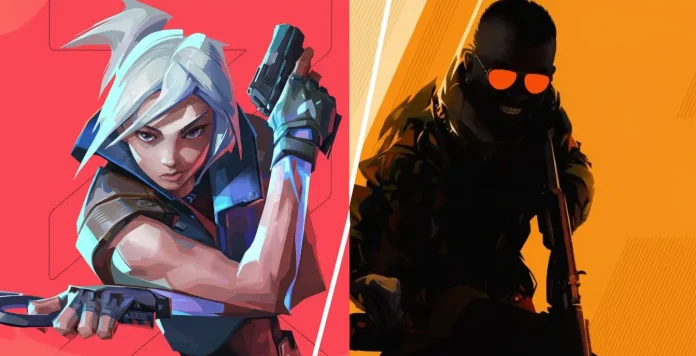
For a long time, Counter-Strike has held a near-monopoly in the competitive shooter genre. For nearly a decade, the Valve title boasted player numbers that no other tactical FPS could come even remotely close to, and featured an esports scene so big that it reshaped perceptions of gaming worldwide.
The release of Riot’s flagship FPS title Valorant in June 2020 marked the first time a game managed to challenge the reign of CS in the genre and lived to tell the tale. Since even before its official launch, Valorant garnered immense hype and anticipation within the gaming community, drawing players from across the competitive shooter landscape with its unique blend of tactical gameplay and Agent abilities.
Around that time, many gamers started picking sides between the two titles, with some claiming that Valorant would be a “CS killer” while others argued that the Riot title would eventually die out over the years as the hype surrounding it faded.
A few years have passed since this rivalry initially began, and since then, both games have carved out their own identities in the landscape. The real debate, however, is no longer about whether the two games can coexist but about supremacy. Which game is currently leading the tactical shooter genre, and what are the factors that have allowed it to pull ahead of the other?
In this article, we’ll take a detailed look at the Valorant vs CS2 debate in 2025 and try to determine which game is objectively coming out on top.
The Legacy of Counter-Strike 2
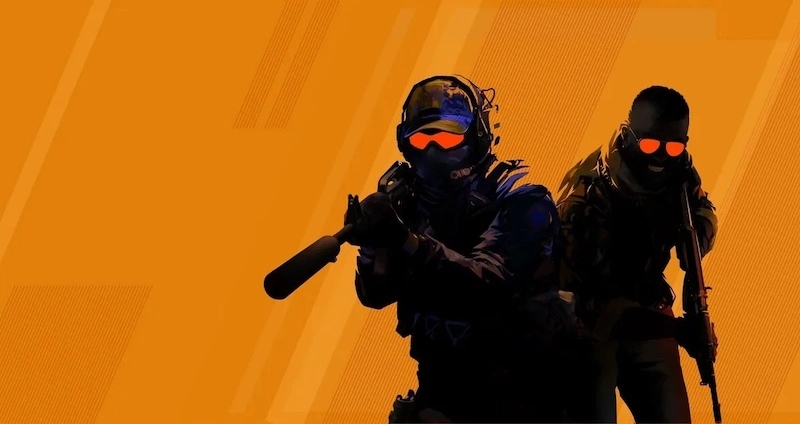
Counter-Strike is a franchise that’s known for its vast legacy and standing the test of time, even after two decades. Originally starting as a mod for Half-Life, CS 1.6 defined the early era of esports and became a household name throughout the world, shaping competitive gaming for years to come.
With the release of CS:GO in 2012, Valve doubled down on the franchise’s strengths and expanded its esports presence to unprecedented heights, building a professional circuit that featured millions of dollars in prize pools, attracted top organizations, packed arenas, and millions of viewers. As a result, it didn’t take long for the popularity of CS:GO to skyrocket, and it soon found itself dominating the world of tactical FPS titles without any notable competition.
Another decade later, in 2023, Valve transitioned the franchise to Counter-Strike 2, marking what many players consider to be the most significant overhaul in the series’ history. Built on the Source 2 engine, CS2 introduced enhanced visuals, reworked game mechanics, and a refreshed competitive framework. While the shift initially got off to a bumpy start, Valve was quick to address the community’s concerns, rolling out frequent updates and fixes that stabilized the game and restored confidence among the player base. Ultimately, the transition proved to be largely successful for the esport, with tournaments, teams, and players embracing the new title and commending the improvements in gameplay and graphics.
Valorant’s Momentum
When Riot Games launched Valorant in 2020, it was clear that the studio wasn’t simply trying to make another shooter, but it was making a direct play for Counter-Strike’s crown. Riot’s initial positioning was smart: blend the precise, tactical gunplay that defined CS with unique Agent abilities inspired by the success of hero shooters like Overwatch. This fusion allowed Valorant to feel familiar enough to attract seasoned CS players while offering fresh mechanics that appealed to a younger, broader audience.
These factors, combined with the aggressive marketing of Riot Games, enabled Valorant to quickly gain momentum and establish itself as a legitimate contender in the competitive shooter genre. Riot’s commitment to consistent updates, rolling out new Agents, maps, balance patches, and limited-time events kept the game feeling fresh over the years. Beyond the game itself, the company also extended Valorant’s presence into a cross-media ecosystem with music, cinematic trailers, and collaborations, which further enabled it to stand out in a crowded market.
Not to mention the strong focus on esports infrastructure. Drawing inspiration from its other popular title, League of Legends, Riot established a franchised league model with a polished broadcast production and top-tier event presentation that made Valorant one of the most professional and viewer-friendly esports to watch.
Now, in 2025, it’s clear that Valorant has matured into a fully realized esport with a dedicated player base, but its fast pace of content releases is also raising new challenges. The question is whether Riot is still innovating in ways that push the genre forward, or if Valorant is beginning to feel the weight of saturation. The answer to that question will define whether its momentum carries it into the next decade or whether it risks plateauing.
Player Base & Community Engagement
Now that we’ve looked at the competitive legacies of both Counter-Strike 2 and Valorant, this might be a good time to shift focus to the raw data about each game’s player base and community engagement.
In terms of sheer player numbers, Counter-Strike 2 has a significant edge over its competitor. According to data from Steam Charts, the Valve shooter sees roughly 1 million players online at any given moment. While Riot does not publicly disclose Valorant’s player numbers, data from the third-party website activeplayer.io indicates the game has roughly 400,000 players online at any given time, less than half of CS2’s concurrent player count.
Regional dominance plays a role in shaping each game’s identity. Counter-Strike maintains its strongest roots in European and South American countries, whereas Valorant has exploded in popularity across North America and Asia, where Riot’s marketing campaigns and esports infrastructure gave the game a massive head start.
The stark contrast of community culture between the two games is also apparent. Due to its realistic, gritty nature, Counter-Strike 2 continues to attract hardcore competitive gamers who value precise gunplay mechanics, strategic play, and the immense tactical depth that the game has to offer. On the other hand, Valorant appeals to a younger and more diverse audience. The unique combination of hero-based abilities, colorful aesthetics, and frequent content updates has helped Valorant cultivate an inclusive community that’s more appealing and welcoming towards the casual player base. Ultimately, it’s safe to say that both communities are thriving, but in very different ways.
Gunplay
Counter-Strike 2 features hardcore, unforgiving gunplay that’s easy to pick up, but extremely difficult to master. Players are given a wide arsenal of weapons to pick from, with each weapon possessing different damage numbers, accurate ranges, and recoil. Every weapon in CS has a unique and fairly consistent spray pattern, mastering which can give you a huge advantage in combat. The game places heavy emphasis on mechanical mastery and muscle memory, rewarding players who put in the time to learn the various weapons that it has to offer.
While Valorant borrows the core elements of Counter-Strike’s gunplay mechanics, it adds its own flair and modern twists to make it more approachable. Each weapon has a rough spray pattern, but these are highly inconsistent, encouraging players to rely on 1-taps and controlled bursts rather than committing to full sprays. This design choice makes kills appear somewhat flashier and reduces the need to master recoil patterns, while still keeping precise aim as the defining skill.
In the end, the gunplay of Counter-Strike 2 and Valorant reflects the core philosophies behind each title. CS2 rewards discipline, recoil control, and muscle memory, staying true to its reputation as the gold standard for precision shooters. Valorant, on the other hand, lowers the barrier to entry with more forgiving mechanics, focusing on clean aim and decision-making rather than spray mastery.
Game Mechanics
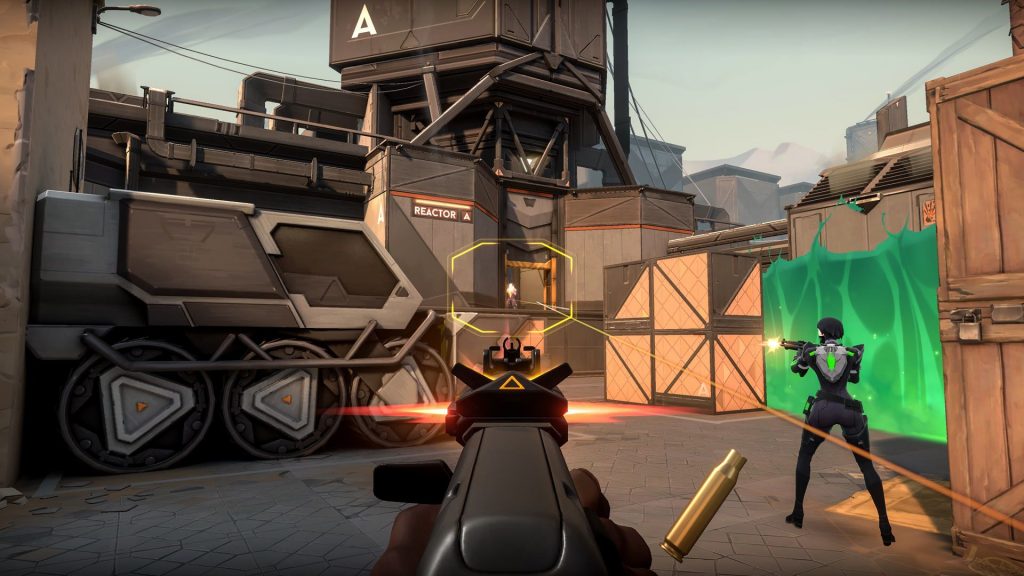
The core gameplay loop of both Counter-Strike and Valorant is built around round-based, attack-versus-defense matches where one side attempts to plant a bomb while the other aims to prevent or defuse it. However, the finer game mechanics of the two games are vastly different.
Counter-Strike 2 is known for its fast-paced gameplay, where sharp aim and split-second decisions often determine the outcome of a round. Player models move faster than in Valorant, making shots much harder to land and equally more satisfying. Although raw aim sits at the core of Counter-Strike 2, utility plays a crucial supporting role, with smokes, flashbangs, grenades, and molotovs often being used to gain a tactical advantage over enemies.
Compared to CS2, Valorant is noticeably slower-paced, with reduced movement speed and more deliberate engagements that make landing headshots on opponents far easier. Instead of relying purely on gunplay, the game’s pace is shaped by Agent abilities, which can act as an alternative to utility to stall pushes, control space, or create openings that wouldn’t be possible in CS2. While the arsenal of weapons in Valorant is a lot smaller compared to CS2, both teams get access to the same gun, making gunfights feel a lot fairer.
Verdict
When evaluating Counter-Strike 2 and Valorant across factors like player base, gunplay mechanics, and overall game design, it becomes clear that Counter-Strike 2 retains the edge in 2025 for competitive FPS players. Its fast-paced, mechanically demanding gameplay, consistent weapon behavior, and long-standing esports infrastructure reward skill and precision in ways that Valorant’s slower, ability-driven mechanics cannot fully replicate. On top of that, the Valve title boasts a thriving skin market possibly worth billions of dollars, which creates an additional layer of engagement and long-term investment for players, collectors, and esports enthusiasts alike.
On the other hand, Valorant excels in factors like accessibility, aesthetics, and an overall broader appeal to newer audiences. While these factors do not necessarily outweigh CS2’s superior depth, consistency, and precise gameplay mechanics, they have allowed the game to maintain a dominant presence not only among casual players but also in the global esports scene, attracting top-tier teams, high-stakes tournaments, and millions of dedicated viewers every year.