


The competitive world of professional Counter-Strike 2 (CS2) esports is one of the toughest in gaming, where incredible skill and unrelenting commitment are required to succeed. In this tough arena, a talented clique of female players has emerged, transcending gender boundaries and redefining excellence in a historically male-dominated space. These players symbolize not only personal success but also the march of competitive gaming towards increasing inclusivity and respect for the talents of all kinds.
The Elite Performers Leading the Charge
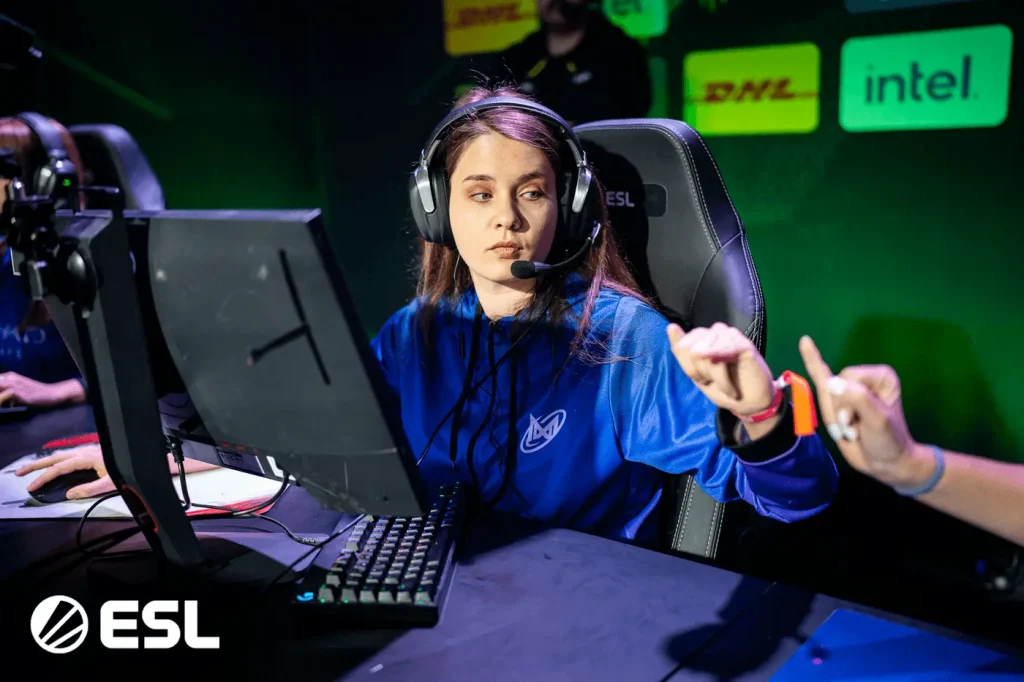
Standing at the top of women’s CS2 play is Ana “ANa” Dumbravă, widely acclaimed as the world’s top female CS2 player. Competing for Imperial Valkyries (previously Nigma Galaxy), ANa has dominated the women’s CS2 scene with impressive mechanical prowess and game knowledge. Her career prize money of about $104,374 speaks volumes about her outstanding performance across several tournaments. What distinguishes ANa is not only her personal skill, but her capacity to perform under pressure while playing for women’s CS2 on the largest stages.
Zainab “zAAz” Turkie is a prime example of longevity and resilience in career esports. Now 34 years of age, this Swedish-Lebanese gamer has been competing since Counter-Strike 1.6, illustrating that age and experience can be a double-edged sword for competitive gaming. Her staggering 55.2% headshot percentage and 1.13 KD ratios are indicative of technical brilliance achieved over two decades of competition. ZAAz’s career spans a transition between generations of women competing in CS2, indicating that long-term success is very much within reach in this highly competitive field.
Alexandra “twenty3” Timonina contributes strategic genius and clutch gameplay to Imperial Valkyries. Her career total of $102,225 places her among the top-paid female CS2 players in the world. What sets twenty3 apart is the mechanical capability to match against male tier-1 teams, as seen during Imperial Valkyries’ landmark showings at top-tier tournaments. Her play is the best example of female players being able to perform at the very pinnacle of CS2.
Rising star Lydia “Fawx” Dalton embodies the future of female CS2. At the age of only 25, she has already proven herself as one of North America’s top female AWPers. Her incredible 1.20 rating is backed by 82.0 ADR, showing the dynamite quality that makes top CS2 play so electrifying. Fawx’s ascension shows how fresh talent continues to reshape the women’s scene.
Brazilian icons Izabella “izaa” Galle and Mariana “LyttleZ” Sabia illustrate the international scope of women’s CS2 greatness. Izaa’s role as captain of FURIA fe, along with her 1.11 KD and 83.0 ADR, illustrates how technical proficiency and tactical sense can exist together at the elite level. LyttleZ’s rapid ascent with Atrix Esports, including a phenomenal 1.24 KD ratio and 82.8 ADR on 104 maps, is the future of South American talent.
Breaking Through the Highest Obstacles
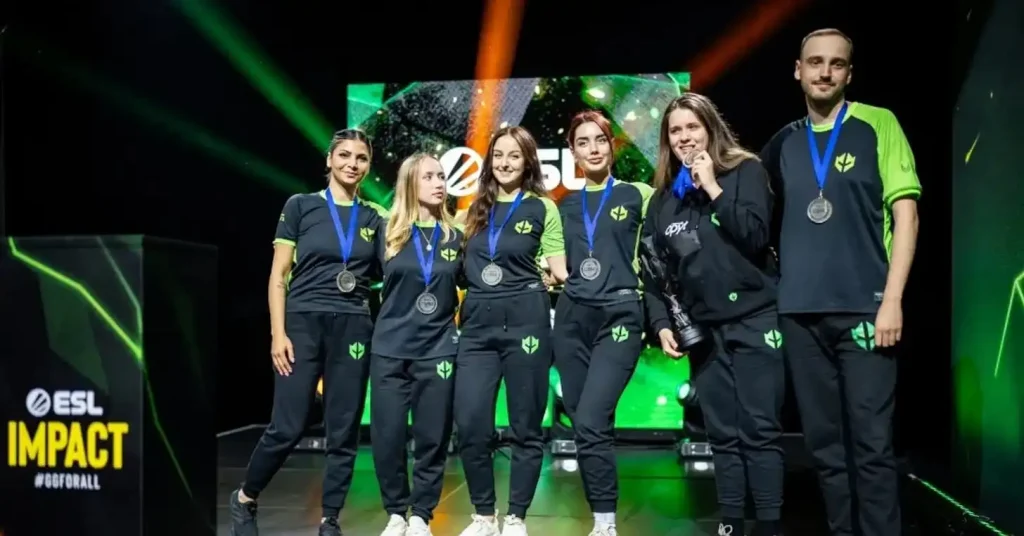
The greatest recent women’s CS2 success occurred in January 2025, when the Imperial Valkyries became the first all-female squad to participate in a tier-1 event since 2014. Their game against NAVI at IEM Katowice 2025 was a turning point for women’s esports. Though they lost 2-0, Imperial Valkyries showed competitive prowess that surprised naysayers and encouraged fans.
This innovation was made possible through Valve’s pioneering ranking system changes, which accord female-exclusive tournaments the same status as open competitions for ranking. Critics say it overinflates rankings, but the system has given unprecedented access to female teams to test themselves against the globe’s top players. Imperial Valkyries’ qualification for BLAST Bounty and IEM Katowice 2025 is a testament to how structural innovations can open doors of opportunity for underrepresented groups to demonstrate their talent.
The historic value is paramount. ZAAz’s inclusion in the 2014 BMG roster and today’s Imperial Valkyries team makes a direct link between periods, representing the continuation and growth of women’s competitive CS2. Her being present in both defining moments signifies the commitment needed to maintain greatness over more than a decade.
Fighting Systemic Challenges
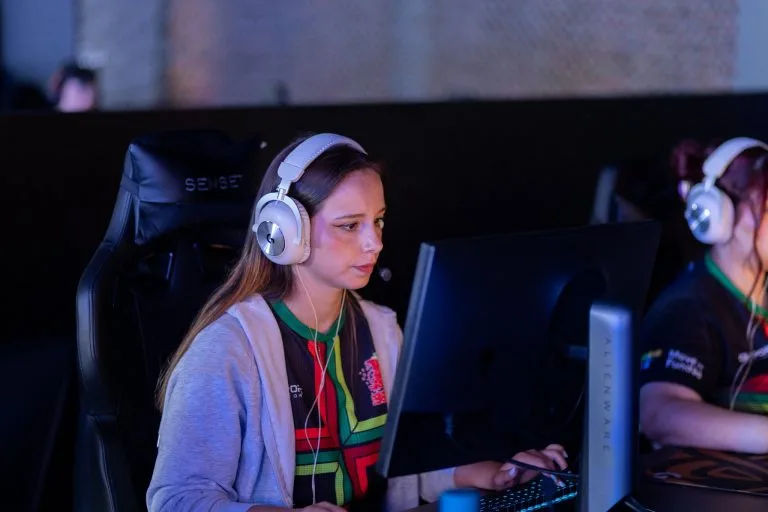
Even with outstanding success, women’s CS2 players encounter challenges differently than their male peers. CS2 pro Ana “Zana” Queiroz previously explained that the hatred and anger towards her simply because of her gender is a reality that affects not just performance but also the long-term ability to sustain a career. Not only is the toxicity there, but also directly aimed at gender identity, further placing psychological demands on competitors.
The structural barriers are also important. Female players practice against male players in “almost 100% of online matches,” but do not have as many chances to play in mixed tournaments. This presents a paradox in which female players train in integrated settings but compete in segregated settings and may be restricted from exposure to the upper echelons of tactical sophistication and mechanical proficiency.
Economic inequalities exacerbate such difficulties. According to reports, the pay gap within esports mirrors broader market inequalities, with women receiving “roughly 32% less than men with the same job” in the gaming industry. For professional CS2 athletes, it means there is reduced financial stability in comparison to their male counterparts, and such makes long-term career dedication difficult.
The player pool imbalance poses arguably the most essential obstacle. As Zana identifies, there exist “a few hundred girls playing FACEIT versus tens of thousands of men grinding pugs”. This countering disadvantage implies that female players have fewer practice partners, lower competitive depth, and limited skill development through high-end practice opportunities.
Learning from Success in Other Titles
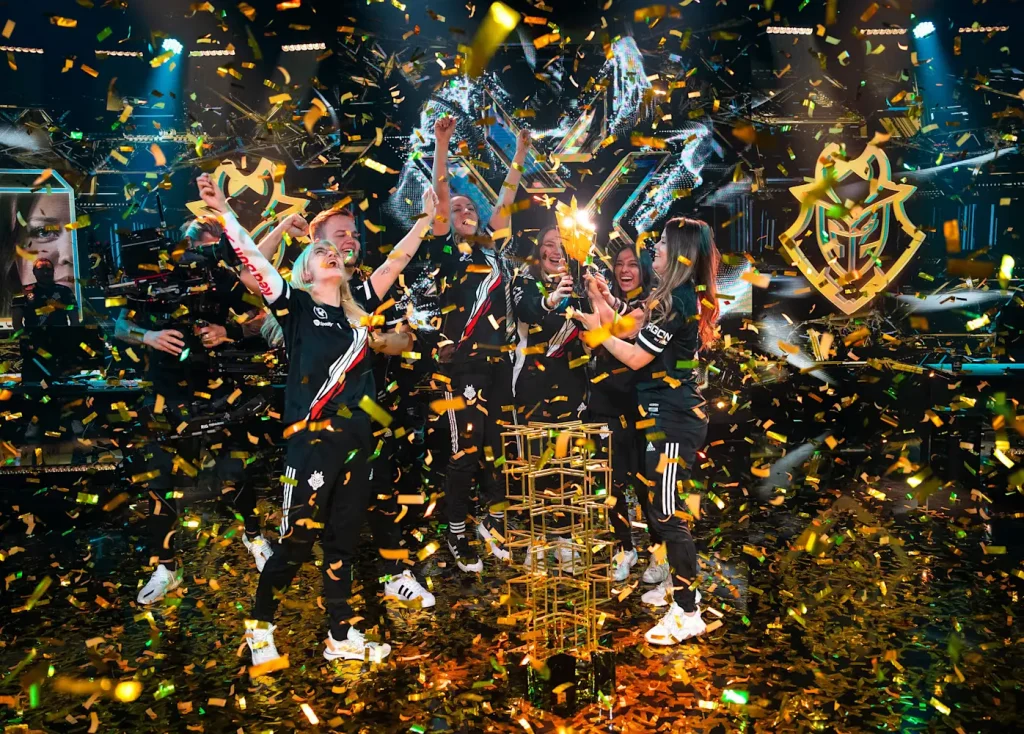
VALORANT’s Game Changers program offers a working example for nurturing female esports talent. Players such as Melanie “meL” Capone with $140,026 in career earnings and Ava “florescent” Eugene, who successfully transitioned from Game Changers to tier-1 VCT play, show the strength of committed development programs. Florescent’s singular example of being the first to successfully move from female-only to mixed competition opens a path forward for CS2 players.
The most notable distinction is in structural support and frequency of competition. Game Changers offers year-round tournaments with deep prize pools, allowing for long-term career tracks for female players. The reduced tournament calendar of CS2 requires female players to compete less often, which could slow skill acquisition and financial viability.
Rocket League’s Women’s Car Ball project, established by professional player Gio “Avenger” Sy, illustrates how grassroots mobilization can provide opportunities. The emphasis on creating “safe spaces” for competition without sacrificing competitive integrity provides insights for CS2 tournament organizers.
The Future Landscape
The path for females’ CS2 seems more promising despite continued challenges. Imperial Valkyries’ tier-1 tournament participations have proven that teams of women can perform competitively against male rivals when presented with opportunities. Competing against NAVI, although ultimately in defeat, proved to display tactical maturity and personal ability that exceeded many expectations.
Organizational structural adjustments can create new opportunities. Valve’s modification of the ranking system, though contentious, has already yielded unprecedented female team invitations. As tournament organizers change to accommodate these adjustments, new opportunities for mixed competition will arise.
The future generation of female players bodes very well. Up-and-coming stars such as LyttleZ and ongoing performances from veteran stars indicate that the skill ceiling keeps increasing. With adequate support mechanisms in place and ongoing investment, women’s CS2 might reach the sustained growth that creates true parity in competitive opportunity.
However, significant challenges remain. Addressing toxicity in competitive environments requires ongoing effort from developers, tournament organizers, and the broader community. Creating safe competitive spaces while maintaining the integrity of high-level competition represents an ongoing balancing act.
Women’s CS2 careers’ economic viability needs sustained investment from sponsors and organizations. As more people watch and market awareness rises, revenue opportunities should increase. Streaming and content creation success offer ancillary revenue streams that can complement tournament winnings.