

The Valve Corporation’s relationship with the Counter-Strike community has come to a breaking point. Close to two years since the widely criticized release of Counter-Strike 2, a trend of deliberate disrespect toward player issues has developed that jeopardizes the very essence of gaming’s onetime most popular tactical shooter. Valve has repeatedly disregarded, dismissed, or responded half-heartedly to community input, building a rift between developer intent and player expectation that widens with every new update.
In this article, we will discuss how Valve is going in a direction that doesn’t really align with the community. Without wasting time let us get started.
The Foundation of Frustration

When CS2 substituted for Counter-Strike: Global Offensive in September 2023, it came not as the revolutionary leap Valve touted, but as a partially formed product lacking core features that players had grown to love for more than a decade. The switch erased popular game modes such as Danger Zone, Arms Race variants, and Flying Scoutsman. Favourite maps like Train, Cache, and Cobblestone were removed from rotation. Even simple features such as achievements, left-handed viewmodels, and community server browsers were removed.
The reaction of the community was instant and raw. In a span of 24 hours, CS2 had garnered more than 6,000 bad Steam reviews, with players condemning everything from performance to missing content. Valve’s response to that cry, however, betrayed a disturbing trend that would characterize their strategy toward dealing with their community: silence, deflection, and obstinate commitment to unpopular choices.
The Subtick Controversy
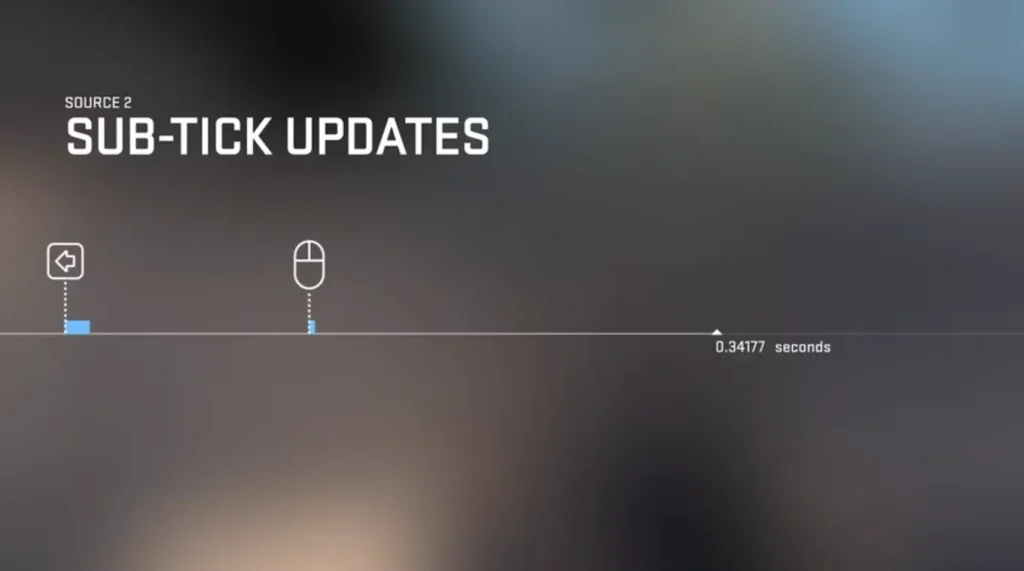
Maybe no feature better illustrates Valve’s tone-deafness to community feedback than the subtick system. Rolled out as a game-changing replacement for old 128-tick servers, subtick was sold as a technological revolution that would reduce the disparity between server types. The community’s reaction was overwhelmingly hostile from the outset.
Professional players immediately recognized underlying issues with subtick’s execution. FaZe Clan’s ropz said that movement seemed uneven and spraying patterns unbalanced in relation to CS:GO 128-tick servers. Community testing revealed that the subtick introduced timing inefficiencies, causing long-standing staples like bunny hopping and jump throws to become unreliable. Players complained of a disparity between visual feedback and real-game state, where shots seemed to hit on screen but registered otherwise on the server.
The technical community outlined a detailed breakdown demonstrating subtick’s limitations. Researchers illustrated that although subtick theoretically provided greater accuracy, it introduced inconsistencies that human players could not learn to adapt to or replicate accurately. The system’s failure to properly handle movement became so well-documented that members of the community released frame-by-frame breakdowns indicating acceleration differences.
Valve’s reaction to this mountain of evidence? Inflexible insistence that the subtick functioned flawlessly as designed. When third-party platforms such as FACEIT provided 128-tick subtick servers to resolve community issues, Valve hardcoded the game to disallow such changes. This heavy-handed action demonstrated a company more focused on compelling people to adopt their technology than on solving legitimate concerns from players.
Communication Breakdown
Valve’s communication policy on CS2 is a masterclass in company complacency. The business practices a policy of “letting updates speak for themselves”, but the policy collapses when the updates are slow, minor, or do not touch on fundamental problems. CS:GO developer Gautam Babbar once described how Valve shuns community engagement because it alters the feedback dynamic and makes players discuss with devs rather than one another. This logic may be valid in theory, but in real life has left a vacuum of information filled with frustration and speculation.
The occasional instances of developer contact have usually done nothing but increase the situation. Valve developer Fletcher Dunn, one of the few Valve personnel available on social media, is a target for community wrath because he’s not unresponsive, but because he’s almost the sole developer who will get involved. His singularity points out that Valve has relinquished its mandate to support serious interaction with its player community.
When developers do speak, their words seem out of touch with player reality. The classic instance of Valve asserting they couldn’t reproduce the jumping bug that had afflicted CS2 for months, despite thousands of players repeatedly showing it is a perfect example of this disconnection. The bug was so ubiquitous that pro players would experience it repeatedly in tournaments, and yet Valve insisted that they required “reproducible examples” to look into.
Performance Issues
CS2’s technical problems are yet another area where Valve has consistently disregarded community input. Players on the full range of hardware have complained of significant performance loss in CS:GO, including high-end rigs experiencing frame drops, stuttering, and variable frame times. The community has submitted extensive documentation of these problems, including detailed system specifications, performance metrics, and comparisons with CS:GO.
Valve’s only response has been to deflect blame to user settings and third-party programs. Developer Fletcher Dunn routinely answers reports of performance problems with requests for ETW traces and asks players to play the game without other software. While certain performance problems may very well be due to user settings, the deflection ignores the fact that CS:GO played fine on the same machines that have trouble with CS2.
The issues with performance reach beyond frame rates to deep-level networking issues. Players experience more frequent dying behind cover, shot registration issues, and overall networking inconsistencies that make competitive play feel unstable. Despite very thorough community documentation of these problems in the form of video evidence and technical analysis, Valve has not given any indication of the depth of the problem nor offered any substantive solutions.
Anti-Cheat Failures and False Promises
The CS2 cheating issue is arguably the most egregious failing of Valve in attending to community issues. Players complain that cheating is just as rife with the new game, in spite of assurances that the game would have better anti-cheat features. The community frequently posts video proof of obvious cheaters, such as spinbotters and aimbotters, who go unbanned for weeks.
Valve’s VAC system has not improved much from its CS:GO version. The VAC Live tech promised by Valve has had very little observable impact on the amount of cheating, with little effect reported on detection ability despite claims by Valve. Top-level competitors and professional players still see blatant cheaters in matchmaking, which degrades the competitive fairness of the game.
The community has put forward solutions, such as the reinstatement of the Overwatch system, which enabled veteran players to check suspected cheaters. Valve has, however, restricted this system to a small, unspecified group of members and thereby eliminated community involvement in anti-cheat initiatives. This move goes straight against years of community input affirming the effectiveness of the initial Overwatch system.
Verdict
Valve’s intentional rejection of community input has brought tangible repercussions. Player attitudes towards CS2 are still mostly negative, as players continue to yearn for the gameplay feel and set of features in CS:GO. The competitive community still grapples with inherent gameplay problems that impact the viewer experience and player enjoyment.
Content creators and community leaders have increasingly been critical of how Valve is doing business. With no significant updates and communication, they have caused a content drought that affects the whole ecosystem around Counter-Strike. Community servers and modding, what made the Counter-Strike experience so alive, are still hindered by small tool sets and a lack of support.
Most concerning is the breakdown of trust between Valve and its community. Decades of bad communication, broken promises, and dismissed feedback have created a cynical player base that anticipates disappointment over change. This damaged relationship jeopardizes the long-term well-being of Counter-Strike as a game and an esport.