

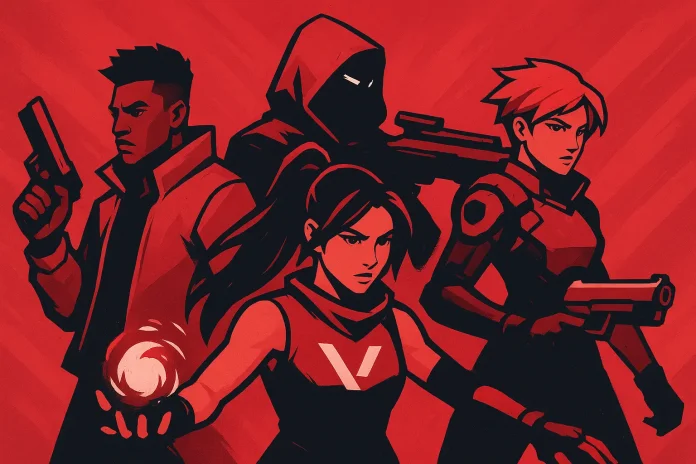
With the official release of Valorant in June 2020, Riot Games took the world of video games by storm. The game saw an explosive release following an incredibly successful closed beta phase, and quickly garnered a large fan following to become one of the biggest tactical shooters of all time, challenging the long-standing reign of CS:GO in the genre.
Riot Games’ flagship FPS title set itself apart in the already saturated genre through its unique blend of tactical gameplay and Agent abilities. While neither of them was a particularly new concept in gaming, Valorant managed to find the perfect mix of gunplay and utility that appealed to casual and hardcore gamers alike.
So, what was Riot’s secret sauce that paved Valorant’s way to where most other titles failed? What enabled the shooter to outshine its competitors and establish a dedicated pro scene in only a few months of its release?
The truth is, Valorant wasn’t created in isolation. Riot drew inspiration from some of the biggest and most successful shooters in modern gaming, blending their strongest elements into a single, cohesive package. It combines the best elements of the gunplay and economy of Counter-Strike, the fluid movement of Apex Legends, and the hero-driven abilities of Overwatch, all while shaping an identity that feels entirely its own.
The Counter-Strike Backbone
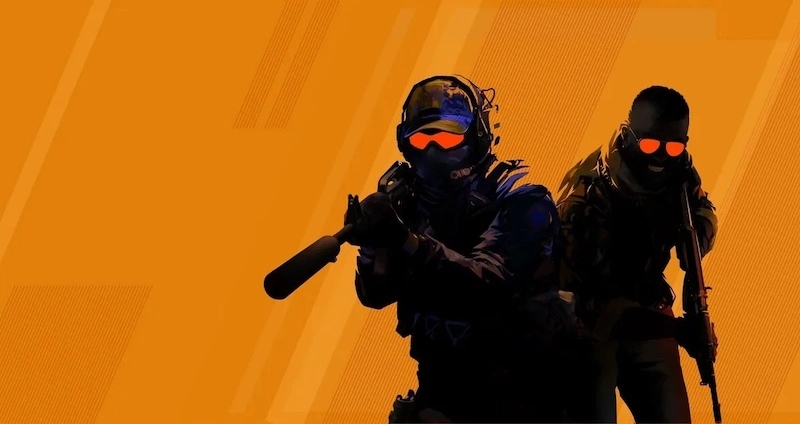
Out of all the games we listed above, it’s safe to say that Counter-Strike had the biggest influence in shaping the overall gameplay of Valorant. Not only are the movement mechanics of the two games extremely similar, but the gunplay of Valorant also seems to be heavily inspired by that of its primary competitor in the genre.
Like in CS, every weapon in Valorant comes with its own effective range and unique recoil patterns. While Valorant’s spray patterns possess a lot more randomness than CS, the resemblance between the two is still unmistakable. Additionally, the headshot lethality of certain weapons is also clearly reminiscent of CS guns. For instance, the Vandal’s one-tap potential mirrors the iconic AK-47, while the Phantom serves as Valorant’s counterpart to the M4.
And then there’s the economic system and round-based structure. Compared to most modern shooters, Valorant’s gameplay is a lot slower-paced, which gives ample breathing room to players in between rounds, a structure that was initially popularized by CS. This design choice creates an environment where every purchase and every round carries weight. The economic system further reinforces this tension, mirroring CS with its emphasis on resource management, forcing teams to balance risk and reward in every buy phase.
What truly sets Valorant apart, however, is how Riot softened these hardcore mechanics to make them more approachable without sacrificing depth. Over the past few years, CS has made a reputation for itself as being extremely tough to get into as a new player, demanding perfect recoil control and deep map knowledge, while Valorant eases new players in with clearer visual cues, simplified spray patterns, and abilities to provide strategic options beyond raw aim. This has enabled Valorant to draw in a good portion of the casual FPS player base, while also being able to keep the veterans engaged with its overall depth.
The Apex Factor
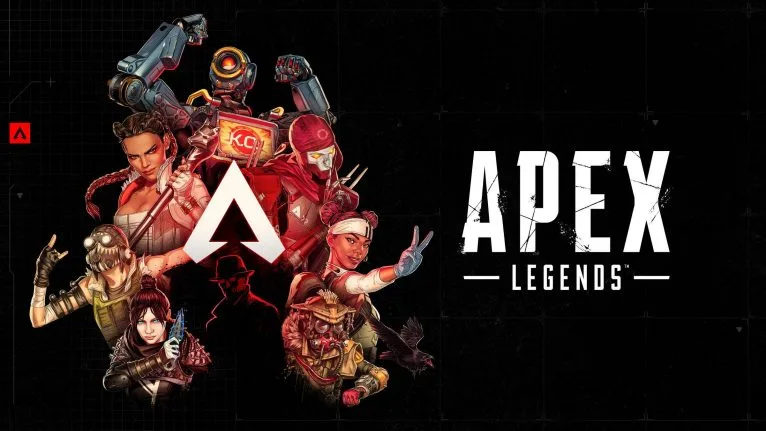
Valorant has a lot of Agents with flashy, mobility-enhancing abilities that enable them to either traverse the map quickly or get out of sticky situations in a jiffy, a design choice that feels straight out of Apex Legends’ playbook. Characters like Pathfinder and Octane have redefined movement as a core part of Apex Legends, and Riot clearly took notes from Respawn’s hero shooter, as evident from Agents like Jett, Raze, and Neon bringing that same energy with dashes, sprints, and satchels that open up creative playstyles beyond what Counter-Strike’s grounded movement would allow.
Apart from simply making the game more satisfying and fun for players, movement tech like this completely transforms how engagements unfold on the battlefield. Apex Legends popularized the idea of using verticality and fluid traversal to outmaneuver opponents, and Valorant embraces that philosophy through map design and kits of certain Agents.
Crucially, Valorant incorporates Apex’s flashy movement abilities and chaotic structure in its gameplay without losing its tactical identity. Unlike Apex, which features fast-paced skirmishes typical of battle royales, Riot heavily slows down the pacing and keeps engagements structured within the round-based format. Abilities in Valorant nicely complement the characters’ movement and aid players in securing map control, but rarely overshadow gunplay as the deciding factor. Elevated sightlines, zip lines, and abilities like the Jett dash or Raze satchel, combined with precise, tactical gunplay, create a fast-paced yet methodical experience where creativity and aim can go hand in hand.
The Overwatch Touch
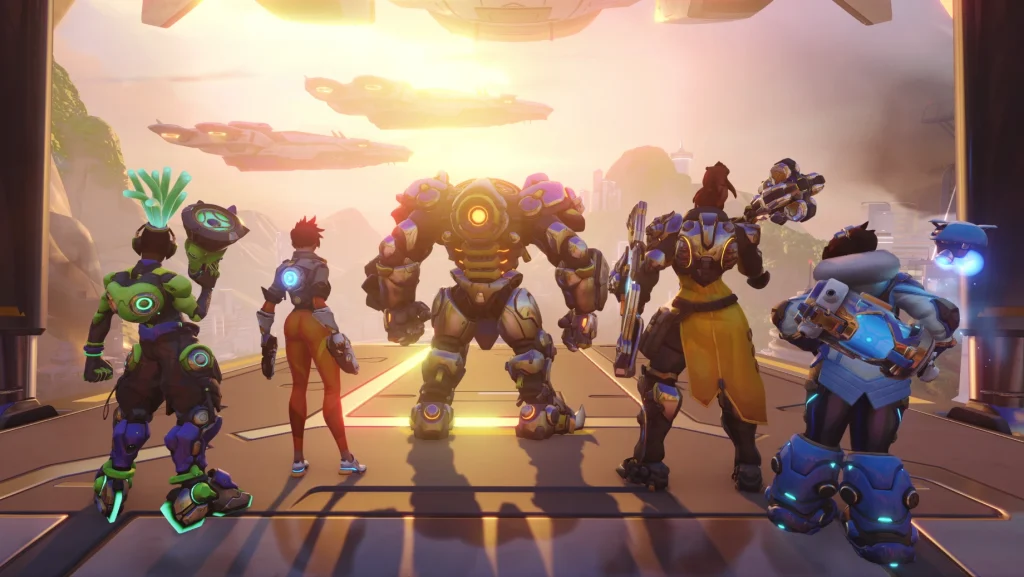
Overwatch was one of the first games to bring ability-driven combat into the world of mainstream shooters. However, similar to Apex Legends, it’s also an extremely fast-paced game with tons of constant visual noise that can easily make it overwhelming for new players to get into.
Riot recognized the appeal of this hero-based design but chose a more restrained approach. Instead of team fights being filled with overlapping ultimates and particle effects, Valorant attempts to integrate abilities into a cleaner, more tactical environment. While utility dumps when executing or retaking bombsites are also a common practice in the higher elos of Valorant, it’s rarely a problem in the lower ranks, giving newbies ample time to get used to the Agent abilities before they encounter the full intensity of them.
The vibrant hero designs of Overwatch have also clearly left their mark on Valorant’s Agent roster, with certain characters in the latter sharing striking similarities with the former. The hero design of Sova is somewhat reminiscent of Hanzo, with both archers being able to gather crucial intel for their team with recon arrows and mow down enemies with their ultimate, while Raze’s satchels seem to have taken inspiration from Junkrat’s Concussion Mines.
Similar to Overwatch, Valorant also places heavy emphasis on character synergies and team compositions. A typical ranked game in the Blizzard hero shooter would see each team having two tanks, two DPS, and two supports. Valorant mirrors this idea with its own roles: Controller, Duelist, Initiator, and Sentinel, while leaving the fifth slot flexible based on the map or strategy. Unlike Overwatch’s stricter meta, however, Valorant allows room for more experimentation, with some teams often opting to skip a role without sacrificing their odds of winning.
How Valorant Crafted Its Own Identity
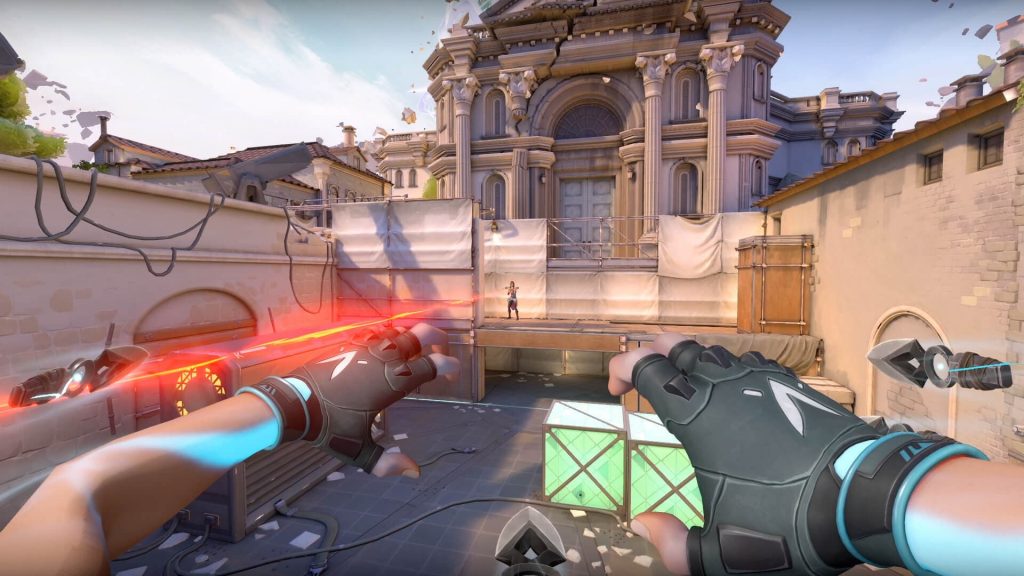
Despite Valorant drawing heavy inspiration from the titles mentioned above, it’s far from being a mere clone of CS, Overwatch, or Apex. Instead, Riot took the strongest elements from each game and incorporated them into a tactical FPS that’s designed for long-term competitive integrity, enabling Valorant to carve its own identity in an already saturated genre.
The most notable distinction lies in Riot’s “gunplay first” philosophy. Agent abilities and utilities will help you gain the upper hand over your opponents in combat, but they are no substitute for mechanical skill. Unlike Overwatch’s intense, chaotic teamfights or Apex’s reliance on having good movement for outplays, Valorant boasts a significantly lower TTK (time to kill), where kills almost always come down to raw aim. Abilities in Valorant primarily act as enablers to flush enemies out of cover, gather intel, or reposition yourself in the heat of battle, but they are rarely a means of securing eliminations. This ensures that at its core, Valorant remains a tactical shooter rather than a hero shooter disguised as one.
Riot’s commitment to competitive infrastructure and esports readiness from day one also played a pivotal role in securing Valorant’s place in the genre. The game launched with robust anti-cheat measures, 128-tick servers, and a clear vision for its pro ecosystem, garnering the attention of avid esports enthusiasts from the moment of its release.
Verdict
While Valorant did begin as a blend of familiar ideas, it didn’t just stop there. Riot took the precision of Counter-Strike, the mobility of Apex Legends, and the hero-driven gameplay of Overwatch, then reshaped them into something that felt entirely its own. Every design choice, from the restrained ability system to the emphasis on clarity, helped make Valorant a tactical shooter that is accessible to newer players, yet leaves plenty of room for veterans to learn and grow. That, when combined with a solid anti-cheat system and smooth, 128-tick servers, positioned the game as an esports-ready title from day one
As mentioned earlier, Valorant is much more than just a clone of another game. In fact, it has laid the foundation for what the future of competitive FPS could look like. Valorant is no longer defined by the titles that inspired it, and it’s safe to say that it currently stands as a benchmark for future competitive FPS titles. The question moving forward is whether Valorant can maintain its success and how far it can evolve without losing the balance that made it special.