

If you’ve ever found yourself grinding for your dream rank in Valorant, chances are you’ve probably felt the quiet pull of the game’s hidden Elo system in your competitive games. You win four games in a row, but your rank barely moves, or you lose 2 games and suddenly drop an entire tier.
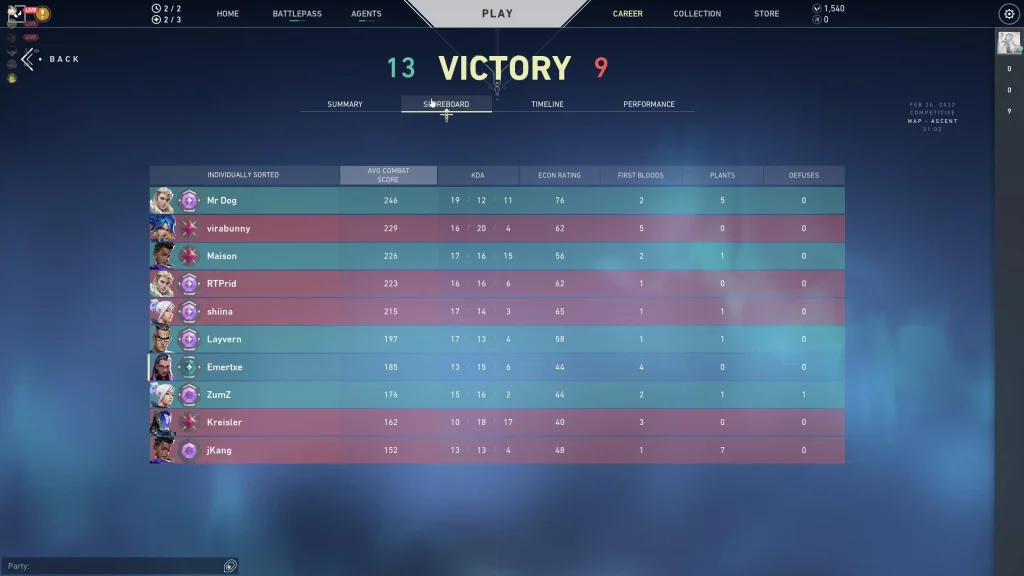
And then there are moments where the algorithm feels stacked against you. Matches that feel completely lopsided, where your team can’t seem to land a shot while the enemy reads every move before you make it. You’re convinced they’re at least a few divisions above you, only to check the scoreboard at the end of the game and find everyone sitting around the same rank.
If this all feels a little too familiar, don’t worry, you’re not alone. While there are several factors that can lead to these moments, many players believe this imbalance in matchmaking is primarily caused by the Hidden Elo system that Valorant and many other competitive multiplayer games have in play.
While Riot Games hasn’t used the term ‘hidden Elo,’ former Valorant Competitive Designer ‘EvrMoar’ has confirmed that the game relies on an unseen matchmaking rating (MMR), which is separate from your visible rank.
But what exactly is hidden Elo in Valorant, and how does it impact your ranked games?
In this article, we’ll take a look at everything you need to know about the hidden elo system of Valorant, how it influences matchmaking, and how you can utilize it to achieve your dream rank.
What is Hidden Elo in Valorant?
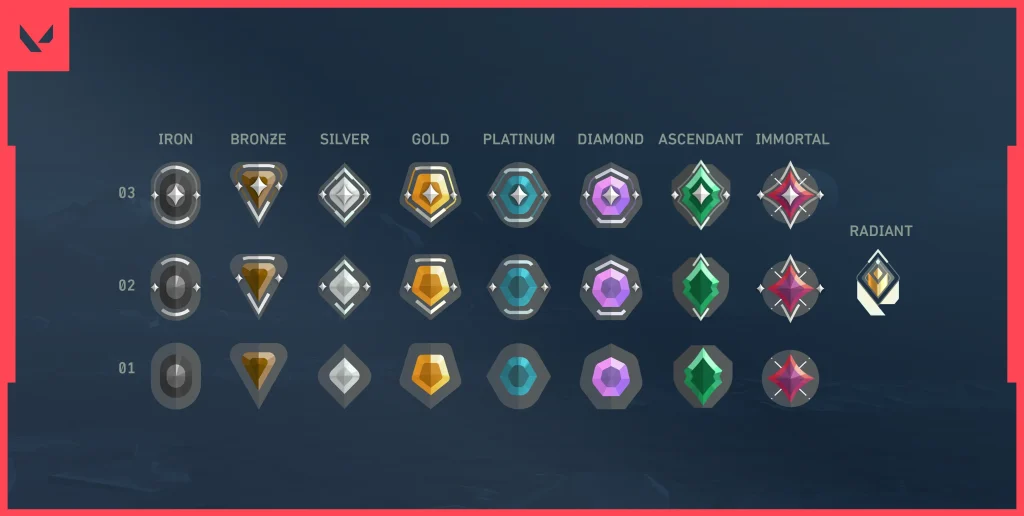
In Valorant, your rank is represented by a visible badge that reflects your current competitive standing. There are a total of nine divisions in the spectrum of ranks – Iron, Bronze, Silver, Gold, Platinum, Diamond, Ascendant, Immortal, and Radiant. Each of these ranks, with the exception of Radiant, is further subdivided into three groups.
As you may already know, you can raise your Valorant rank by winning competitive games, while losing games will make you rank lower in a lower division. However, this is just the visible badge that you see on your profile. Behind that shiny emblem lies a hidden number, which is the real force driving your matchmaking experience.
This hidden Elo in Valorant, which is assigned to every player based on a number of different performance metrics, is the primary factor determining your matchmaking quality, how much RR (rank rating) you gain or lose per game, and the caliber of opponents you face in your ranked matches.
This hidden MMR is rarely a representation of your visible Valorant rank, and it’s not uncommon for two players sharing the same badge to have wildly different MMRs.
How Hidden Elo Skews Matchmaking
Since the hidden Elo of players can often be significantly different from their visible rank, it can easily skew the matchmaking experience in ranked games.
For instance, players with a higher hidden Elo are more likely to be placed against tougher opponents even if their visible rank is lower, while players with a low hidden Elo might face easier opponents.
This is why you’ll occasionally see a Gold-ranked player in your Diamond solo queue match or find yourself going up against an Ascendant while sitting in Platinum.
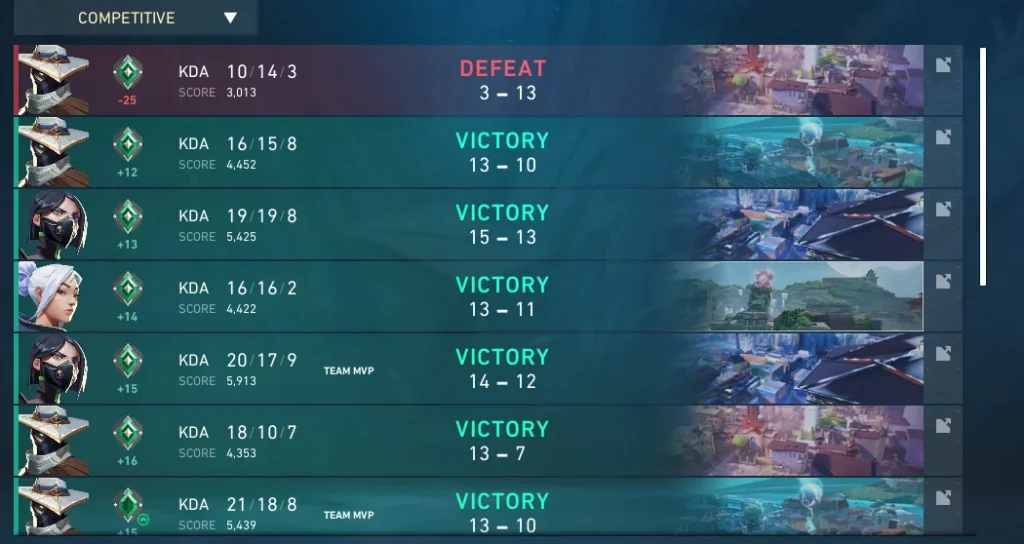
For the same reason, players with a high hidden Elo find themselves gaining more RR upon winning a ranked game, whereas those with a low hidden Elo gain significantly less and lose more when they’re defeated.
This is where the snowball effect kicks in. A losing streak can tank your hidden Elo far more than you might expect, making every subsequent game harder to climb back from. Even if you have rank shields active or don’t see a big change in your visible rank, you’ll eventually start noticing smaller RR gains while still losing more per defeat.
As a result, recovery can feel painfully slow, which is why many players end up feeling hard-stuck.
Why This Makes Ranked Feel Unfair
The biggest problem with hidden Elo in Valorant is how it creates mismatched lobbies, which often lead to one-sided games. If a player hasn’t tuned into Valorant ranked for a few seasons, their visible rank will see a notable drop. However, their hidden Elo often remains much higher than their new visible rank, meaning they’ll still be placed against tougher opponents despite the rank reset.
This can create lobbies where some players are essentially smurfing unintentionally, while others struggle to keep up with the higher-ranked players. You might have a Gold player on your team who’s secretly playing like an Immortal, or vice versa, making some games feel predetermined before the first round even starts.
There’s also the feeling that your performance matters less than Riot’s hidden math. Let’s say you drop 30 kills, carry your team to overtime, and end up winning the game. However, when you see the results, you notice that you’ve gained fewer RR points than your friend who’s sitting in the middle of the scoreboard. Not only is it demoralizing, but it can also feel like the system values its algorithm over your actual in-game effort.
What Riot Can Do
So, what exactly can Riot Games do to address the problems caused by hidden Elo in Valorant? Can they even be fixed?
For starters, the devs need to be more transparent regarding the hidden MMR of Valorant and let players know about the factors that affect them. Alongside external resources, they can also improve transparency from within the game by adopting a “rank confidence” system that’s already found in some other competitive titles like Dota 2. By displaying rank confidence alongside the visible rank, players would understand how close they are to ranking up or down, reducing the confusion and frustration that come from seemingly arbitrary RR gains and losses.
Some core system adjustments also need to be made to fix the ranking system of Valorant. RR gains and losses should be adjusted so that streaks feel less punishing, and the overall volatility in rank progression needs to be smoothed out to reward consistency rather than short-term swings. Additionally, matchmaking should prioritize pairing players with similar hidden MMR to minimize extreme skill gaps within lobbies.
Lastly, the major issue of ‘rank inflation’ in Valorant needs to be addressed. Features like Rank Shield and derank protection at 0 RR should be removed, and the current soft rank resets each season should be replaced with hard resets to ensure a truly even playing field at the start of every episode. This would prevent inflated ranks from carrying over and force players to re-earn their position based on current performance, keeping the competitive ladder more accurate and equally rewarding.
How to Use Hidden Elo to Your Advantage
The hidden MMR system in Valorant is here to stay, but luckily, there are a few ways that you can utilize it to your advantage on the road to your dream rank.
The first thing you should start doing is to prioritize consistency over streaks. Focus on getting a consistent K/D each game instead of dropping 25 kills one game only to bottom frag 6/19 the next. Performing consistently can not only give your hidden Elo a boost, but you’ll also find yourself winning a lot more.
However, this doesn’t mean that you should stop focusing on performance metrics entirely. While winning the game should be your number one priority at all times, you should also try to perform better than your teammates, as good stats can accelerate your hidden MMR gains.
Next, work on adjusting your expectations. If you see a large disparity in skill groups within a game, instead of getting frustrated, understand that all the players likely have a similar hidden Elo.
Lastly, know when to stop queuing. If you ever find yourself getting tilted or losing 2-3 games in a row, it might be best for you to stop queuing ranked and take a break instead. It might be tempting to get that one win in before hitting the exit button, but you’ll likely end up losing another and getting stuck in a loop.
Verdict
In conclusion, hidden Elo isn’t inherently a bad thing; it exists to improve matchmaking and reduce frustration among the player base. However, if not properly set up or mismanaged, it does the complete opposite, leading to imbalanced lobbies, making progress feel unrewarding, and ultimately increasing player frustration instead of alleviating it.
Without proper transparency from the devs, players are likely to feel left out in the cold and blindsided when the numbers don’t seem to add up.
It’s high time for Riot to step up and close the gap between what players see and what the system knows. The devs need to explain how matchmaking truly works and provide players with the tools to understand their progress, so ranked can finally feel like the fair, skill-based climb it was always meant to be.