

Artificial intelligence is suddenly everywhere in gaming. Technology companies are pitching tools that promise to transform game development.
Publishers are experimenting with generative systems capable of producing dialogue, assets, and even interactive characters. Conferences such as the Game Developers Conference are increasingly filled with panels focused on AI-powered development pipelines and NPCs that can theoretically converse with players. To hear some companies describe it, the future of gaming may be shaped by generative AI systems capable of building worlds dynamically and responding to players in ways that were never explicitly scripted.
Yet the narrative that artificial intelligence is new to gaming is misleading. Games have relied on AI for decades.
Long before generative models entered the conversation, developers had already solved many of the fundamental gameplay challenges of artificial intelligence. Non-player characters, enemy bots, and environmental behaviors have always depended on carefully designed AI systems.

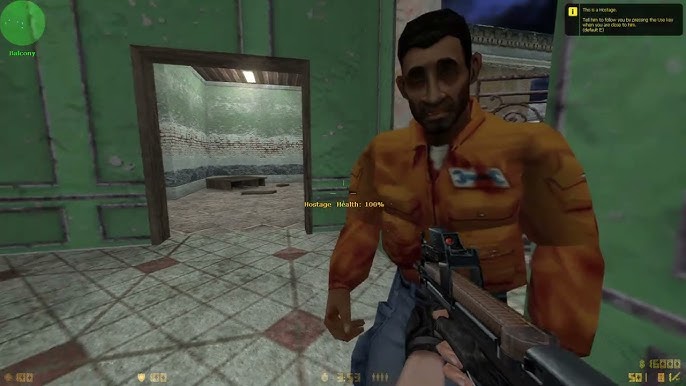
Open-world games such as Grand Theft Auto built entire cities powered by AI routines. Pedestrians follow schedules, vehicles respond to traffic patterns, and police units react dynamically to crimes committed by players. Competitive shooters like Counter-Strike introduced bots capable of navigating maps, planting bombs, defusing them, acting as hostages, coordinating with teammates, and reacting to player strategies and many more among other features.
These systems were not attempting to replicate human intelligence. Instead, they were carefully designed rule-based systems built to create believable and predictable behavior within the constraints of gameplay. Techniques such as pathfinding algorithms, finite state machines, and behavior trees allowed developers to simulate intelligence while maintaining the level of control required to balance a game.
Generative AI approaches the problem from a different direction.
Rather than following explicit rules written by designers, generative models produce responses based on patterns learned from large datasets. Dialogue can be generated dynamically. Images and animations can be created on demand. Characters could theoretically react to player input in ways that were never written by developers.
The promise sounds revolutionary. But in practice it introduces a new set of questions about control, consistency, and creative authorship in games.
Gaming Has Always Used Artificial Intelligence
Artificial intelligence in games has historically been less about intelligence and more about illusion. Developers design systems that behave intelligently within a limited context rather than attempting to simulate real cognition.
Classic FPS games relied on AI enemies capable of taking cover, flanking players, and coordinating attacks. Strategy games such as Civilization and StarCraft pushed these systems further, creating AI opponents capable of planning strategies and adapting to player actions.
Even competitive multiplayer games incorporated AI in the form of bots. Counter-Strike introduced bots to simulate players in offline matches, allowing newcomers to practice mechanics and learn maps. These bots could navigate environments, manage weapons, and react to combat situations using predefined decision systems.
The AI powering these systems was deterministic. Designers controlled exactly how characters behaved and how they responded to the player. This predictability was essential for gameplay balance. Generative AI changes that equation by introducing probabilistic systems into environments where predictability has traditionally been critical. That shift is at the heart of the industry’s current uncertainty.
Everyone Is Talking About AI in Gaming, But Does It Actually Improve Games?
The excitement surrounding generative AI did not appear in isolation. It arrived during a period when the economics of game development were already under pressure.
AAA game production has grown dramatically more expensive over the past decade. Modern blockbuster titles often require hundreds of developers and development cycles that stretch across five or more years. At the same time, the rise of live-service games has created an expectation that developers will continuously release new content, events, cosmetics, and story updates long after a game launches.
In this environment, generative AI offers something extremely attractive to publishers, and that is automation. AI-assisted tools can accelerate concept art generation, produce dialogue drafts during early development, assist with code writing, and automate parts of localization or testing workflows. Even if the final content still requires human oversight, the ability to generate early drafts quickly can significantly speed up production pipelines.
Industry surveys suggest that this is exactly where generative AI is currently being used. Many developers report experimenting with AI tools for brainstorming, coding assistance, or internal development tools rather than player-facing gameplay features.
The GDC 2026 SF Moment
The prominence of generative AI became especially visible at recent industry events.
At the Game Developers Conference, generative AI tools were showcased across numerous panels and demonstrations. Technology companies presented systems capable of generating game environments, assisting with programming tasks, or producing dialogue for NPCs.
Yet the atmosphere surrounding these discussions has not been entirely enthusiastic.
Polygon journalist Giovanni Colantonio observed this contrast while covering the event, noting that generative AI had quickly become the dominant topic across conference discussions. At the same time, many developers expressed uncertainty about how these tools should actually be integrated into real game production. The enthusiasm surrounding AI demonstrations stood alongside a quieter skepticism among developers who are still trying to determine what role generative systems should play in their work.
Experiments From Ubisoft, NVIDIA, and Microsoft
Some of the most visible generative AI experiments in gaming have come from large technology companies and major publishers. Ubisoft, for example, revealed an experimental generative AI system designed to allow NPCs to converse dynamically with players.
The prototype demonstrated characters capable of responding to player input using AI-generated dialogue rather than scripted lines. The technology generated excitement but also raised questions about narrative control. Games often rely on carefully crafted dialogue to maintain tone, pacing, and story consistency. Allowing NPCs to generate responses dynamically introduces the risk that dialogue could contradict established lore or disrupt narrative structure.
NVIDIA has explored similar ideas with its ACE (Avatar Cloud Engine) technology. Demonstrations showed AI-powered NPCs capable of holding conversations with players in real time. These characters could theoretically respond to questions or adapt dialogue dynamically based on the context of the interaction.
Microsoft has also entered the conversation with experimental models such as Muse, designed to generate gameplay ideas or assist developers during the design process.
These projects illustrate the industry’s curiosity about generative AI. They also highlight how experimental the technology still is. Many demonstrations remain prototypes rather than features implemented in shipping games.
Steam’s AI Disclosure Rules
Valve’s Steam platform introduced another important development in the AI debate.
In 2024, Steam began requiring developers to disclose whether their games include content generated using artificial intelligence. The policy requires studios to explain how generative AI is used in the development process and to confirm that the content does not violate copyright or intellectual property rules. The rule reflects the growing complexity of AI’s role in creative industries. Generative models are trained on large datasets that may include copyrighted materials, raising legal questions about ownership and attribution.
By requiring developers to disclose AI usage, Steam effectively acknowledged that generative AI had already begun entering the game development pipeline.
When Gaming Community & Players Pushed Back
While technology companies and publishers have been eager to experiment with generative AI, player communities have often reacted more cautiously.
Several high-profile controversies illustrate how sensitive the topic has become.
One widely discussed example involved the Call of Duty franchise, where players accused developers of using AI-generated artwork after screenshots circulated online showing visual errors that appeared typical of AI-generated imagery. The controversy quickly spread across gaming forums and social media, with players criticizing the idea that a major AAA title might rely on AI-generated assets instead of human artists.
Another controversy emerged around an experimental mobile release tied to the Angry Birds franchise. Players discovered that several images within the game appeared to have been generated using AI tools. The reaction from the community was overwhelmingly negative, with many players accusing the studio of cutting corners. The backlash was severe enough that the game was eventually removed from the Play Store.
Even studios with strong reputations have faced scrutiny. When comments from developers at Larian Studios suggested that generative AI might be useful for concept exploration, some fans immediately expressed concern that the technology could replace artists or writers in future projects. The studio later clarified its stance to reassure players that AI would not replace human creators.
These incidents reveal a broader tension within gaming communities. While players are often enthusiastic about new technology, many remain deeply protective of the craftsmanship behind game development.
Though The Question Still Remains
Artificial intelligence has always played a role in gaming.
What has changed is the scale of the conversation surrounding generative systems. Technology companies see enormous potential in tools that can accelerate development and expand content creation. Publishers see opportunities to reduce production costs and increase the speed of game development. Developers and players, meanwhile, remain uncertain about what this transformation might mean. Generative AI may eventually enable richer worlds, more dynamic characters, and interactive storytelling systems that were once impossible to build manually.
But it may also reveal something about the modern gaming industry itself.
If generative AI does reshape gaming, it may do so quietly behind the scenes rather than on the screen itself. The question now is whether developers and players will embrace that shift or continue to view it with skepticism.